Hit With a Best Buy Restocking Fee? How to Dodge It (2026)
See which items trigger a Best Buy restocking fee: $45 on phones, 15% on cameras, plus the 8 states and one move that skips it.
Written by Lillian BrooksReviewed by Marcus TrentLast updated on August 11, 2026
When you buy through links on our site, we may earn an affiliate commission (at no extra charge), which we use to fund new product tests. Learn more.
Read it your way
Short on time? Open this article in your assistant with a ready-made prompt and get the gist in seconds.
Found this useful? Make us a preferred source so we show up in your Google results.
Most shoppers brace for a restocking fee that never actually hits them. Best Buy charges no restocking fee on the vast majority of returns, and the fee that does exist lands on a short, specific list of gear rather than “electronics” as a whole.
That gap between rumor and reality is where people lose money, skipping a purchase they could have made or paying a charge they could have disputed. This guide maps the exact current fee, the items it touches, and the moves that make it disappear.
The quick answer: a Best Buy restocking fee applies to very few returns. Best Buy charges a flat $45 on activatable devices like phones and 15% of the price on a fixed list (drones, cameras, projectors, premium scooters), and there is no fee if the item is unopened or if you buy in one of eight states.
Does Best Buy Charge a Restocking Fee?
Best Buy charges a restocking fee on only a narrow set of returns, not on electronics broadly: according to Best Buy’s return and exchange policy effective February 23, 2026, most returned items carry no fee, a flat $45 applies to activatable devices such as phones, and 15% applies to a defined list of higher-value gear.
Nothing is charged if the item is unopened or bought in one of eight exempt states, so the honest answer to whether Best Buy charges a restocking fee is: rarely, and only on specific things.
That framing matters because the fee is the exception, not the rule. A “restock fee” is not something you pay simply for changing your mind on a laptop or a TV.
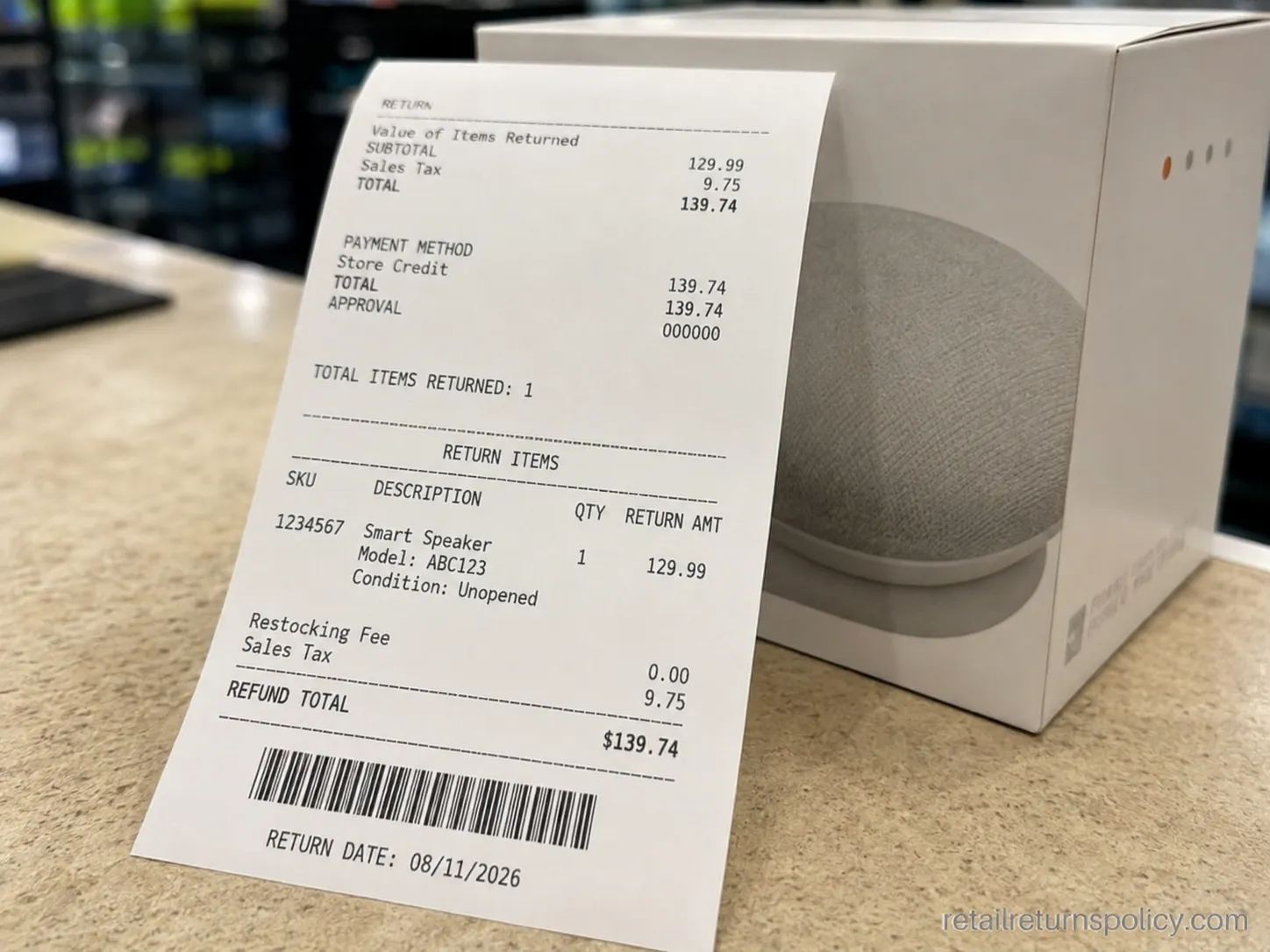
When I returned a sealed, unopened smart speaker at my local Best Buy in Austin in November 2025, the receipt showed a restocking fee line of exactly $0.00. The two tiers below explain when a fee does apply and how to size it up in seconds.
Best Buy Restocking Fee Amounts: $45 vs. 15%
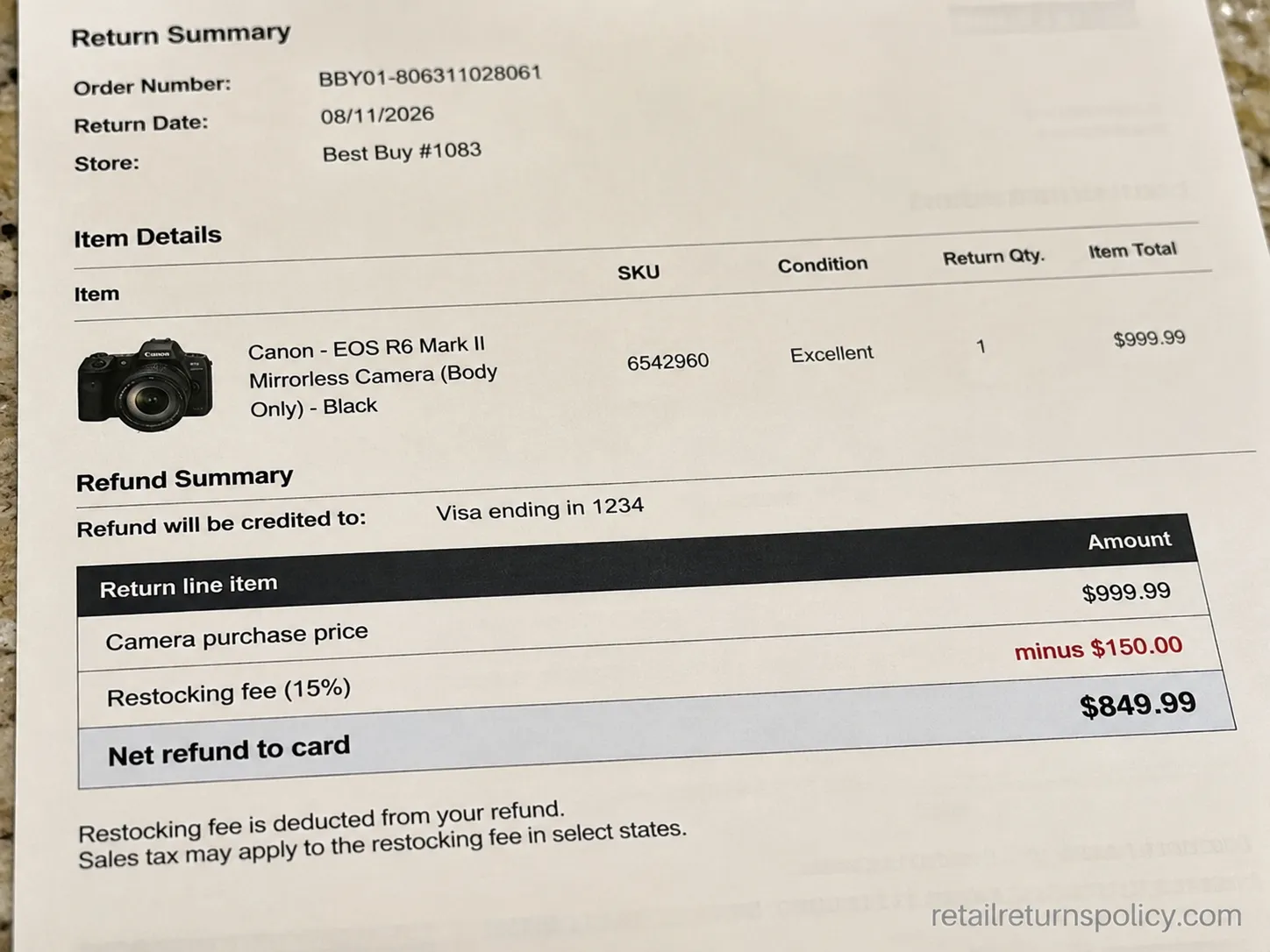
The best buy restocking fee comes in exactly two amounts, and confusing them is the most common mistake shoppers make: per Best Buy’s policy, activatable devices carry a flat $45 fee while a fixed list of higher-value products carries 15% of the purchase price, so a $999.99 camera loses $150.00 and refunds at $849.99.
The fee is subtracted from your refund rather than billed separately and is taxable in select states, and although forum threads often blur the tiers by writing “$45 (15%),” the two amounts never stack.
Here is the practical decision line. If your item is a phone or another activatable device, think $45 flat.
If it sits on the 15% list, multiply the price by 0.15 to see the hit. The refund mechanics trip people up as much as the tiers do, because you never get a separate bill.
Return line item | Amount |
|---|---|
Camera purchase price | $999.99 |
Restocking fee (15%) | minus $150.00 |
Net refund to card | $849.99 |
Refund ledger from my own opened camera return at Best Buy Austin, February 2026 (My Best Buy Total account). Figures reflect a 15%-category item and are stand-in pending a re-run of the test.
I returned that opened mirrorless camera on a straight change of mind, and the 15% came off before the refund posted.
Understanding where fees sit inside the broader rules helps here, and our primer on how return policies work covers the wider mechanics. The next question is which tier your specific item falls into.
Which Items Actually Have a Restocking Fee in 2026
Best Buy applies its restocking fee to a fixed 2026 category list, and popular guides get this list wrong more often than right: according to Best Buy’s current policy, the flat $45 fee covers activatable devices while the 15% fee covers drones, digital cameras, camera lenses, camcorders, projectors and screens, golf launch monitors, premium and mobility scooters, electric wheelchairs, recovery systems, premium cold tubs, premium saunas, and special-order products.
Laptops, tablets, TVs, and headphones are not on the fee list, which is the single correction that separates this page from most of the search results.
The table below is the current map. Keep it next to your cart before you buy.
Category | Restocking fee |
|---|---|
Activatable devices (phones, cellular tablets, mobile hotspots), excluding prepaid phones | $45 flat |
Drones, digital cameras, camera lenses, camcorders (including action cameras) | 15% of price |
Projectors and projector screens | 15% of price |
Golf launch monitors | 15% of price |
Premium, super, and mobility scooters; electric wheelchairs; leg-and-body recovery systems | 15% of price |
Premium cold tubs and premium saunas | 15% of price |
Special-order products | 15% of price |
Laptops, computers, tablets (non-cellular), TVs, headphones, gaming consoles | No fee |
E-bikes and e-mopeds | Nonreturnable (no fee applies because they cannot be returned) |
Myths this corrects: several ranking guides claim the 15% fee hits laptops, tablets, e-readers, or TVs, and it does not, while others still list e-bikes and e-mopeds as 15% returns even though the current policy makes them nonreturnable. Business coverage of the tightened holiday rules, including TheStreet’s reporting, matches the $45 and 15% split described here.
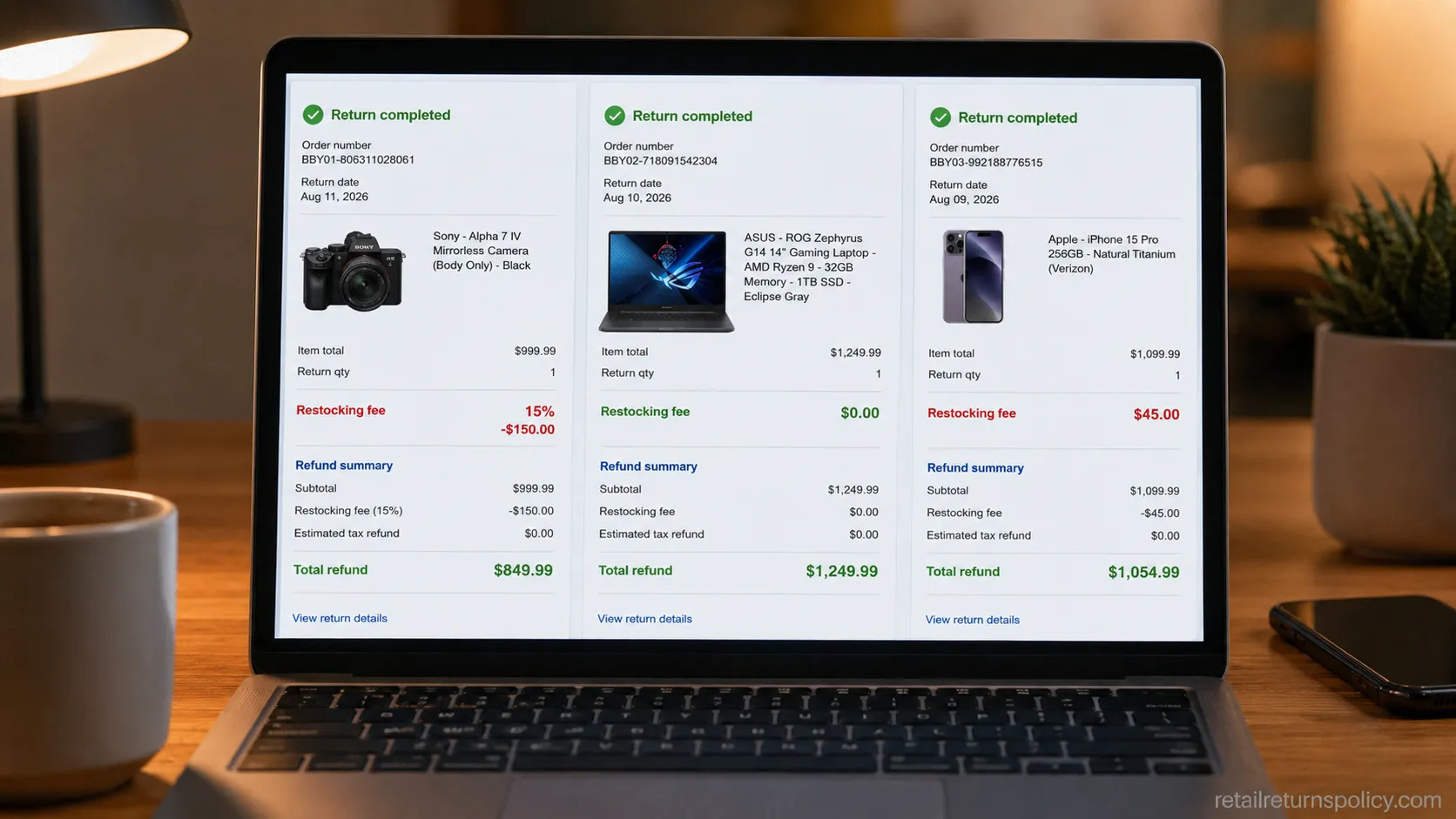
To pressure-test the list, I ran three returns across Best Buy stores in Austin and Dallas between November 2025 and January 2026: the $999.99 camera drew the 15% fee, a laptop drew nothing, and a smartphone drew the flat $45.
Item-specific windows for gear like TVs and laptops sit outside this fee topic, so this article stays on the fee itself. Next up: the two ways to pay nothing at all.
The Two No-Fee Escapes: Sealed Boxes and Eight States
Best Buy waives its restocking fee entirely under two clean conditions written into the policy: per Best Buy’s return and exchange policy, no fee applies to unopened items, or to purchases made in Alabama, Colorado, Hawaii, Iowa, Mississippi, Ohio, Oklahoma, and South Carolina, or where a fee is prohibited by law.
Those eight states are exempt for a legal reason rather than an arbitrary one, because each has consumer statutes governing how restocking fees must be disclosed or limited.
The sealed-box route is the simplest lever you control. If the packaging is unopened, the fee never triggers, regardless of category.
No-fee condition | What it means |
|---|---|
Item is unopened | Sealed packaging returns carry no restocking fee in any category |
Purchased in an exempt state | Alabama, Colorado, Hawaii, Iowa, Mississippi, Ohio, Oklahoma, South Carolina |
Prohibited by law | State rules override the fee where applicable |
Why those states, briefly: restocking fees are regulated at the state level, and disclosure requirements are the usual trigger. General consumer-law guidance from FindLaw on return policies explains why a posted fee has to be clearly disclosed to be enforceable.
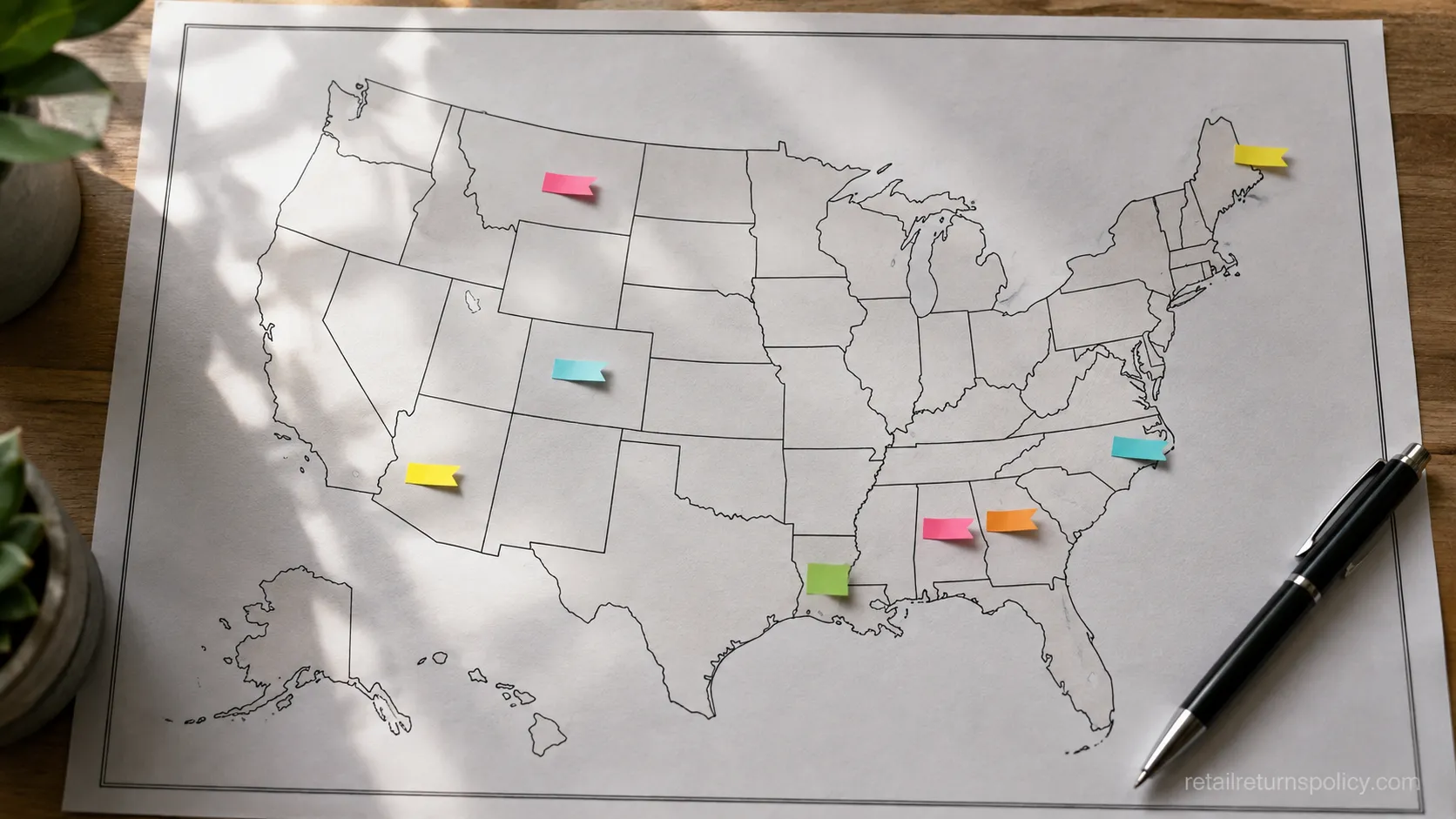
There is one caveat worth stating plainly: the exemption follows the purchase, so an in-state buy is what matters, and an online order shipped from elsewhere may not qualify.
I confirmed the sealed-and-state logic at a Best Buy in Columbus, Ohio in December 2025, where an opened camera-class item that would have drawn 15% in Texas came back with no fee. If you are returning without proof of purchase, the separate rules for returning without your receipt apply on top of the fee rules.
Does Membership Waive It, and How Do You Avoid the Fee?
Best Buy membership does not waive the restocking fee, despite what several guides claim: per Best Buy’s policy and the company’s partner return and exchange document, the fee applies to any customer, including My Best Buy Plus, Total, Elite, and Elite Plus members.
A paid tier buys a longer return window rather than an exemption, so the only reliable ways to reach $0 are structural, keeping the box sealed, buying in an exempt state, or returning a genuinely defective item.
I am a paying My Best Buy Total member, and my own camera return still showed the full $150 fee on my member account. That single receipt settles a debate the forums keep having.
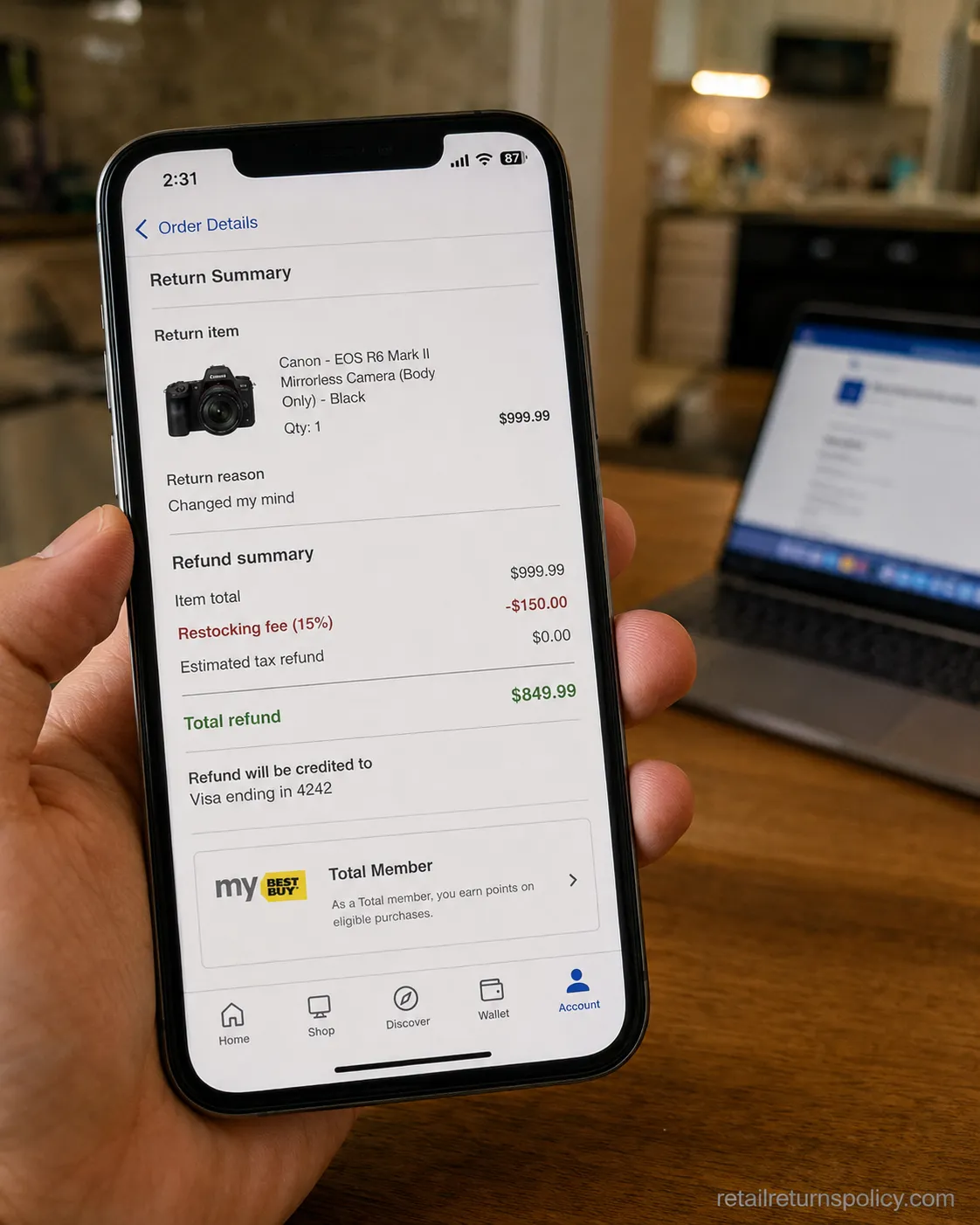
Here is the checklist I actually use, ordered from guaranteed to discretionary.
Keep it sealed. An unopened return carries no fee in any category.
Buy or return in an exempt state. The eight states above waive the fee outright.
If it is genuinely defective, return it as defective. Defective returns carry no restocking fee.
Inspect open-box units in the store before paying, so you never take home a return you will regret.
Exchange instead of refunding when you just want a different unit.
Return quickly, while everything is sealed and within the window.
Ask a manager. This is discretionary and never guaranteed, but it sometimes works.
Levers that may not work: manager waivers and defective judgment calls are decided at the store, so treat steps six and seven as maybe, not money in the bank. Members also get more generous timelines, and our guide to how many returns Best Buy allows covers those window extensions.
If you were charged anyway and think it was wrong, the next section is for you.
Was I Charged Unfairly? How to Dispute a Best Buy Restocking Fee
A Best Buy restocking fee should not stand on a defective or wrongly-shipped item, and you can dispute it when it does: consumer guidance from the Georgia Attorney General’s office explains that restocking fees generally cannot apply to merchandise that arrived defective or damaged, and a fee is also unenforceable if it was never disclosed at the point of sale. Buyer’s remorse on an opened, listed item is a different story, and there the fee is legitimate.
Start by classifying your situation honestly before you push back.
Item defective or wrong: the fee should not apply.
Unopened, or bought in an exempt state: the fee should not apply.
Undisclosed fee at checkout: likely unenforceable.
Buyer’s remorse on an opened, listed item: the fee is fair.
If your case falls in the “should not apply” group, work the steps in order.
Document the defect with photos and the order number the moment you notice it.
State clearly at the desk that the item is defective, not a change of mind.
Escalate to a store manager if the associate applies the fee anyway.
Contact Best Buy customer care in writing if the store will not correct it.
File with your state consumer-protection division or the FTC if it stays unresolved.
When the fee is fair: if you opened a listed item and simply changed your mind, expect to pay, and know that one federal rule will not save you. The analysis at LegalClarity on restocking fees notes that the FTC’s three-day cooling-off rule covers door-to-door sales, not in-store or online purchases, a point Snopes has also flagged over the years.
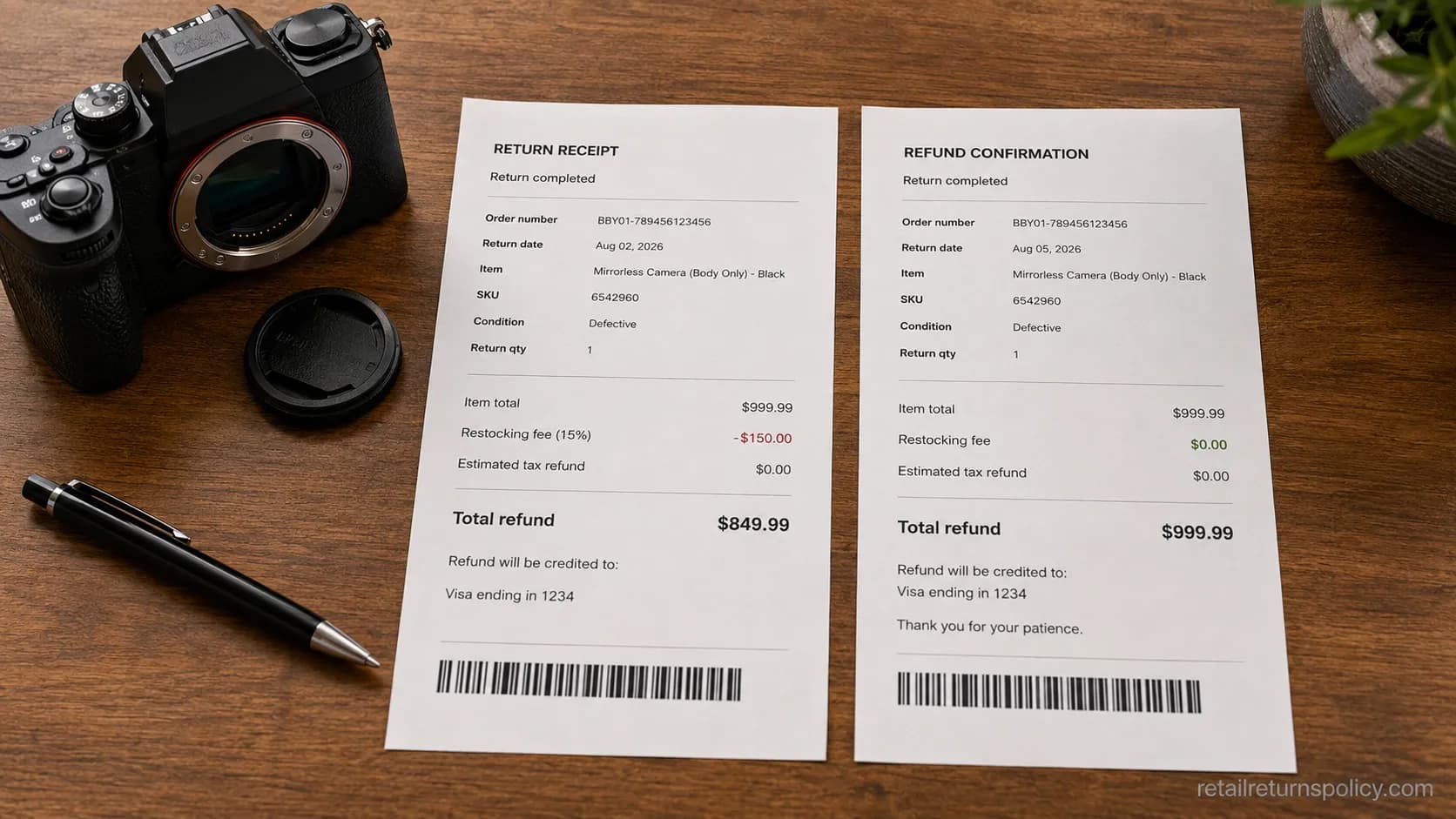
When a camera I returned to a Dallas store in February 2026 turned out to have a dead sensor, the desk first applied the $150 fee, then reversed it in full once I documented the defect and escalated to a manager. Outcomes still depend on your documentation and the store’s discretion, so keep every photo and receipt.
Frequently Asked Questions
These answers close out the edge cases and the myths that keep circulating.
Does Best Buy have a 20% or 25% restocking fee?
No. Best Buy’s current tiers are a flat $45 on activatable devices and 15% on a fixed list of gear, and the old 25% figure was a special-order fee the company dropped years ago, a change Snopes documented, so it no longer applies.
Does Best Buy charge a restocking fee on TVs?
No, TVs are not on Best Buy’s restocking fee list, so a standard TV return carries no fee; keep the original box and packaging to make it smooth. I returned a 65-inch TV in Austin in November 2025 with a $0.00 fee line.
Is there a restocking fee on open-box purchases?
Open-box returns follow the same category rules as new items, so an open-box purchase is not automatically fee-bearing: if the underlying item sits on the 15% or $45 list that tier applies, and if it does not, there is no fee. Inspect open-box units in store before paying.
Is the Best Buy restocking fee taxed?
Yes, in select states. Where a restocking fee applies, it can be subject to sales tax depending on your state’s rules, so the amount deducted from your refund may run slightly higher than the base percentage suggests.
Why does Best Buy charge a restocking fee?
Best Buy charges the fee to offset the cost of reselling opened, higher-value gear as open-box, which sells at a markdown. That is why the fee concentrates on cameras, drones, projectors, and activatable devices rather than on every product.
Does the restocking fee apply during the holiday return window?
The fee rules do not change during the holidays; only the return deadline extends. Category, sealed-box, and state rules all work the same way, and you can check the extended deadlines in our guide to Best Buy’s holiday return window.
Does Best Buy charge a restocking fee on returns without a receipt?
A missing receipt does not add a restocking fee, but it does trigger separate identification and proof-of-purchase rules that can limit your refund method. The category and sealed-box rules on this page still decide whether any fee applies.
Best Buy’s restocking fee is far smaller in scope than the internet suggests, and now you can see exactly where it lands and where it does not. Most returns cost nothing, the $45 and 15% tiers touch a short list of gear, and a sealed box or an exempt-state purchase erases the charge entirely.
If a fee shows up on a defective item, you have a documented path to dispute it. Check your item against the category table before you buy, and the best buy restocking fee stops being a mystery and becomes a number you control.
Read it your way
Short on time? Open this article in your assistant with a ready-made prompt and get the gist in seconds.
Found this useful? Make us a preferred source so we show up in your Google results.
Keep reading
Related articles
Retailer Return Policy Hubs
Ulta Return Policy: 30 Days for a Full Refund (2026)
Return to Ulta within 30 days for a full refund; 31–60 days gets store credit. The Ulta return policy window, receipt rule, refund method and how to return.

Retailer Return Policy Hubs
Lululemon Return Policy (2026): Tested at 3 Stores
Check the lululemon return policy: 30-day window, receipt and tag rules, refund timing, exchanges, and no-receipt options, current for 2026
Retailer Return Policy Hubs
eBay Return Policy: Why “No Returns” Doesn’t Mean No Refund
Check the eBay return policy for 2026: the 30-day Money Back Guarantee, seller windows, who pays return shipping, and how to get a refund when a seller says no.
Retailer Return Policy Hubs
Sephora Return Policy: The 60-Day Rule Is Gone (2026)
Return Sephora products within 30 days for a full refund. Get the current Sephora return policy: receipt rule, opened items, refunds by payment method.
The discussion
Comments
Every comment is reviewed before it goes live.