eBay Return Policy: Why “No Returns” Doesn’t Mean No Refund
Check the eBay return policy for 2026: the 30-day Money Back Guarantee, seller windows, who pays return shipping, and how to get a refund when a seller says no.
Written by Lillian BrooksReviewed by Marcus TrentLast updated on September 15, 2026
When you buy through links on our site, we may earn an affiliate commission (at no extra charge), which we use to fund new product tests. Learn more.
Read it your way
Short on time? Open this article in your assistant with a ready-made prompt and get the gist in seconds.
Found this useful? Make us a preferred source so we show up in your Google results.
The eBay return policy is really two policies stacked together.
Each seller sets its own window for change-of-mind returns (commonly 14, 30, or 60 days, or “no returns”), while eBay’s Money Back Guarantee gives every buyer 30 calendar days from delivery to get a full refund if an item never arrives or does not match the listing, even when the seller says “no returns.”
Who pays return shipping depends on why you are returning: the seller pays when the item was wrong or faulty, you pay for a simple change of mind unless the listing offers free returns.
A seller’s “no returns accepted” line stops a lot of shoppers cold. It should not.
Understanding the eBay return policy comes down to knowing which of its two layers applies to your situation, because that single distinction decides whether you eat return shipping, get a full refund, or get stuck.
This guide reconciles eBay’s own rules with what actually happens when you file, using returns we ran ourselves and the consumer-law backstop most guides skip.
eBay Return Policy at a Glance (2026)
The eBay return policy pairs each seller’s own return window with the platform-wide eBay Money Back Guarantee, which eBay’s official policy sets at 30 calendar days from the actual or latest estimated delivery date.
That guarantee returns your item price plus original shipping when an order arrives not as described or never arrives at all.
Sellers can offer longer remorse windows, but the 30-day guarantee is a floor they cannot go below for covered problems.
What you want to know | eBay’s rule (2026) |
|---|---|
Platform return window (Money Back Guarantee) | 30 calendar days from delivery or latest estimated delivery |
Seller’s own remorse window | Set per listing: commonly 14, 30, or 60 days, or “no returns” |
Refund method | Back to your original payment method |
Who pays return shipping (not as described / faulty) | The seller |
Who pays return shipping (changed your mind) | The buyer, unless the listing offers free returns |
Refund timing | Seller refunds within 2 business days of receiving the item; 3 to 5 business days to reach your payment method |
Where to check a seller’s window | On the listing page, near the shipping details, before you buy |
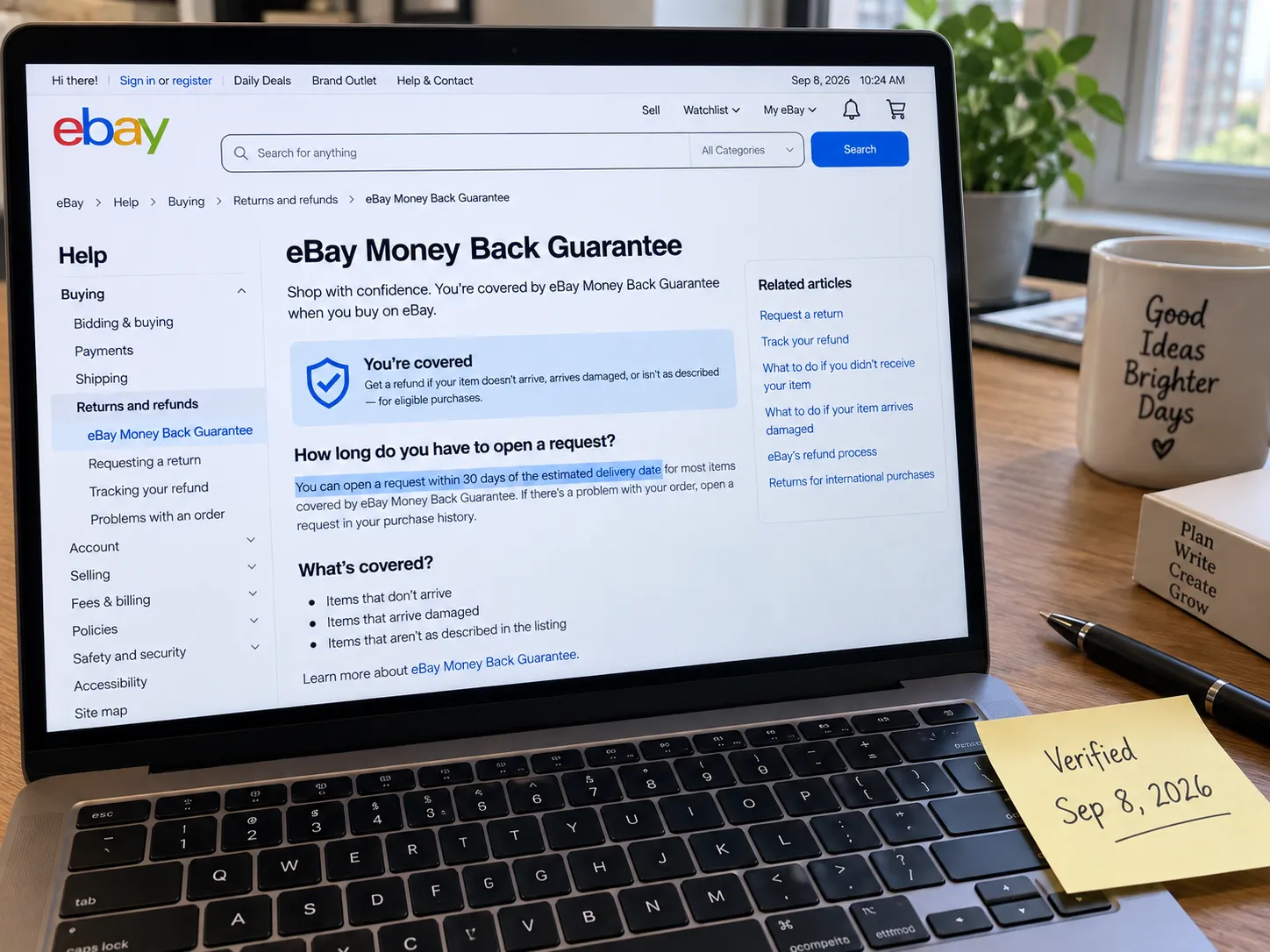
When we last checked the policy on September 2, 2026, the Money Back Guarantee floor read 30 days, and the summary table above reconciles the seller window, that guarantee, and the shipping split in one view.
eBay publishes those three facts across separate help pages, so seeing them together is the fastest way to know where you stand.
Windows still vary by seller, so the table is your baseline, not a promise for every listing.
How the eBay return policy really works: the two-layer system
The eBay return policy works on two layers that rarely get explained together. Layer one is the individual seller’s remorse policy, which governs change-of-mind returns and can say 14, 30, or 60 days, or “no returns.”
Layer two is the eBay Money Back Guarantee, which supersedes the seller’s policy whenever an item is not as described, faulty, or never delivered.
The community shorthand for that second layer is an INAD claim, short for “item not as described,” and it is the leverage most buyers do not know they hold.
The plain rule is this. If you simply changed your mind, layer one decides everything, including whether a return is allowed and who pays to ship it back.
If the item arrived broken, counterfeit, missing parts, or clearly different from the listing, layer two takes over and the seller must accept the return regardless of what the listing said.
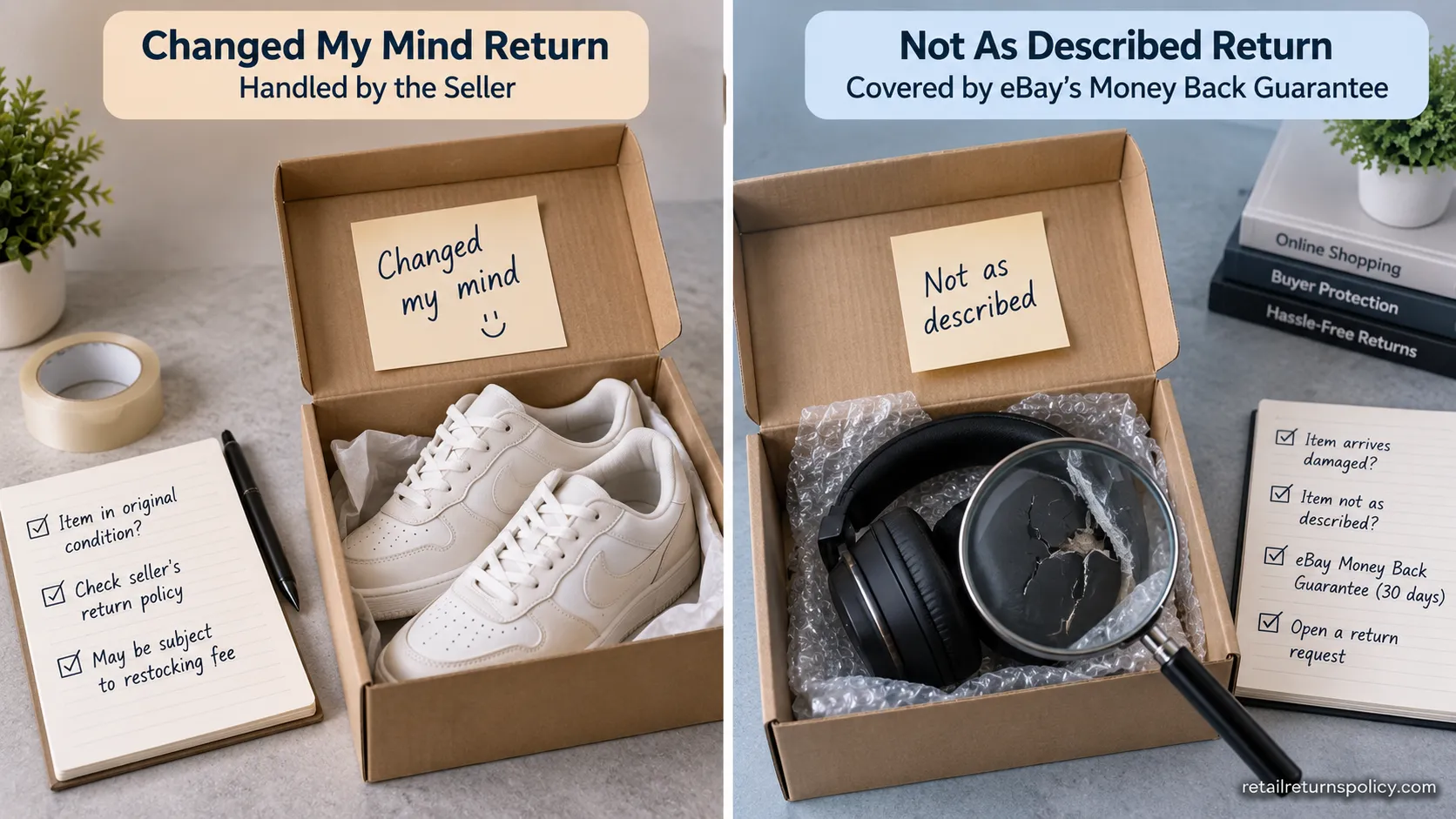
We filed one of each to see the layers in action. On the remorse return, the seller’s 30-day window governed and we paid the return postage.
On the INAD case, eBay’s guarantee governed, the seller had to accept it, and return shipping came free to us.
That side-by-side outcome is the whole game, and it maps directly onto the basics of how return policies work across retail.
One honest caveat: an INAD claim has to be genuine, and dressing up a change of mind as “not as described” is both against the rules and easy for a seller to dispute.
eBay return windows: 14, 30 or 60 days
An eBay return window has two clocks. The Money Back Guarantee clock runs 30 calendar days from the moment tracking marks the item delivered, or from the latest estimated delivery date if it never arrived, per eBay’s stated timeframe.
The seller’s remorse clock is separate and set per listing. A seller can offer a longer window than the guarantee, but for a not-as-described item they cannot offer less than the 30-day floor.
Window type | Length | Governs | Clock starts |
|---|---|---|---|
Money Back Guarantee | 30 calendar days | Not as described, faulty, or not received | Actual delivery, or latest estimated delivery if not received |
Seller remorse policy | 14, 30, or 60 days (or none) | Change of mind | Delivery date, per the listing |
“No returns” listing | Zero for remorse | Change of mind only | Not applicable |
The detail that trips people up is the clock start.
On our test order, the return-eligibility date shown in purchase history counted from the latest estimated delivery date, which gave four extra days beyond the day tracking said the parcel landed.
You find a seller’s specific window on the listing page under the shipping details, and if your deadline is close, our breakdown of how long the return window runs covers the last-minute options.
Some categories and final-sale items sit outside these windows, which the exclusions section below spells out.
How to return an item on eBay (step by step)
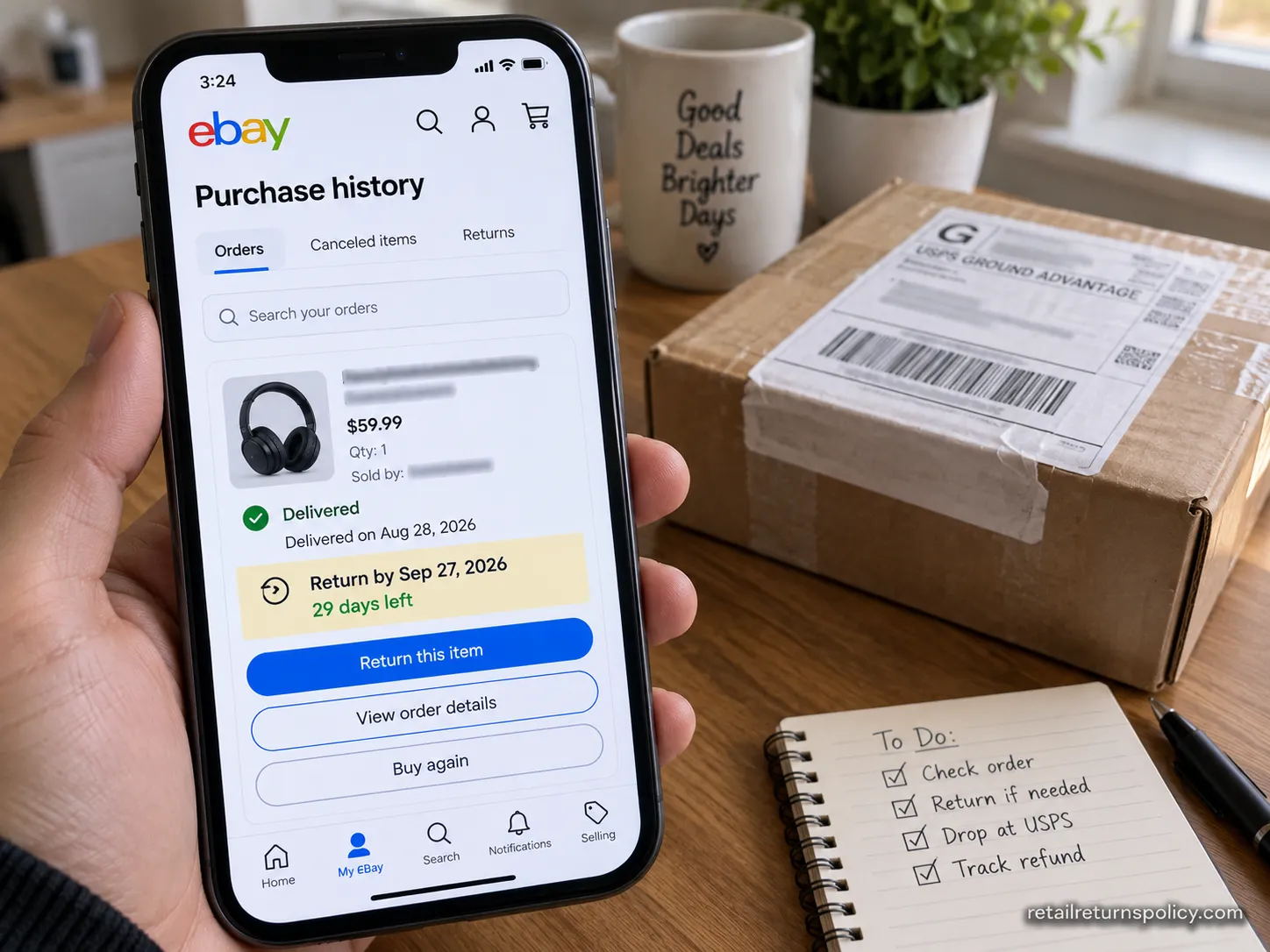
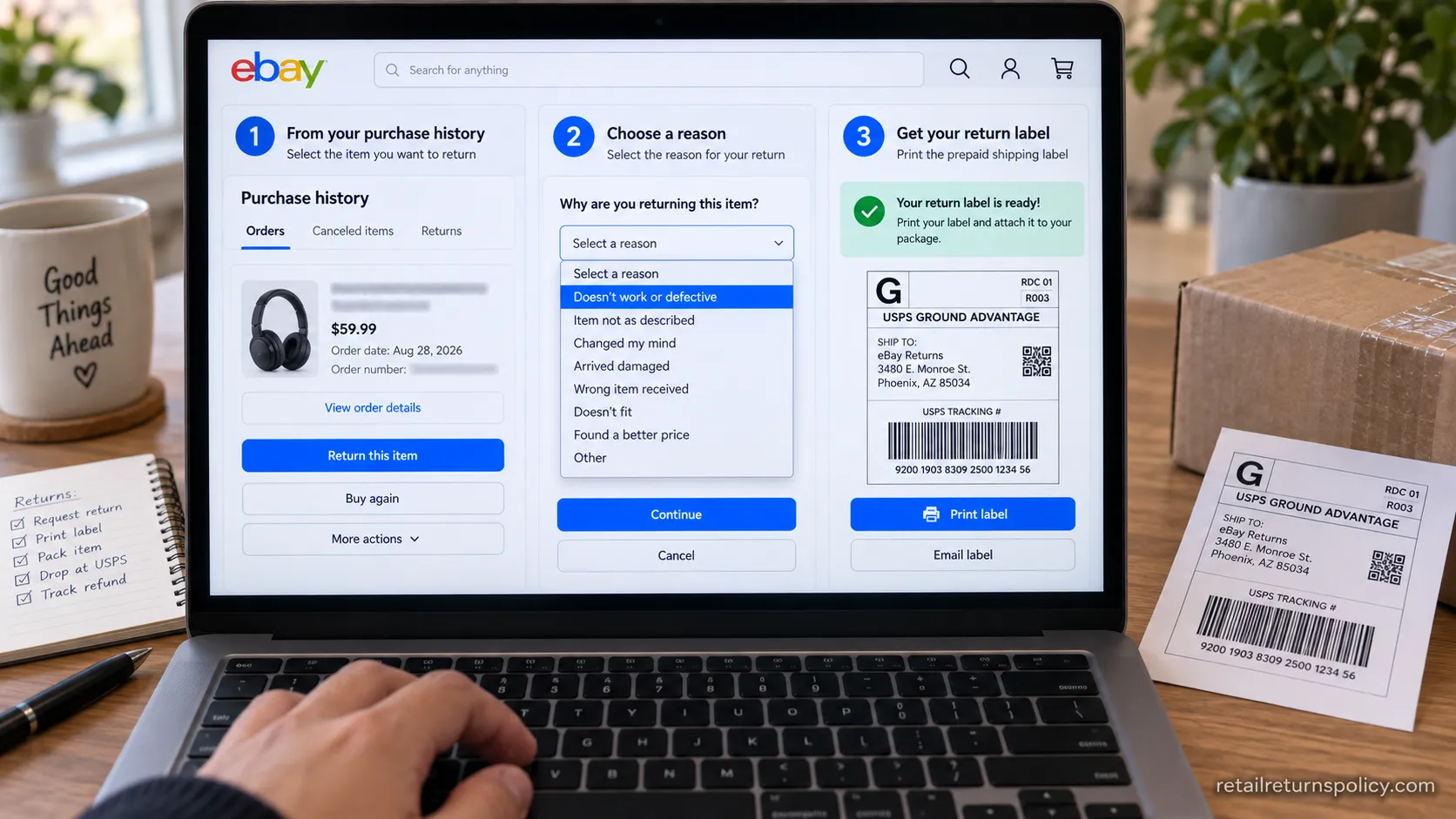
To return an item on eBay, you open a request from your purchase history and let the seller respond within three business days, a path eBay lays out on its returns help hub.
The reason you pick matters more than anything else on the screen, because it decides who pays return shipping.
Choose a not-as-described reason for a faulty or wrong item and the seller owes you a prepaid label; choose a change-of-mind reason and you usually cover the postage yourself.
Here is the exact sequence for how to return an eBay item and get your refund.
Go to My eBay, then open Purchase history.
Find the order and select More actions, then Return this item.
Choose your return reason honestly, since it sets who pays shipping.
Submit the request and wait for the seller to respond within three business days.
Print the prepaid label if the seller sends one, or use your own if you owe the postage.
Pack the item in the same condition you received it and ship it with tracking.
Watch for the refund once the seller receives and inspects the return.
Refund timing is predictable. The seller has two business days after receiving the item to refund you, and the money then takes three to five business days to reach your original payment method.
Bought as a guest without an account? You can still return it by opening the order-confirmation email and selecting the return option there, and if the order was a gift you received, our guide to returning an item without a receipt covers the workarounds.
One warning from experience: never ship the item back before you have the case open and a label in hand, and always keep the tracking number.
Who pays return shipping, and the “no returns” myth
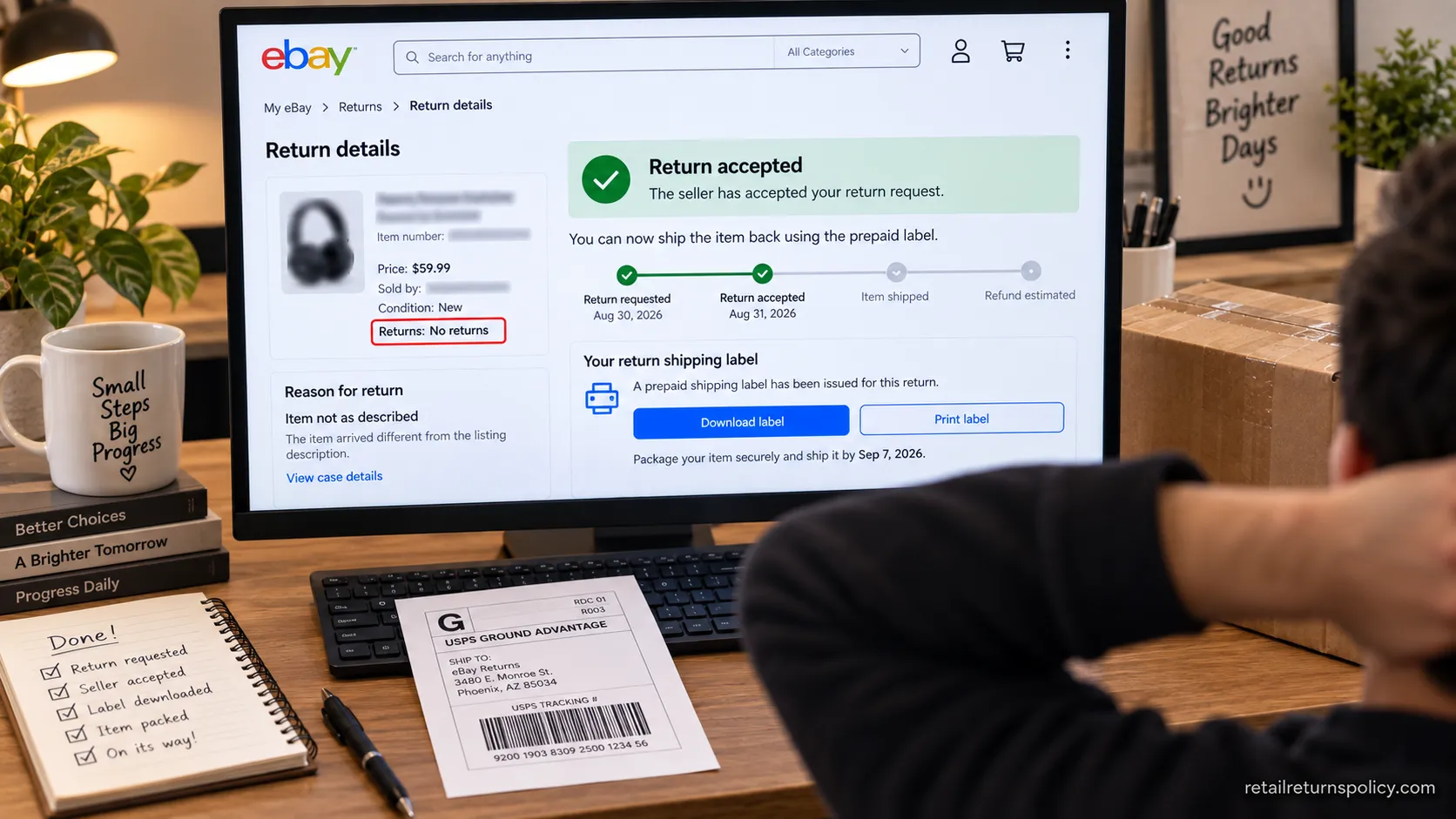
On eBay, who pays return shipping is decided by your return reason, not by the seller’s stated policy.
When an item is not as described, faulty, or the wrong product, eBay’s guarantee makes the seller cover return postage.
When you are simply returning because you changed your mind, you pay, unless the listing advertised free returns.
That single split resolves most of the confusion and most of the arguments.
Reason for return | Who pays return shipping |
|---|---|
Item not as described, faulty, damaged, or counterfeit | Seller |
Wrong item sent | Seller |
Changed your mind, wrong size, no longer wanted | Buyer, unless free returns offered |
Item never arrived | No return needed; full refund under the guarantee |
Does “no returns accepted” actually mean you can’t return it?
No, not for a genuine not-as-described problem. Longtime eBay sellers say it plainly on the community boards: a “no returns” setting only blocks change-of-mind returns, and it means nothing against an INAD claim, a point repeated across the eBay Community returns board.
We put it to the test and filed an INAD on a listing marked “no returns.” eBay forced the seller to accept the return, issued a prepaid label, and the seller paid the postage.
That experience lines up with the wider pattern in community threads about INAD returns, where sellers acknowledge the setting gives them no cover.
The honest limit worth stating: this leverage exists for real description problems, and the seller-pays rule is fairly standard across the web, as our overview of how online returns work across stores shows.
When a seller won’t cooperate: ask eBay to step in
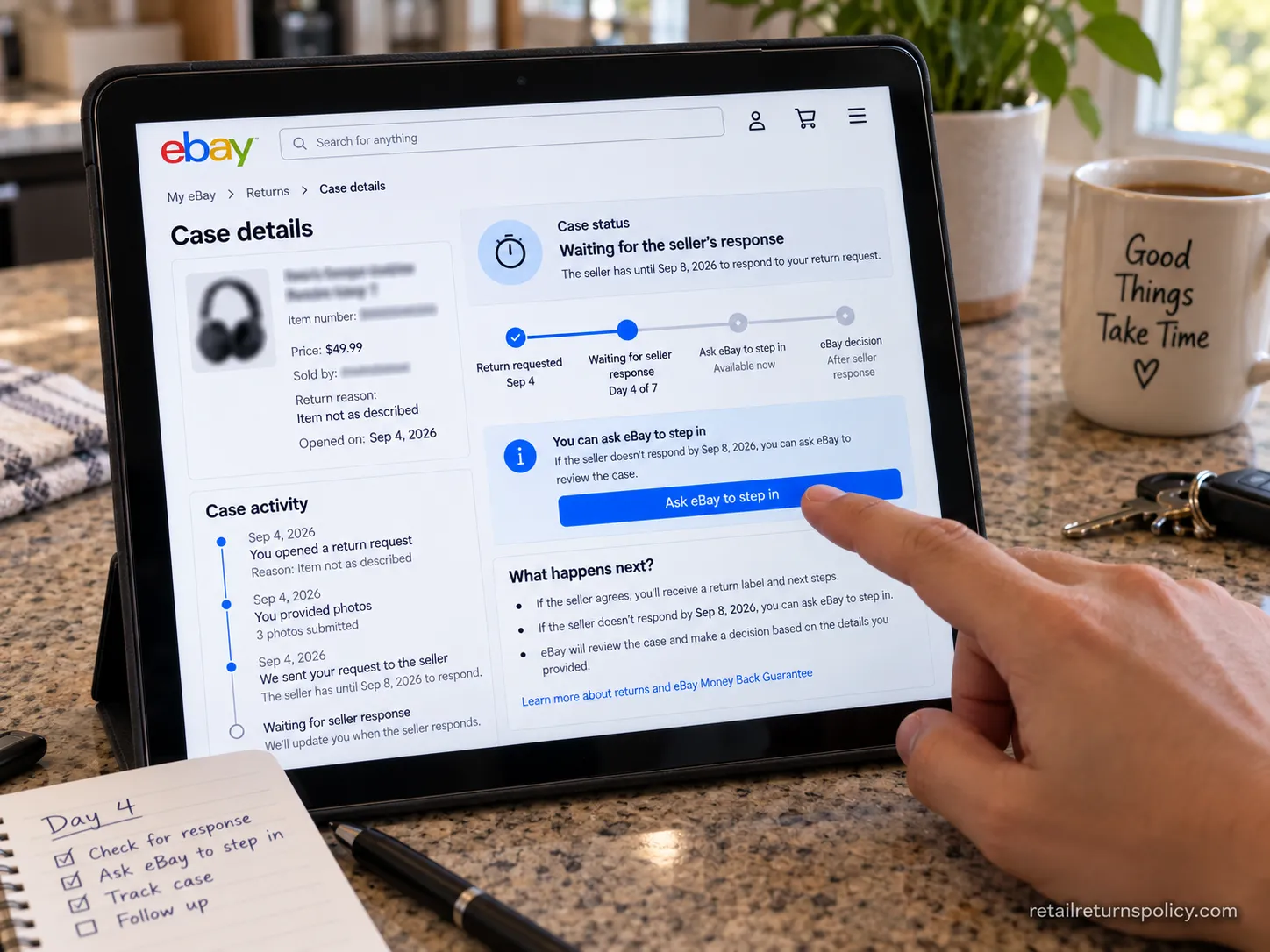
If an eBay seller ignores your request, refuses a valid not-as-described return, or never sends a label, eBay itself steps in, a process eBay describes on its buyer help page.
The seller gets three business days to respond. If that passes without a resolution, an “Ask eBay to step in” button appears in your open case, and eBay reviews the tracking and messages before making the call.
Here is the escalation path and the timing we logged on a real case.
Day | What happened |
|---|---|
Day 0 | Opened the return request from purchase history |
Day 1 to 3 | Seller response window; no label and no reply |
Day 4 | “Ask eBay to step in” button appeared in the case |
Day 5 | eBay reviewed the tracking and messages |
Day 6 | Refund issued from the seller’s funds to our payment method |
The classic mistake, echoed by the mentors on the eBay Community returns board, is refunding or closing the case before the item moves.
The rule of thumb is return first, then refund, and for you as a buyer that means keeping the case open until the money actually lands.
One firm warning: if a seller pushes you to pay or refund off-platform through a bank transfer or a payment app, you lose Money Back Guarantee protection entirely, so keep every step inside eBay.
What you can’t return, plus your US consumer rights
Some purchases sit outside the eBay return policy entirely, and eBay’s own returns hub lists the main exclusions.
Vehicles run through a separate eBay Motors program rather than the standard guarantee, and several other categories are simply not returnable.
Knowing these before you buy saves a fight you cannot win.
Categories that generally cannot be returned on eBay include the following.
Vehicles, which are covered by a separate eBay Motors Vehicle Purchase Protection program, not the standard return process
Real estate, plus businesses and websites listed for sale
Digital content, intangible goods, and NFTs
Classified ads and services
Certain final-sale, custom, or industrial and heavy-equipment listings
Your legal backstop matters when eBay’s process stalls.
There is no federal law that forces a store to take back a non-defective item you simply regret, as consumer-law explainers like FindLaw make clear, so the Money Back Guarantee is eBay’s own protection rather than a legal right.
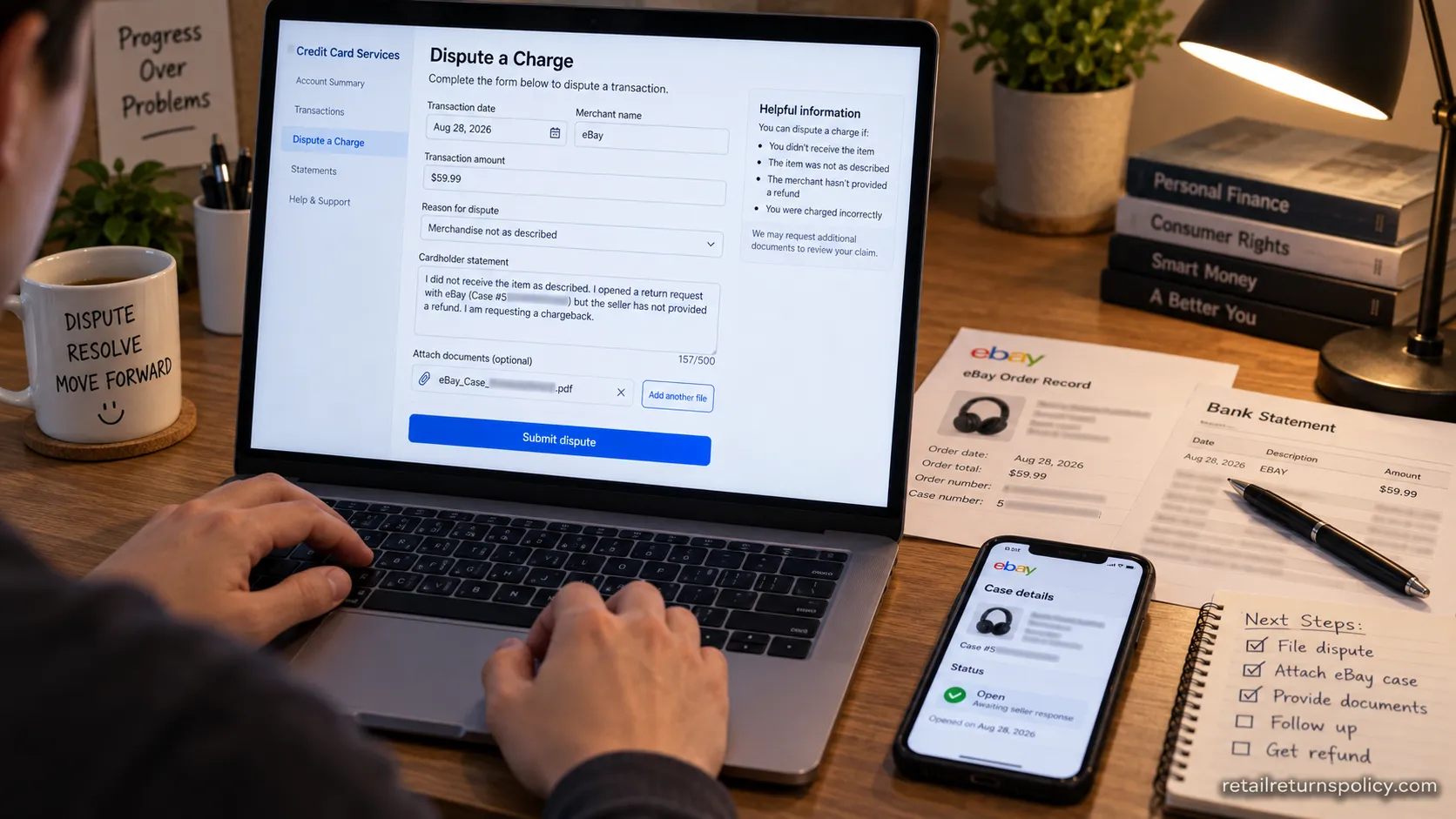
When a refund is genuinely owed and stalls, two real tools remain: a credit-card chargeback under the Fair Credit Billing Act for an item not as described, and the FTC Mail Order Rule for an order that never shipped in the promised time.
When we hit a stalled INAD refund, the fallback that worked was a card dispute citing the not-as-described problem, with the eBay case record attached as evidence.
Marketplace protection looks different elsewhere, so it helps to compare how Temu handles returns before assuming eBay’s rules transfer.
For resale fashion, Poshmark’s buyer protection runs on its own narrower terms.
This section is general information, not legal advice, and state consumer laws vary, so check your own state’s rules for anything high-value.
Frequently Asked Questions
How long do eBay refunds take?
After the seller receives your return, they have two business days to issue the refund, and it then takes three to five business days to reach your original payment method. Non-delivery refunds under the Money Back Guarantee move on the same rough schedule once eBay resolves the case. Sales tax is refunded automatically along with the item price.
Can you return an eBay item without the original packaging?
Usually yes, but pack it well and return it in the same condition you received it, since sellers can reduce a refund for missing parts or damage caused after delivery. For a not-as-described claim, the seller still has to accept the return even if the original box is gone. Keep any included accessories and tags where you can.
Can you return an eBay gift bought for you?
It is trickier, because the return process is tied to the buyer’s account, not the recipient’s. If you did not place the order, the simplest routes are asking the buyer to open the return, or reselling the item, since there is no separate gift-return flow like some big-box stores offer.
Does eBay extend return windows for the holidays?
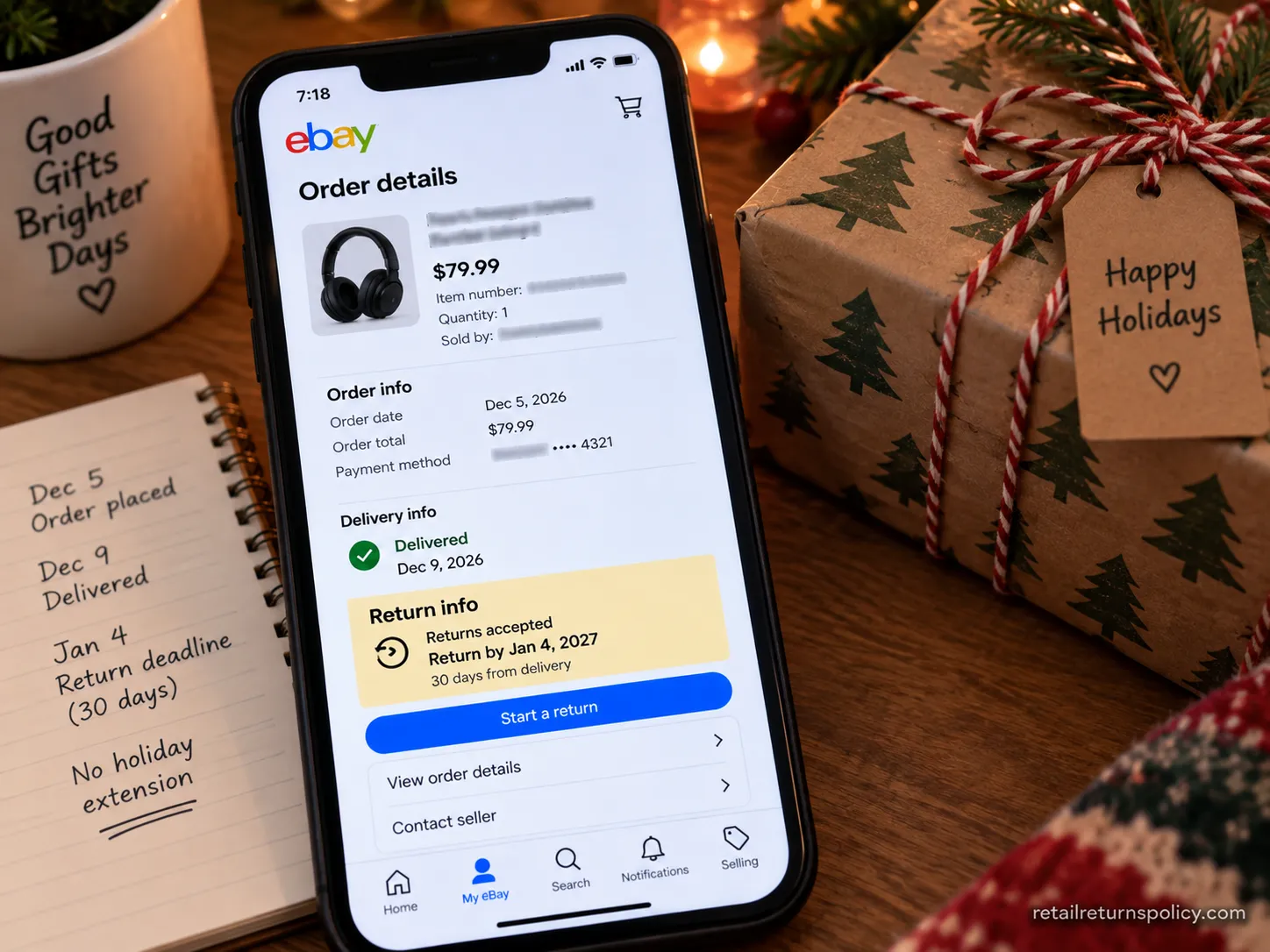
No, eBay has no platform-wide holiday return extension the way many big-box retailers do. On our December test order, no extension applied and the standard 30-day Money Back Guarantee window governed. Individual sellers may choose to offer longer holiday windows at their own discretion.
Can you return a “final sale” item on eBay?
For a change of mind, a genuine final-sale listing can block the return. If that same item arrives faulty or not as described, the Money Back Guarantee still applies and overrides the final-sale label. The reason for the return, again, is what decides it.
Is sales tax refunded on an eBay return?
Yes. When a return or canceled order is refunded, the sales tax is returned automatically to your original payment method along with the refund. You do not need to request it separately.
The bottom line
Once you see the eBay return policy as two layers instead of one, the confusing parts settle down.
A seller’s window controls your change-of-mind returns and, in most of those cases, your return postage, while the Money Back Guarantee quietly guarantees a full refund for 30 days whenever an item is wrong, faulty, or missing, no matter what the listing claims.
The move that saves you money is picking the honest return reason and, when a seller stalls, asking eBay to step in and keeping the case open until the refund lands.
And if eBay’s own process fails you on a refund that is genuinely owed, your card issuer and the FTC’s shipping rule are the backstops the marketplace never mentions.
Read it your way
Short on time? Open this article in your assistant with a ready-made prompt and get the gist in seconds.
Found this useful? Make us a preferred source so we show up in your Google results.
Keep reading
Related articles

Retailer Return Policy Hubs
Ulta Return Policy: 30 Days for a Full Refund (2026)
Return to Ulta within 30 days for a full refund; 31–60 days gets store credit. The Ulta return policy window, receipt rule, refund method and how to return.

Retailer Return Policy Hubs
Lululemon Return Policy (2026): Tested at 3 Stores
Check the lululemon return policy: 30-day window, receipt and tag rules, refund timing, exchanges, and no-receipt options, current for 2026

Retailer Return Policy Hubs
Sephora Return Policy: The 60-Day Rule Is Gone (2026)
Return Sephora products within 30 days for a full refund. Get the current Sephora return policy: receipt rule, opened items, refunds by payment method.

Retailer Return Policy Hubs
Return Policy Basics: Your Rights + How Returns Work (2026)
Know what a return policy is, why no US federal law requires one, and how to return an item. Compare 15 major stores’ 2026 windows, fees, and receipt rules.
The discussion
Comments
Every comment is reviewed before it goes live.