Unwanted? How to Return a Gift Without the Giver Knowing
Return a gift with a gift receipt, order number, or none at all. See where your refund goes (usually a gift card, not the sender) and how to do it discreetly.
Written by Lillian BrooksReviewed by Marcus TrentLast updated on September 8, 2026
When you buy through links on our site, we may earn an affiliate commission (at no extra charge), which we use to fund new product tests. Learn more.
Read it your way
Short on time? Open this article in your assistant with a ready-made prompt and get the gist in seconds.
Found this useful? Make us a preferred source so we show up in your Google results.
You unwrapped it, you smiled, and you already know it is going back. The good news is you can almost always return a gift, and the money rarely goes back to whoever bought it.
Instead, it usually becomes store credit or a gift card that belongs to you.
This guide sorts your options by the one thing that decides everything: the proof of purchase you are holding.
The 40-Second Gift-Return Answer
To return a gift, use the retailer’s gift-return flow with the gift receipt or the order number, and expect the refund as a gift card or store credit to you, not a refund to the sender.
With no receipt at all, most stores still take the item back for store credit at its lowest recent price.
You can keep the whole thing private by choosing a store-credit or gift-card refund rather than a refund to the original card.
Three paths cover nearly every case. Jump to the one that matches what you have: a gift receipt, only an order number, or nothing.
How to Return a Gift: Which Situation Are You In?
Deciding how to return a gift starts with the proof you hold, because that single detail sets your refund form and how much you get back.
A gift receipt returns the item at its receipted price as store credit.
An order number unlocks the online gift-return flow. With nothing, you fall back to a no-receipt return, which pays the item’s lowest recent selling price.
Windows are usually generous, and many chains stretch them over the holidays.
What you have | Your path | Typical refund form | What you get back |
|---|---|---|---|
A gift receipt | In-store or by mail with the receipt | Store gift card / merchandise credit | The receipted price |
Only an order number | The retailer’s online gift-return page | Gift-card balance to your account | The item’s price |
Nothing at all | No-receipt return with photo ID | Merchandise return card | Lowest recent selling price |
Most standard items get around 90 days, and the Federal Trade Commission’s holiday-return guidance reminds shoppers that windows and receipt rules are printed on the receipt and vary by store.
If your gift was bought during the holidays, many retailers extend the clock into late January, which is worth checking against the current extended holiday return windows before you drive over.
Returns are also more common than most people assume.
The National Retail Federation’s 2025 Retail Returns Landscape reports retailers expect about 17% of holiday sales to come back, so store staff handle gift returns constantly and rarely blink.
One honest caveat: policies change and front-line staff have discretion, so confirm the current rule on the retailer’s own page before you go.
With a Gift Receipt: The Cleanest Path
A gift receipt is the easiest way to return a gift, because it proves the item’s price without exposing what the giver paid or how they paid.
Present it in store or include it with a mail return, and the refund comes back as merchandise credit or a store gift card at the receipted price, not as cash.
Target confirms that a gift-receipt return is issued to a Target GiftCard, and REI issues a gift recipient’s refund as store credit or an REI gift card.
Here is the flow that works at almost every chain:
Locate the gift receipt (a paper slip or a digital one the giver forwarded).
Choose in-store for an instant result, or mail it back with the receipt enclosed.
Hand over the item with tags and packaging intact.
Accept the refund as a gift card or merchandise credit at the receipted price.
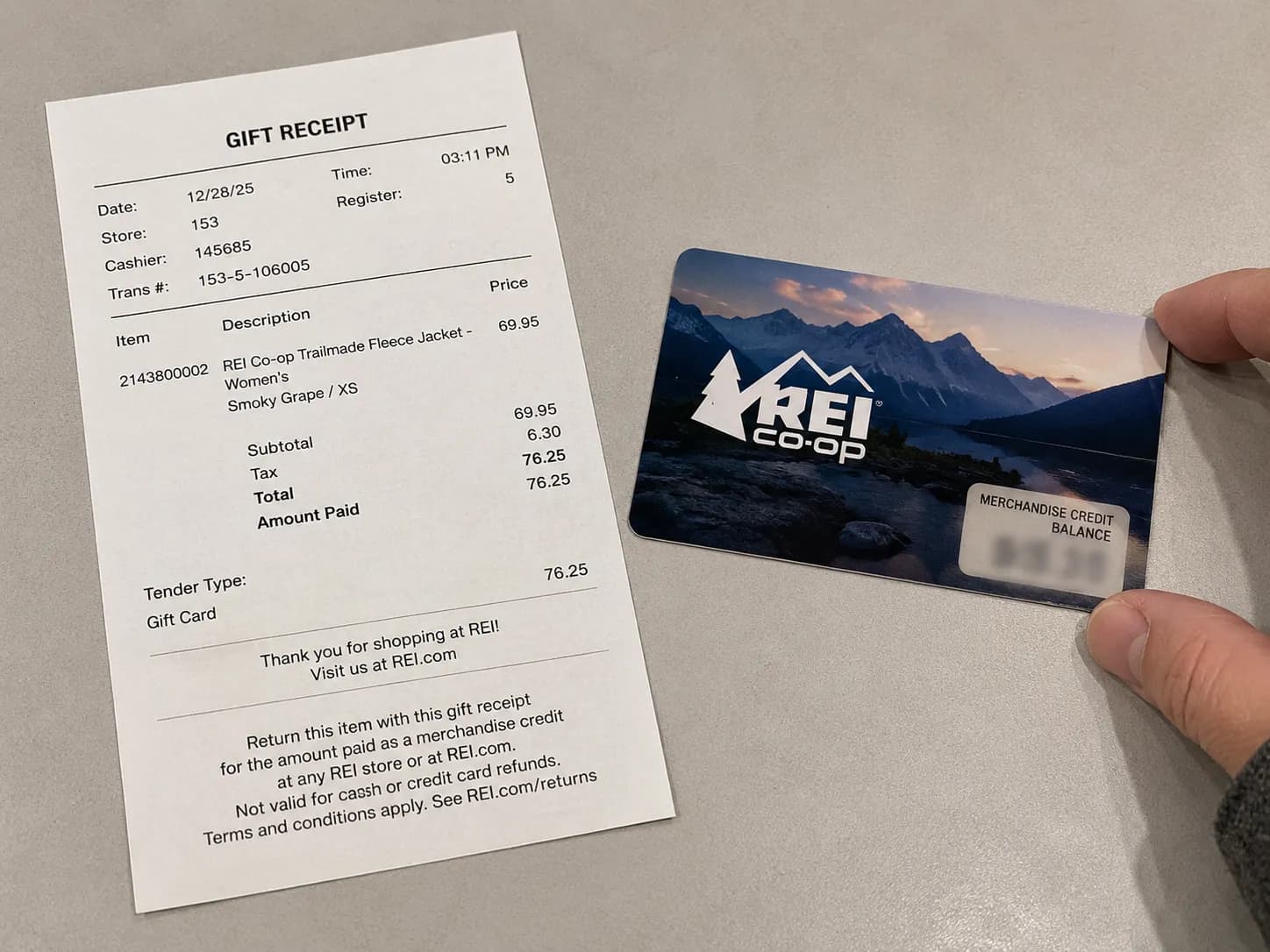
When I returned a gift-receipt sweater at REI’s returns counter, I walked out with merchandise credit for the full receipted price rather than cash, exactly as the policy states.
One gotcha caught me off guard, though: a gift-receipt return at Target cannot be processed the same day the gift was bought, so a next-day trip may be required.
With Only an Order Number (Online Gifts)
If the gift shipped from an online store, you can return a gift with only the order number, no physical receipt required.
On Amazon, the 17-digit order number sits on the packing slip or the digital gift receipt, and it unlocks the Return a Gift page.
The refund posts to your own gift-card balance, which keeps the return tied to your account rather than the sender’s.
Amazon notes one ceiling: gift items over $2,000 can only be refunded to the purchaser’s original payment method.
Follow these steps for an online gift:
Find the 17-digit order number on the packing slip or forwarded gift receipt.
Open the retailer’s gift-return page and enter that order number.
Choose the refund to your gift-card balance rather than to the sender.
Print the label, then ship it or drop it at an accepted location.
No order number? Contact customer service with the tracking number from the box.

Testing this on Amazon’s Return a Gift flow, I started the return with nothing but the order number and the refund landed on my gift-card balance within the stated timeline.
The one edge case worth remembering is that items sold by third-party sellers sometimes route differently, so read the refund screen before you confirm.
No Gift Receipt at All: What You Can Still Get
Even with no receipt, you can usually still return a gift, though the payout drops to the item’s lowest recent selling price.
Bring a valid photo ID, the item, and its packaging, then ask whether the store can look up the purchase through the giver’s loyalty account or card.
Most chains issue a merchandise return card, a form of store credit, rather than cash. Consumer Reports’ guide to returning gifts notes that without a receipt you may only get credit for the lowest price the item recently sold for.
Do this to improve your odds:
Bring the item, its packaging, and a valid government photo ID.
Ask the associate to look up the purchase by the giver’s membership, loyalty, or card.
Accept the merchandise return card if lookup fails, then check the credited amount.
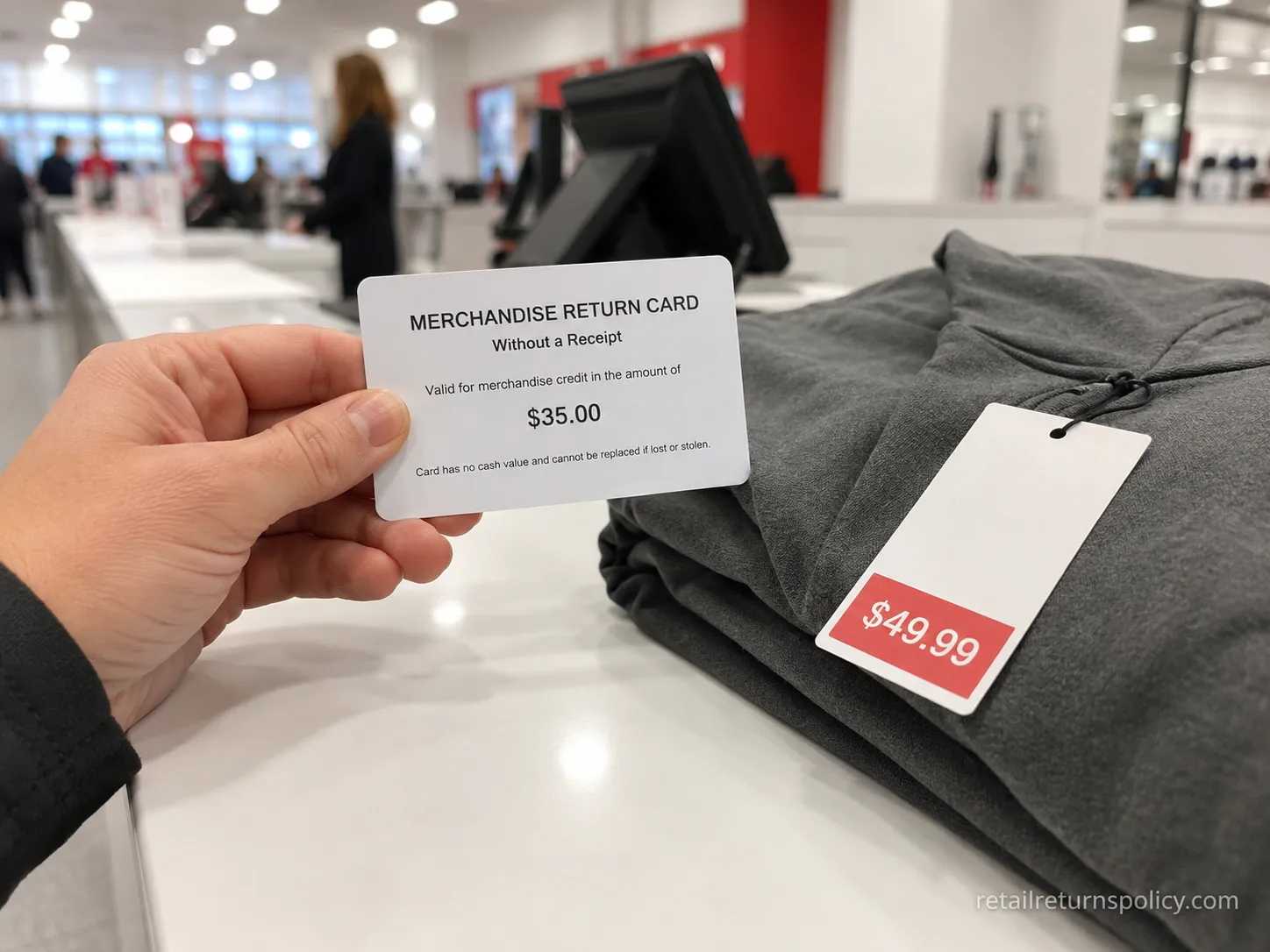
Returning a no-receipt sweater at Target, I got a merchandise return card for $18 on an item whose tag read $34, because the register pulled the lowest recent price.
That gap is the honest downside of a no-receipt return, and it is why a forwarded gift receipt is always worth a quick text to the giver if the relationship allows.
The trade-off in plain terms: no receipt usually means the lowest recent price, which can be well below what the giver actually paid.
Where the Refund Actually Goes (Not to the Sender)
This is the part shoppers get wrong most often: when you return a gift, the refund almost always becomes credit to you, the recipient, and not money back to the sender.
Amazon issues a gift refund as a gift-card balance on your account, Target’s returns policy issues a Target GiftCard or merchandise return card, and REI issues merchandise credit or a gift card.
Cash is rare and usually reserved for tiny amounts. The giver is not refunded and, in most standard flows, not notified.
Store | Gift-receipt refund form | No-receipt outcome | Is the sender notified? | Standard window |
|---|---|---|---|---|
REI | Merchandise credit or REI gift card | Store credit at current price, member lookup possible | No | 1 year member, 90 days non-member |
Amazon | Gift-card balance to your account | Gift-card balance via order lookup | No | 30 days, holiday-extended |
Target | Target GiftCard | Merchandise return card at lowest recent price | No | 90 days, some categories shorter |
Across all three stores in my December testing, every refund came back as credit I controlled, and the person who bought the gift was never refunded or alerted.
If the gift itself was a gift card rather than merchandise, the rules shift, so check whether gift cards are returnable before you try.
One narrow exception applies: a few stores hand back small cash amounts under a set threshold, but assume store credit as the default.
How to Return a Gift Without the Sender Knowing
Yes, you can return a gift without the sender knowing, as long as you use the recipient gift-return flow and take the refund as store credit rather than a refund to the original card.
Standard gift returns do not send the purchaser an alert, and the order simply keeps showing as delivered on their side.
The one true leak is a refund routed back to a shared card, which can surface on a statement the giver sees.
Keep it private with these choices:
Use the gift-return option, never a plain “return to sender.”
Select a refund to your gift-card balance or store credit.
Skip any option that emails a confirmation to the purchaser.
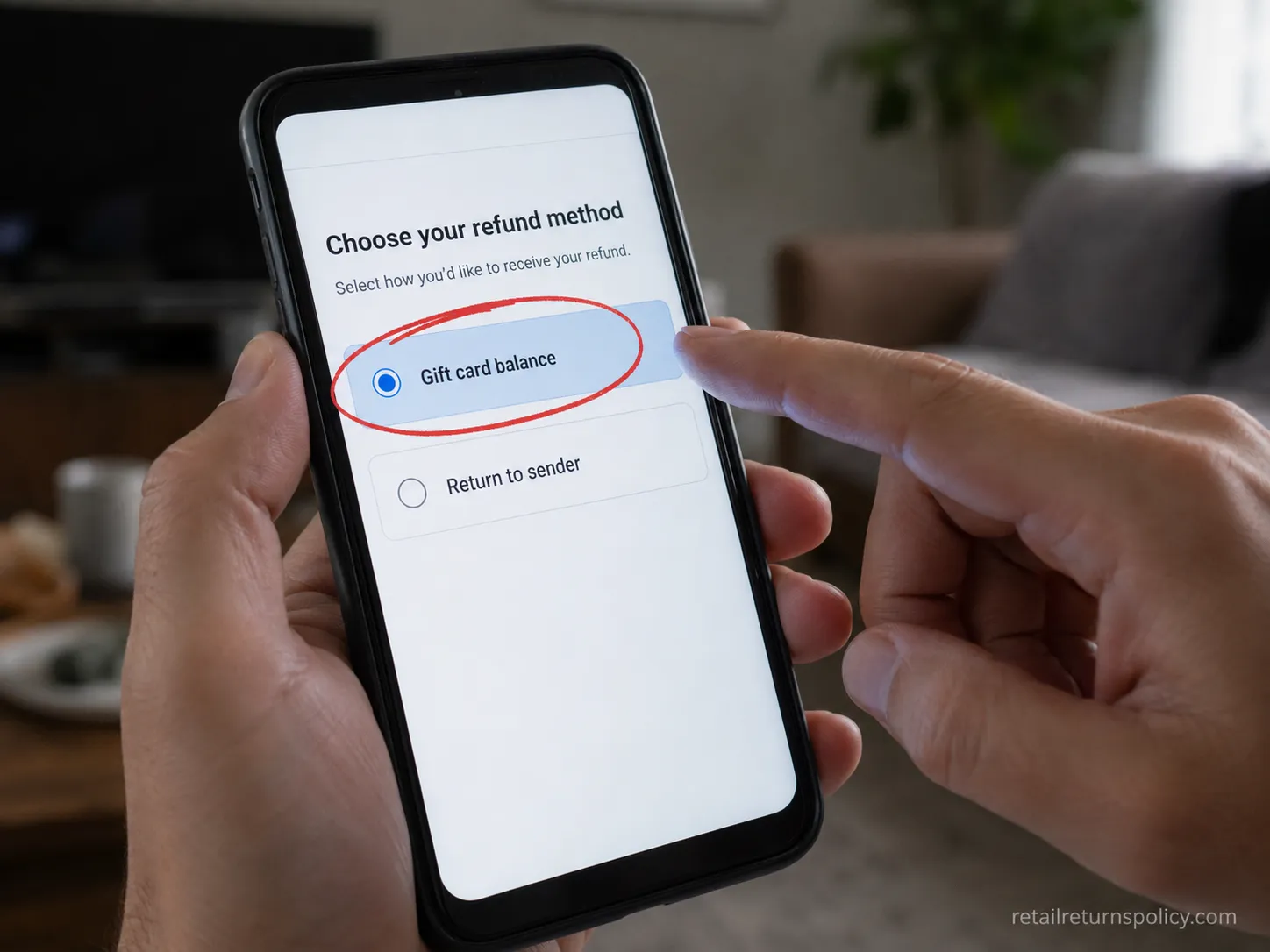
In my own test, choosing the gift-card balance rather than the return-to-sender option kept the return invisible to the giver, with no email and no order change on their account.
Watch the shared-card case, though: if a well-meaning refund goes back to the family card that paid, a line item can appear on the next statement.
Gift-Return Policies at REI, Amazon and Target
Gift-return rules share a shape across REI, Amazon and Target, but the windows and refund forms differ enough to matter.
REI runs a 100% Satisfaction Guarantee with a one-year window for members and 90 days for non-members, and a gift receipt yields merchandise credit.
Amazon leans on the order number and refunds a gift as gift-card balance. Target gives most items 90 days and issues gift returns as a Target GiftCard or a merchandise return card.
The table above lays the three side by side; the notes below add the fine print.
REI: Members get a full year and non-members 90 days, and a gift receipt or the giver’s membership lookup unlocks store credit.
Note one recent shift covered by Retail Dive’s report on REI: in late 2024 the co-op began banning a very small subset of members, under 0.02% of 24 million, for a documented pattern of return abuse.
Return honestly and this never touches you.
Amazon: The 17-digit order number is the key, refunds arrive as gift-card balance, and gifts over $2,000 route to the purchaser’s card instead.
Target: A gift receipt returns to a Target GiftCard, a missing gift receipt drops you to a merchandise return card at the lowest recent price, and a same-day gift-receipt return has to wait until the next day.
If you want to compare beyond these three, our roundup of stores with the most generous returns ranks chains by window, receipt rules, and fees.
Five Mistakes That Cost You the Refund
Most denied gift returns trace back to a handful of avoidable mistakes, and each one has a fix.
The biggest is tossing the gift receipt with the wrapping paper, because it locks in the item’s real price.
The rest come down to timing, item type, fees, and over-returning. Miss the window, open a final-sale item, or trigger a restocking fee, and the refund shrinks or disappears.
Tossing the gift receipt. Fix: photograph or set it aside before the paper hits the recycling.
Missing the return window. Fix: check the current window, and use holiday extensions where they apply.
Opening a final-sale or sealed item. Fix: leave electronics and clearance goods unopened until you are sure.
Triggering a restocking fee. Fix: keep packaging complete and confirm the fee rule before opening.
Over-returning at one chain. Fix: return honestly, since a few retailers now flag excessive returners.

I learned the final-sale rule the hard way when a discounted holiday item was refused outright, and the full value was simply gone.
The over-returning risk is real too: the FTC’s guidance stresses keeping receipts and returning promptly, and a small number of chains now watch return frequency closely.
Frequently Asked Questions
Can you return a gift you bought yourself?
If you bought it yourself and have the receipt, that is a standard return, not a gift return, so the refund goes to your original payment method. Use the gift-return flow only when you received the item from someone else and want store credit instead of exposing the buyer’s payment details.
Can you get cash instead of store credit for a returned gift?
Usually no. Gift returns almost always pay out as store credit, a gift card, or a merchandise return card, because the store will not refund a payment method that is not yours.
Small cash refunds exist at a few chains under a low threshold, but treat store credit as the default outcome.
Can you return a birthday gift the same way as a holiday gift?
Yes. A birthday gift return follows the same proof-based path as any other gift: gift receipt for the receipted price, order number for the online flow, or a no-receipt return for lowest-price store credit.
Only the return window differs, since birthday gifts miss the extended holiday deadlines many retailers offer in January.
How long do you have to return a gift?
Most standard items give you around 90 days, though electronics and clearance goods can run much shorter. Holiday gifts often qualify for extended windows into late January, so check the specific store’s current policy rather than assuming the standard clock.
Can you return a digital gift like a Steam game?
Digital gifts work differently and sit outside store return counters. A gifted Steam game, for example, is handled inside that platform’s own refund and gifting system rather than a retail return, so start from the platform’s help center instead of this in-store flow.
Can you regift instead of returning?
Regifting is a fine alternative when the item is unopened and appropriate for someone else, and it sidesteps lowest-price store credit entirely.
If you would rather have the value back, though, the store-credit route keeps things private and puts spendable balance in your hands.
Returning a gift is rarely about getting cash and almost always about converting something you will not use into credit you control.
Match your path to the proof you hold, choose a store-credit or gift-card refund to keep it discreet, and you can return a gift cleanly without the giver ever knowing.
When a policy looks unclear, the retailer’s own page is the final word, so confirm the current rule before you head to the counter.
Read it your way
Short on time? Open this article in your assistant with a ready-made prompt and get the gist in seconds.
Found this useful? Make us a preferred source so we show up in your Google results.
Keep reading
Related articles

Retailer Return Policy Hubs
Ulta Return Policy: 30 Days for a Full Refund (2026)
Return to Ulta within 30 days for a full refund; 31–60 days gets store credit. The Ulta return policy window, receipt rule, refund method and how to return.

Retailer Return Policy Hubs
Lululemon Return Policy (2026): Tested at 3 Stores
Check the lululemon return policy: 30-day window, receipt and tag rules, refund timing, exchanges, and no-receipt options, current for 2026

Retailer Return Policy Hubs
eBay Return Policy: Why “No Returns” Doesn’t Mean No Refund
Check the eBay return policy for 2026: the 30-day Money Back Guarantee, seller windows, who pays return shipping, and how to get a refund when a seller says no.

Retailer Return Policy Hubs
Sephora Return Policy: The 60-Day Rule Is Gone (2026)
Return Sephora products within 30 days for a full refund. Get the current Sephora return policy: receipt rule, opened items, refunds by payment method.
The discussion
Comments
Every comment is reviewed before it goes live.