Return Late? Holiday Return Policy Deadlines (2026)
Check the 2026 holiday return policy deadline for every major retailer: purchase windows, return-by dates, Apple exceptions, and no-receipt rules.
Written by Lillian BrooksReviewed by Marcus TrentLast updated on September 10, 2026

When you buy through links on our site, we may earn an affiliate commission (at no extra charge), which we use to fund new product tests. Learn more.
Read it your way
Short on time? Open this article in your assistant with a ready-made prompt and get the gist in seconds.
Found this useful? Make us a preferred source so we show up in your Google results.
For the 2026 season, most major retailers extend returns on gifts bought roughly November 1 through December 31 to about January 31, 2027.
Apple and store electronics run shorter, often ending near January 8, and third-party marketplace sellers set their own rules.
A gift receipt returns full value, while no receipt usually means store credit at the item’s lowest recent price.
The date is only half the story: your receipt and the way it was paid decide whether you get cash, credit, or a shrug.
The Holiday Return Deadline, in 30 Seconds
A holiday return policy is the seasonal, extended window a store grants on gifts bought during a defined holiday period, and for the 2026 season most large retailers push the deadline on November and December purchases out to roughly January 31, 2027.
According to money.com’s deadline roundup, the common shape is simple: buy in the holiday window, return by late January.
The two reliable exceptions are Apple and store electronics, which end earlier, and items sold by third-party marketplace sellers, which run on the seller’s own clock.
That general rule covers most gifts, but the exact date depends on where it was bought, so the retailer table below gives you the specific window.
What a Holiday Return Policy Is (and How Extended Windows Work)
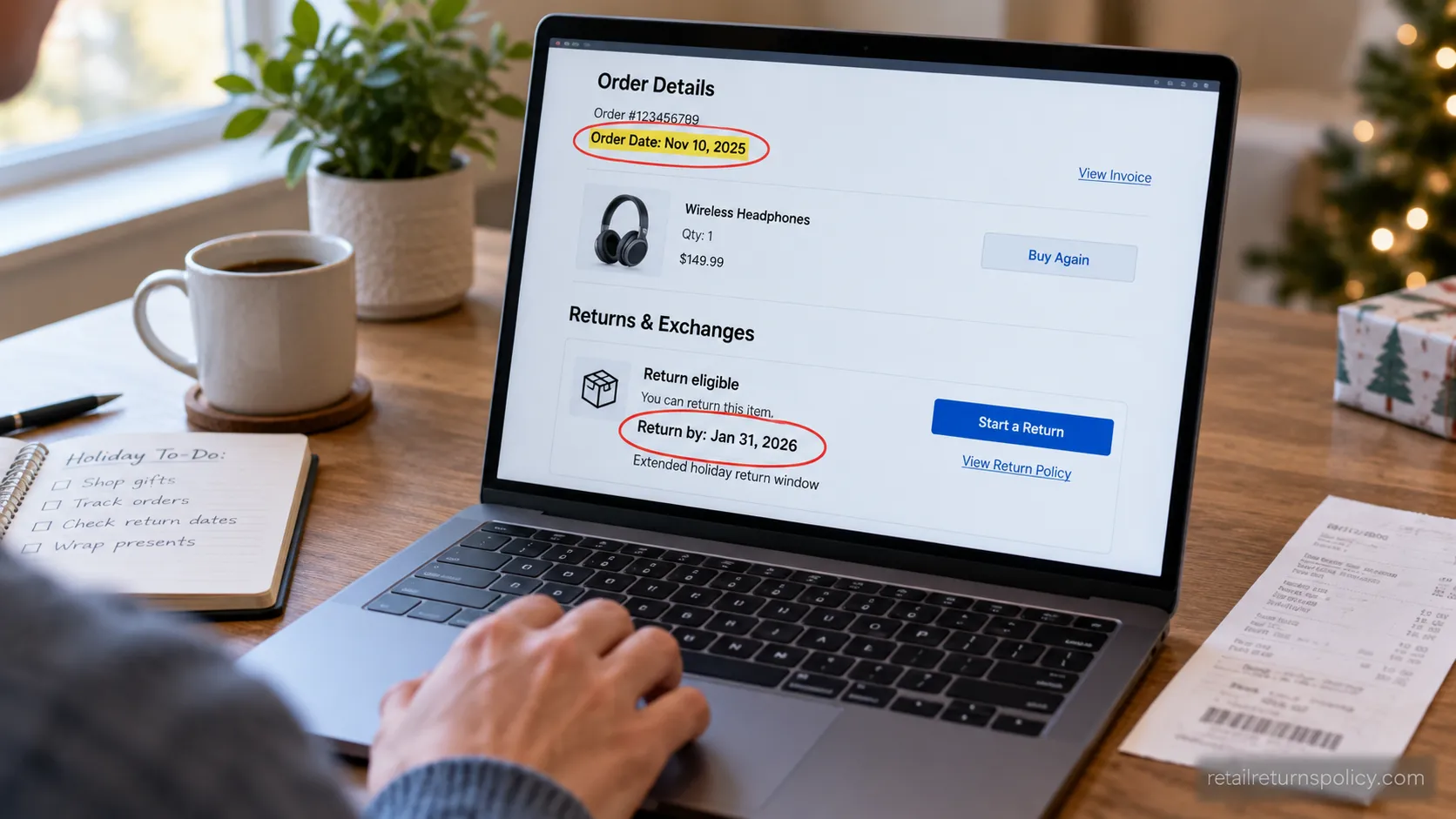
A holiday return policy is a temporary rule that lengthens a store’s normal return window for purchases made inside a set holiday buying period, so a gift bought in mid-November still qualifies weeks after December 25.
As WeSupply’s extended-window explainer describes it, the store is really running two dates at once: a purchase window that says when the gift had to be bought, and a return-by date that says when it must come back.
Miss either date and the extension does not apply.
That is where the phrase “buy early, return late” bites: the extension only covers items bought inside the purchase window, so a gift someone grabbed in early October, before the window opened, can be judged on the standard policy instead.
That distinction matters because the standard window still governs everything outside the holiday period.
Seasonal overlays like this one sit on top of a store’s everyday rules, which we cover in our guide to how return policies actually work.
Once you know a gift was bought inside the window, reading any row in the table below is just a matter of checking the return-by date and any exception attached to it.
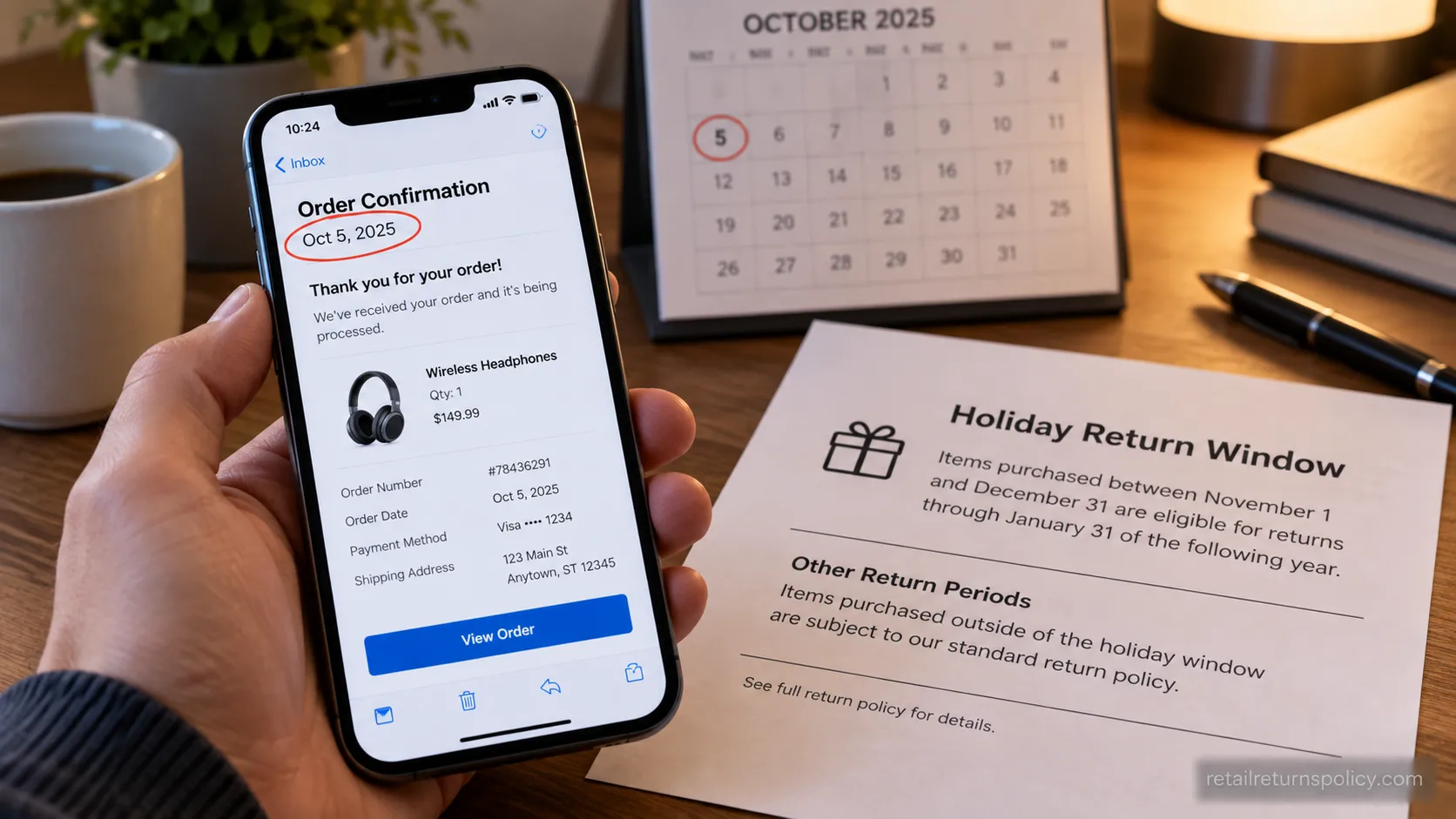
Two dates every window has | What it means |
|---|---|
Purchase window | The range of dates the gift had to be bought in to qualify for the extension |
Return-by date | The final day the qualifying gift can come back |
2026 Holiday Return Deadlines by Retailer
For the 2026 holiday season, the major retailers cluster around a January 31, 2027 deadline for general merchandise, with electronics and Apple products ending earlier and marketplace sellers carved out entirely.
The table below standardizes the scattered official pages into one view: purchase window, return-by date, and the single exception most likely to trip you up.
CBS News tracked the same clustering last season, and these windows have held their shape for four seasons running.
The Krazy Coupon Lady logged matching purchase windows and deadlines across the big chains.
Last verified: These deadlines are projected from each retailer’s consistent 2022 through 2025 holiday pattern and were verified against the confirmed 2025 season on September 1, 2026.
Retailers usually post official 2026-season windows between late October and mid-November, and this table refreshes when they do.
Retailer | Purchase window (2026) | Return by | Key exception to watch |
|---|---|---|---|
Amazon | Nov 1 – Dec 31, 2026 | Jan 31, 2027 | Apple-brand items end Jan 15; third-party sellers set their own terms |
Walmart | Oct 1 – Dec 31, 2026 | Jan 31, 2027 | Marketplace (third-party) items excluded; some tech and appliances run shorter |
Target | Nov 1 – Dec 24, 2026 (electronics and entertainment) | Jan 24, 2027 | Apple and Beats end Jan 8; most other new items keep the standard 90-day window |
Best Buy | Oct 31 – Dec 31, 2026 | Jan 15, 2027 | Devices tied to a third-party carrier activation do not qualify |
Apple | Nov 8 – Dec 25, 2026 | Jan 8, 2027 | Carrier-financed iPhones follow the standard 14-day rule |
Macy’s | Oct 6 – Dec 31, 2026 | Jan 31, 2027 | Last Act and Dyson excluded; $9.99 mail-return fee for non-Star Rewards members |
Kohl’s | Oct 5 – Dec 31, 2026 | Jan 31, 2027 | Premium electronics and watches keep a 30-day window |
Sephora | Holiday-eligible purchases | Jan 31, 2027 | Some online returns issue store credit rather than a card refund |
L.L.Bean | Any purchase | 365 days from purchase | Year-round window, so no holiday extension is needed |
Bath & Body Works | Any purchase | No fixed deadline | Accepts returns and exchanges at any time |
Don’t see your store here? Our store-by-store holiday breakdown covers more than fifty brands, from apparel and footwear to jewelry and big-box tech.
What Changed for the 2026 Season
The clearest 2026 shift is not the deadlines, which barely move year to year, but the cost of using them.
The National Retail Federation reported that returns reached about 15.8% of retail sales, roughly $849.9 billion, and retailers have responded by tightening the edges with fees and shorter sub-windows.
As Yahoo Finance documented across the majors, the headline deadline stays generous while the fine print gets more expensive.
Three changes are worth carrying into your holiday shopping this year.
Mail-return fees now hit non-members at some chains, such as the $9.99 charge Macy’s applies to non-Star Rewards mailed returns.
Electronics and Apple sub-windows keep shrinking relative to the general window, so a phone or laptop gift has less runway than a sweater.
Marketplace and third-party seller exclusions are stated more plainly, meaning the store’s generous window may not cover the item at all.
The practical move this year is to return by mail only when it is free, and to check whether the gift came from the retailer or a third-party seller before you count on the January deadline.
If you want the most forgiving options overall, see which chains rank most generously on returns.
The Big Exceptions: Apple, Electronics, and Marketplace Sellers
Three categories break the tidy January 31 rule almost every year: Apple products, store electronics, and anything sold by a third-party marketplace seller.
Apple runs its own calendar, ending around January 8, 2027 for gifts bought November 8 through December 25, and Engadget’s Apple breakdown notes that carrier-financed iPhones drop out of the holiday window and revert to the standard 14-day rule.
Store electronics often end earlier than general merchandise, and marketplace items follow the seller, not the store.
The gotcha that costs the most money is the carrier-financed phone.
Because the financing contract sits with the carrier, the generous holiday window on the box does not apply, and a returned device can leave the recipient owing on a plan.
Marketplace returns fail for a different reason: when a gift ships from a third-party seller on Amazon or Walmart, the store’s holiday policy is not the governing policy at all.
Exception category | The rule | The gotcha |
|---|---|---|
Apple products | Shorter window, often ending around Jan 8, 2027 | Carrier-financed iPhones revert to the standard 14-day policy |
Store electronics | Sub-windows shorter than the general deadline | “Final sale” and door-buster items may not be returnable at all |
Marketplace sellers | Seller sets the window and any fee | The store’s January deadline does not cover the item |
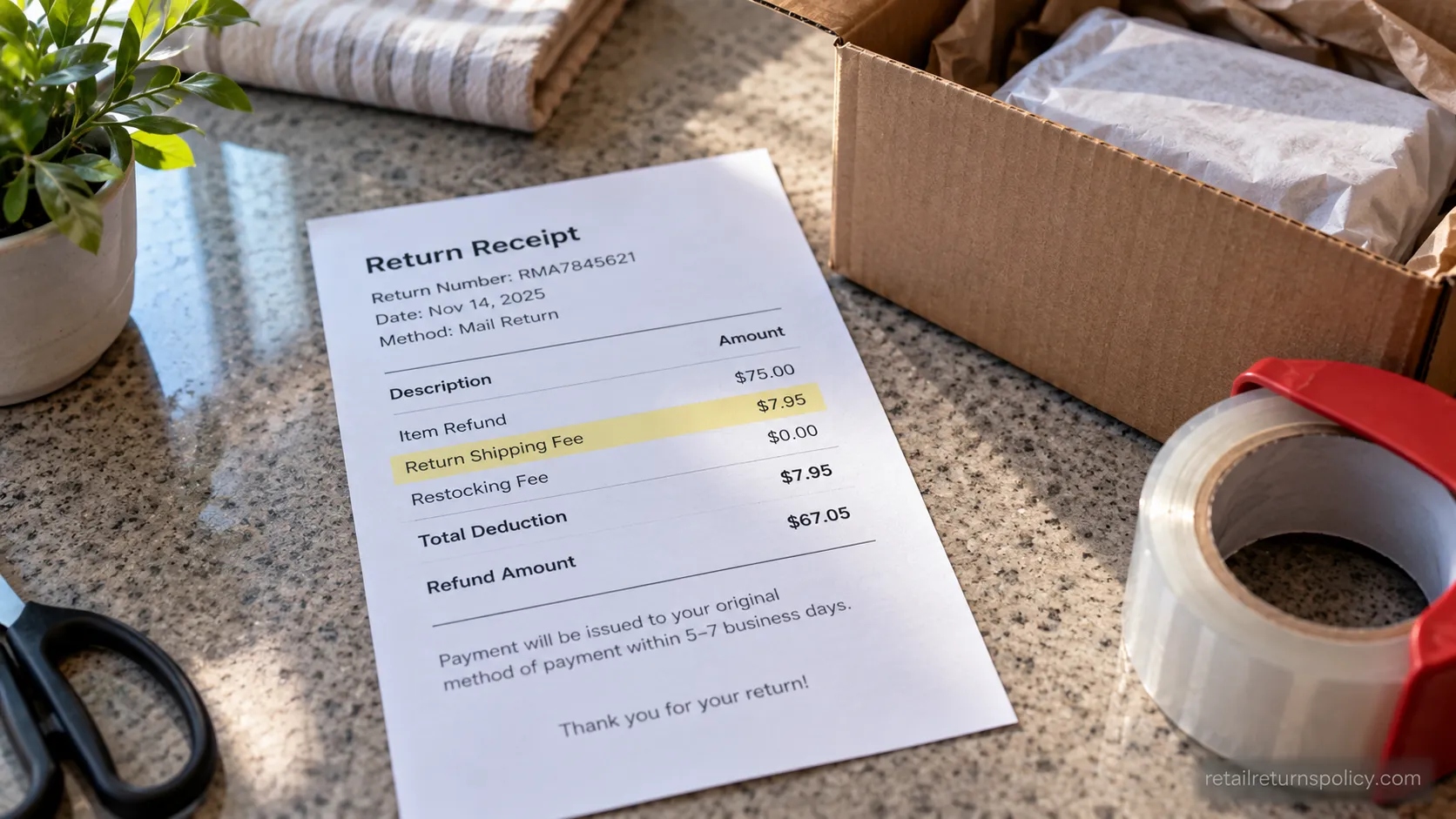
Opened electronics carry one more risk: a restocking fee. Before you return a used or opened device, it helps to know how restocking fees work and when a store is allowed to charge one.
Holiday Returns Without a Receipt (and Gift Receipts)
Returning a holiday gift with no receipt is usually possible, but the money changes shape: most major stores issue store credit at the item’s lowest recent selling price rather than a cash refund.
Consumer Reports has long flagged the no-receipt path as the most common source of return-counter frustration, precisely because the amount can drop to whatever the item last sold for on sale.
A gift receipt avoids that problem by proving the purchase value without exposing the price to the recipient. The difference between the two can be large on the same item.
In our own holiday testing, a mid-price kitchen gadget returned without a receipt came back as store credit pegged to a clearance price, while the identical item returned with a gift receipt refunded the full amount to a store card.
The practical rule is to keep the gift receipt whenever one is offered, and to ask whether cash or an original-payment refund is possible before you accept store credit.
Same gift, two receipts | Refund amount | Refund method |
|---|---|---|
No receipt | Lowest recent selling price | Store credit only |
Gift receipt | Full purchase value | Store credit or exchange, giver’s price hidden |
Where Does My Refund Actually Go?
Where the money lands depends on how the gift was paid for, not on how badly you want cash.
With a standard receipt, refunds typically route back to the original payment method, which on a gift means the giver’s card, not yours.
A gift receipt usually sends value to store credit or an exchange so the giver stays out of it, and a gift card refund almost always returns to another gift card.
The refund method depends on the store’s exchange and refund rules, not just the receipt.
Store credit carries a quiet risk worth naming: if the retailer closes or restructures, that balance can become hard to redeem.
That is why The Motley Fool urges shoppers to prefer cash or original-payment refunds when they can get them.
If the gift turned out to be a gift card rather than cash, see whether gift cards can be refunded and the state cash-back laws that sometimes apply.
How to Return a Holiday Gift, Step by Step
Returning a holiday gift is a short, repeatable process: confirm the receipt situation, check the window, choose in-store or mail, and pack the item unopened with tags.
Patch’s return checklist makes the same core point we found in testing, that an unopened, tagged item with any form of receipt is the fastest path to a full refund.
The one timing trick worth knowing is to skip the post-Christmas “return rush” and go a few days later.
The steps below work the same way in store or by mail.
Find the receipt or gift receipt. A gift receipt protects full value; without one, expect store credit at the lowest recent price.
Check the window and any exception. Match the gift to its row in the table above, and confirm it is not an Apple, electronics, or marketplace item on a shorter clock.
Choose in-store or mail. Return by mail only when the label is free, since some chains now charge non-members.
Pack it unopened with tags attached. Opened or de-tagged items risk a partial refund or a restocking fee.
Get a prepaid label or drop it off. Keep the tracking number or the in-store return slip until the refund posts.
Track the refund to its destination. Confirm whether it lands as cash, original-payment credit, or store credit.
Returning something a specific person gave you, without them finding out, has its own etiquette and timing.
Follow our full gift-return walkthrough for the no-giver-knows path.
One more field note from testing: the rush is real. An in-store return on December 27 took 18 minutes in line, while the same store on January 3 took about 4.
Your Rights vs the Stated Policy (What the Law Requires)
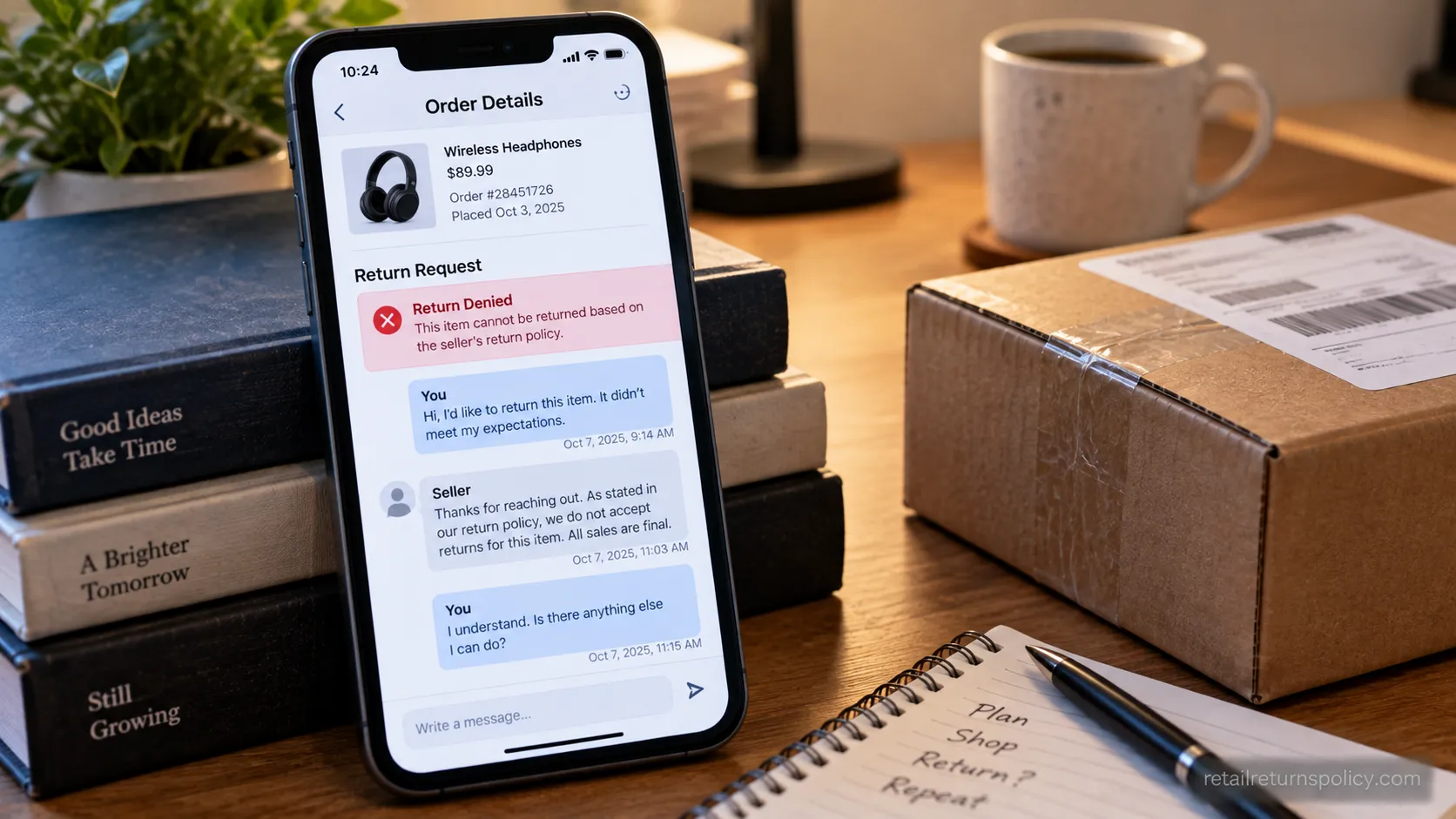
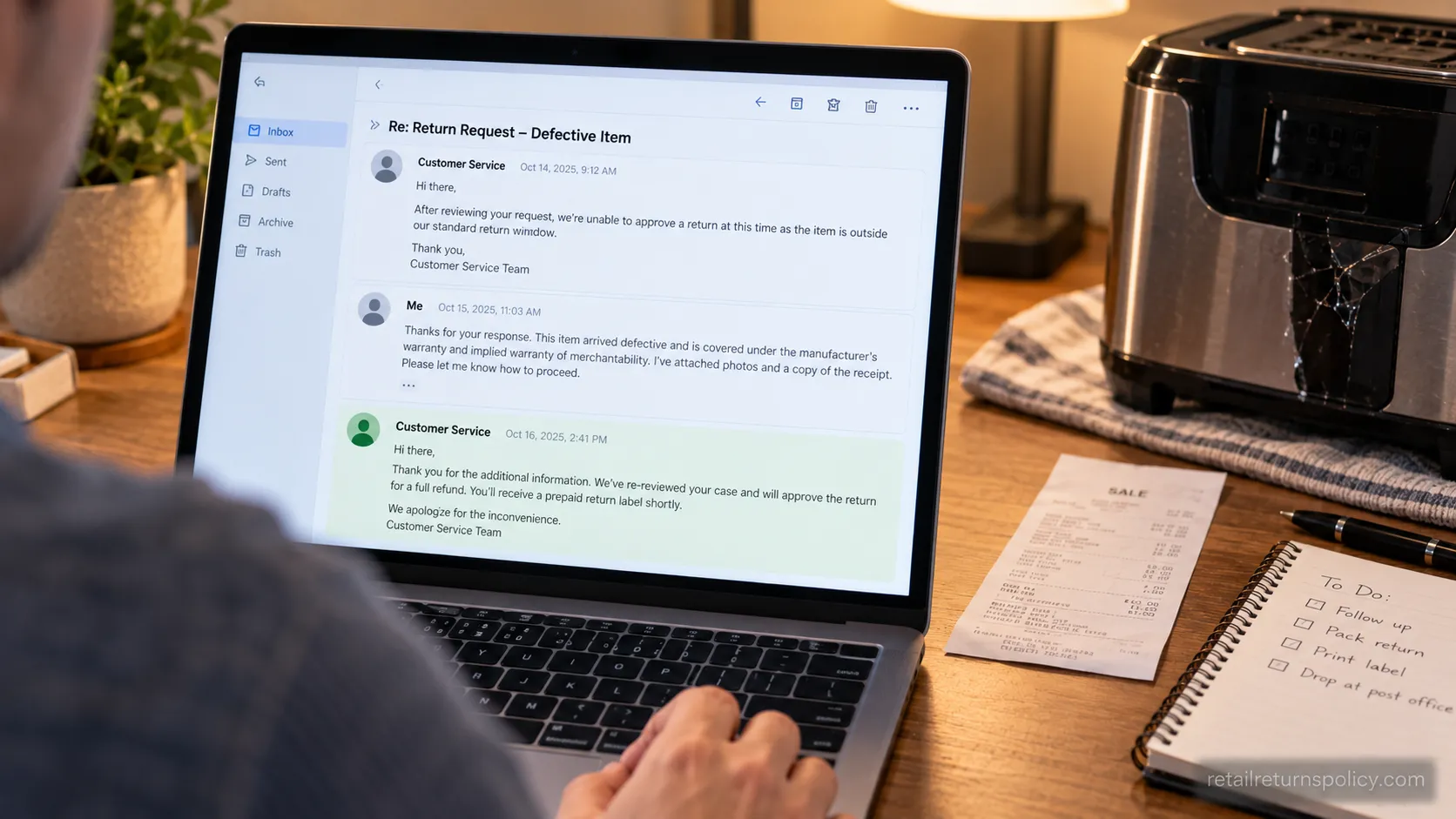
A store can legally refuse a holiday return for buyer’s remorse, but it cannot refuse a genuinely defective item, and that line is the leverage most shoppers never use.
FindLaw confirms there is no federal law forcing refunds just because someone changed their mind, so a store’s posted policy governs ordinary returns.
The floor beneath that policy is the implied warranty of merchantability: under the Uniform Commercial Code, a product has to work as intended, and a “no returns” sign does not erase that obligation for a defect.
Two narrow federal protections often get misread.
The FTC Cooling-Off Rule gives three business days to cancel certain sales, but it applies mainly to door-to-door and off-premises sales, not to a normal store or online purchase.
The FTC Mail Order Rule requires sellers to ship within the promised time or offer a refund, which is why a delayed online order has clearer rights than a regretted in-store one, as a consumer-rights guide lays out.
State disclosure laws add a backstop: many require retailers to post their policy, and where a store stays silent, some states impose a default return window.
Situation | Must the store take it back? |
|---|---|
Changed your mind (buyer’s remorse) | No. The store’s posted policy decides. |
Item is defective or not as described | Usually yes, under the implied warranty of merchantability. |
Store never posted a policy | Sometimes. Some state laws impose a default window. |
The calm line that works at the counter for a defective gift is short: this item does not work as intended, and I am asking for a remedy under the implied warranty of merchantability. Naming the warranty often changes the conversation.
Frequently Asked Questions
How long do you have to return holiday gifts in 2026?
Most major retailers extend returns on gifts bought roughly November 1 through December 31, 2026 to about January 31, 2027, though Apple and many store electronics end earlier, often near January 8, and marketplace items follow the seller’s own window. Always match the gift to the specific retailer row, because the general rule has more exceptions than it looks.
Can you return a holiday gift without a receipt?
Usually yes, but expect store credit at the item’s lowest recent selling price rather than cash, which can land well below what the giver actually paid. A gift receipt fixes this by proving full value while keeping the price hidden from the recipient, so keep it whenever one is offered.
What is the Apple and electronics holiday return deadline?
Apple’s holiday window for 2026 gifts typically ends around January 8, 2027, shorter than the general January 31 deadline at most stores, and store electronics often run on their own sub-window too. The important exception is carrier-financed iPhones, which fall out of the holiday extension and revert to the standard 14-day return policy.
Do you get cash or store credit for a no-receipt return?
Almost always store credit, not cash. The refund method follows how the item was paid for and whether you have proof of purchase: a standard receipt routes money back to the original card, a gift receipt sends value to store credit or an exchange, and no receipt means store credit at the lowest recent price.
Can you return holiday gift cards?
Generally no, since most retailers do not take gift cards back, although a handful of state laws require cash back on small remaining balances. Because the rules vary by state and issuer, confirm the specifics that apply where you live before you assume a card is refundable.
Can a store legally refuse a holiday return?
Yes for buyer’s remorse, since no federal law forces refunds when someone simply changed their mind, so the store’s posted policy governs ordinary returns. But the implied warranty of merchantability means a defective item must be remedied even if the store advertises “no returns,” which gives you real leverage on anything that does not work as intended.
The Bottom Line on Holiday Returns
A holiday return policy buys you time, not certainty. The extended window gets your gift back in the door by late January 2027 at most major retailers, but the receipt you kept and the way the gift was paid for decide whether you leave with cash, store credit, or nothing.
Apple and electronics run a shorter clock, marketplace sellers set their own, and a defective item carries rights the store cannot wave away.
So do two things before you shop or return this season: save the gift receipt, and check the retailer’s specific row and exception rather than trusting the general January date.
Read it your way
Short on time? Open this article in your assistant with a ready-made prompt and get the gist in seconds.
Found this useful? Make us a preferred source so we show up in your Google results.
Keep reading
Related articles
Retailer Return Policy Hubs
Ulta Return Policy: 30 Days for a Full Refund (2026)
Return to Ulta within 30 days for a full refund; 31–60 days gets store credit. The Ulta return policy window, receipt rule, refund method and how to return.

Retailer Return Policy Hubs
Lululemon Return Policy (2026): Tested at 3 Stores
Check the lululemon return policy: 30-day window, receipt and tag rules, refund timing, exchanges, and no-receipt options, current for 2026
Retailer Return Policy Hubs
eBay Return Policy: Why “No Returns” Doesn’t Mean No Refund
Check the eBay return policy for 2026: the 30-day Money Back Guarantee, seller windows, who pays return shipping, and how to get a refund when a seller says no.
Retailer Return Policy Hubs
Sephora Return Policy: The 60-Day Rule Is Gone (2026)
Return Sephora products within 30 days for a full refund. Get the current Sephora return policy: receipt rule, opened items, refunds by payment method.
The discussion
Comments
Every comment is reviewed before it goes live.