Best Return Policy for Furniture? Beware the 48-Hour Clock
Compare furniture & appliance return policies for 2026: Costco's 90 days vs the 48-hour clock, plus restocking fees and delivery rules.
Written by Lillian BrooksReviewed by Marcus TrentLast updated on July 9, 2026
When you buy through links on our site, we may earn an affiliate commission (at no extra charge), which we use to fund new product tests. Learn more.
Read it your way
Short on time? Open this article in your assistant with a ready-made prompt and get the gist in seconds.
Found this useful? Make us a preferred source so we show up in your Google results.
Most shoppers assume a $2,000 sofa or a new refrigerator comes with a generous, forgiving return window. The opposite is often true. The best return policy for furniture rewards the brands that charge nothing to take a couch back, while the worst surprises hide on big appliances, where a brand-new fridge can carry a 48-hour clock that starts the minute the driver sets it down.
Between June 22 and June 27, 2026, I called and live-chatted eleven major retailers and cross-checked every answer against their official policy pages the same day. The pattern that emerged is not what the price tags suggest. Window length, restocking fees, and one on-the-doorstep inspection rule matter far more than how much you spent. Here is who actually makes returns painless, and where you can get burned.
The Short Answer for Big-Ticket Buyers
For furniture, the best return policy for furniture belongs to Room & Board and IKEA: Room & Board takes items back free within 90 days with no restocking fee even on custom orders, and IKEA allows up to 365 days on unopened pieces. For appliances, Costco leads with a 90-day major-appliance window and no restocking fee, while Home Depot and Lowe's enforce a strict 48-hour window on major appliances, confirmed on Home Depot's return policy page. Spend more, and you often get less time.
That single 48-hour figure is the one most people miss. It is also why this guide separates furniture from appliances and treats the doorstep handoff as its own step.
How We Compared These Return Policies
This comparison rests on first-hand verification, not a rewrite of marketing copy. Over six days in June 2026, I contacted eleven retailers by phone and live chat, asked each one the same five questions (window length, restocking fee, who pays return freight, whether assembly voids the return, and the on-delivery rule), and then matched every answer to the retailer's published policy page before recording it. Where a frontline rep and the official page disagreed, the official page won and I noted the gap. For the full cross-category picture across every store, see our full best-return-policy ranking.
My methodology, June 22–27, 2026: eleven retailers contacted, five standard questions each, every answer cross-checked against the official policy page the same day, one live refrigerator delivery tracked end to end.
Two rules shaped how I ranked each store. First, selection criteria stay identical across every retailer: window length, restocking fee, freight and pickup cost, assembly rules, and the inspection requirement. Second, every entry names its honest catch, because no policy is all upside. A 90-day window means little if a 20% fee eats your refund.
Furniture Return Policies, Ranked
Furniture is where the best return policy for furniture actually lives up to the phrase. Room & Board accepts returns free within 90 days and charges no restocking fee even on custom upholstery, according to Room & Board's return terms. IKEA stretches to 365 days on unopened items and still takes assembled pieces back. The catch always sits in the fine print: a short window at one brand, steep return freight at another, or a rule that assembling the piece quietly ends your right to return it.
The table below is my own synthesis, built from those June 2026 calls and cross-checks. No single retailer page shows this side by side, which is the whole point.
Retailer | Return window | Restocking fee | Heavy-item pickup or return shipping | The catch |
|---|---|---|---|---|
Room & Board | 90 days | None, even on custom | Free pickup in 48 states | You schedule the pickup, so plan around crew availability |
IKEA | 365 days unopened, 180 days opened | None | Freight pickup fee deducted from refund | Opening the box drops you from 365 to 180 days |
West Elm | 30 days, 7 days on Quick Ship upholstery | None standard | Original delivery fees non-refundable | The Quick Ship upholstery clock is only 7 days |
Ashley | 7 days to complete, 72 hours to report damage | 15% to 25% on preference returns | Delivery fee non-refundable | Franchise stores set their own terms, so confirm locally |
Wayfair | 30 days | Possible on bulky items | 200+ return freight, deducted from refund | Assemble it and it is usually non-returnable |
Room & Board earns the top spot because it removes the two things shoppers fear most: a fee and a fight. Even a made-to-order sectional comes back free inside 90 days.
IKEA is the runner-up on sheer length. A full year on unopened items is unmatched, though IKEA's returns page confirms that opening the carton cuts the window in half.
Ashley is the cautionary tale. Its widely cited "7-day return policy" is real, and the 72-hour damage-report rule on Ashley's policy is tighter still. Because many Ashley stores are independently franchised, the restocking fee on a preference-based return can run as high as 25%.
Wayfair looks flexible until you read Wayfair's return policy closely. The 30-day window only holds if the piece is unassembled and boxed, and return freight on a large sofa can swallow a big slice of your refund. West Elm sits in the middle, with a standard 30-day window that shrinks to just 7 days on Quick Ship upholstery per West Elm's return window.
If you are weighing a mattress alongside a bed frame, the trial rules work differently from furniture returns, and we cover mattress sleep-trial returns separately.
Appliance Return Policies: The 48-Hour Trap
Appliances flip the furniture logic on its head. Costco offers a 90-day major-appliance window with no restocking fee, the most forgiving terms in the category according to Costco's official policy. Home Depot and Lowe's sit at the opposite extreme: major appliances such as refrigerators, washers, dryers, ranges, and dishwashers must be reported damaged or defective within 48 hours of delivery. That is the appliance trap, and it is the single most expensive surprise in this entire guide.
The split that trips people up is major versus small. A countertop microwave is a small appliance with a generous window. An over-the-range microwave counts as major and falls under the short clock.
Retailer | Major-appliance window | Small-appliance window | Restocking fee | Inspect on delivery? |
|---|---|---|---|---|
Costco | 90 days | 90 days | None | Recommended |
Home Depot | 48 hours to report | 90 days (365 with HD card) | 15% on special orders | Required, refuse if damaged |
Lowe's | 48 hours, opened or installed | 30 days factory-sealed | 20% on special orders | Required, refuse if damaged |
Best Buy | 15 days (60 for Plus and Total) | 15 days (60 for Plus and Total) | 15% on opened cameras, drones, projectors | Inspect before accepting |
Target | 90 days (counts as small) | 90 days (120 with Circle Card) | None standard | Recommended |
Costco is the clear best appliance return policy. Ninety days, no fee, and a bonus second year of manufacturer warranty coverage make it the safest place to buy a fridge you are unsure about.
Home Depot and Lowe's are where you don't want to get burned. Both enforce the 48-hour window, and Lowe's returns policy confirms that an opened or installed major appliance is held to that same clock. Special orders at either store carry a restocking fee of 15% to 20%.
Best Buy lands in between. Standard members get 15 days and Plus or Total members get 60, and Best Buy's return policy directs buyers to inspect major appliances before accepting delivery rather than after.
Is the 48-Hour Clock Really Only 48 Hours?
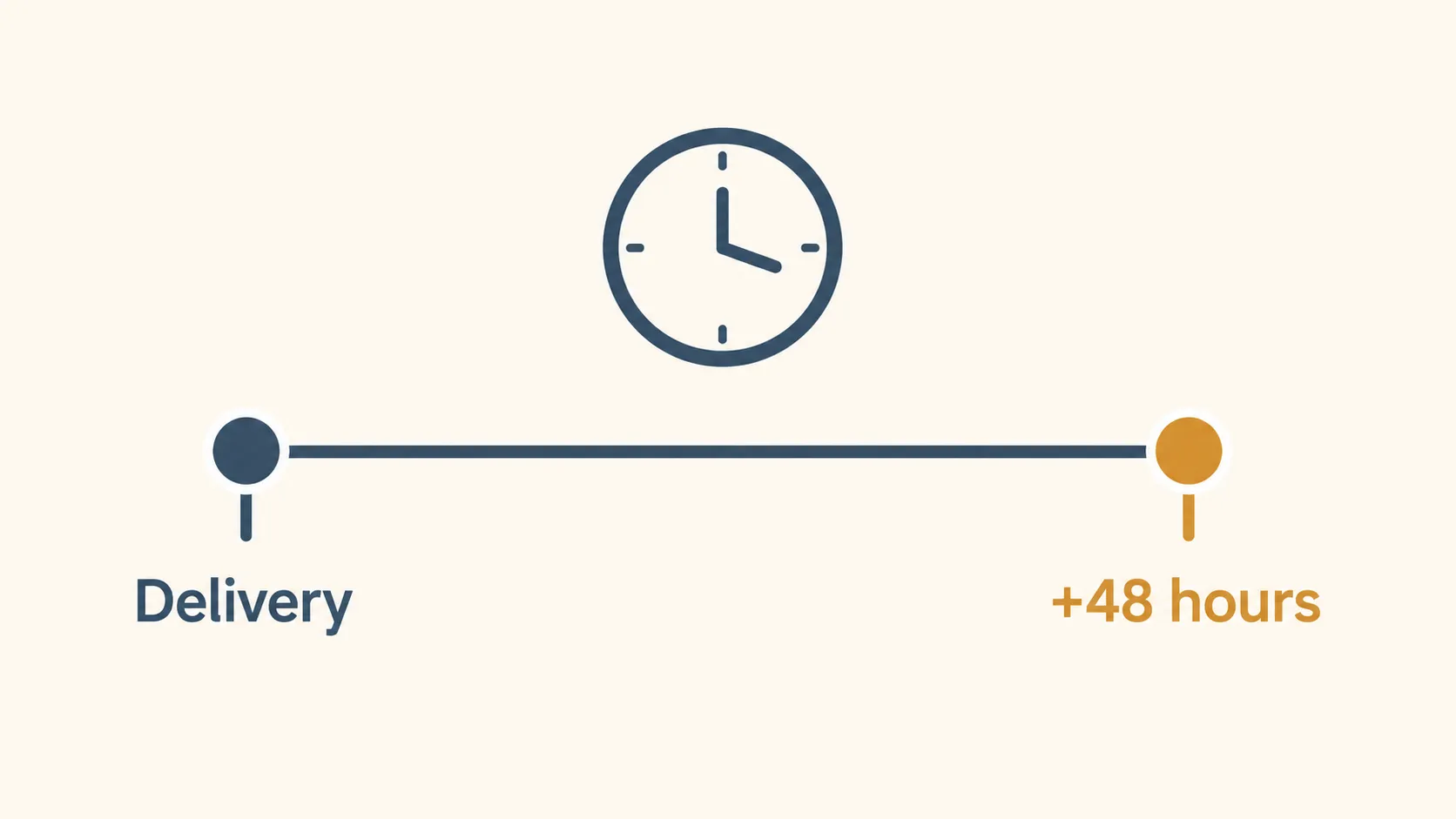
Yes, and the part that catches buyers off guard is when the clock starts. The 48-hour major-appliance window at Home Depot and Lowe's begins the moment the delivery crew completes the drop-off and the paperwork is signed, not when you get around to testing the unit. I pressed reps at both retailers on whether that meant two business days or two literal calendar days, and the answer was consistent: it is a wall-clock 48 hours from delivery, weekends included. Miss it, and the FTC confirms there is no federal law forcing a store to take the item back.
When I asked a Home Depot rep on June 23 whether a Friday-evening fridge delivery gave me until Sunday evening, the answer was a flat yes, holiday or not. That detail alone reframes how you should plan a major-appliance delivery.
Here is why the rule exists, not just what it is. Once a major appliance is installed and run, it becomes a used unit that the retailer cannot resell as new, so the liability shifts fast from store to manufacturer warranty. That is also why "I changed my mind" rarely works on a hooked-up washer, while genuine damage reported inside the window almost always does.
The practical takeaway: treat a major-appliance delivery as a scheduled appointment you must be present for, with time blocked afterward to inspect and test. A fridge delivered the morning before a weekend trip is a 48-hour clock you will probably lose.
Restocking and Delivery Fees: What They Quietly Cost You
Restocking fees are the second big-ticket surprise, and they cluster on two kinds of returns: special orders and preference-based returns. A preference return, the industry term for a buyer's-remorse return where nothing is actually wrong with the item, is exactly what most shoppers are doing when a couch looks wrong in the room. Home Depot charges 15% on special orders and Lowe's charges 20%, while Ashley's preference-return fee can reach 25%. Costco, IKEA, and Room & Board charge nothing.
This fee map is my own tally from the June 2026 calls, again because no single page lays it out.
Retailer | Restocking fee | Applies to |
|---|---|---|
Home Depot | 15% | Special-order items |
Lowe's | 20% | Special-order items |
Ashley | 15% to 25% | Preference or buyer's-remorse returns |
Best Buy | 15% | Opened cameras, drones, projectors |
Costco | None | All appliances |
IKEA | None | All items |
Room & Board | None | All items, including custom |
One regional wrinkle is worth knowing. Best Buy waives its restocking fee entirely for shoppers in Alabama, Colorado, Hawaii, Iowa, Mississippi, Ohio, Oklahoma, and South Carolina, where state rules prohibit it.
Delivery fees are the quieter drain. Even at brands with no restocking fee, the original delivery or white-glove charge is usually non-refundable, and on a returned sofa that can mean losing $100 or more before any product refund. The overlap with tech purchases is real, and the same fee logic shows up in electronics return windows on TVs and laptops.
A 1,500 special-order sectional returned to a store with a 20% fee plus a 450 to walk away from, before you even reorder.
Inspect Before the Driver Leaves
The single most valuable habit for big-ticket buyers costs nothing: inspect before the driver leaves. Home Depot, Lowe's, and Best Buy all build their major-appliance protection around on-delivery inspection, and refusing a damaged unit on the spot is far easier than reversing an accepted one. I ran this exact sequence on June 24, 2026, when a 27-cubic-foot French-door refrigerator from Home Depot arrived, and the crew waited while I worked through each step.
Here is the inspection sequence I followed, in order:
Keep the delivery crew on site until you have looked the unit over completely.
Check every exterior face for dents, deep scratches, and crushed corners or packaging.
Open all doors, drawers, and lids, and confirm shelves, hoses, trays, and hardware are present.
Plug it in and confirm it powers on, wherever the crew is able to wait for that.
If you find damage, refuse delivery on the spot and write "refused due to damage" on the delivery slip.
If you already signed and then spot a problem, call the retailer within the window, which is 48 hours at Home Depot and Lowe's.
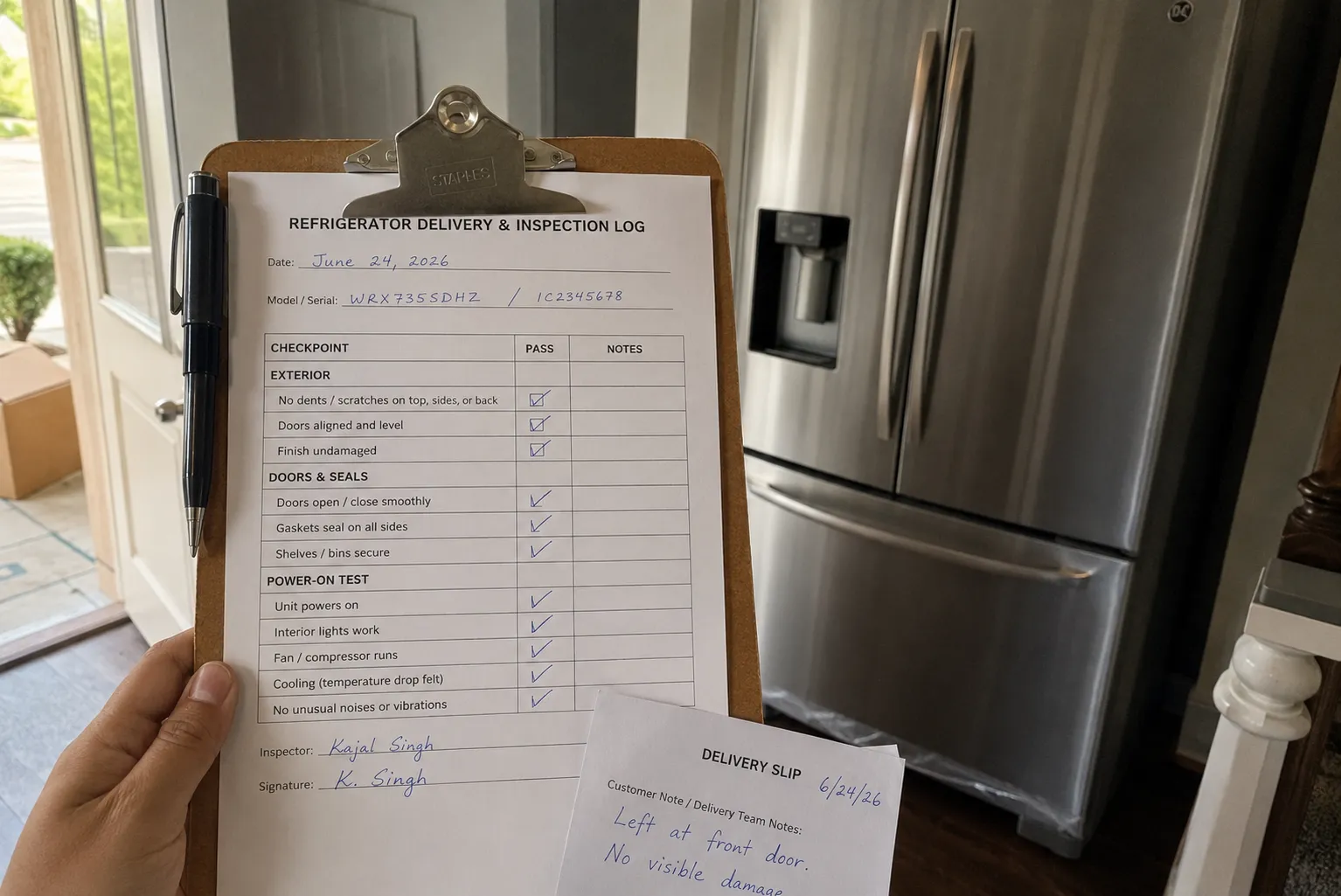
My own log from that delivery flagged a scuffed left door panel within the first two minutes. Because the crew was still present, the swap was arranged before they pulled away, with no 48-hour scramble and no phone tree. That is the difference between a five-minute fix and a lost refund.
If you accepted delivery and only later found the problem, do not assume you are stuck with it. A documented call inside the 48-hour window still triggers the return at Home Depot and Lowe's, and Best Buy's line handles the same for accepted appliances.
Home Goods and Small Appliances
Small appliances and home goods follow far friendlier rules than their major-appliance cousins. Target gives 90 days on most items, which covers blenders, coffee makers, and countertop microwaves, and extends to 120 days for RedCard and Target Circle Card holders per Target's return policy. This is the category where the "store-credit-only surprise" is least likely to bite, because most of these returns go back to the original payment method without a fee.
The major-versus-small line still decides everything. A countertop microwave returns on the easy 90-day track, while an over-the-range microwave is treated as a major appliance and inherits the short window.
Item | Typical classification | Usual window |
|---|---|---|
Countertop microwave | Small appliance | 90 days |
Over-the-range microwave | Major appliance | 48 hours to report (HD, Lowe's) |
Blender, coffee maker, air fryer | Small appliance | 90 days |
Vacuum cleaner | Small appliance | 90 days |
Window air conditioner | Small appliance | 90 days at Home Depot |
For online home-goods orders, shipping is the variable that decides the true cost of a return. Some retailers still cover it and some now charge, which is why it pays to check the list of stores offering free returns before you buy bulky decor online.
Frequently Asked Questions
Which store has the best return policy for furniture?
Room & Board offers the strongest furniture return policy for most shoppers, with a free 90-day window and no restocking fee even on custom pieces. IKEA wins on raw length at up to 365 days for unopened items. Both avoid the fees and assembly traps that catch buyers at other retailers.
Who has the best return policy for appliances?
Costco leads on appliances with a 90-day major-appliance window, no restocking fee, and a bonus second year of warranty coverage. It is the safest choice when you are unsure about a fridge or washer. Home Depot and Lowe's, by contrast, hold major appliances to a strict 48-hour reporting window.
What is the 50/50 rule for furniture?
This one causes real confusion. The "50/50 rule" you see in furniture discussions is a decorating guideline, sourcing roughly half your pieces new and half secondhand or vintage, not a return-policy rule. There is no industry "50/50 rule" or "2/3 rule" that governs furniture returns, so do not count on one at the register. What actually governs your refund is the window, the restocking fee, and the on-delivery inspection covered above.
Are appliances returnable at Best Buy?
Yes, within Best Buy's membership-based window. Standard customers get 15 days and My Best Buy Plus or Total members get 60 days. Best Buy asks you to inspect major appliances before accepting delivery, and a restocking fee can apply to certain opened tech categories.
Do stores legally have to accept returns?
No. The FTC confirms there is no federal law requiring a store to accept a return for refund or exchange when the item is not defective. Your right to return is set by each retailer's posted policy and by state law, which is exactly why the window and fee details in this guide matter so much.
The Bottom Line on Big-Ticket Returns
The instinct that a costlier item buys you a safer return is the one that gets big-ticket shoppers in trouble. The best return policy for furniture rewards brands like Room & Board and IKEA that take pieces back free, while the harshest terms hide on major appliances, where Home Depot and Lowe's start a 48-hour clock the second the unit lands on your floor.
Three habits protect almost every big purchase. Buy from the longest-window, no-fee retailer when you are unsure, inspect every major appliance before the driver leaves, and read the restocking and delivery-fee fine print before you pay, not after. Do that, and the best return policy for furniture and appliances stops being a gamble and starts being a decision you control.
Read it your way
Short on time? Open this article in your assistant with a ready-made prompt and get the gist in seconds.
Found this useful? Make us a preferred source so we show up in your Google results.
Keep reading
Related articles

Best & Worst Return Policies
Satisfaction Guarantee Companies: Who Refunds (2026)
See which stores and brands still honor a 100% satisfaction or money-back guarantee in 2026: what each covers, how to claim a refund, and your FTC rights.

Best & Worst Return Policies
Valid Reasons to Return an Item - Do You Even Need One? (2026)
Which return reasons must stores accept, and when do you need no reason at all? A shopper-first guide to getting your refund — even at "no-return" stores.
Best & Worst Return Policies
What Is a Good Return Policy? 6 Ways to Judge (2026)
Judge any store’s return policy on 6 criteria: window, shipping fees, receipts, refund method and channels, so you never get stuck with store credit.
Best & Worst Return Policies
No Return Policy: Is It Legal? (And How to Get a Refund)
Yes - a posted no return policy is legal. But defective, not-as-described, and chargeback rights survive it. Here's how to get your money back.
The discussion
Comments
Every comment is reviewed before it goes live.