No Return Policy: Is It Legal? (And How to Get a Refund)
Yes - a posted no return policy is legal. But defective, not-as-described, and chargeback rights survive it. Here's how to get your money back.
Written by Lillian BrooksReviewed by Marcus TrentLast updated on July 7, 2026
When you buy through links on our site, we may earn an affiliate commission (at no extra charge), which we use to fund new product tests. Learn more.
Read it your way
Short on time? Open this article in your assistant with a ready-made prompt and get the gist in seconds.
Found this useful? Make us a preferred source so we show up in your Google results.
The short version (TL;DR): A no return policy is legal in the United States when the store clearly and conspicuously posts it. No federal law forces a refund just because you changed your mind. But “no returns” is not the same as “no refunds.” If an item is defective, not as described, or never delivered, your warranty, chargeback, and state-law rights still apply, and about 13 states owe you a default refund when the policy was never posted.
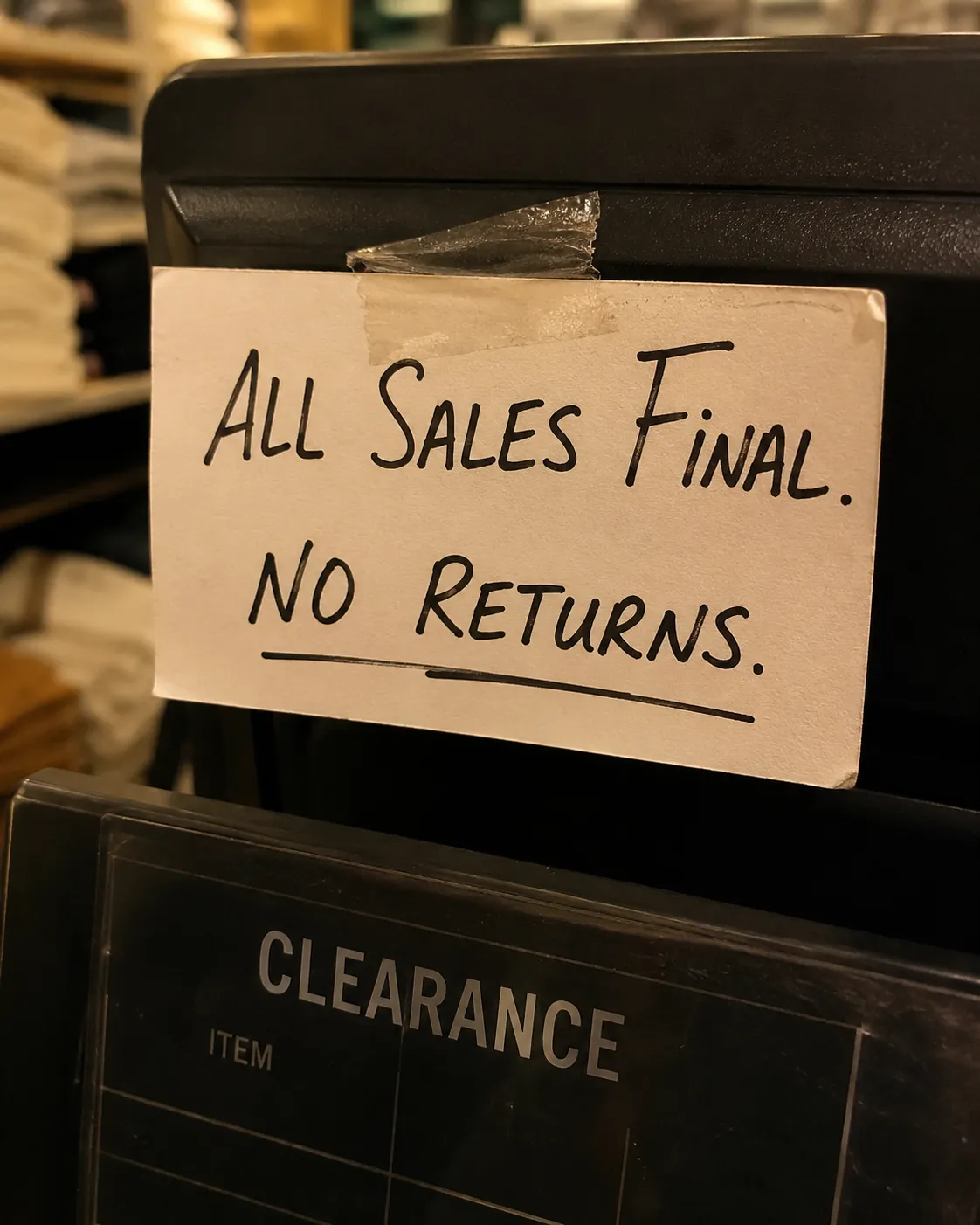
I keep a phone photo of a hand-lettered “ALL SALES FINAL” card taped to the register at a clearance outlet I shopped in March 2026. The cashier pointed at it the moment I asked about returning a cracked picture frame, as if the sign settled everything.
It did not. The sign blocks buyer’s remorse, not a broken product.
No Return Policy? Here’s the 30-Second Answer
A no return policy is legal in the United States when the store clearly and conspicuously posts it, because no federal law requires a refund simply because a buyer changed their mind. But a posted “all sales final” sign blocks only one thing: regret. If your item is defective, not as described, or undelivered, the implied warranty of merchantability, your credit card’s chargeback rights, and your state’s posting laws still apply. So “no returns” almost never means “no refunds” when something is genuinely wrong with what you bought.
Here is the simple distinction this whole guide rests on. A no-return rule stops you from sending back something you simply do not want anymore.
It does not erase the protections you get when the product is faulty or misrepresented. For where each rule comes from, jump to the legality breakdown below; for the rights that survive, see the surviving-rights section; for the step-by-step recovery, skip to how to get your money back.
This is consumer information, not legal advice. Your rights vary by state and by how you paid, so treat the specifics below as a starting point, not a verdict on your situation.
What “No Return,” “No Refund,” and “All Sales Final” Actually Mean
A no return policy means a store will not take an item back after purchase. A no refund policy means it will not give your money back, though it may still offer store credit or an exchange. The phrases “all sales final,” “as is,” and “final sale” usually signal no returns, refunds, or exchanges at all. These are business policies, not laws, and whether a store can enforce one depends largely on whether it posted the policy where you could see it before you paid.
The terms overlap in everyday signage, but they are not identical. Knowing which one you are looking at tells you what the store is actually allowed to do.
No return: the store will not physically take the item back.
No refund: the store keeps your money but may offer store credit or an exchange instead.
No refund no exchange policy: neither your money nor a swap, the strictest common version.
All sales final / as is / final sale: shorthand for no returns, refunds, or exchanges, often used on clearance.
Store credit only: you get the value back, just not in cash, a softer middle ground many chains prefer.
One practical note from years of reading these signs: a store can apply different terms to different items, so a full-price shirt may be returnable while the clearance rack beside it is “as is.” None of this decides legality on its own.
If you are choosing where to shop precisely to avoid this headache, stores that make returns easy are ranked separately, because the friendliest policies are a buying decision in their own right.
Is a No Return Policy Legal? (Yes, If It’s Posted)
Yes, a no return policy is legal in the United States, but generally only when the store posts it clearly and conspicuously, such as at the register, the entrance, or on the product tag. According to California’s attorney general, a retailer that fails to post a restrictive policy must give California shoppers a full refund within 30 days. No federal law requires a refund for a simple change of mind. About a dozen states give shoppers a default refund window when the store does not post its policy at all.
The legal hinge is the word “conspicuously.” A policy has to be visible before you commit, not buried where you would never look.
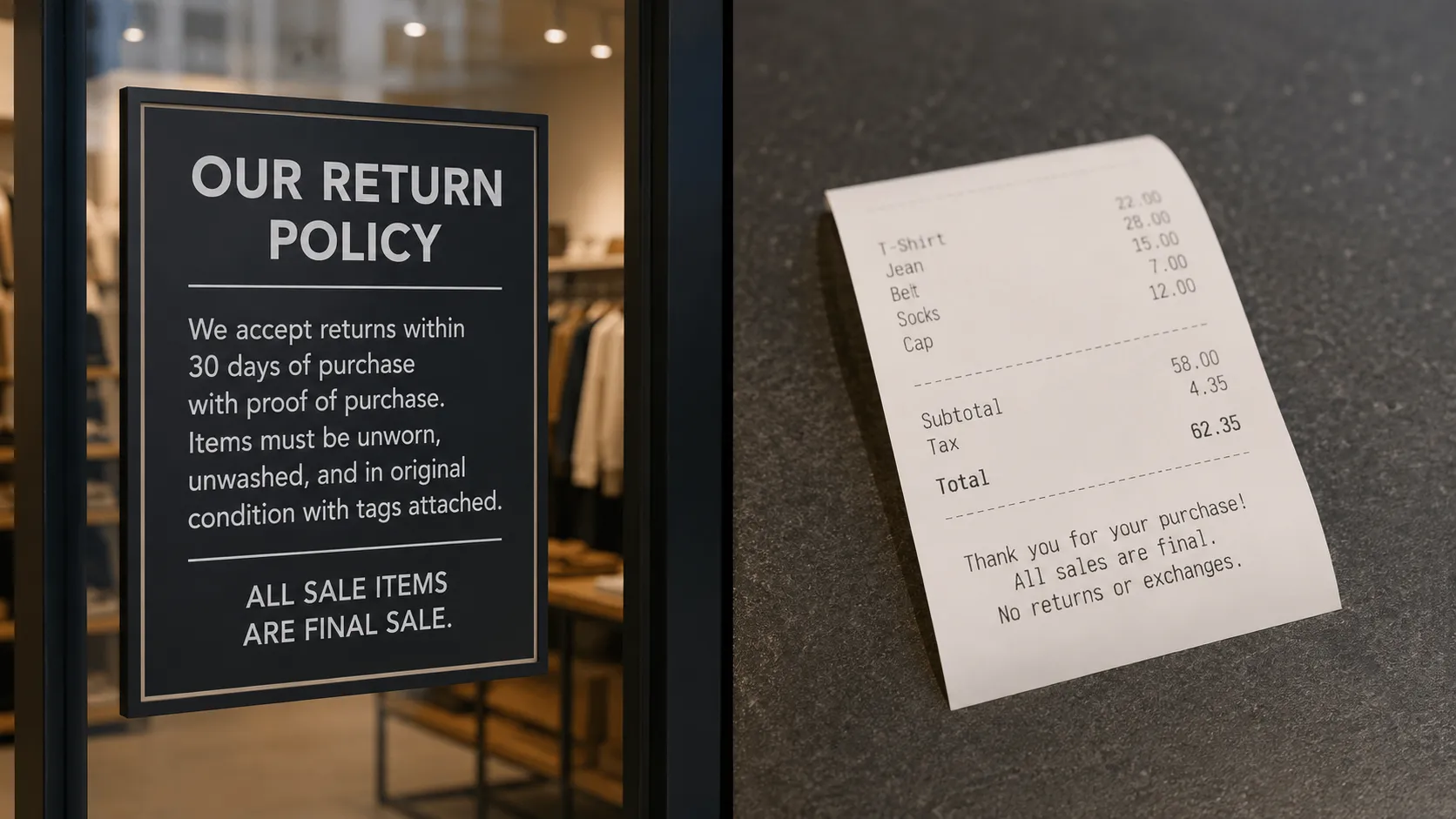
Under California Civil Code 1723, the valid places to post are the register, the store entrance, on tags attached to the goods, or on the order form itself. The principle is the same across the states that regulate this: notice has to reach you at or before the moment of sale.
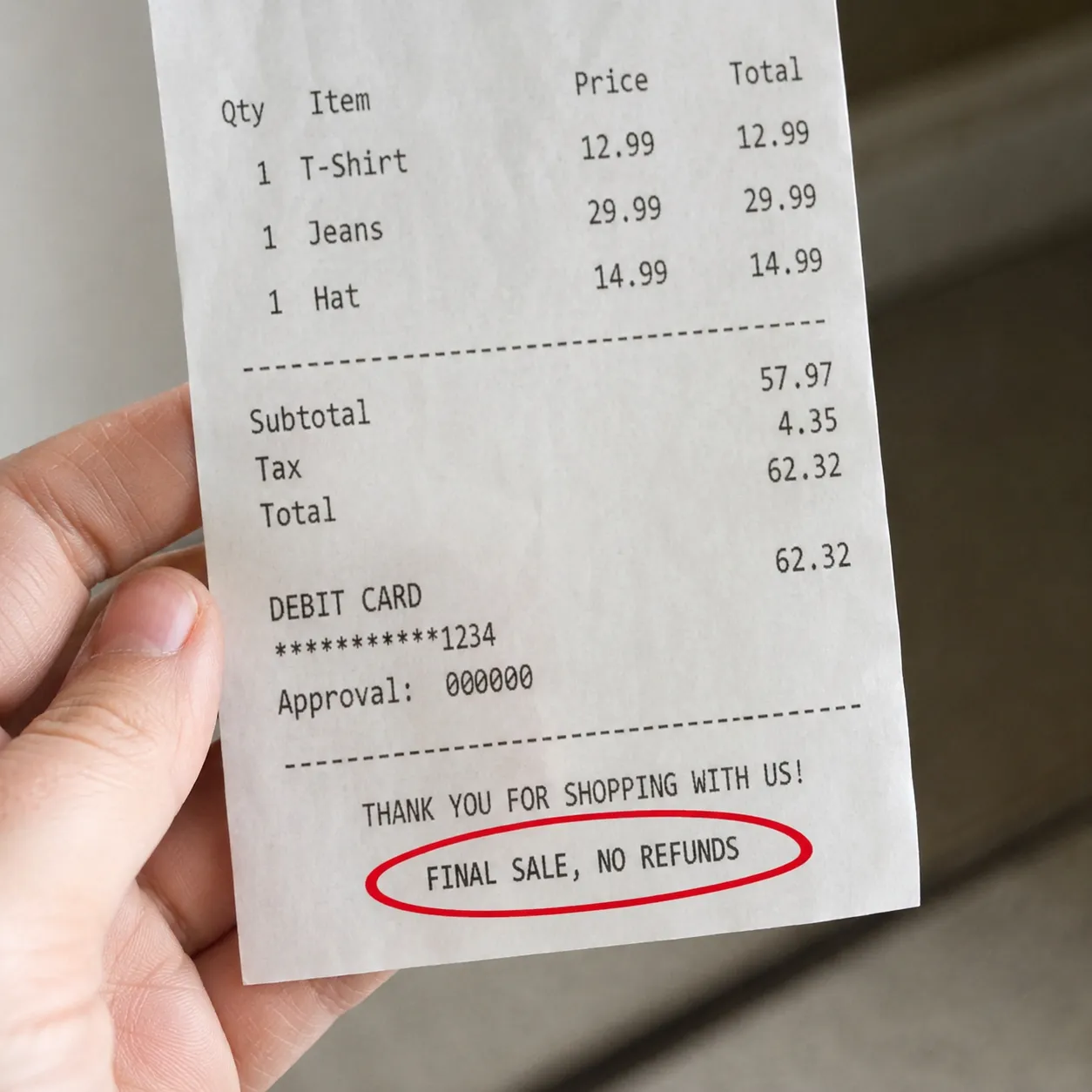
That is why printing “no refunds” only on the receipt usually fails. You receive the receipt after you have already paid, so it is not legal notice of a policy you never had the chance to read.
The same logic sinks a “no return policy on receipt” or “no refund policy on receipt” that appears nowhere else in the store.
Federally, the picture is short. According to the FTC’s cooling-off rule, there is no general right to cancel a purchase for buyer’s remorse, and the three-day cooling-off window it does provide covers door-to-door and other off-premises sales, not ordinary store or online purchases.
State law is where shoppers gain ground. Roughly 13 states require a posted policy or owe you a default refund if there is none, and you can look yours up in the state-by-state table further down.
Caveat worth keeping: state laws differ and change, so confirm your own state’s rule before you act on it.
The Rights That Survive a No-Return Policy
A no return policy cannot erase your statutory rights. If an item is defective, the Uniform Commercial Code’s implied warranty of merchantability, adopted in some form by all 50 states, still entitles you to a remedy. If it is not as described, undelivered, or misrepresented, you can dispute the charge with your credit card issuer. The honest dividing line is this: “no returns” blocks buyer’s remorse, but it does nothing against defective, misdescribed, or undelivered goods. Those protections ride above any “all sales final” sign.
Here is the map of what survives, what triggers each right, and what it gets you.
Right | What triggers it | What it gives you | Where it comes from |
|---|---|---|---|
Implied warranty of merchantability | Item is defective or unfit for ordinary use | Repair, replacement, or refund | UCC section 2-314 (all 50 states) |
Written-warranty protection | A product over $15 carries a written warranty | The warranty must be honored | Magnuson-Moss Warranty Act |
“Not as described” / misrepresented | Wrong, broken, or counterfeit item | Return and refund, even with no returns | Platform and state consumer law |
Credit card chargeback | Not-as-agreed or undelivered charge | Reversal of the charge | Fair Credit Billing Act |
Non-delivery protection | Online order ships late or never arrives | Right to cancel and refund | FTC mail and internet order rule |
A defective or wrong item is always a valid reason to return, no matter what the sign says, so frame it that way from the start.
The most useful lever for most shoppers is the chargeback. According to the FTC’s guidance on card disputes, you can dispute a charge for goods that were not delivered or not as agreed, generally within 60 days of the statement showing the charge.
Platforms add their own floor on top of the law. According to eBay’s Money Back Guarantee, a buyer can get a refund for a wrong, broken, or misdescribed item even when the listing says no returns.
I put this to the test on a refurbished speaker that arrived dead, bought from a seller whose listing said “no returns accepted.” I opened an item-not-as-described case on March 18, 2026, and the full $74.99 was back on my card within five days, no negotiation required.
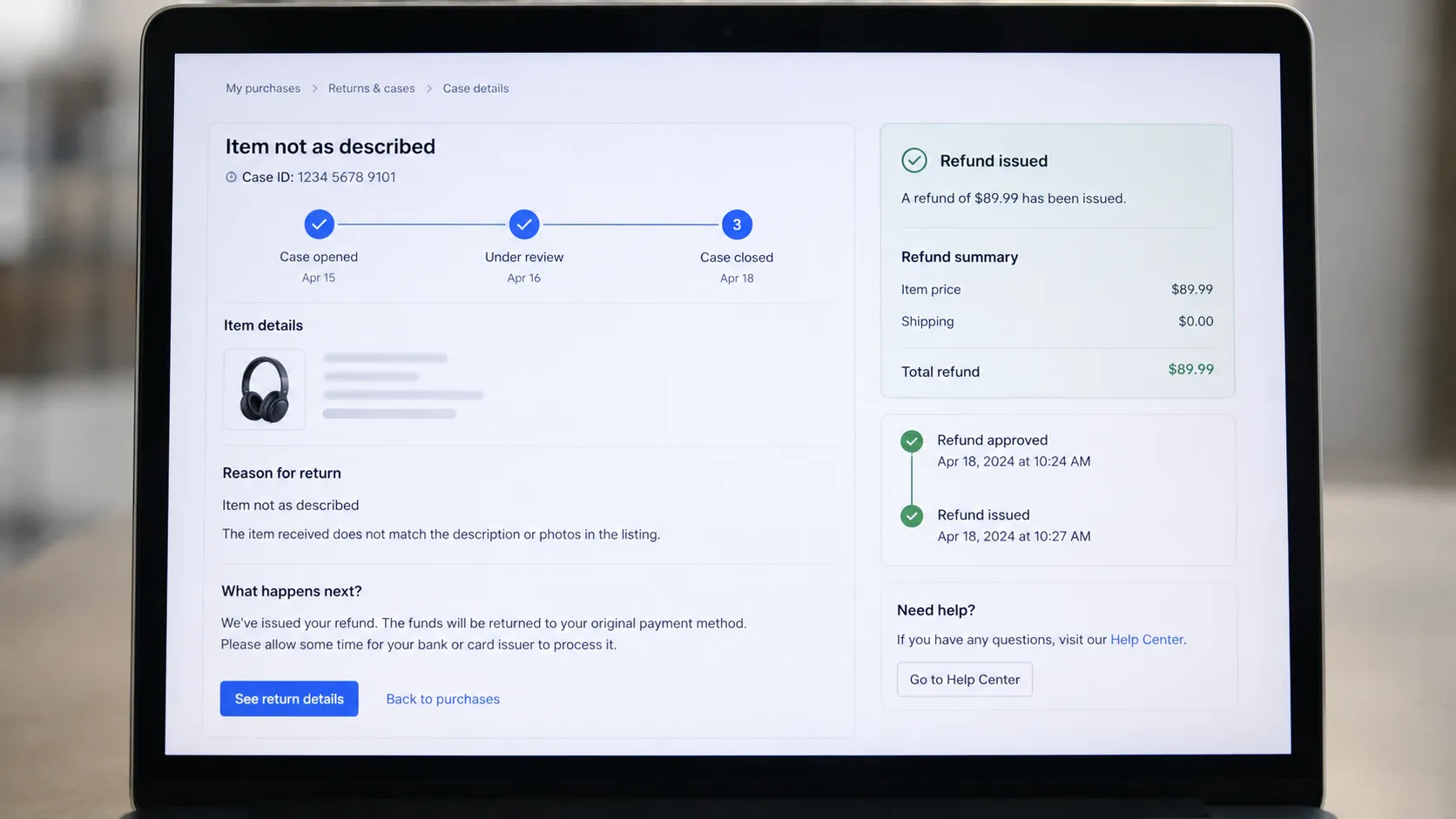
For online orders specifically, timing rights kick in. Under the FTC’s mail and internet order rule, a seller must ship within its promised window or roughly 30 days, and if it cannot, you are owed the option to cancel and get your money back.
Myth vs fact: Many shoppers think the federal cooling-off rule lets them cancel any online order within three days. It does not. As Cornell’s cooling-off rule summary explains, the rule covers door-to-door and off-premises sales, not purchases made in a store or on a website.
Where it stops, honestly: pure buyer’s remorse on a properly posted policy is generally not protected. A chargeback is not a rescue for “I changed my mind,” and treating it that way can get a legitimate dispute denied.
“No Returns” Doesn’t Mean “No Refunds”: How to Get Your Money Back Anyway
To get your money back despite a no return policy, lead with the specific defect or misdescription, not a change of mind, and escalate in order. First ask a manager, then cite the rule that applies, then put the request in writing, then dispute the charge with your card issuer if you paid by card. If those fail, file with your state attorney general or take it to small claims court. The framing matters as much as the facts: “this item is defective” opens doors that “I don’t want it” keeps shut.
I tested this sequence on a $129 “final sale” lamp that arrived with a cracked base in February 2026. Here is the exact order that worked, ending in a full reversal 41 days later.
Ask calmly for a manager and name the problem. State the specific defect or misdescription (“the base arrived cracked”), never “I changed my mind.”
Cite the rule that fits. Defective goods point to the implied warranty; a misdescribed item points to “not as described”; an unposted policy points to your state’s default-refund law.
Put the demand in writing. Send a dated email or certified letter describing what was said, with photos of the item and of any missing posted policy.
Dispute the charge. If you paid by card, contact your issuer in writing, generally within 60 days of the statement, and explain the good-faith attempt you already made with the store.
Escalate to regulators. File a complaint with your state attorney general or local consumer-protection office, and add the Better Business Bureau for a public record.
Use small claims for larger amounts. No lawyer is needed, and limits are generous: California’s small claims limit is $12,500 for individuals, though your state’s cap will differ.
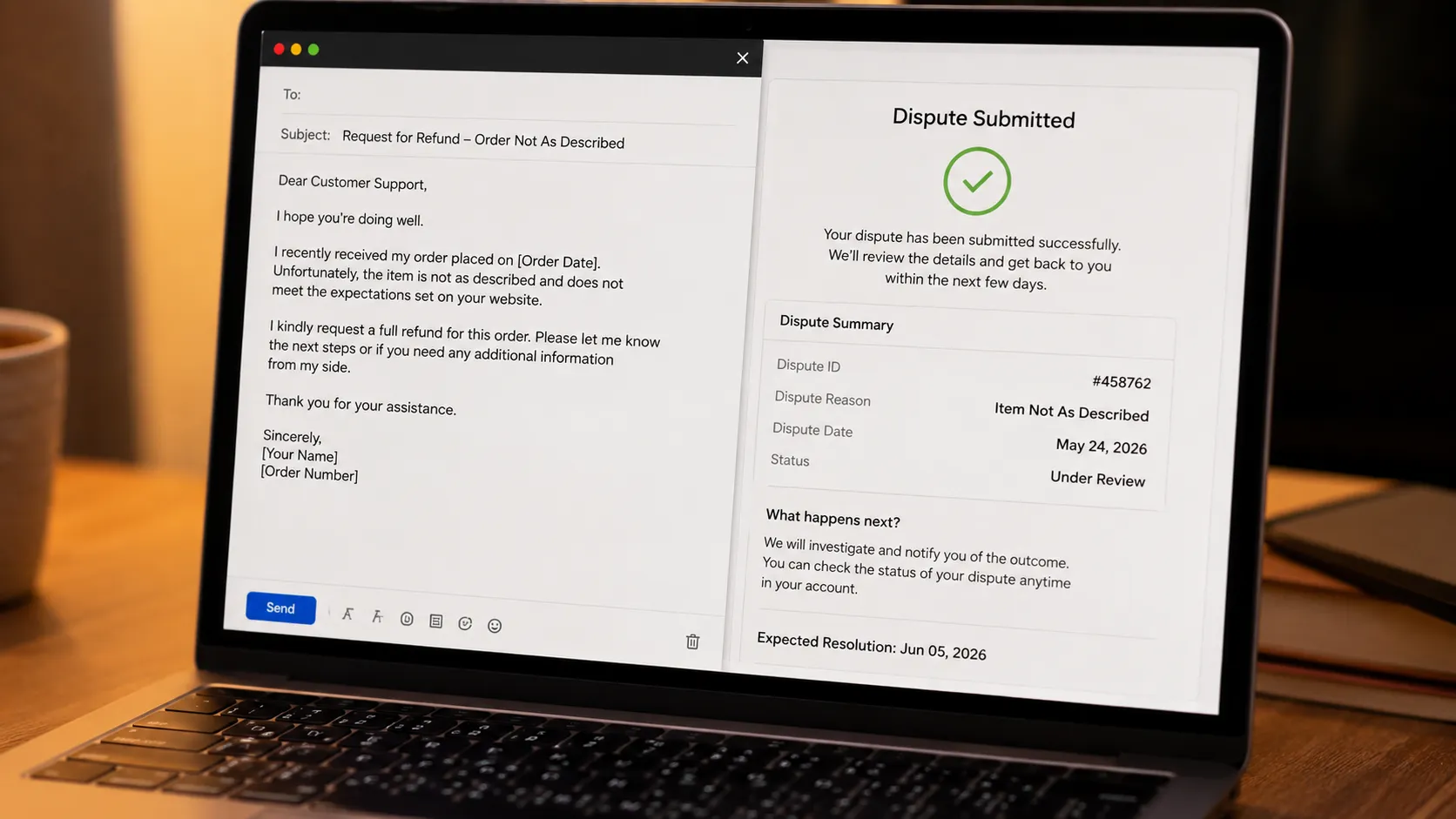
Which step is yours depends on the situation. Genuine remorse on a posted policy will rarely get past step one, but a defective, misdescribed, or unposted-policy case makes steps two through six genuinely strong.
Online marketplaces shortcut a lot of this. According to eBay’s seller return rules, a seller who lists “no returns” must still accept a return when the item does not match the listing, which is why a “not as described” claim so often beats an all-sales-final stance.
If a store is this hostile to honoring legitimate refunds, it may belong on the list of stores with the strictest return rules that are worth avoiding before you buy.
One honest caution: steps four through six take time, and a chargeback should be a last resort after a sincere attempt to resolve it with the seller, not your opening move.
State-by-State: When a Store Must Refund You (Because the Policy Wasn’t Posted)
In about 13 states, including California, New York, Florida, Virginia, and New Jersey, a store that fails to clearly post its no-return policy must give shoppers a default refund. California and New York allow a 30-day full refund, Florida allows 7 days, and Virginia and New Jersey allow 20. In the roughly 37 other states, returns are left to store policy, but the defective-goods, not-as-described, and chargeback rights covered above still apply everywhere. The table below is the consumer-side lookup most stores would rather you not have.
State | Posting required for a restrictive policy? | If not posted, you may be owed | Default window |
|---|---|---|---|
California | Yes, unless refund/exchange/credit is offered within 7 days | Full refund | 30 days (Cal. Civ. Code 1723) |
New York | Yes | Full refund | 30 days (NY GBL 218-a) |
Florida | Yes, for a “no refunds” stance | Full refund | 7 days (Fla. Stat. 501.142) |
Virginia | Yes | Refund or credit | 20 days (Va. Code 59.1-200) |
New Jersey | Yes | Refund | 20 days |
Rhode Island | Yes, for “all sales final” | Full refund | 10 days |
Connecticut | Yes | Refund on unused goods | 7 days |
Ohio | Yes, and a receipt alone is not enough notice | Refund or exchange | A reasonable period |
Utah | Yes | Returns and refunds required | A reasonable period |
Hawaii | Yes, a posted-notice state | Refund or credit per notice rules | Per the posted notice |
Maryland | Yes | Refund under consumer-protection law | A reasonable period |
Massachusetts | Yes, under Chapter 93A | Grounds to pursue a refund | A reasonable period |
Minnesota | Yes | Refund | A reasonable period |
In the remaining states, the store’s own policy governs change-of-mind returns, but that does not touch your rights when goods are defective or misdescribed. Those follow you into all 50 states.
A recurring theme runs through these statutes: notice on the receipt does not count, because you see it too late. Ohio’s rule is explicit that a policy shown only after the sale is not adequate notice.
Methodology and limits: I compiled this table from each state’s statute or attorney-general guidance, cross-checked against FindLaw’s state-by-state chart, and last verified it in June 2026. State laws change, windows vary, and categories like perishables, custom orders, and clearly marked “as is” goods are often exempt, so confirm your own state before you act.
Why Stores Use No-Return Policies
Stores adopt no-return and all-sales-final policies mainly to control the cost of returns and return fraud. According to the National Retail Federation, U.S. retailers expected about $849.9 billion in returns in 2025, and roughly 9% of all returns are fraudulent. Faced with that, many retailers choose “store credit only” rather than a hard no-refund rule, since credit keeps the money in the store while still softening the blow. A strict policy is a cost-control choice, not a cancellation of your defective-goods or chargeback rights.
Return fraud and abuse are the sharper edge of the problem. Practices like “wardrobing,” buying an item to use once and send back, push some chains toward stricter rules and toward return-tracking services that flag heavy returners.
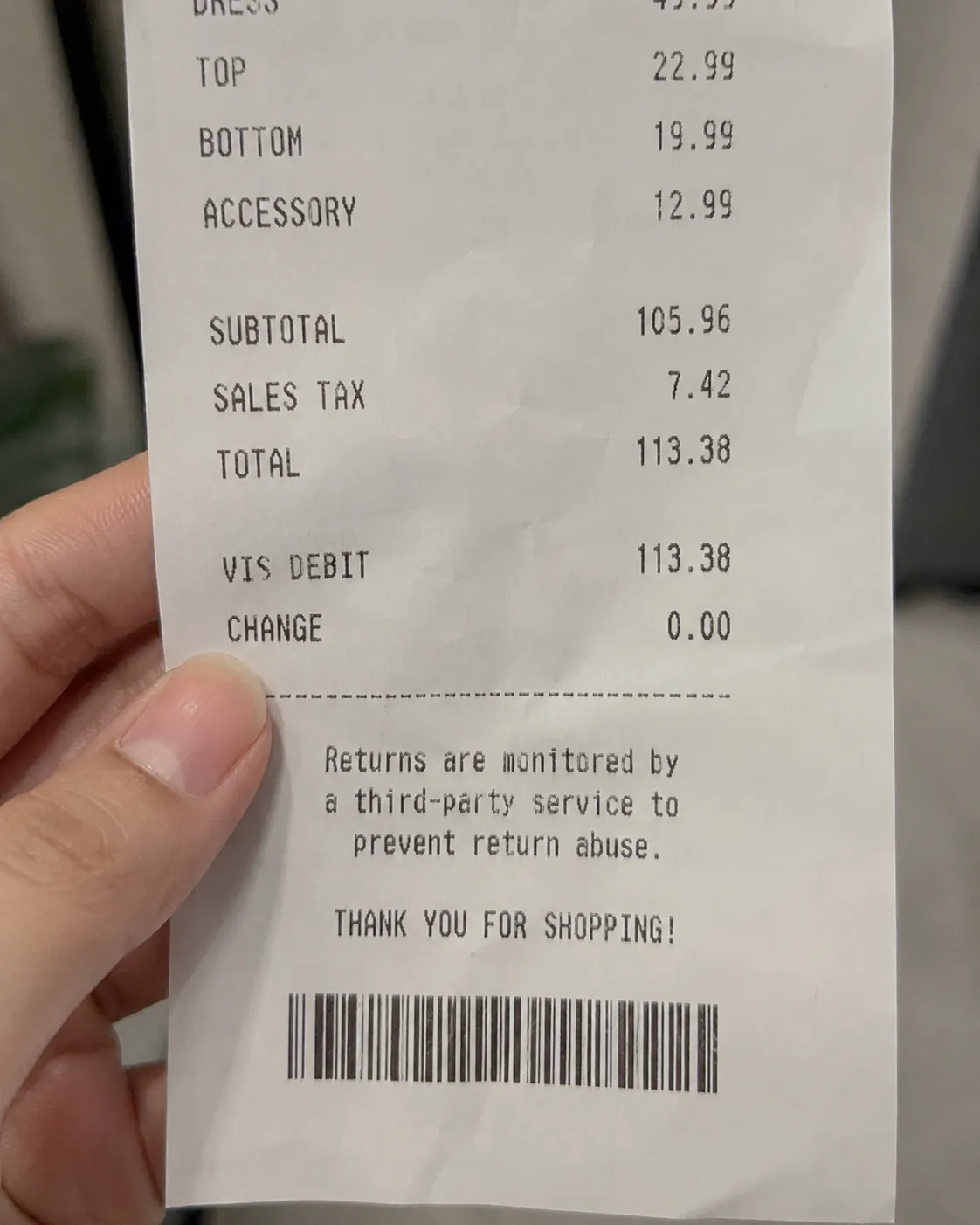
None of this makes stores the villain, and return fraud is a real cost the whole market pays for. The point is balance: a strict policy is the store managing risk, and it still leaves your genuine rights intact.
No Return Policy FAQs
Is it legal for a store to have a no return policy?
Yes. In the United States a store can refuse change-of-mind returns as long as it posts the policy clearly and conspicuously, such as at the register or entrance. There is no federal law forcing refunds for buyer’s remorse, though about 13 states owe you a default refund if the policy was never posted.
Does “no returns” mean “no refunds”?
No. A no-returns rule blocks buyer’s remorse, but it does not cancel your right to a refund when an item is defective, not as described, or never delivered. Those protections come from warranty law, your card’s chargeback rights, and state consumer law, and they survive any “all sales final” sign.
Is a no refund policy printed only on the receipt valid?
Usually not. You receive the receipt after you have already paid, so a “no refund policy on receipt” generally fails the legal test of conspicuous notice before the sale. States like Ohio say outright that receipt-only notice is not adequate, which is why the policy must also appear at the register, entrance, or on the tag.
Can I sue for a no refund?
Sometimes, and small claims court is built for it. For defective, misdescribed, or unposted-policy cases you can sue without a lawyer, often after disputing the charge under the Fair Credit Billing Act first. In my own $129 final-sale dispute the card reversal came through on day 41, well before any courtroom step was needed, so treat suing as the last resort after the written demand and the chargeback.
Can I get a refund with no receipt under a no-return policy?
It is harder but not hopeless. Without a receipt you lean on bank or card statements, order confirmations, and the defective-goods angle rather than the store’s goodwill. Our separate guide to returning items without a receipt covers the proof that tends to work when the policy is already strict.
What if the store posted no policy at all?
Then your state may already owe you a refund. Even setting state law aside, the FTC on undelivered orders confirms your dispute rights when goods never arrive, and an absent in-store policy in a posting state can trigger a default refund window, 30 days in California and New York, 7 in Florida, and so on through the state table above.
This article is general consumer information, not legal advice. For a dispute specific to your situation, consult your state attorney general’s consumer-protection division or a qualified attorney.
Read it your way
Short on time? Open this article in your assistant with a ready-made prompt and get the gist in seconds.
Found this useful? Make us a preferred source so we show up in your Google results.
Keep reading
Related articles

Best & Worst Return Policies
Satisfaction Guarantee Companies: Who Refunds (2026)
See which stores and brands still honor a 100% satisfaction or money-back guarantee in 2026: what each covers, how to claim a refund, and your FTC rights.

Best & Worst Return Policies
Valid Reasons to Return an Item - Do You Even Need One? (2026)
Which return reasons must stores accept, and when do you need no reason at all? A shopper-first guide to getting your refund — even at "no-return" stores.
Best & Worst Return Policies
What Is a Good Return Policy? 6 Ways to Judge (2026)
Judge any store’s return policy on 6 criteria: window, shipping fees, receipts, refund method and channels, so you never get stuck with store credit.

Best & Worst Return Policies
Stores With the Worst Return Policies in 2026 (Avoid These)
Avoid the stores with the worst return policies in 2026: tight windows, $9.95–$11.99 return fees, store-credit-only refunds, and final-sale traps.
The discussion
Comments
Every comment is reviewed before it goes live.