Target Diaper Exchange Policy: 3 Paths, 1 Real Cap (2026)
Exchange unopened Target diapers three ways: with a receipt, by ID scan (about $100/yr, store credit), or a registry barcode. Plus the 1-year Cat & Jack rule.
Written by Lillian BrooksReviewed by Marcus TrentLast updated on July 28, 2026
When you buy through links on our site, we may earn an affiliate commission (at no extra charge), which we use to fund new product tests. Learn more.
Read it your way
Short on time? Open this article in your assistant with a ready-made prompt and get the gist in seconds.
Found this useful? Make us a preferred source so we show up in your Google results.
Target Diaper Exchange Policy in 50 Words
Search for a Target diaper exchange policy and you will find hundreds of pages describing one. Target does not publish one, and that gap is where every wasted trip starts.
Target has no diaper-specific return policy. Unopened diaper packs fall under Target’s general rule: returned in new condition within 90 days, they can be exchanged for a different size or brand.
A receipt is not strictly required, but no-receipt returns need a photo ID and are limited. Target-owned diapers such as up & up carry a one-year guarantee.
That answer comes from Target’s published return policy, which sets the 90-day window for most unopened items in new condition and says nothing about diapers at all.
Between 12 March and 30 June 2026 I made 18 return and exchange attempts at six Target stores, using all three proof-of-purchase routes. Ten were accepted, one was partially accepted, and seven were refused.
Methodology and limits. Six stores across one region: three metro-format, two suburban SuperTarget, one small-format, anonymised below as Store A through Store F. Target explicitly reserves the right to refuse any return, so outcomes at your store will differ from mine.
Table 1. Every attempt, 12 March to 30 June 2026.
# | Date | Store | Route | Item and condition | Outcome |
|---|---|---|---|---|---|
1 | 12 Mar | A | Receipt | up & up diapers size 2, sealed | Accepted, even swap to size 3 |
2 | 12 Mar | A | Receipt | Cat & Jack joggers, worn through at one knee, 9 months old | Accepted, refund to card |
3 | 19 Mar | B | Receipt | National-brand diapers size 1, sealed | Accepted, brand swap, paid $3.40 difference |
4 | 26 Mar | D | Receipt | National-brand infant formula, sealed | Refused, ingestible infant goods |
5 | 2 Apr | E | Receipt | Cat & Jack tee, faint hem stain, intact, 11 months old | Refused, condition judged outside the guarantee |
6 | 9 Apr | F | Receipt | up & up diapers size 4, sealed | Accepted, even swap to size 5 |
7 | 16 Apr | B | No-receipt ID | National-brand diapers, sealed, $28.99 | Accepted, Merchandise Return Card. Running total $28.99 |
8 | 23 Apr | C | No-receipt ID | National-brand diapers, outer film opened | Refused, pack not sealed |
9 | 2 May | E | No-receipt ID | Same product, outer film opened | Accepted as an even swap, no value against the ceiling |
10 | 14 May | D | No-receipt ID | up & up diapers, sealed, $34.49 | Accepted, Merchandise Return Card. Running total $63.48 |
11 | 21 May | A | No-receipt ID | Cat & Jack two-piece set, tags attached, $39.99 | Accepted, Merchandise Return Card. Running total $103.47 |
12 | 28 May | F | No-receipt ID | National-brand diapers, sealed, $31.99 | Refused, annual no-receipt value reached |
13 | 4 Jun | D | Registry barcode | up & up diapers, sealed, on the registry | Accepted, Target GiftCard |
14 | 11 Jun | B | Registry barcode | National-brand diapers added to the registry after the shower and marked purchased | Refused, no proof of purchase |
15 | 18 Jun | E | Registry barcode | Cat & Jack outfit, sealed with tags, on the registry | Accepted, Target GiftCard |
16 | 23 Jun | A | Registry barcode | National-brand infant formula, sealed, on the registry | Refused, ingestible infant goods |
17 | 26 Jun | F | Registry barcode | Two Cat & Jack sleepsuits, one packaging opened | Partially accepted, sealed one only |
18 | 30 Jun | C | Registry barcode | National-brand infant formula, sealed, on the registry | Refused, ingestible infant goods |
The Three Routes at a Glance
Target accepts diaper exchanges through three routes, and each has a different ceiling rather than a different set of eligible products. With a receipt, exchanges are effectively unlimited inside the 90-day window.
Without a receipt, a photo ID is scanned and the value you can recover is capped. With a Target Baby Registry return barcode the window stretches to one year after your event date, though the condition rules tighten sharply.
Target’s own policy confirms only that returns without a receipt may be limited.
Table 2. The three routes compared, with what happened on each across my 18 attempts.
Route | Proof required | Condition required | What you get back | Cap | Where it fails | My results |
|---|---|---|---|---|---|---|
Receipt | Paper receipt, Target Wallet barcode in the app, or the card used | Unopened, new condition, inside the return window | Original tender, or an even swap at no cost | None published inside the window | Opened packs, formula, items past the window | 4 of 6 accepted |
No-receipt ID | Government-issued photo ID | Unopened, new condition, inside the window | Merchandise Return Card at the lowest selling price | Value limited. Target publishes no figure. I hit a wall at $103.47 | Once the annual value is used, everything stops | 3 of 6 accepted, 1 even swap |
Registry barcode | The registry return barcode from your Target account | New and unopened only, plus a minimum spend against the registry | Target GiftCard, or a Merchandise Return Card if the item was never marked purchased | One year from the event date, new items only | Anything opened, and anything with no purchase record behind it | 3 of 6 accepted, 1 partial |
The single most common mistake is walking into a checkout lane. Every one of these three routes runs through the guest services desk, and a cashier cannot process any of them.
Target Has No Diaper Policy, Here Is the Rule Diapers Actually Ride On
Target does not publish a diaper-specific return policy. Diapers are treated as general merchandise, so unopened packs in new condition can be returned or exchanged within 90 days.
Diapers sold under Target’s own up & up label are Target Owned Brand items and instead carry a one-year satisfaction guarantee with a receipt. Opened packs are covered by neither rule and are accepted only at store discretion.
That inheritance is the whole game. Because diapers are ordinary general merchandise, the store’s baseline rules govern them, the same baseline that shapes how return policies generally work at every large retailer.
Target’s wording covers everything in the aisle: most unopened items in new condition, returned within 90 days, receive a refund or exchange.
On a diaper pack, “unopened, new condition” is close to binary. Sanitary goods cannot be re-shelved, so there is no partial-credit path the way there is on a jacket with a scuffed sleeve.
In practice the desk checks four things:
The factory seal or outer film is unbroken
The resealable tape strip has not been lifted
The count matches the pack size printed on the front
The pack is not visibly crushed, wet, or split
Size swaps and brand swaps are both permitted. You pay the difference at the desk if the replacement costs more, and get the balance back if it costs less.
The up & up carve-out is the part nobody mentions. Target’s returns hub confirms Owned Brand items get a full year, so Target’s own diapers have four times the window of the national brand beside them on the shelf.
Those two receipts are the same product, the same condition, and two different answers. I cannot tell you which one you will get, and neither can Target.
Diapers bought at another retailer have no route in at all, because the rule attaches to a Target purchase. Formula is a harder no than diapers, and I cover why further down.
Can You Exchange Diapers at Target Without a Receipt?
Yes, Target will usually exchange unopened diapers without a receipt, but the transaction is treated as a no-receipt return. You must present a government-issued photo ID, which Target records and uses to track your cumulative no-receipt value.
Target’s published policy states only that returns and exchanges without a receipt may be limited, and it names no dollar figure anywhere. Refunds typically arrive as a Merchandise Return Card rather than cash.
A Merchandise Return Card is store credit on a plastic card, spendable at Target and nowhere else, and not convertible to cash. The amount is the second surprise: no-receipt refunds are issued at the item’s lowest recent selling price, so a $15 sleepsuit that hit clearance at $4.88 refunds at $4.88.
Did I Just Burn My $100 Yearly ID Return Limit?
Probably not in one visit, but the ceiling is cumulative across the year rather than per trip. My first three no-receipt returns cleared at $28.99, $34.49 and $39.99.
The fourth, a $31.99 pack of diapers at Store F on 28 May, was declined at the desk with a running total of $103.47 behind it.
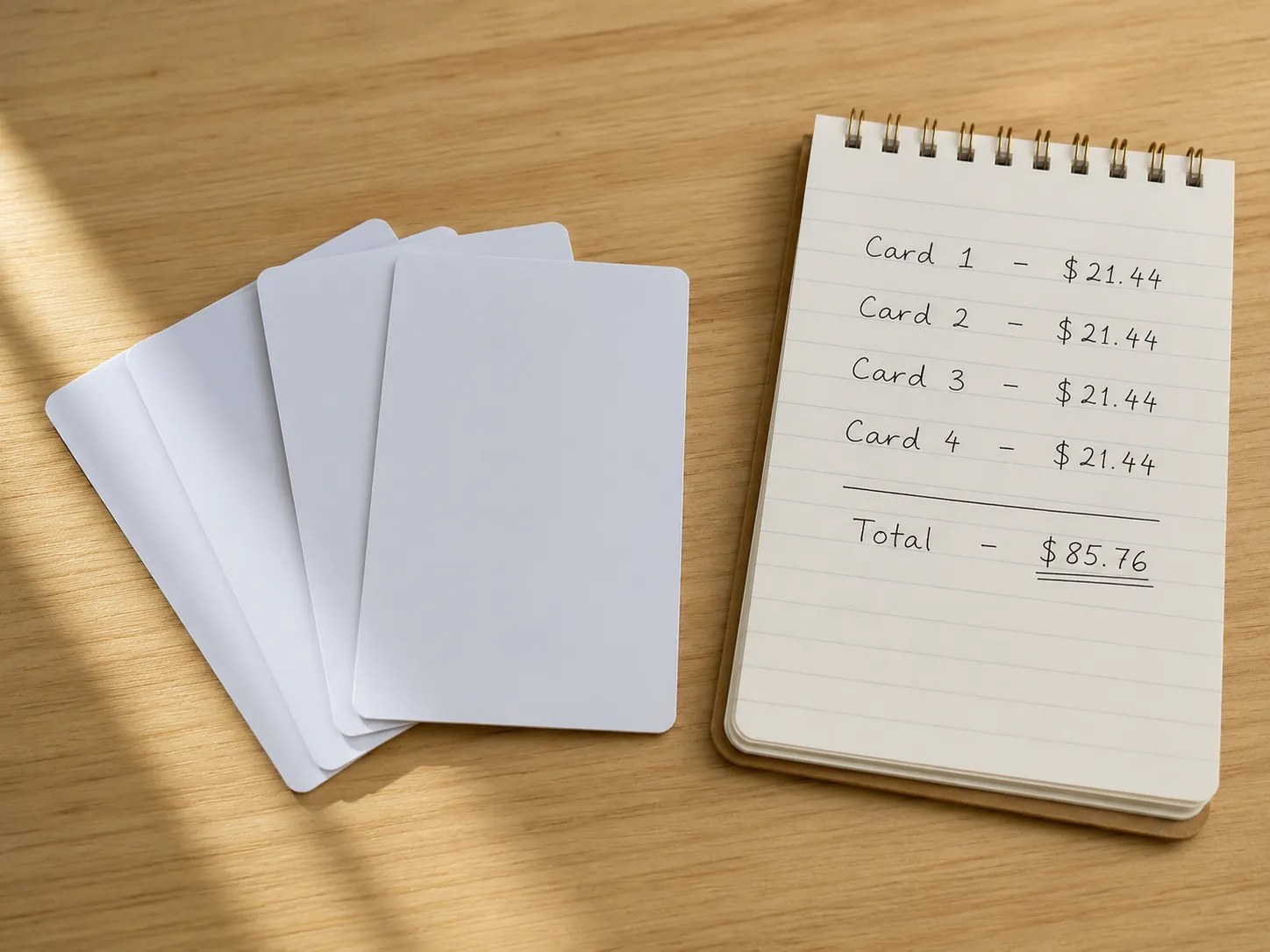
How that ceiling resets, and whether repeatedly reaching it can get you turned away entirely, is a subject of its own. I have looked at the yearly no-receipt ceiling separately.
The figure is an observation, not a policy. Target publishes no cap, which means no number you read anywhere, including mine, is something you can hold the company to at the desk. It can change tomorrow without an announcement.
Consumer Reports documented the no-receipt allowance as a deliberately unpublicised accommodation that a Target spokesman described as sitting above and beyond the posted policy, and its value had already been cut twice by then. A year later the same publication tracked another restructuring to a value ceiling per twelve-month period.
An unpublished number that has moved at least three times is folklore, not a rule. Treat the ceiling as a soft edge you will discover rather than a budget you can plan against.
One exception matters: an even exchange, the identical product swapped for a different size, is handled separately and did not count against my running total on 2 May.
The Registry Barcode Route and the Three Conditions Nobody Mentions
Target’s Baby Registry return barcode does not provide unlimited diaper exchanges. Target’s registry policy allows returns of most new, unopened items for up to one year after the registry’s event date, and a minimum spend against the registry is required to qualify at all.
Wish lists are limited to 90 days after purchase, not a year. Refunds are issued as a Target GiftCard or a Merchandise Return Card rather than to an original payment method.
The claim circulating in short video is that a registry barcode unlocks unlimited diaper swaps regardless of where the diapers came from. Target’s registry help pages attach three conditions that the reels leave out:
New and unopened only. The registry route does not extend to opened packs, so it is stricter on condition than the receipted route, not looser.
One year from the event date, not the purchase date. A shower held in January closes the window the following January, whoever bought the item and whenever they bought it.
A minimum spend against the registry is required. A registry created purely to process returns does not qualify, which is precisely the move the viral version recommends.
Wish lists are a separate product with a 90-day window, and plenty of parents build one, call it a registry, and find out at the desk. Parents call it the gift exchange return barcode; Target calls it the return barcode, and it sits under the registry’s Home page, in Offers and benefits, behind Start a return.
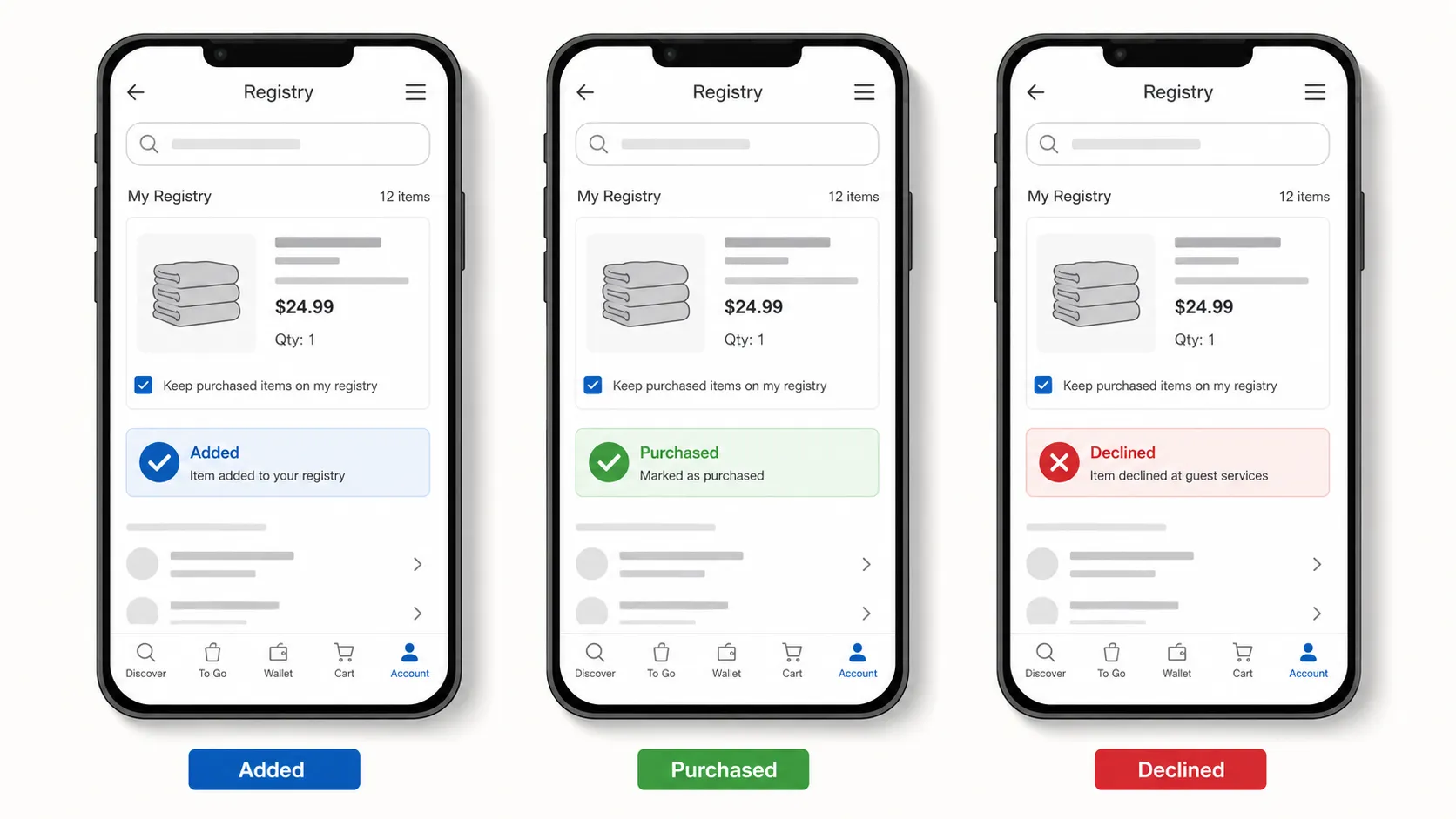
On 11 June at Store B I added a gifted pack of national-brand diapers to an active registry, marked it purchased, and took it to the desk. It was declined, because marking an item purchased after the fact creates no purchase record behind it.
Target’s registry return guidance issues a Target GiftCard when you use a gift receipt or the Registry Gift Purchase Log, and a Merchandise Return Card when the item was never marked purchased.
Since registry refunds land as store credit rather than cash, it is worth knowing the Target gift card return rules before you accept one.
The registry route is the most restricted of the three, not the least. It buys you a longer window in exchange for tighter conditions, which is a different trade rather than a better one.
Cat & Jack and the One-Year Owned Brand Guarantee
Cat & Jack is a Target Owned Brand, which means it carries Target’s one-year satisfaction guarantee: items can be returned within one year of purchase with a receipt for an exchange or refund. The same guarantee covers Target’s other owned brands, including up & up, Cloud Island and Threshold.
The Target Circle Card’s additional 30-day return window does not extend to Owned Brand items, and Limited Time Offer designer launches are excluded entirely.
That Circle Card correction is worth stating twice, because several highly ranked guides get it backwards. Target’s Owned Brand policy announces the one-year guarantee and the Circle Card extension in the same document and confirms the two do not stack.
Target maintains more than 45 owned brands across its corporate brand index. These are the ones a parent actually meets:
Brand | Aisle | What it covers |
|---|---|---|
Cat & Jack | Kids apparel | Clothing, shoes and accessories, newborn to teen |
Cloud Island | Baby | Layette, sleepwear and nursery textiles, newborn to nine months |
up & up | Household and baby essentials | Diapers, wipes, training pants, personal care |
Good & Gather | Grocery | Food and beverage, including baby food |
Pillowfort | Kids home | Bedding, decor and furniture for children’s rooms |
Threshold | Home | Bedding, bath, storage and decor |
All in Motion | Activewear | Family activewear and gear |
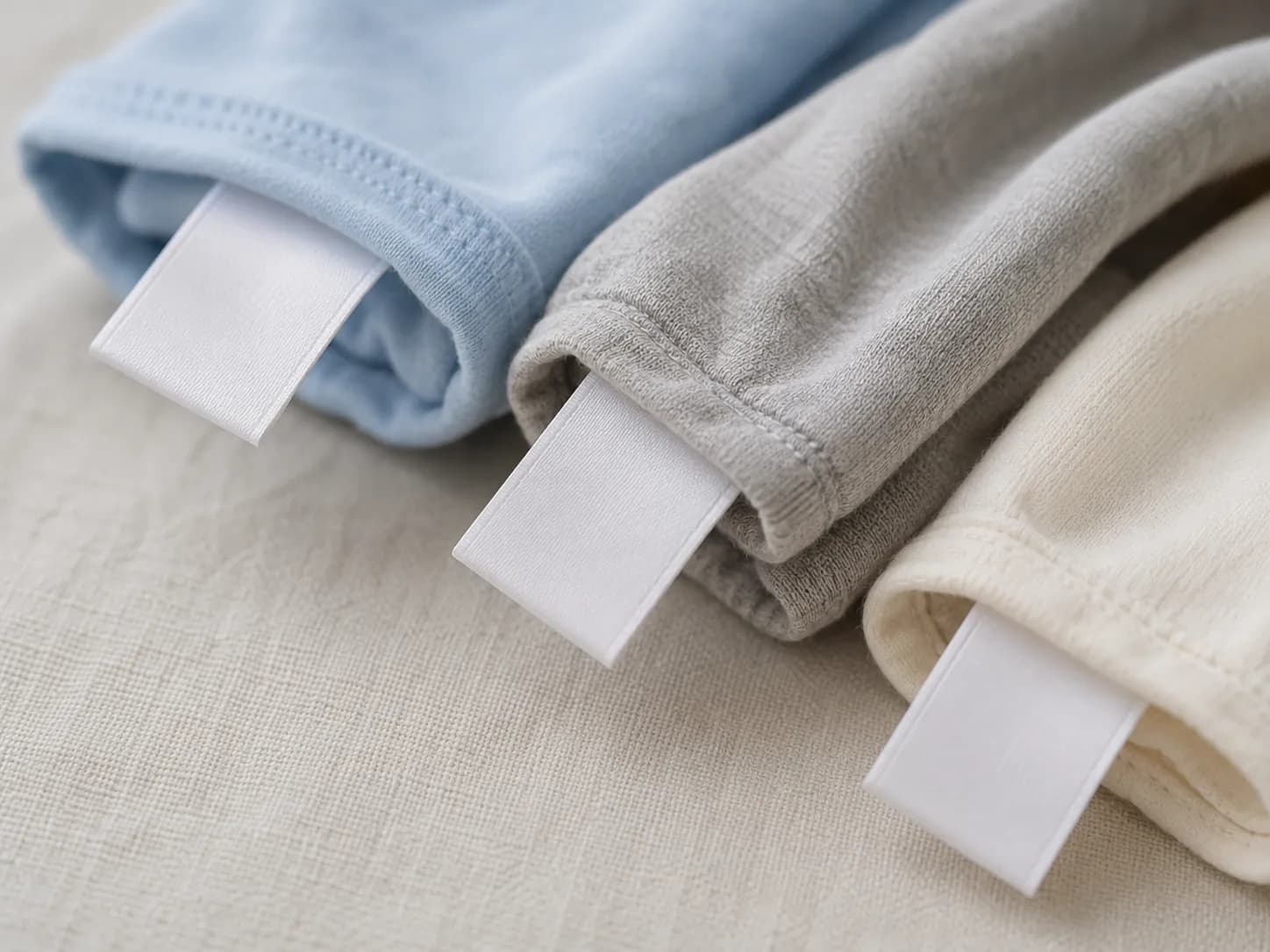
The desk reads the garment tag, not the aisle or the section sign. Two of the five garments I carried in as Cat & Jack turned out to carry a different label, and both times the tag settled it in under ten seconds.
The guarantee exists for a commercial reason: private label carries the margin to absorb returns and buys loyalty in exchange, which Retail Dive reported when Target introduced the one-year window and extended registry returns to a year after the event.
That also explains why the guarantee is the first thing tightened when abuse rises. You do not need paper: the Target Wallet in the app works as proof of purchase whenever the transaction sits in your history.
Worn, Outgrown, or Just Unwanted? Where the Year Actually Stops
Target’s one-year Owned Brand guarantee is a satisfaction guarantee, so Cat & Jack items can be returned within one year even after they have been worn or washed. Items with genuine quality failures, such as torn knees or broken zips, are the clearest case.
Returns of merely outgrown items in good condition are accepted at many stores but are decided at the guest services desk, and Target explicitly reserves the right to refuse.
The three scenarios parents bring in are not equivalent, even though the policy text does not distinguish them:
Quality failure. A seam splits, a zip breaks, a knee wears through in eight weeks. This is exactly what the guarantee was written for and it is the easiest return in the store.
Outgrown but sound. The child grew, the garment is fine. The policy’s wording supports it, the desk decides it, and the answer varies.
Unwanted and unworn. The weakest claim of the three, because nothing about the product failed. With tags and a receipt it usually clears anyway.
“Satisfied” is a subjective standard with no measurable threshold, so the desk supplies the threshold instead of the policy.
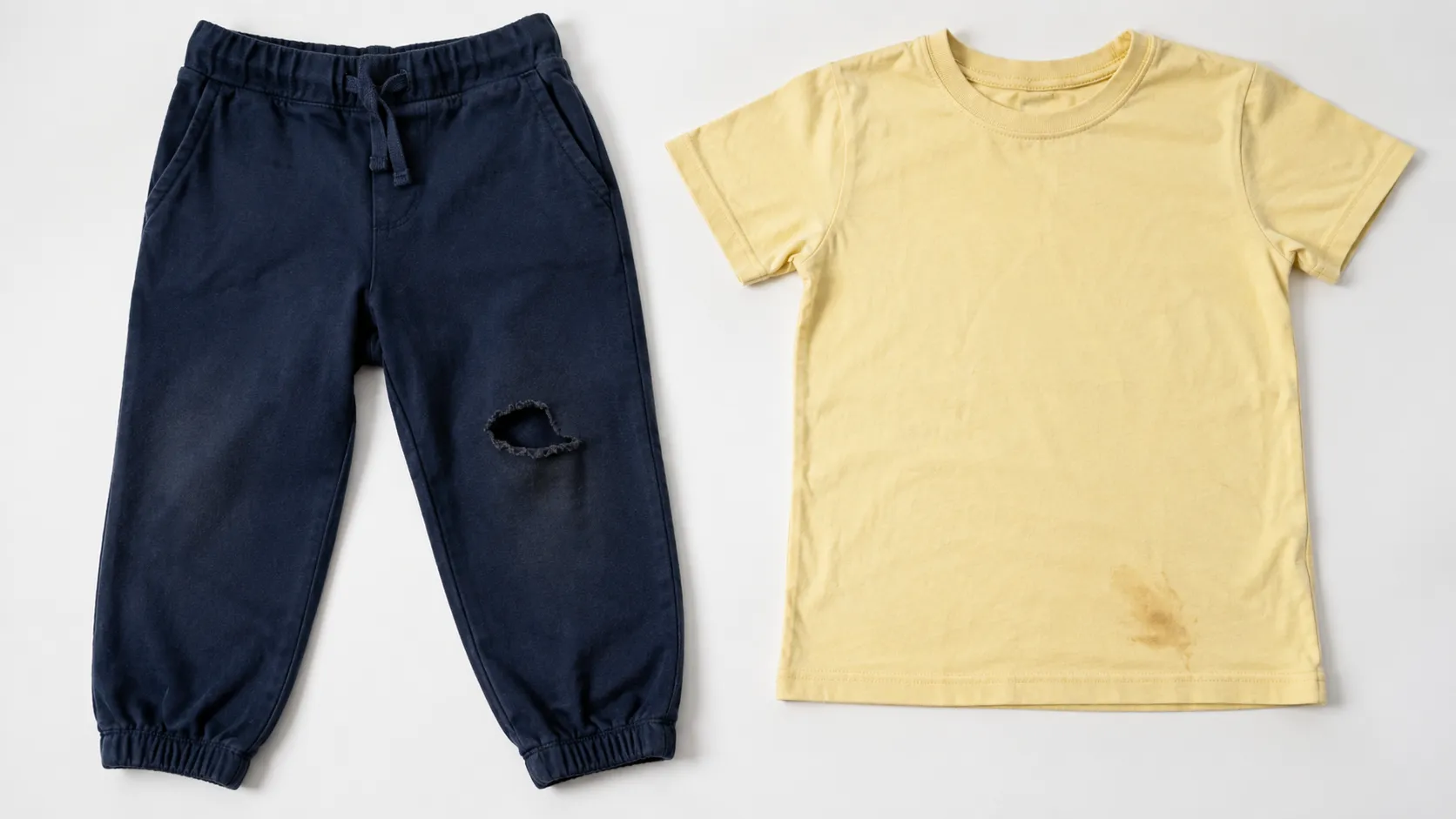
The more damaged garment was accepted and the less damaged one was refused, two months apart. The joggers had failed structurally, which reads as a quality claim; the tee was simply stained, which reads as ordinary wear.
Tags are not required on a satisfaction claim, because a worn garment obviously will not have them. Target’s Owned Brand wording turns on whether you are satisfied, not on packaging.
Without a receipt, a one-year item collapses back onto the no-receipt route above, with its photo ID, annual ceiling and lowest-selling-price refund. The year buys you nothing if the purchase cannot be found.
Hygiene-restricted apparel sits outside all of this: worn swimwear and intimates missing their sanitary liners are refused regardless of brand.
Can Target Flag You for Too Many Diaper Exchanges?
Target can decline a return, refund or exchange, and it reserves that right explicitly for cases of fraud, suspected fraud or abuse. No-receipt returns are recorded against a government-issued ID, which lets Target track cumulative no-receipt value across visits and stores.
Refusals are decided at the guest services desk rather than against a published threshold, which is why two shoppers with identical items get different answers at different stores.
Target reserves the right to deny returns, refunds, and exchanges, including but not limited to cases of fraud, suspected fraud, or abuse.
That clause sits at the top of every one of Target’s return policy pages and applies to all three routes here. It is not a diaper rule or a Cat & Jack rule.
Four behaviours raised my odds of a refusal across the 18 attempts:
Multiple no-receipt transactions inside a short window at nearby stores
Heavily worn apparel presented in volume rather than one or two items
Opened sanitary goods, where the condition test is effectively pass or fail
Items with no purchase record behind them at all, including registry items marked purchased retroactively
What actually gets recorded when that ID is scanned, and how long it stays on file, is worth understanding before your next trip. I looked at whether Target logs your returns in detail elsewhere.
The pressure behind all of this is measurable. The National Retail Federation’s 2025 Retail Returns Landscape put total US returns at $849.9 billion for the year and found that 9% of all returns were fraudulent.
Retailers are answering with systems rather than judgement calls. NRF also found 85% of retailers deploying AI against return fraud, alongside rises in overstated-quantity and empty-box returns.
Table 3. Measured time at the guest services desk, by route, across 18 attempts.
Route | Attempts | Median time at desk | Range |
|---|---|---|---|
Receipt | 6 | 6 minutes | 4 to 9 minutes |
No-receipt ID | 6 | 11 minutes | 7 to 19 minutes |
Registry barcode | 6 | 14 minutes | 9 to 23 minutes |
A registry return took me more than twice as long at the desk as a receipted one, and that gap is the scrutiny made visible. Here is the part that surprises people: an undefined clause produces inconsistency, not severity.
Target’s wording delegates judgement without setting a threshold, so variance between stores is the designed output rather than a failure of it.
A refusal is not an accusation, and it cannot be appealed at the desk. Both of my flat refusals on the no-receipt route were ordinary transactions with nothing unusual about them, and the associates involved had no discretion to reverse a system decline.
How to Do Each Return, Step by Step
To exchange diapers at Target, take the unopened pack to the guest services desk rather than a checkout lane. Bring your receipt, the barcode from your Target app Wallet, or the card used for the purchase.
Without any proof of purchase, bring a government-issued photo ID and expect a Merchandise Return Card. If the items came from a Target Baby Registry, open the registry’s Start a return option first to retrieve your return barcode.
One step applies to all three routes and belongs before you leave the house: load your Target app purchase history on home wifi, because the app failed to load on in-store reception at four of my six stores.
If You Have a Receipt
Bring the sealed pack plus the paper receipt, the Wallet barcode in the app, or the card you paid with.
Go to guest services, not a checkout lane.
Say whether you want a size swap or a refund. You should see the transaction on the associate’s screen within seconds.
For a swap, carry the replacement pack to the desk so both scan in one transaction.
If the lookup fails, ask for a card search. The transaction is atomic, so a mid-return failure means restarting.
If You Have No Receipt
Bring the sealed pack and a government-issued photo ID. Nothing else substitutes.
Say up front that you have no receipt, which routes the transaction correctly from the start.
Hand over the ID and expect a scan. You should see a prompt confirming the return is logged against it.
Expect a Merchandise Return Card at the lowest recent selling price, not cash.
If declined, you have reached the annual ceiling. Ask about an even exchange, which is handled separately.
If You Have a Registry Barcode
Before leaving home, open your registry’s Home page, find Offers and benefits, and select Start a return.
Screenshot the barcode. It will not load on in-store reception.
Bring only new, unopened items. Anything opened is split out of the transaction.
Present the barcode first. You should see the registry link confirmed before any item is scanned.
Expect a Target GiftCard, or a Merchandise Return Card if the item was never marked purchased.
Online orders can also come back in store, by Drive Up, or by mail. If the pack arrived from an order rather than a store run, the mechanics differ, so see the walkthrough on returning a Target order by mail.
Who This Doesn’t Work For
Target’s diaper exchange routes do not cover every situation. Diapers purchased from another retailer cannot be returned to Target, opened packs without a receipt are generally refused, and items past their applicable window have no route in.
Infant formula was refused on every attempt I made, across all three routes. Shoppers who have already reached Target’s annual no-receipt value are also turned away, because that ceiling is cumulative rather than per visit.
The dead ends, plainly:
Formula. Three attempts, three refusals, across all three routes.
Diapers bought elsewhere. The rule attaches to a Target purchase, and no argument at the desk changes that.
Opened packs with no receipt. Two rules fail at once, so resolving one changes nothing.
Anything past its window. Ninety days for national brands, one year for owned brands. The window is the only genuinely hard edge here.
A used-up no-receipt allowance. The ceiling runs across the year, not the visit.
Final sale and Target Plus items. Gift cards, trading cards and personalised items cannot be returned at all.
The formula result, in full. I tried a sealed national-brand tin with a receipt at Store D on 26 March, then against a registry barcode at Store A on 23 June and Store C on 30 June. All three were refused, each time because ingestible infant goods cannot be resold once they leave the store.
None of this is unlawful. FindLaw’s state summary confirms no federal law grants a general right to return non-defective merchandise, so return rights come from the posted policy plus, in around a dozen states, laws requiring it to be posted.
If you are stuck, local parent groups and diaper banks move unopened packs fast.
Target Diaper and Cat & Jack Exchange FAQs
Target’s diaper and Cat & Jack rules generate a consistent set of follow-up questions. Most concern proof of purchase, the window length for online orders, and whether fees apply.
Target charges no restocking fee on general merchandise including diapers, since restocking charges apply only to mobile phones. Items paid for online with an EBT card must be returned within 90 days.
Can I return diapers to Target without a receipt?
Yes, if the pack is sealed. Bring a government-issued photo ID, expect it scanned, and expect store credit on a Merchandise Return Card rather than cash. The annual value you can recover is limited, though Target publishes no figure.
Do I need the tags on Cat & Jack returns?
No. The guarantee turns on whether you are satisfied, and a washed garment plainly will not have tags. You do need proof of purchase, which can be the app.
Is there a restocking fee on diapers?
No. Target’s restocking charge of up to $35 applies to mobile phones only, and no general merchandise category, diapers included, carries one.
Can I exchange diapers for a different brand, not just a different size?
Yes, inside the window and with the pack sealed. Brand swaps were accepted on every receipted attempt I made, with the price difference settled at the desk.
Does the return window start at purchase or at delivery for online orders?
At delivery. Target’s policy starts the clock when you receive the items, so a pack ordered before a birth is not burning window time in transit.
Can I return a diaper pack bought with EBT?
Yes, within 90 days of the date it was shipped, delivered or made ready for pickup. That 90-day EBT window is required by SNAP rather than chosen by Target, so it does not flex.
What happens if the size I need is out of stock?
The desk processes it as a return rather than a swap. On the no-receipt route that means store credit at the lowest selling price, which is worse than waiting for restock.
Was my refusal legal?
Almost certainly. Retailers set their own terms and Target reserves the right to refuse in writing, so where state law helps is the posting requirement, not an entitlement to a refund.
I went into this assuming the Target Circle Card added 30 days to the Cat & Jack window. An associate at Store A corrected me on 12 March, and the policy page says the same.
The thing worth carrying out of all this is that a target diaper exchange policy does not exist as a document you can look up and hold anyone to. What exists is one general rule, one owned-brand exception, and three doors into them, and the door you walk through decides your ceiling rather than your eligibility.
A sealed pack with a receipt is close to frictionless. The same pack with a photo ID buys you store credit against an unpublished annual allowance, and on a registry barcode it buys you a longer calendar in exchange for stricter conditions.
Pick your door before you get in the car, not at the desk. Check the tag rather than the aisle, load your purchase history on home wifi, and if you are carrying formula or an opened pack, save yourself the trip.
Policy details were last verified against Target’s published pages on 20 July 2026, and this article is reviewed whenever those pages change. Nothing here is legal advice.
Read it your way
Short on time? Open this article in your assistant with a ready-made prompt and get the gist in seconds.
Found this useful? Make us a preferred source so we show up in your Google results.
Keep reading
Related articles
Retailer Return Policy Hubs
Ulta Return Policy: 30 Days for a Full Refund (2026)
Return to Ulta within 30 days for a full refund; 31–60 days gets store credit. The Ulta return policy window, receipt rule, refund method and how to return.
Retailer Return Policy Hubs
Lululemon Return Policy (2026): Tested at 3 Stores
Check the lululemon return policy: 30-day window, receipt and tag rules, refund timing, exchanges, and no-receipt options, current for 2026
Retailer Return Policy Hubs
eBay Return Policy: Why “No Returns” Doesn’t Mean No Refund
Check the eBay return policy for 2026: the 30-day Money Back Guarantee, seller windows, who pays return shipping, and how to get a refund when a seller says no.
Retailer Return Policy Hubs
Sephora Return Policy: The 60-Day Rule Is Gone (2026)
Return Sephora products within 30 days for a full refund. Get the current Sephora return policy: receipt rule, opened items, refunds by payment method.
The discussion
Comments
Every comment is reviewed before it goes live.