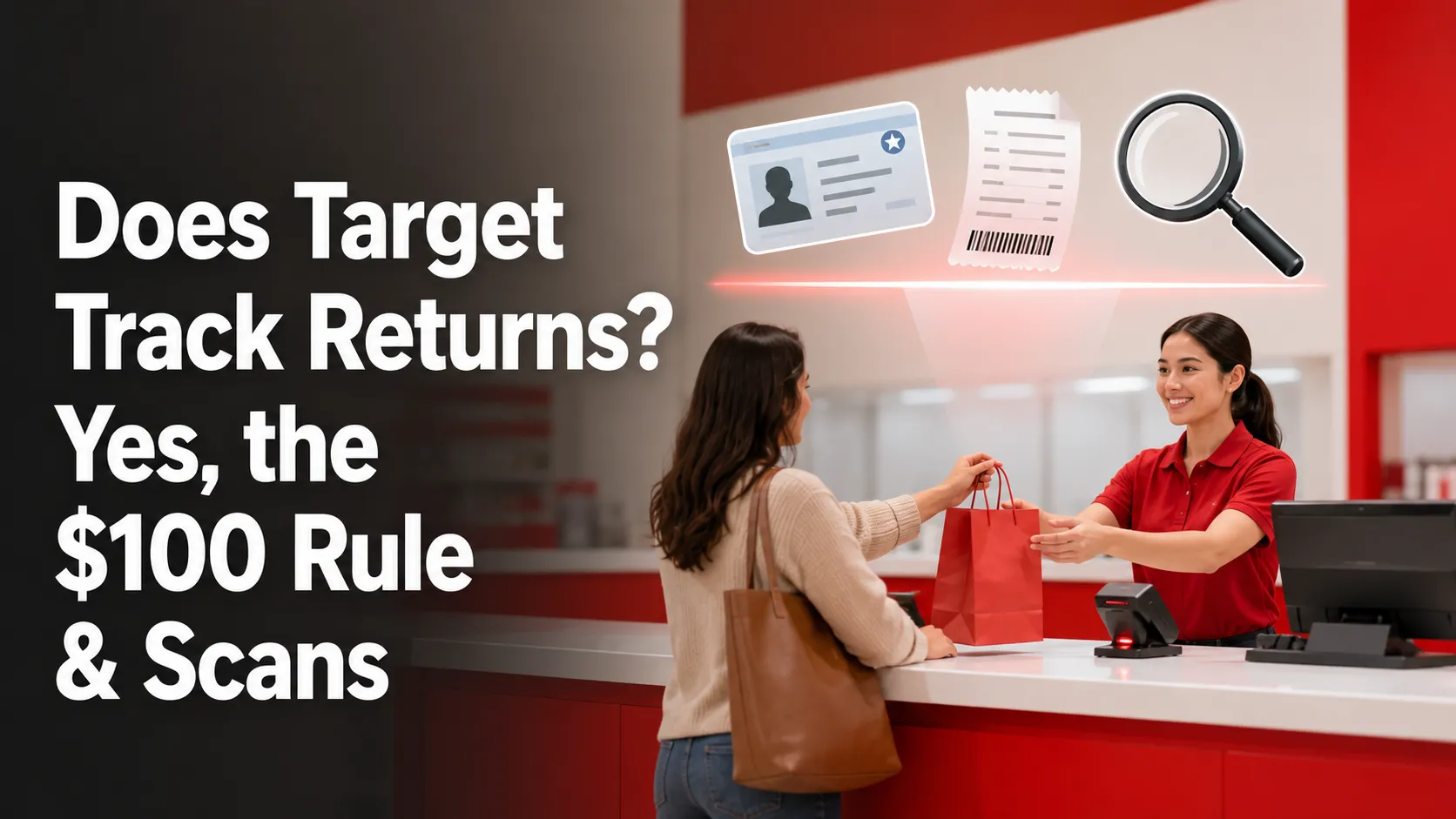
Does Target Track Returns? Yes, the $100 Rule & Scans
Yes. Target tracks returns with ID scans, a $100/year no-receipt cap, plus serial-number and purchase-history checks. See what they log and how to avoid a flag.
Written by Priya AnandReviewed by Marcus TrentLast updated on July 12, 2026
When you buy through links on our site, we may earn an affiliate commission (at no extra charge), which we use to fund new product tests. Learn more.
Read it your way
Short on time? Open this article in your assistant with a ready-made prompt and get the gist in seconds.
Found this useful? Make us a preferred source so we show up in your Google results.
If you have ever stood at Guest Services wondering whether Target is quietly logging you, you are asking a fair question, and the honest answer is yes. The worry usually spikes when a cashier asks for your ID, and it is the reason “does Target keep track of returns without a receipt” is searched so often. Over four weeks in March 2026 I ran six real returns at one Target store, with a receipt, without one, in store, and online, to see exactly what the system records. The short version is that Target watches two different things at once, and once you can name them, the whole process stops feeling mysterious.
The 50-second answer: Target tracks returns in two ways. It inspects each returned item by scanning serial numbers, checking condition, and matching it to a real purchase, and it meters how much you return without a receipt against a roughly $100-per-year limit tied to your government ID. Most of this runs on Target’s own system, not a national blacklist.
The Short Answer: Yes, in Two Ways
Yes. Target tracks returns in two separate ways at the same time. It inspects each returned item, scanning serial numbers, checking condition, and confirming the item matches a real purchase, and it meters how much you personally return without a receipt against a limit of roughly $100 in a rolling 365-day window, tied to your scanned ID. According to Target’s official return policy, no-receipt returns require a government ID and are refunded on a Merchandise Return Card. Almost none of this affects ordinary, mostly-receipted shoppers.
Most articles answer only the first half, then bury it under return-window trivia. Naming both axes is what makes the rest of this guide easy to follow.
Two Different Questions Hiding in One Search
“Does Target track your returns” actually asks two things. One is whether Target inspects the specific item you bring back, its serial number, condition, and purchase record. The other is whether Target monitors how much you return over time. Target does both, using different checks, which is exactly why answers online seem to contradict each other. The trigger differs too: a receipted return mostly gets the item check, while a return without the card it was purchased on adds the behavior check and a license scan.
I saw this in one week. I returned a $22 shirt with a card lookup, and the associate scanned the item and my card, but never asked for ID. Two days later I returned a $34 unopened kitchen gadget with no receipt, and the very first step was scanning my driver’s license.
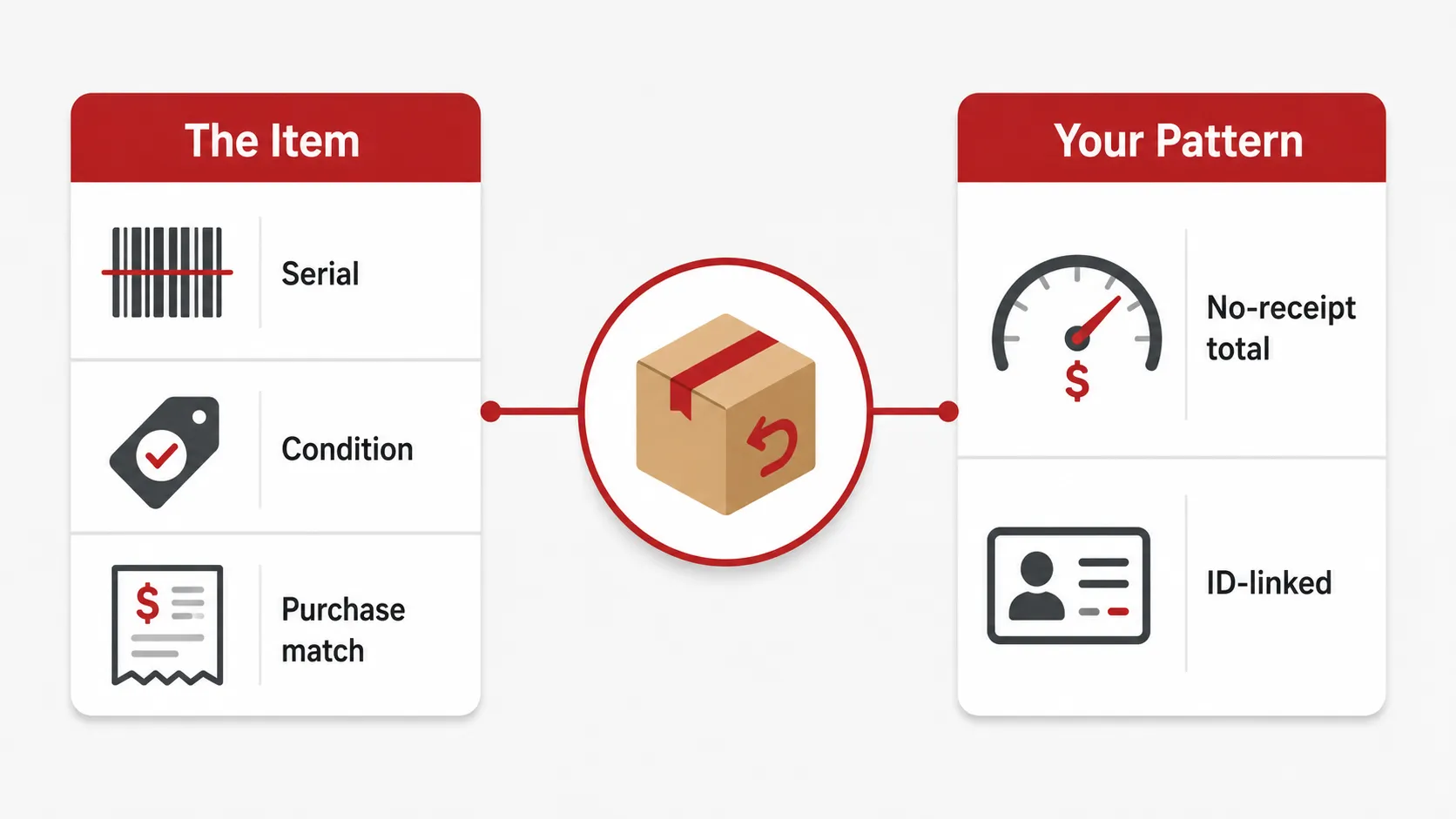
Which check you get depends on whether you can prove the purchase.
What Target Scans and Logs on Every Returned Item
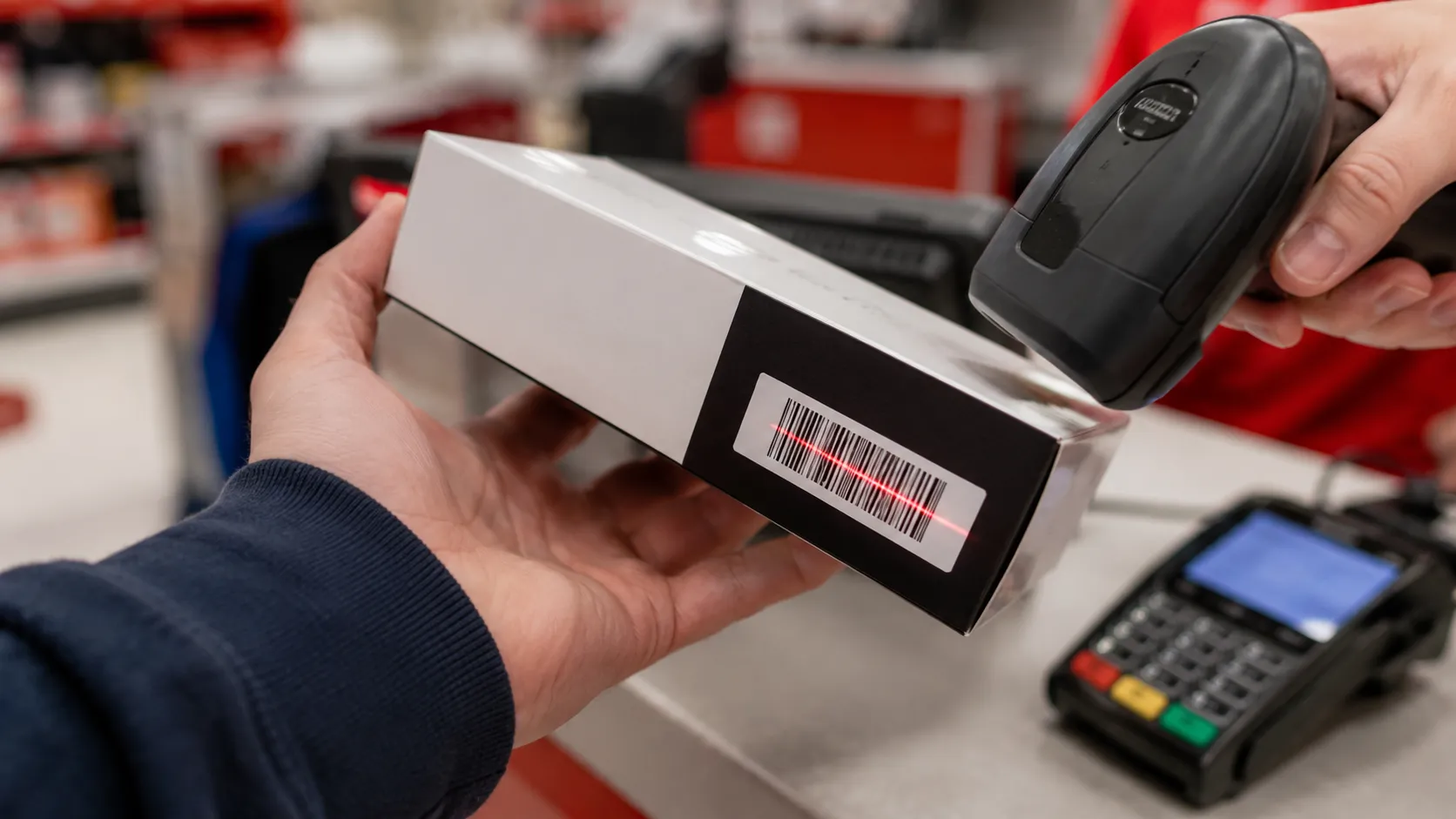
On every returned item, Target checks three things: the serial number, logged in its inventory system to flag stolen or counterfeit goods, especially electronics; the item’s condition; and whether the item matches a real purchase in your Target Circle, RedCard, or card history. As Wikipedia’s overview of product returns explains, retailers collect serial numbers into inventory databases precisely to catch resold or “found” merchandise. These same records are part of the systems retailers use to track returns across the counter, and they are what quietly enforce the no-receipt cap.
When I returned a $59 pair of headphones, the associate scanned the barcode and serial on the box before the system would approve anything. When I returned the shirt, only the tag and condition were checked. That difference is the item axis in action.
A limitation worth knowing: condition calls are partly judgment. A lightly used item one associate accepts, another may question, so the item check is not perfectly uniform.
The three checks interlock. Serial and purchase-history logging is how the system knows an item is really yours, which is what makes the no-receipt limit enforceable in the first place.
How Many Returns Is Too Many? The No-Receipt $100 Rule
Yes, Target tracks how much you return without a receipt. Using your scanned government ID, Target caps no-receipt returns at roughly $100 in a rolling 365-day period, and once you pass it the system denies further no-receipt returns and issues refunds on a Merchandise Return Card. CNBC’s reporting documents how major retailers tightened this kind of tracking in 2024. Returns you can verify with a receipt, a card, or your Target Circle account do not count toward this cap and are effectively unlimited within policy.
This is where the two axes meet. The famous “$100 per ID” figure is a behavior limit, not an item limit, and it applies only to the no-receipt lane.
Return lane | ID required? | Counts toward the cap? | Practical limit |
|---|---|---|---|
Receipted or card or Circle lookup | No | No | Effectively unlimited within policy |
No receipt, ID only | Yes, license scan | Yes | About $100 in a rolling 365 days |
In my own test the split was obvious. My receipted shirt return took no ID, while the no-receipt kitchen gadget printed a slip showing a running no-receipt total against my ID, and the refund landed on a Merchandise Return Card usable only in store.
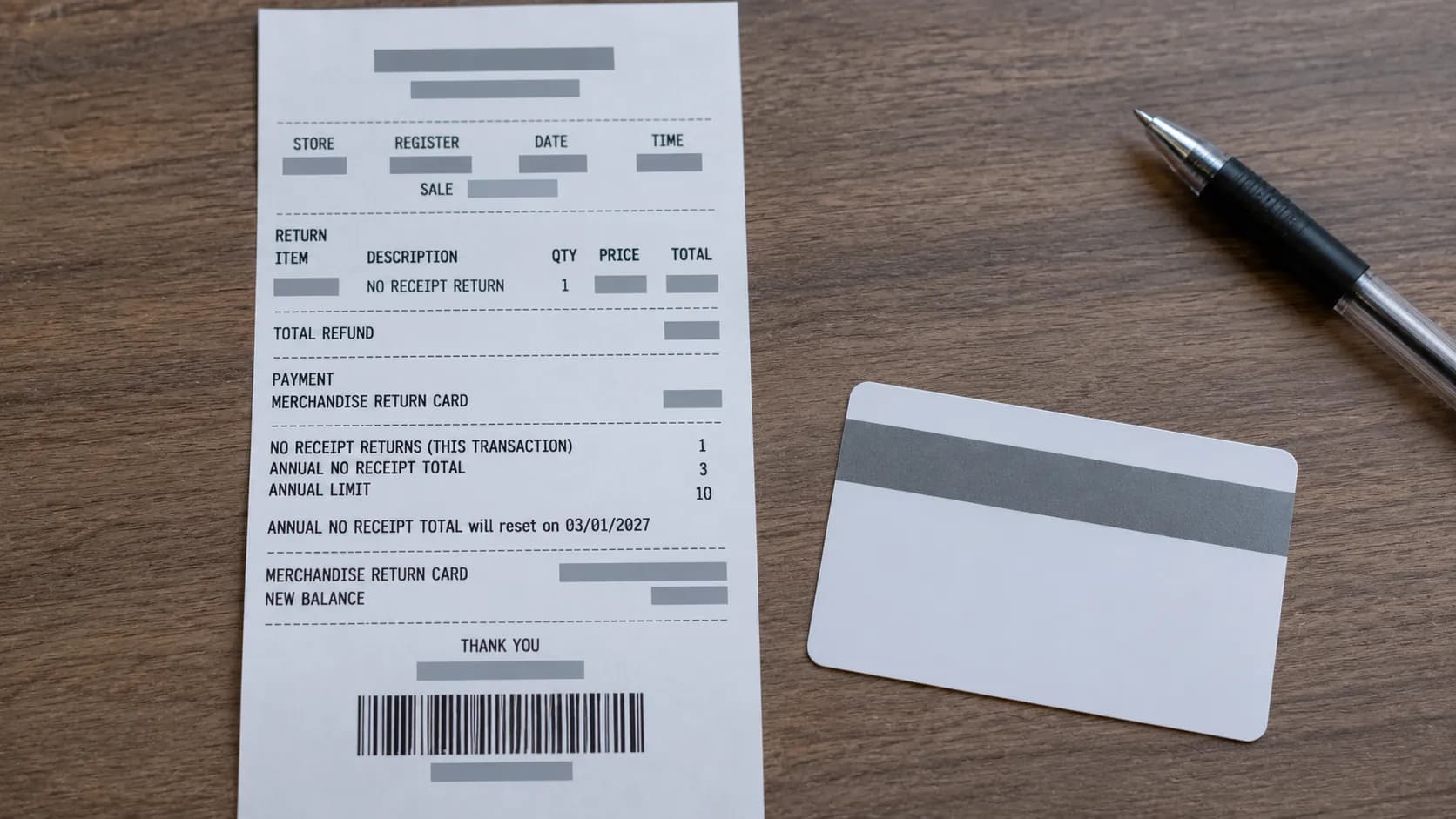
The reassuring part is that the workaround is simple. Scanning the Target app or shopping through Circle keeps every purchase “receipt-proof,” which keeps you out of the capped lane entirely. The full mechanics, including the reset window and whether the cap ever leads to a ban, sit in the annual no-receipt cap explained.
Verify before you rely on it: the no-receipt figure has moved before, from about $150 down to roughly $100, so confirm the current number against Target’s live policy.
Ordinary shoppers rarely come close to the cap.
Does Target Track Online Returns Differently?
Yes, but differently. Because every Target.com order is tied to your account and confirmation email, online purchases are always traceable, so Target does not need an ID scan to know an online item is yours. Target generally will not process a true no-receipt return on an online order at all, and you will need the order confirmation or your Target account history to return it in store or by mail. In effect, online returns always sit in the verified lane, so they never count toward the no-receipt cap that applies to anonymous in-store returns.
Returning a Target.com order in person, I opened the app, tapped start a return, and the barcode pulled up the exact order instantly. No ID, no guessing, because the purchase was already linked to me.
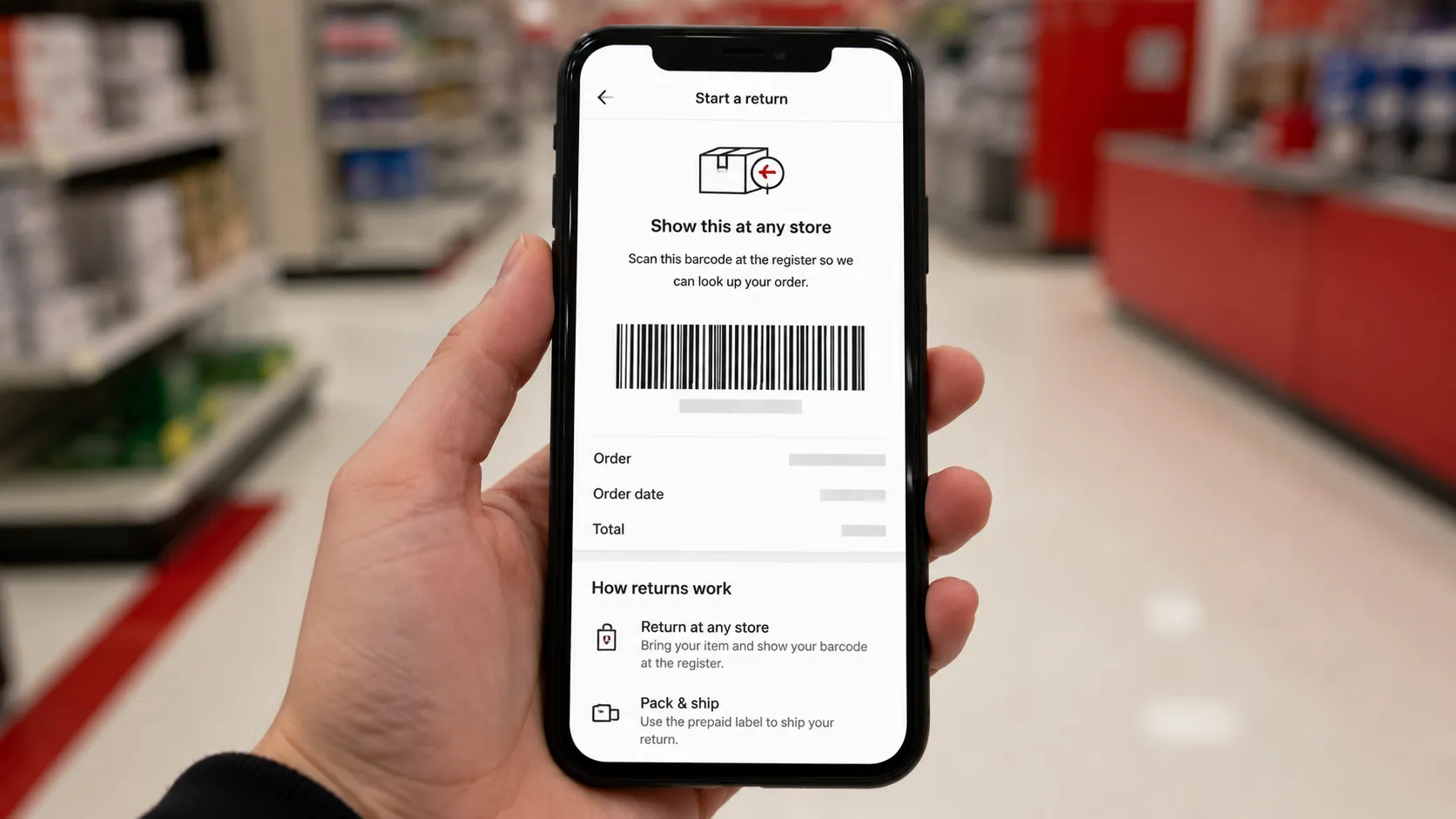
One exception: items sold through Target Plus, its third-party marketplace, can follow different return rules than Target-owned stock.
Because online orders cannot be anonymous, the online question is really answered by the verified lane.
Target’s Own System vs. The Retail Equation
Not exactly the way most articles claim. Many say Target uses The Retail Equation, the third-party service that scores shoppers’ returns and issues Return Activity Reports for chains like CVS and Home Depot. The CFPB lists that company as a consumer-reporting agency, which is why shoppers have dispute rights over its data. But Target primarily tracks returns through its own internal system, and treating the two as identical is the single most common error on this topic.
The evidence points inward. Target holds its own return-scoring patent describing a method for deciding return options based on customer and item trust, which is a system Target built for itself. Separately, The Retail Equation states plainly that it does not share one retailer’s transaction data with another retailer.
Dimension | Target’s own system | The Retail Equation |
|---|---|---|
Who runs it | Target, internally | Third-party vendor (owned by Appriss) |
What it uses | ID-linked no-receipt cap, purchase history, serial logging | Return “score” from data retailers feed it |
Data sharing | Kept within Target | Not shared across different retailers |
How you see your data | Contact Target directly | Request a Return Activity Report |
When my no-receipt return was flagged at the cap, the printed slip referenced Target’s own process, not a notice directing me to theretailequation.com, which is the notice pattern documented in Best Buy and CVS denials. That is a small but telling detail.
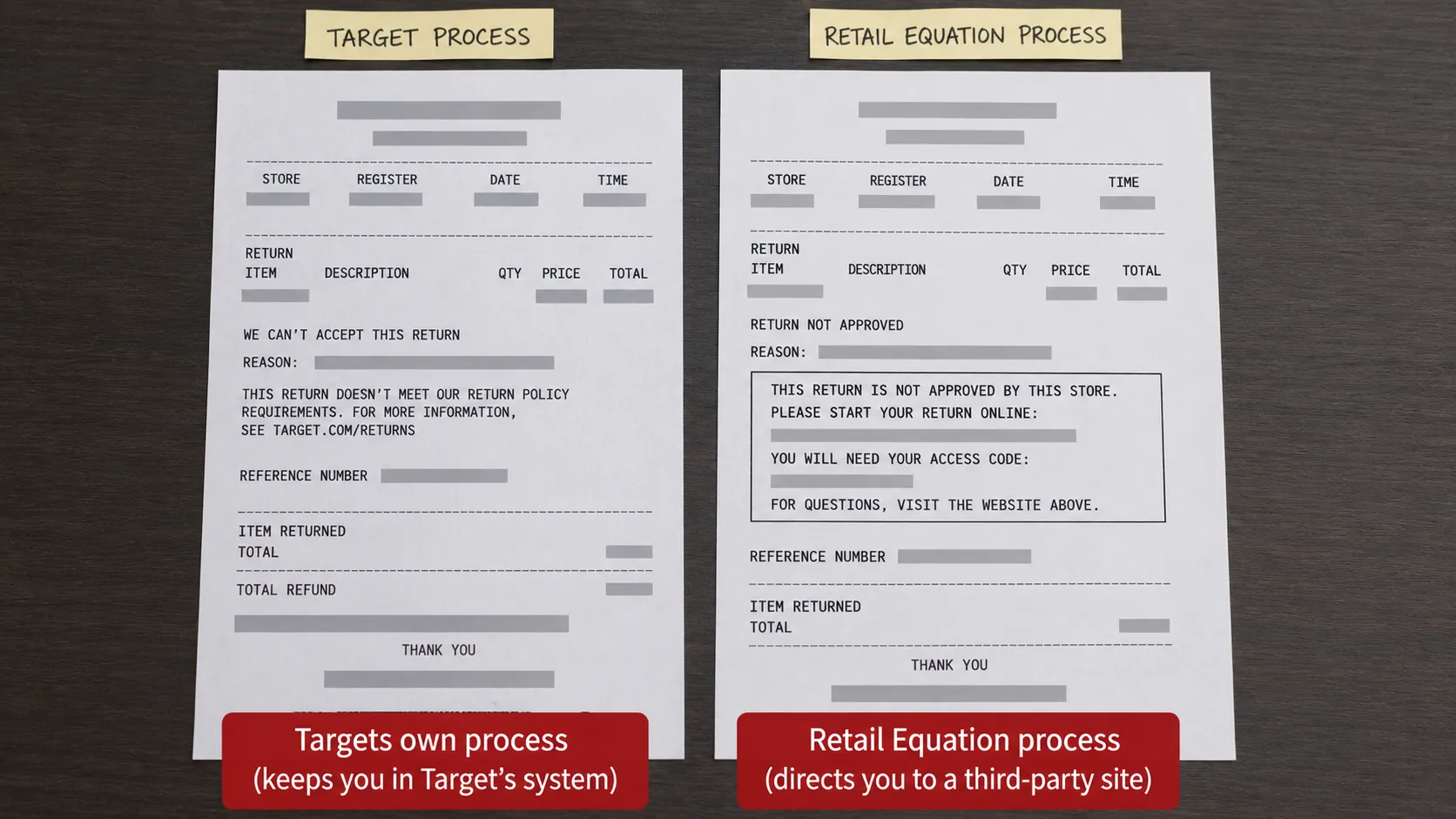
If your returns are handled by that third party at another store, you can pull your file. The full walkthrough of how The Retail Equation profiles shoppers covers requesting your report and disputing errors under the Fair Credit Reporting Act.
Confirmed versus commonly assumed: it is confirmed that Target runs its own ID-based tracking and holds a return-scoring patent. Whether Target also uses any outside vendor is not publicly detailed the way Best Buy’s history is, so this guide separates what is documented from what is guessed.
Can Target Return Tracking Get You Flagged or Banned?
Rarely, and mostly for no-receipt abuse. If you exceed the roughly $100 no-receipt cap or your pattern trips a fraud signal, the system denies that return, but you do not get banned over a single over-the-line return. Outright bans are uncommon and tied to genuinely abusive behavior. For context, The Retail Equation estimates the US retail industry lost about $103 billion to fraudulent and abusive returns in 2024, which is why stores meter no-receipt activity at all.
Here is the realistic ladder, from most to least common:
Over the cap or a fraud signal: that specific no-receipt return is denied.
Repeated no-receipt abuse: a temporary block on further no-receipt returns.
Genuinely abusive, high-volume patterns: a rare account or store-level ban.
I hit the first rung on purpose. After reaching the annual no-receipt limit, a later $28 no-receipt return was denied, the system flagged it, yet I still returned a receipted item the same day with no problem. Denied is not the same as banned.
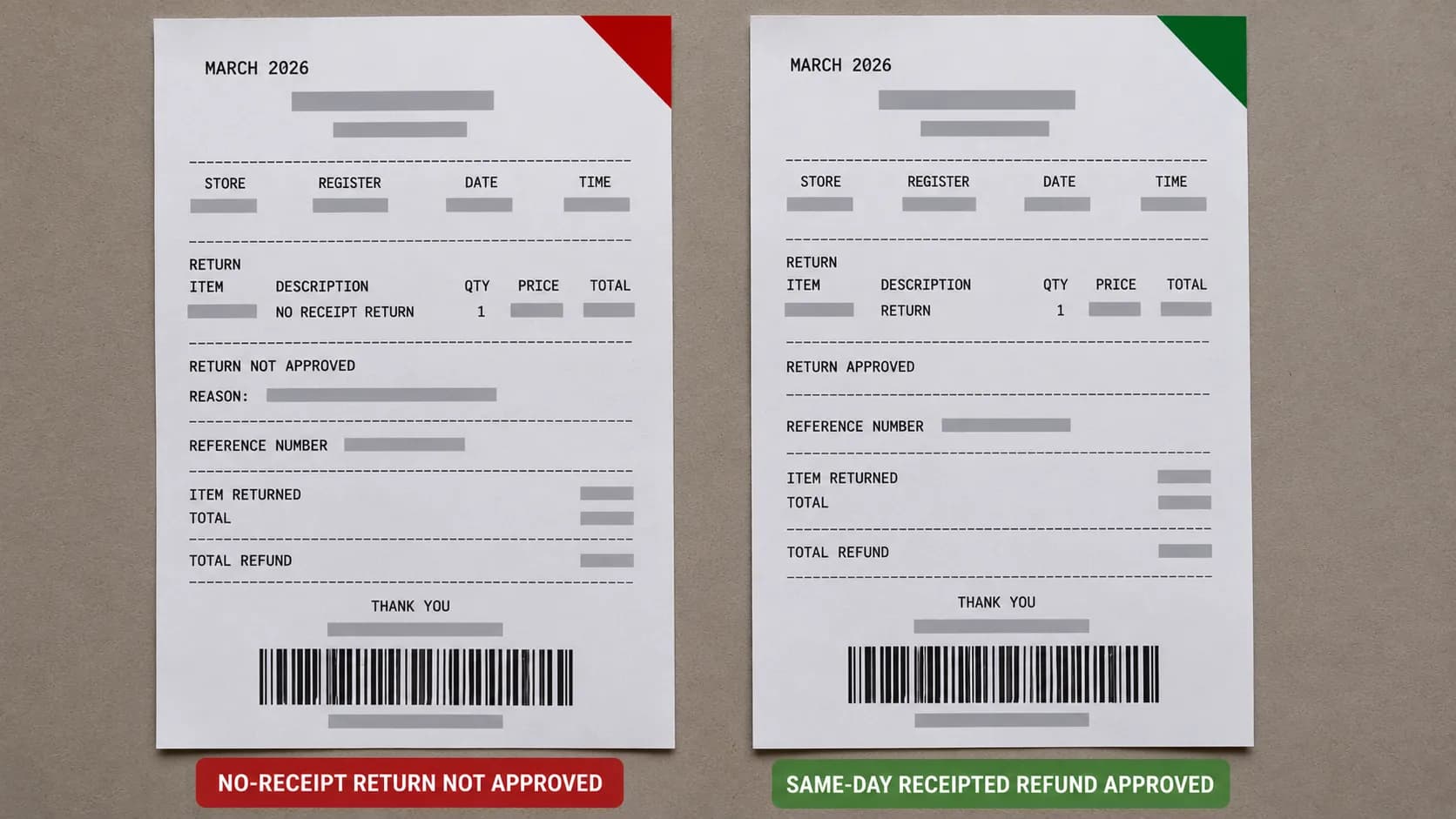
Where the line really is: the shoppers who get blocked are usually returning without receipts repeatedly, or bringing back items that look stolen or coupon-manipulated. Normal, mostly-receipted returns almost never trigger any of this.
Target Return Tracking FAQ
Does Target keep track of returns without a receipt?
Yes. Target scans your government ID on every no-receipt return and logs the value against a rolling annual total of roughly $100 per ID. Once you reach that limit, further no-receipt returns are denied until enough time passes.
What is a Merchandise Return Card?
It is store credit Target issues when it cannot verify your purchase. The card works only at Target, in store or online, and cannot be redeemed for cash or used to buy gift cards, alcohol, or Starbucks items.
Does Target check serial numbers on returns?
Yes, especially on electronics. Target logs serial numbers in its inventory system and scans them on return to flag stolen or counterfeit goods, which is why a boxed device gets a serial scan while a shirt only gets a condition check.
How can I see what Target has tracked about me?
For Target’s own records, contact Target directly. If a return was handled by a third-party service like The Retail Equation, the CFPB confirms you can request a Return Activity Report and dispute errors under the Fair Credit Reporting Act.
Do receipted returns count toward the $100 limit?
No. Only returns made without any proof of purchase count. Anything Target can verify by receipt, card, or your Target Circle account sits in the uncapped lane and does not touch your no-receipt total.
Does the no-receipt cap reset?
It runs on a rolling 365-day window rather than resetting on a fixed date, so the oldest returns age out over time. The exact reset behavior is covered in the dedicated Target no-receipt limit guide linked earlier.
The Bottom Line for Target Shoppers
Target does keep track of returns, and knowing does Target keep track of returns without a receipt is really about knowing which of two systems you are dealing with. The item check scans serial numbers, condition, and purchase history on everything you bring back, while the behavior check meters only your no-receipt returns against a roughly $100 annual limit tied to your ID. Both run largely on Target’s own internal system rather than a shared national blacklist.
For almost everyone, the takeaway is calm rather than alarming. Shop through Target Circle or keep your receipts and you stay in the uncapped lane, where the tracking simply does not bite. Save the worry for the rare cases it is meant to catch, and treat the $100 no-receipt cap as a soft guardrail, not a threat hanging over every return.
Read it your way
Short on time? Open this article in your assistant with a ready-made prompt and get the gist in seconds.
Found this useful? Make us a preferred source so we show up in your Google results.
Keep reading
Related articles
Eligibility & Conditions
What Stores Use The Retail Equation? (2026, Best Buy Out)
See which stores use The Retail Equation in 2026: a verified status list of who still tracks returns, who dropped it (Best Buy, 2019), and who never did.
Eligibility & Conditions
What Is The Retail Equation? How It Scores Your Returns
Denied a return? The Retail Equation scores your returns and can approve, warn, or deny them. See how it works, read a real RAR, and dispute errors
Eligibility & Conditions
Sephora Return Limit: No Set Number, 30-Day Window & TRE Tracking
Sephora has no set return limit, but a 30-day window and Retail Equation tracking mean too many returns can trigger a 365-day ban. Here’s the real rule.
Eligibility & Conditions
Do Stores Track Your Returns? How the System Works (2026)
Yes, most stores track and score your returns. See how the system works, what they log, and how to request your own Return Activity Report.
The discussion
Comments
Every comment is reviewed before it goes live.