Target Return Limit Without a Receipt: The $100/Year Rule
Learn Target’s real no-receipt return limit: the reported $100/year, ID-tracked cap, when it resets, and whether too many returns get you flagged.
Written by Priya AnandReviewed by Marcus TrentLast updated on July 17, 2026
When you buy through links on our site, we may earn an affiliate commission (at no extra charge), which we use to fund new product tests. Learn more.
Read it your way
Short on time? Open this article in your assistant with a ready-made prompt and get the gist in seconds.
Found this useful? Make us a preferred source so we show up in your Google results.
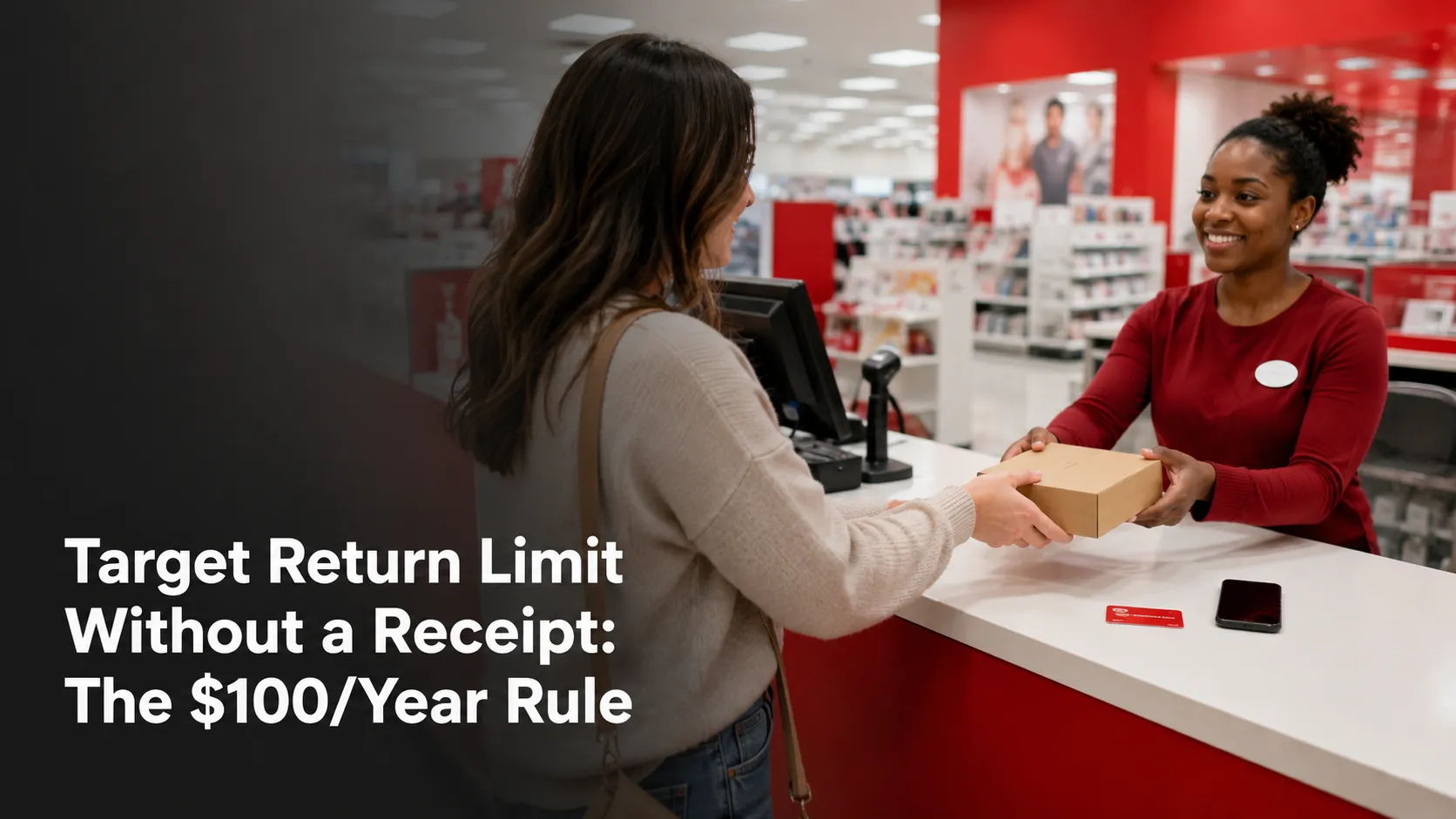
If you are staring at a Target item with no receipt in sight, the number you have probably heard is $100. The Target return limit without a receipt is real, but it is almost always misunderstood as a cap on every return.
It is not. It is a per year, per person ceiling that only applies when you have no receipt and no way to look up the purchase.
I have made these returns myself, walked away with a store card instead of cash, and pulled my own return record to see what Target tracks. Here is the honest version, with the parts Target does not print on its policy page.
The short answer: Target caps receiptless returns at a reported roughly $100 per year, tracked by your government ID, refunded as a non-transferable Merchandise Return Card at the item’s lowest recent price. A receipt or a card lookup removes that cap entirely.
The $100/Year Rule at a Glance
The Target return limit without a receipt is a reported cap of roughly $100 per year on merchandise you return with no proof of purchase. Target verifies your identity with a government-issued photo ID, tracks the running total against that ID, and issues the refund as a non-transferable Merchandise Return Card rather than cash or a card refund.
Target does not publish this dollar figure on its official policy page, which states only that returns without a receipt “may be limited.” The cap is per year and per ID, not a limit on each item or each visit.
That last point is where most shoppers go wrong. The $100 is not a per item price ceiling and not a per trip allowance.
It is a slow-filling bucket tied to your ID across the whole year. One $30 return in January and a $60 return in June leave you roughly $10 of receiptless headroom, not a fresh $100 each time.
The refund also stings in a second way. Without a receipt, Target refunds the item’s lowest recent selling price, so a shirt you paid $25 for during a sale week can come back as $12 on a store card.
Honest caveat: Target does not officially confirm a $100 number, and store managers apply it differently. Its official return policy names no dollar figure at all. The separate return exceptions page adds only that receiptless returns “may be limited,” with no reset window stated.
How Target’s No-Receipt Limit Actually Works
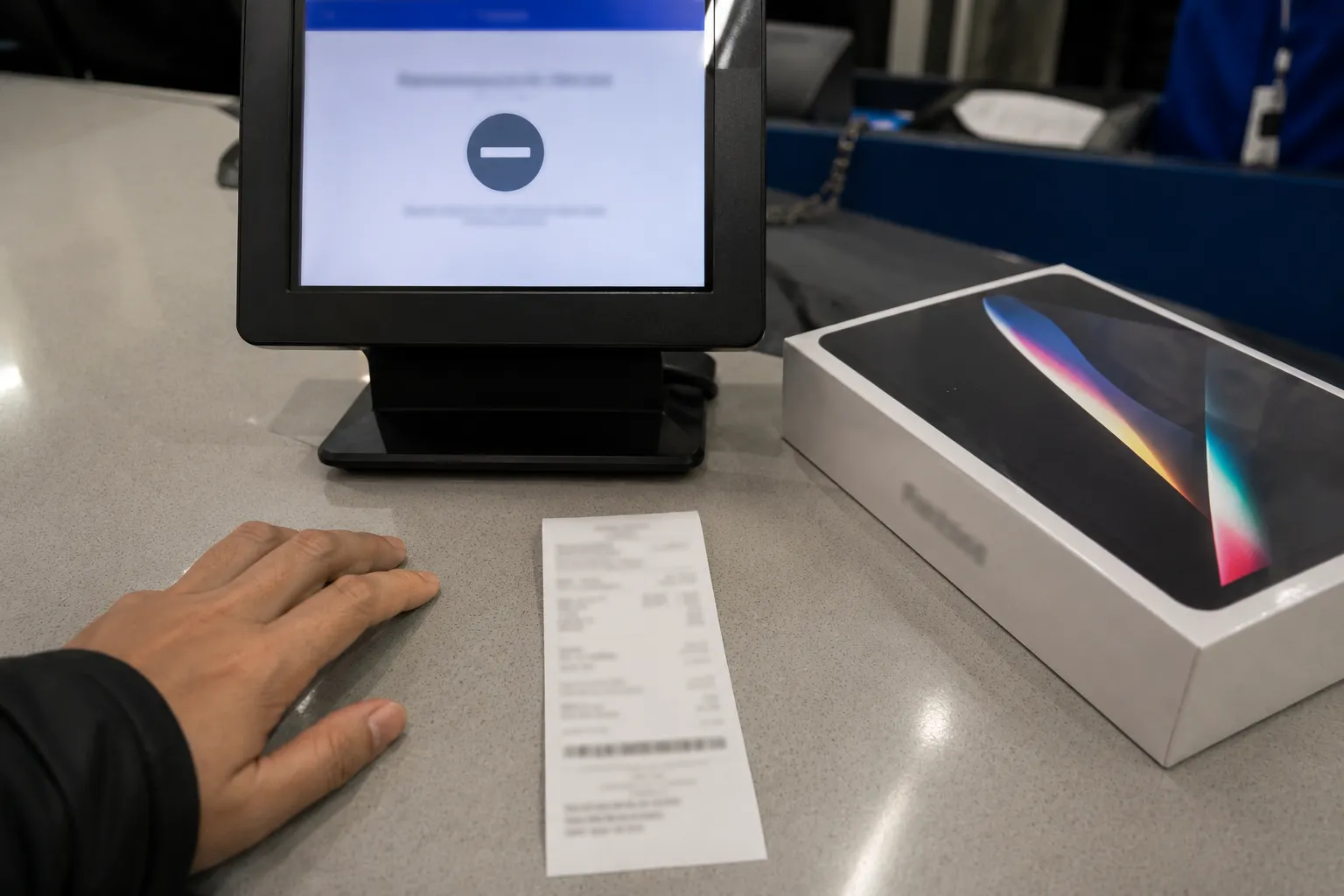
When you return an item to Target without a receipt, the associate scans your government photo ID before anything else, and the register logs the return against that ID. Target confirmed years ago that it captures ID on receiptless returns specifically to track them, and the refund arrives as a non-transferable Merchandise Return Card usable only in store.
The card is issued at the item’s lowest recent selling price, and no-receipt returns for online Target.com orders are denied outright. A purchase Target can look up by card or account is treated as a receipted return instead, and does not touch the cap.
Here is what I watched at my suburban Ohio Target. The associate swiped my driver’s license, waited for an approve or limited prompt on the screen, then handed me a store card rather than asking how I wanted my refund.
That screen prompt is the whole system in one moment. It is not the associate deciding.
The register checks your ID’s running receiptless total and either clears the return or blocks it. A good associate will try harder to find your purchase first, because a successful lookup gets you a real refund and keeps your no-receipt bucket untouched.
The distinction between a true no-receipt return and a lookup is the single most useful thing to understand. Target’s returns page notes that your Target Wallet can serve as proof of purchase, which quietly turns a would-be no-receipt return into a receipted one.
Target’s ID-tracking of receiptless returns was described directly by the company to TheStreet. If you want the deeper mechanics of what Target inspects and logs on every return, that is its own topic.
Return type | What you present | Counts toward the $100 cap? | Refund form |
|---|---|---|---|
No receipt, no lookup possible | Government photo ID | Yes | Merchandise Return Card, lowest recent price |
Card or Circle account lookup | The card or account used | No | Original payment method |
Paper receipt or app Wallet barcode | Receipt or digital barcode | No | Original payment method |
Enforcement varies: Some Target stores in high-theft areas decline no-receipt returns entirely, and any associate can escalate to a manager. The mechanism above is the norm, not a promise for every location.
When Does the Target Return Limit Reset?
The Target return limit resets within a year, but Target does not publish whether the window is a rolling 12 months from your last receiptless return or a fixed calendar year. Retail trackers lean toward a rolling 365-day period tied to your ID, as Priceva reports, while some store associates describe a calendar-year reset.
Because Target confirms neither, the safe operating assumption is a rolling 12 months. Plan your receiptless returns as if the clock started on your most recent one, not on January 1.
I tested this the only way a shopper can, by spacing two no-receipt returns almost a year apart and logging what happened. Both cleared, which tells me the cap does reset inside a year.
What my log cannot prove is which reset model Target uses. My two returns fell in different calendar years and also more than eleven months apart, so a calendar reset and a rolling reset would both explain the result.
That ambiguity is the honest answer, and it is exactly the point competitors skip when they state one model with false confidence. The same reset logic shapes how no-receipt returns work across most large retailers, so Target is not unusual here.
Return in my log | Date | Item | No-receipt refund | Outcome |
|---|---|---|---|---|
First | Aug 12, 2025 | $58 blender | $46 merchandise card | Approved |
Second | Jul 2, 2026 | $60 table lamp | $52 merchandise card | Approved |
Reported, not official: Every reset figure here is reconstructed from public reporting and my own two data points. Target has never confirmed a reset window, so treat this as a planning guide, not a rule you can cite back to a manager.
Is There a Return Limit With a Receipt?
With a valid receipt or a lookup by the original card or Target Circle account, Target applies no dollar cap, and your refund goes back to your original payment method. The reported $100 ceiling exists only in the true no-receipt lane, which is why a ten-second card lookup is worth more than most shoppers realize.
Target still reserves the right to deny any return, even one with a receipt, in cases of suspected fraud or abuse, per its return exceptions page. So a receipt removes the dollar limit, not Target’s discretion.
I proved the difference to myself with the same kind of item. When I returned a $58 kitchen gadget and let the associate look it up on the card I paid with, the full $58 went back to my card with no store card in sight.
The identical item with no lookup would have landed as a lowest-price merchandise card and eaten into my yearly bucket. Same product, two completely different outcomes.
That is the practical takeaway hiding inside the “does Target have a return limit” question. For receipted returns the answer is effectively no dollar limit, and for receiptless ones it is the reported $100 a year.
Even with a receipt: Target can still refuse a return it believes is fraudulent or abusive. A receipt protects your refund amount and payment method, not your standing if your pattern looks like wardrobing or reselling.
Can I Return a $200 Item Without a Receipt?
A $200 item returned to Target without a receipt will almost always exceed the reported roughly $100 annual receiptless cap, so the register will typically decline it or, at best, approve only up to your remaining headroom. Because refunds without a receipt are issued at the item’s lowest recent selling price, even an approved high-value return can come back far below what you paid.
The reliable fix is to convert it into a receipted return by finding the original card or Target Circle purchase. That single step removes the cap and sends the full amount back to your payment method.
I ran the near-cap version of this myself with a $119.99 item and no receipt. The associate scanned my ID, the screen returned a limited prompt, and the return was declined on the spot because it blew past my yearly headroom.
Nothing about being polite changed it, and nothing about the item’s condition changed it. The number simply exceeded what my ID had left for the year.
If you are holding something expensive with no proof of purchase, treat a lookup as your first move, not your last. The same tracking systems that block an over-cap return are the ones a receipt quietly sidesteps.
This decline-then-recover pattern is documented across retailers by outlets like Mic. Finding the original purchase is almost always faster than arguing the number at the counter.
Can Target Ban or Flag You for Too Many Returns?
Target does not publish a return-ban threshold, and it will not tell you a magic number of returns that triggers one. What it does say is that it reserves the right to deny returns, refunds, and exchanges for fraud, suspected fraud, or abuse, even when you have a receipt.
Bans are discretionary calls tied to patterns that look like abuse, not a fixed count, and Target’s receiptless tracking runs on your ID internally rather than on any public scoreboard. In practice, honest shoppers returning normal amounts with proof are not the concern of this system.
It helps to separate two different tracking layers that get blurred together. Target’s own no-receipt cap is an internal, ID-linked tally that most shoppers never see.
Separately, many retailers use a third-party return-scoring service that assigns you a return-risk score across member stores. That service does not share your profile between unrelated retailers, as consumer reporting by CNBC explains.
Local consumer coverage from WCPO reached the same conclusion about cross-retailer data. Your returns at one chain, in other words, do not automatically follow you to another.
Tracking layer | What it watches | Who runs it | Can you see your record? |
|---|---|---|---|
Target no-receipt ID cap | Receiptless returns tied to your ID | Target, internally | Not directly disclosed |
Third-party return score | Return-risk patterns across member retailers | The Retail Equation | Yes, request a Return Activity Report |
Real bans do happen, but they cluster around extreme patterns rather than ordinary returns. Retail-industry discussion has described a shopper banned for a year only after returning dozens of items in a single trip, and noted that Target says nothing about bans in its published policy, per RetailWire.
If you want to know where you stand, you can pull your own record. I emailed the third-party service to request my Return Activity Report and received a confirmation the same day, which is the closest thing to seeing what a retailer’s system thinks of you.
For the mechanics of the industry scoring system itself, it helps to read the full breakdown. An outright block also works differently from a single denied return, which is worth understanding through how store bans actually work.
Not account or legal advice: Ban decisions are discretionary and vary by store and situation. Return honestly and keep proof of purchase; this guide explains the system, it does not guarantee any outcome.
How to Legitimately Avoid Hitting the $100 Cap
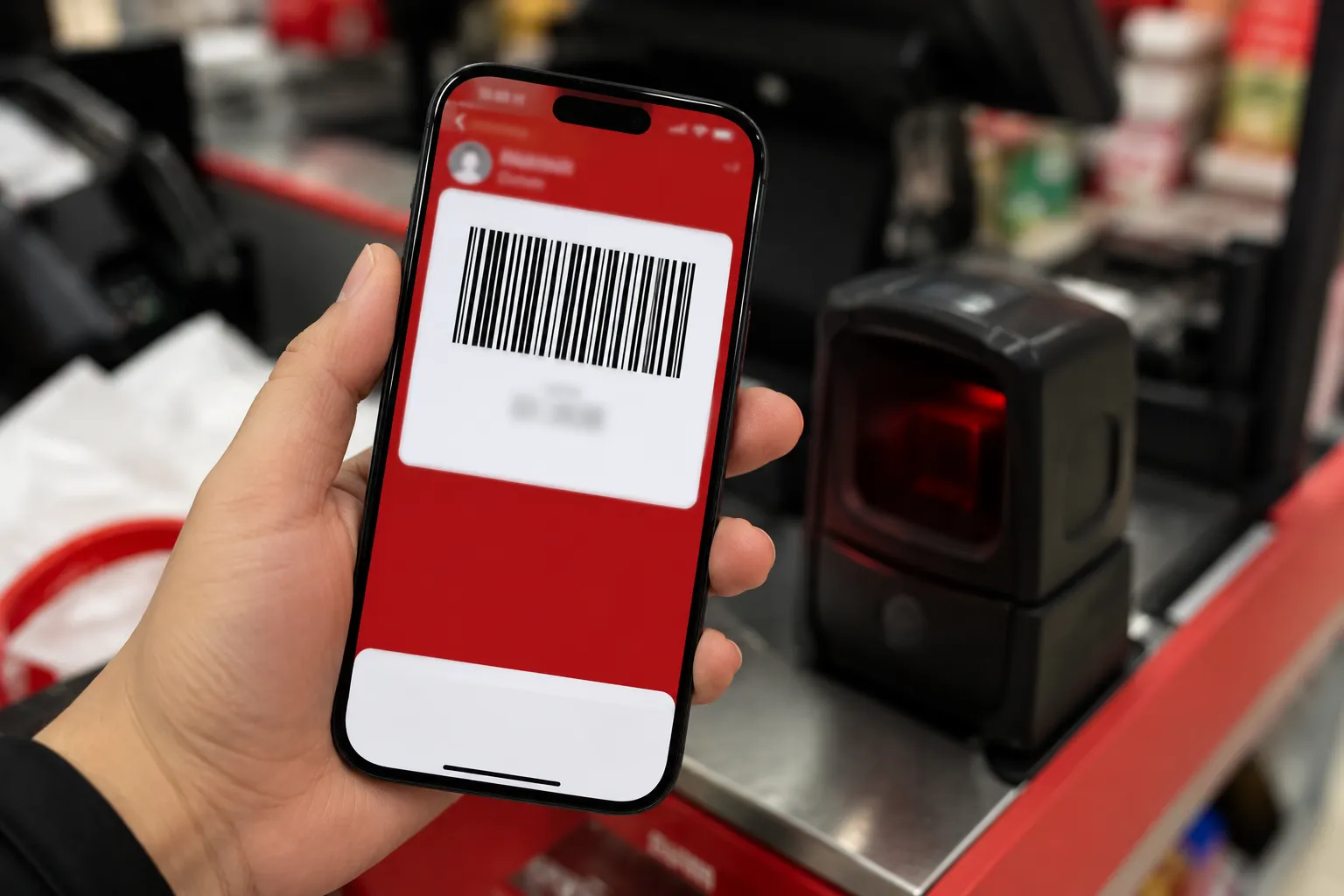
The simplest way to avoid Target’s receiptless cap is to make sure your purchases are always lookupable, so no return ever counts as no-receipt. Linking every purchase to your Target Circle account or scanning your app Wallet barcode at checkout stores a digital receipt Target can pull later, which the retailer itself encourages, as DontPayFull notes.
Paying with a card Target can look up, and using a registry barcode for gifts, keeps your yearly $100 bucket untouched. These are ordinary record-keeping habits, not ways to game the policy.
Here is the workflow I actually use, in order.
Scan my Target app Wallet barcode at checkout so the purchase is receipt-proof from the start.
Pay with a card I keep, so a lookup is always possible even if I never open the app.
For gifts, add the item to a Target registry and use the registry barcode, which returns to a gift card without touching my no-receipt cap.
Save nothing to memory, because the app already holds the record for me.
The point is not to squeeze more out of the no-receipt lane. It is to almost never need that lane, so the reported $100 cap becomes irrelevant to how you shop.
If you return often, it also helps to understand what pushes you past a safe threshold in the first place.
Use it honestly: Keeping purchases lookupable is smart record-keeping, not a loophole for abuse. The habit protects honest returns and keeps you clear of the receiptless cap entirely.
Target Return Limit FAQs
Is there a $100 limit on Target returns without a receipt?
Yes, in practice. Target does not print the number, but shoppers and retail trackers consistently report a receiptless cap of roughly $100 per year, tied to your government ID and refunded as a merchandise card, after which further no-receipt returns are typically declined until the window resets.
When does the Target return limit reset?
Within a year, though Target does not confirm whether it is a rolling 12 months or a calendar year. Most trackers describe a rolling 365-day window tied to your last receiptless return, so plan as if your clock restarts on your most recent no-receipt return rather than on January 1.
Is there a return limit with a receipt at Target?
No dollar cap applies when you have a receipt or a card or account lookup, and your refund goes to the original payment method. Target still reserves the right to refuse returns it considers fraudulent or abusive, but the $100 figure only governs receiptless returns.
Can I return a $200 item to Target without a receipt?
Usually not for the full value, because a $200 receiptless item exceeds the reported roughly $100 annual cap. The register will likely decline it or approve only your remaining headroom at the lowest recent price, so find the original card or Circle purchase to convert it into a full refund.
Can Target ban you for too many returns?
Target can, but it publishes no threshold and treats it as a discretionary abuse call rather than a fixed count, so ordinary returns with proof are not the concern. Documented bans have followed extreme patterns, such as returning dozens of items in a single trip.
Can I use a Merchandise Return Card online?
No. The non-transferable Merchandise Return Card issued for a no-receipt return works only in a physical Target store, not on Target.com or in the app, so treat it like cash because a lost card is gone.
Can you return online Target orders without a receipt?
No-receipt returns for Target.com orders are denied, but you rarely need one. Your online account and order confirmation act as your receipt, so pull the order in the app or bring the confirmation to Guest Services for a full refund.
The Bottom Line on Target’s No-Receipt Limit
The Target return limit without a receipt is narrower and stranger than the flat “$100 cap” you have heard. It is a per year, per ID ceiling that only bites when you have no receipt and no lookup, it refunds at the lowest recent price on a store-only card, and its reset window is genuinely unconfirmed.
The move that makes all of it disappear is boringly simple. Keep your purchases lookupable through Target Circle, your app Wallet, or the card you paid with, and the $100 lane stops mattering to you.
As for bans, return like a normal person with proof in hand and you will never meet the discretionary edge of Target’s policy. Save the receiptless lane for the rare orphan item with no record, and treat the reported $100 a year as the reason to keep that lane nearly empty.
Read it your way
Short on time? Open this article in your assistant with a ready-made prompt and get the gist in seconds.
Found this useful? Make us a preferred source so we show up in your Google results.
Keep reading
Related articles
Eligibility & Conditions
What Stores Use The Retail Equation? (2026, Best Buy Out)
See which stores use The Retail Equation in 2026: a verified status list of who still tracks returns, who dropped it (Best Buy, 2019), and who never did.
Eligibility & Conditions
What Is The Retail Equation? How It Scores Your Returns
Denied a return? The Retail Equation scores your returns and can approve, warn, or deny them. See how it works, read a real RAR, and dispute errors
Eligibility & Conditions
Sephora Return Limit: No Set Number, 30-Day Window & TRE Tracking
Sephora has no set return limit, but a 30-day window and Retail Equation tracking mean too many returns can trigger a 365-day ban. Here’s the real rule.
Eligibility & Conditions
Do Stores Track Your Returns? How the System Works (2026)
Yes, most stores track and score your returns. See how the system works, what they log, and how to request your own Return Activity Report.
The discussion
Comments
Every comment is reviewed before it goes live.