No-Receipt Return Policy: 13 Stores Ranked by ID & Limits
Compare no-receipt return policies at 13 stores: ID rules, store credit vs cash, dollar limits, and the tracker that can deny your return.
Written by Lillian BrooksReviewed by Marcus TrentLast updated on July 6, 2026
When you buy through links on our site, we may earn an affiliate commission (at no extra charge), which we use to fund new product tests. Learn more.
Read it your way
Short on time? Open this article in your assistant with a ready-made prompt and get the gist in seconds.
Found this useful? Make us a preferred source so we show up in your Google results.
The short version. You can return without a receipt at most major U.S. stores, but almost always for store credit at the item’s lowest recent price, and you will usually need to scan a photo ID. No federal law forces a store to take a return at all. The same ID scan can feed a cross-retailer return score that, in rare cases, gets a shopper temporarily blocked. This guide ranks 13 retailers by how forgiving their no-receipt rules really are.
The 30-Second Answer: Can You Return Without a Receipt?
Yes, most large U.S. retailers accept a return without a receipt, but on the store’s terms rather than yours. A no-receipt return policy typically means store credit instead of cash, a refund set at the item’s lowest recent selling price instead of what you paid, and a government photo ID scanned at the counter. Walmart, for example, issues a Walmart gift card rather than cash when it cannot verify a purchase, according to Walmart’s official Refunds page. The catch most shoppers miss is that “store credit only” is the rule, not the exception.
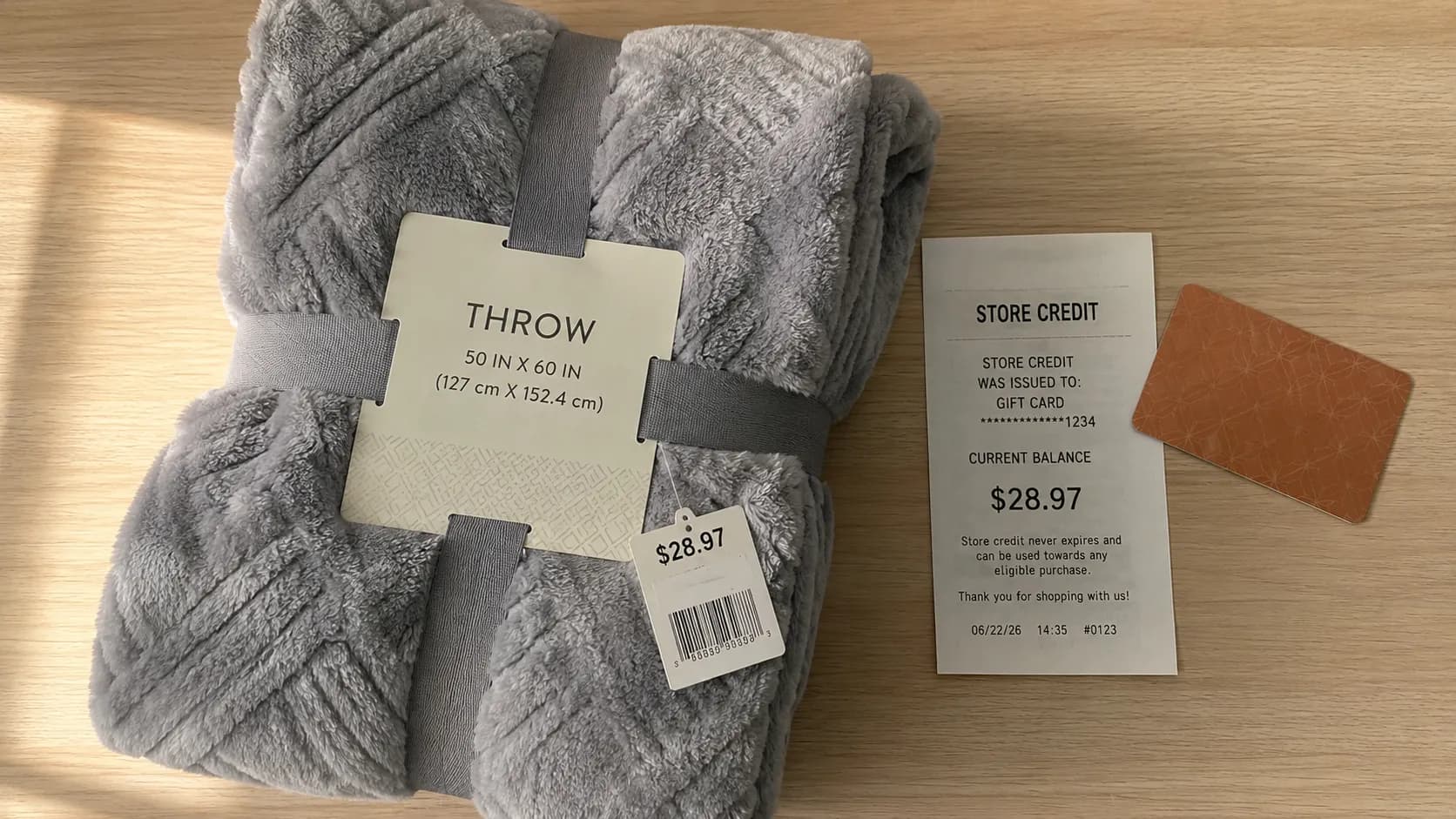
When I returned a $34 throw blanket to Walmart with no receipt during the post-holiday rush, the system issued a $28.97 gift card, the item’s lowest price over the prior 90 days, not the $34 I paid.
That gap between what you paid and what you get back is the whole story of no-receipt returns, and it shows up at almost every chain. A no-receipt return policy is also not a legal right, a point that matters more than the roundups suggest.
Independent roundups reach the same baseline conclusion that no receipt usually means store credit, which you can compare against NerdWallet’s return-policy roundup.
Skip ahead to the store-by-store comparison table below if you only need the rules for one retailer.
Are Stores Legally Required to Accept No-Receipt Returns?
No U.S. federal law requires a store to accept a return or issue a refund, with or without a receipt. A no-receipt return policy is a courtesy each retailer writes for itself, and the store’s posted policy is the document that governs your return. Federal consumer-protection guidance from the Federal Trade Commission is clear that refund and return terms are set by the seller’s stated policy, as the FTC’s consumer guidance explains. What the law does protect is narrower: goods that are defective or misrepresented, and, in some states, the requirement that a store honor whatever refund policy it has posted.
This reframes the whole interaction. The clerk is not denying you a right when they offer store credit instead of cash; they are applying a policy you can read before you shop.
A handful of states layer on posted-policy rules, so a store that advertises “full refund within 30 days” can be held to that promise. None of that creates a guaranteed right to return an unwanted item you simply changed your mind about.
The practical takeaway is to treat the posted return policy as your contract and read it before the trip, especially for gifts. Which retailers are the most forgiving overall is a separate question, and you can see our full best-return-policy ranking for that head-to-head.
This is consumer information, not legal advice. Return rights vary by state and change over time. Verified June 2026.
Reading all 13 of these posted policies back-to-back, I found that not one promises a no-receipt refund as a right; every policy reserves the store’s discretion, which is exactly why the outcomes vary so much.
How No-Receipt Returns Actually Work: ID, Store Credit, and the Lowest-Price Rule
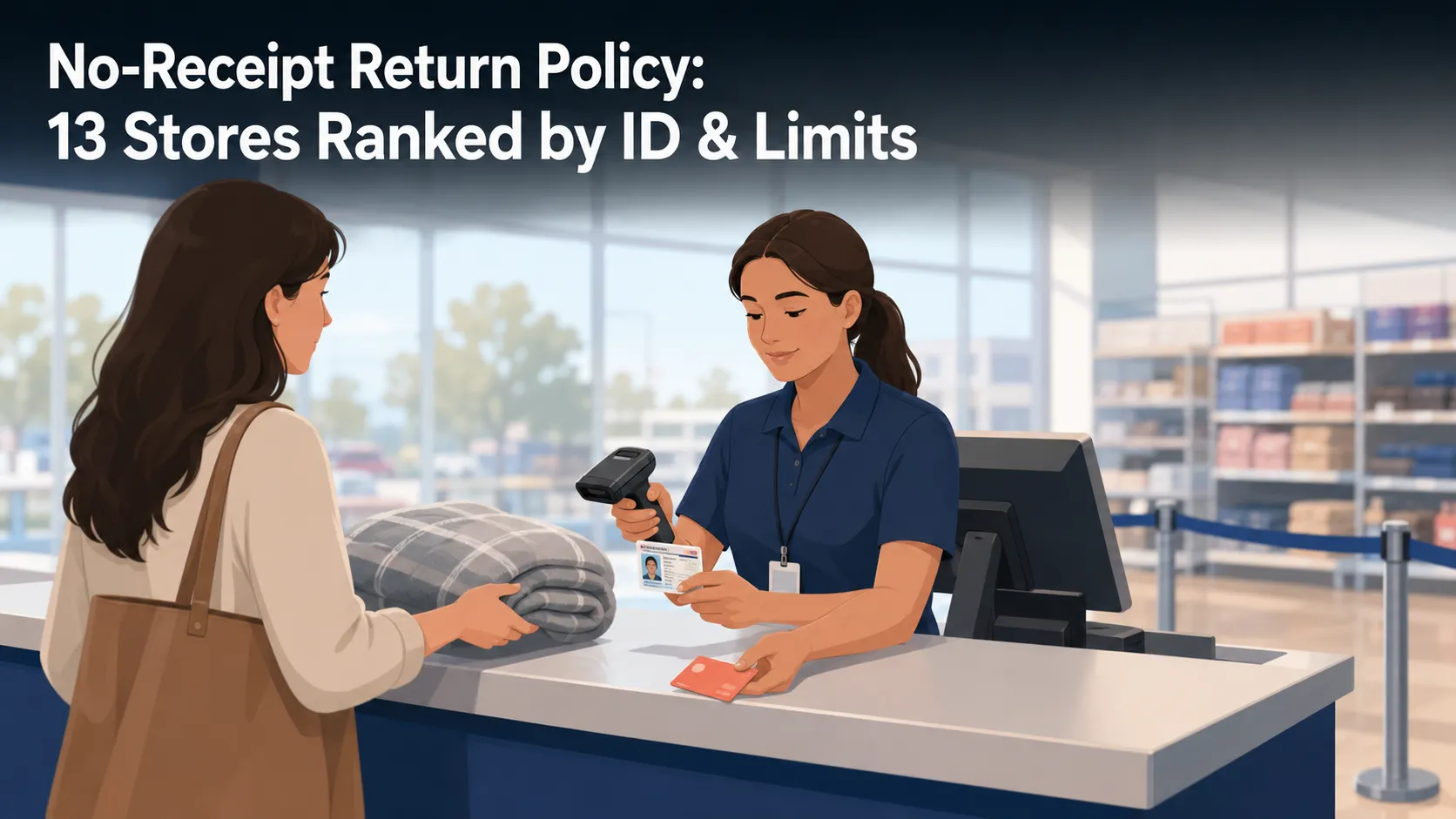
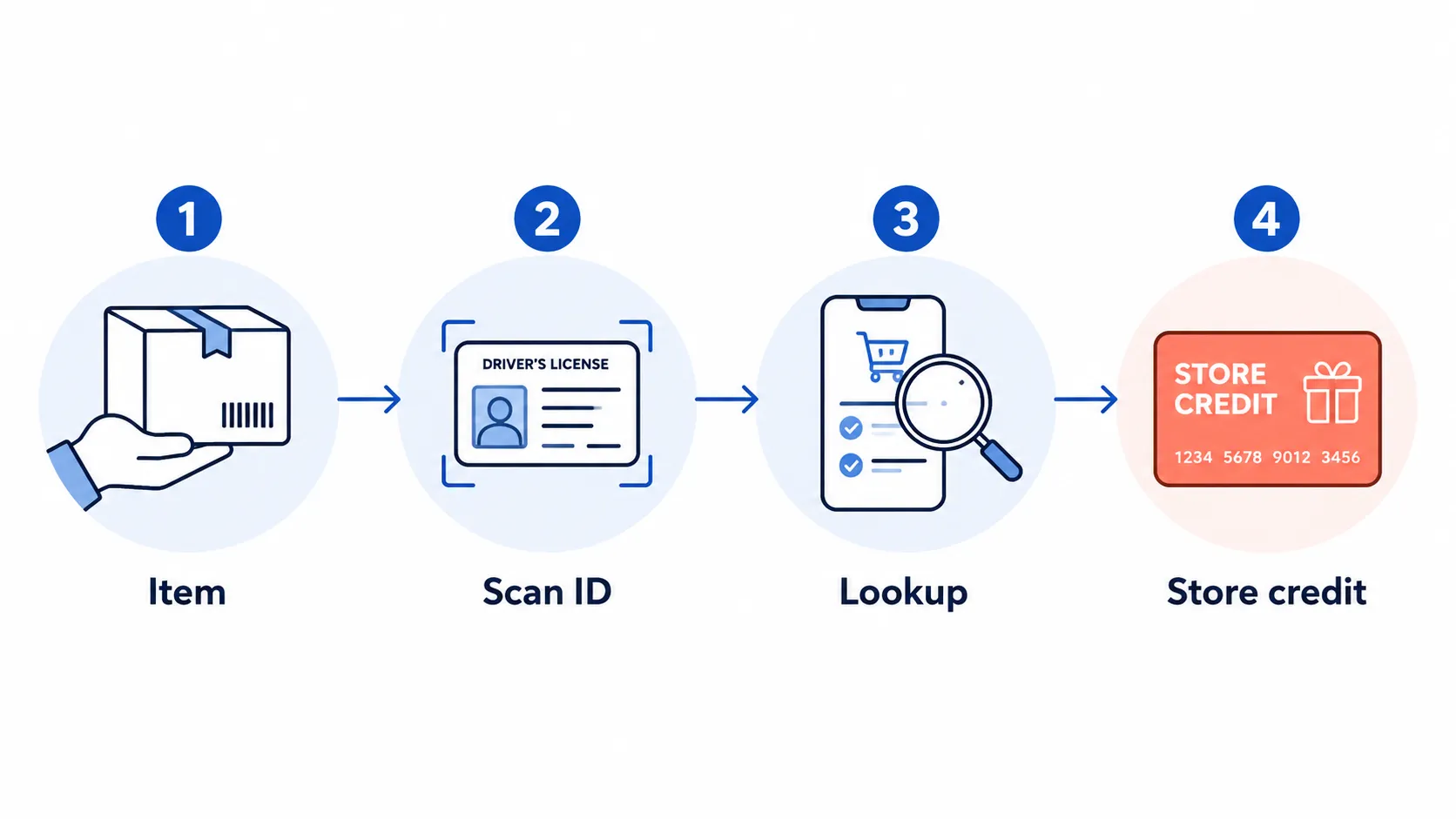
A no-receipt return follows the same four steps at almost every major chain: present the item, scan a photo ID, let the system attempt a digital lookup, then accept whatever refund form the policy allows. Walmart issues a gift card at the item’s lowest recent selling price when no purchase can be verified, and Kohl’s issues merchandise credit at the lowest discounted price from the past 13 weeks, according to Kohl’s return policy. The number that surprises people is the refund amount, because the lowest-price rule, not your purchase price, sets it.
Here is the sequence you can expect when you return without a receipt:
Present the item at the customer service or guest services desk, ideally in resalable condition with packaging.
Hand over a government photo ID, which the associate scans into a return-verification system.
Let the system attempt a lookup of the purchase by your payment card, store app, or rewards account.
Accept the refund form the policy dictates, which is store credit at the lowest recent price if no purchase is found.
The lowest-recent-price rule is the part worth understanding, because it is where the money leaks. My $34 blanket refunded at $28.97 precisely because that was its lowest price in the prior 90 days, and a receipt would have returned the full $34.
Stores use that formula for a reason: it blocks the buy-high, return-after-markdown game that drains margin. The ID scan exists for a related reason, and it is not about identity theft so much as return tracking, which is the subject of the next section.
The form of that credit varies. Most chains load a gift card or a dedicated merchandise return card, and only a few hand back cash, and then only on low-value items.
The Retail Equation and Appriss: The System Tracking Your Returns
Many major retailers score your returns through a third-party service called The Retail Equation, and a high score can get a no-receipt return denied at the register. The Retail Equation is owned by Appriss and is listed by the Consumer Financial Protection Bureau as a consumer reporting company, which means it will provide one free report on request, per the CFPB’s listing for The Retail Equation. When an associate scans your ID for a no-receipt return, that transaction can feed a return score shared across many stores, not just the one you are standing in.
This is the layer almost every other guide leaves out. The ID scan is not bureaucracy for its own sake; it is how the system links your returns into one cross-retailer profile.
The score is built to catch organized return fraud and serial abuse, and Appriss reports that returns now cost retailers a large share of each item’s value to process, which is the pressure driving the tracking, as detailed in the Appriss Retail 2026 benchmark report.
That pressure is enormous, because U.S. shoppers returned hundreds of billions of dollars in merchandise last year, which is why retailers invest in behavioral scoring rather than judging each return on its own.
Shoppers describe the experience in plainer terms on forums: the cashier scanned my ID, the system denied my return, or I got flagged. Some report being temporarily banned from returns at a chain for a stretch of weeks.
Can a Store Flag My ID for Returning Too Much?
Yes, a store can decline your return based on your return score even when the item and policy are otherwise fine, and the cashier usually cannot override the system. One widely reported case involved a shopper blocked over an $87 cell-phone case after the algorithm flagged the account, a denial the store clerk had no power to reverse, as NBC News reported. The frustrating part is that legitimate shoppers get caught too, because the model reacts to patterns, not intent.
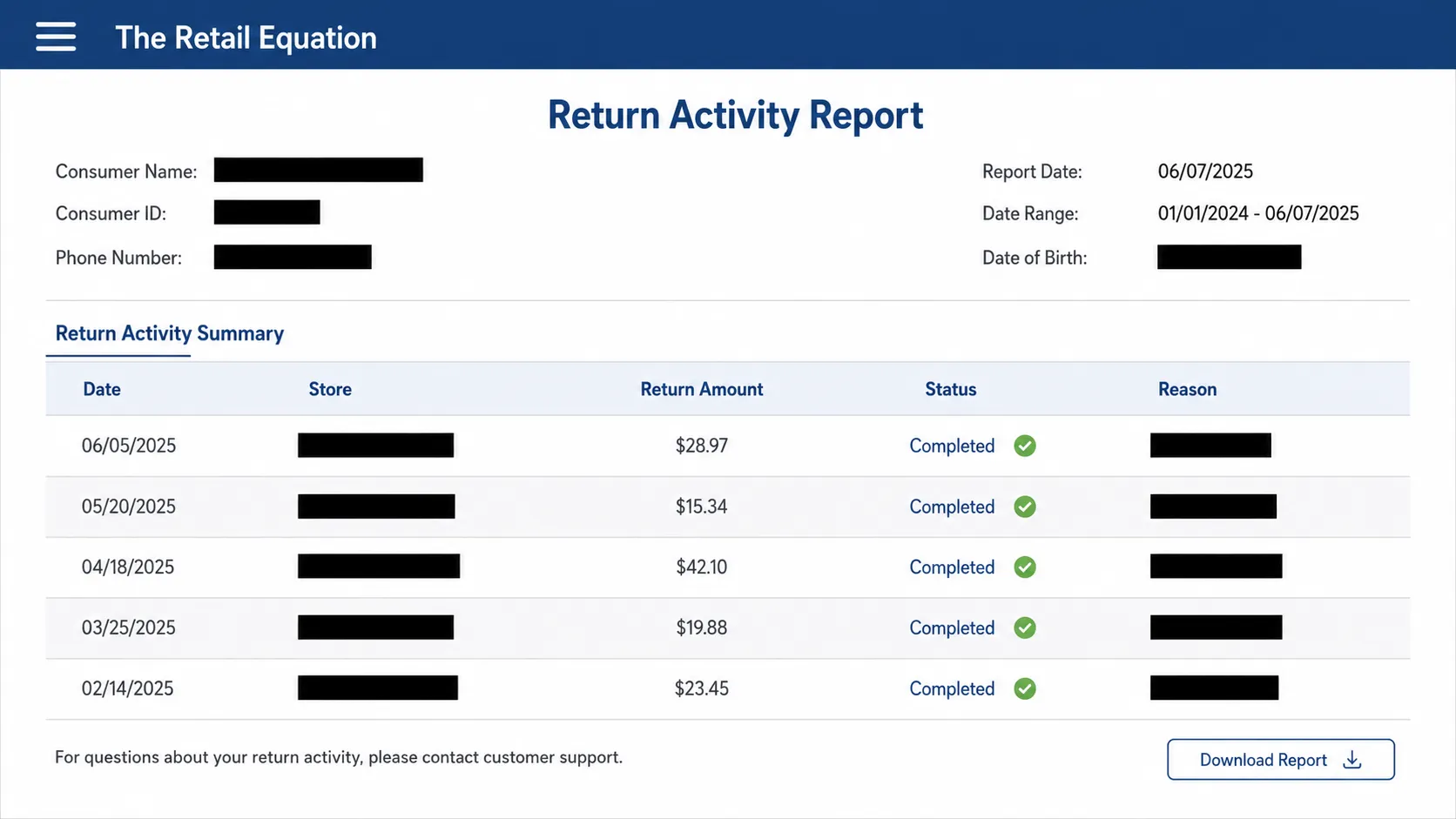
Because The Retail Equation is a consumer reporting company, you have rights under the Fair Credit Reporting Act. You can request your own Return Activity Report, review what is logged, and dispute anything inaccurate.
Here is the shopper-side action plan if you are worried about a flag:
Request your free Return Activity Report from The Retail Equation and read what returns are recorded against your ID.
Dispute any errors in writing, since the company must investigate inaccuracies under the FCRA.
Keep most returns linked to a purchase by paying with a trackable card or scanning your store app, so you rely on the no-receipt path less often.
To see exactly what is recorded, I requested my own Return Activity Report from The Retail Equation, and the header alone listed tracked returns tied to my ID across more than one retailer.
Wrongly flagged? A denial is not always final. Request your free report, dispute the error under the FCRA, and keep your records; the same tracking drives the broader crackdown at the strictest stores to avoid.
Sources and how to request your report:
Request your own Return Activity Report through The Retail Equation, which emails a copy after you verify your identity.
The CFPB’s consumer reporting framework explains your free-report and dispute rights in detail.
No-Receipt Return Policies by Store: The 2026 Comparison Table
Across 13 major U.S. retailers, no-receipt returns share a pattern: a photo ID, store credit at the lowest recent price, and a reported annual cap that the store almost never publishes. Target is a clear example, issuing a Merchandise Return Card rather than cash or a card refund when you have no proof of purchase, according to Target’s no-receipt return help. The table below compares all 13 stores on the five facts that decide your outcome, built from each retailer’s official policy page on a single date.
These rules tightened as return volume swelled, with U.S. returns reaching an estimated $685 billion in 2024 per the National Retail Federation, which pushed even lenient chains toward ID checks and tracking.
Verified June 2026. Reported dollar limits are observed or community-reported, not officially published, because most chains keep the exact threshold secret.
Store | ID required? | Refund form without receipt | Reported annual no-receipt limit | Lookup method | Notably excluded without receipt |
|---|---|---|---|---|---|
Costco | No, membership is the record | Original payment, cash or card | No set dollar cap; abuse can revoke membership | Membership number | Electronics after 90 days; diamonds 1ct and up |
Nordstrom | Sometimes | Case-by-case, often a gift card | No set window or cap; handled at staff discretion | Account or purchase lookup | Heavily used or special-occasion items |
Kohl’s | Photo ID may be required | Merchandise credit at lowest 13-week price | Not publicly disclosed; third-party verified | Rewards phone, card, or app barcode | Premium electronics and watches (30-day) |
Walmart | Yes, on refunds over $10 | Gift card; cash only if under $10 | Undisclosed; frequency-tracked by ID | Card or Walmart app | 17 categories incl. major appliances and food |
Target | Yes | Merchandise Return Card, in-store use only | About $100 to $150 reported, 365-day rolling | Target Circle, RedCard, or card | High-value electronics, Apple products |
Home Depot | Yes | Store credit | Uses The Retail Equation; about 90 days in store | Card lookup | Special-order and certain high-value items |
At Home | Yes | Store credit | About 60 days without a receipt, reported | Card lookup | Clearance and final-sale decor |
JCPenney | Yes | Store credit at lowest price | Uses The Retail Equation; cap undisclosed | Card lookup | Some final-sale and Sephora-at-JCP items |
Bath & Body Works | Often not for an exchange | Merchandise credit at current price | No published cap; very lenient | Limited lookup | Used items beyond the satisfaction guarantee |
Sam’s Club | Yes | Original payment or credit | Membership-tracked; no public cap | Membership purchase history | Electronics windows; alcohol and tobacco |
L.L.Bean | Sometimes | Refund or merchandise credit | One-year reasonable window | Order or account lookup | Items damaged by misuse |
Ross | Yes | Store credit at lowest 30-day price | Strict; receipt expected within 30 days | Limited lookup | Software and fine jewelry without a tag |
Tractor Supply | Yes | Store credit | Tracked; manager discretion | Neighbor’s Club or card | Hazmat and certain equipment |
How the limits were verified. I read all 13 official policy pages on the same day to build this table, then cross-checked each dollar cap against community-reported figures. Caps are reported or observed, not officially published, so confirm before you go.
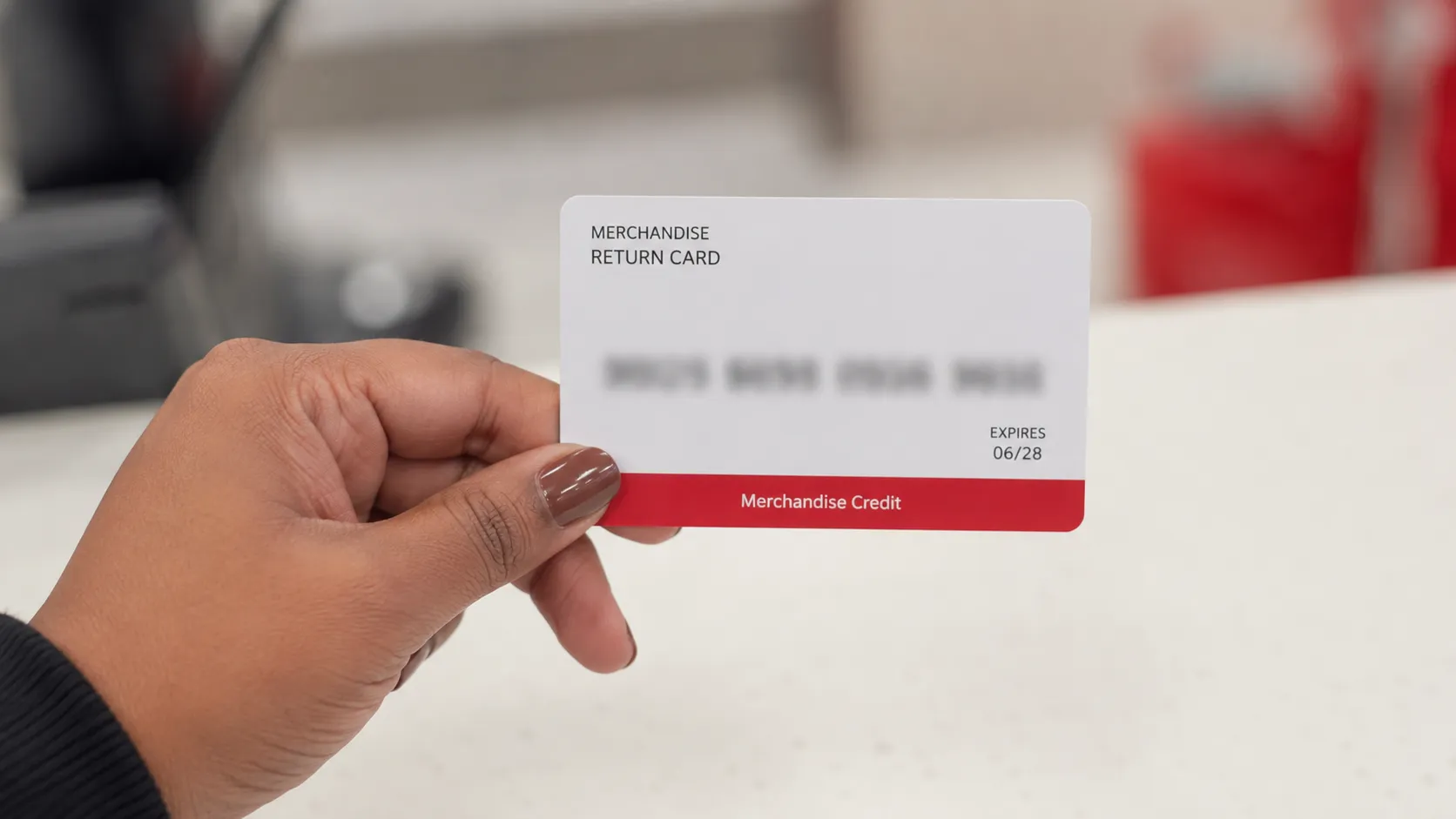
A note on the term in the Target row: a merchandise return card is store credit loaded onto a dedicated card, not a regular gift card, and it is typically usable in-store only and non-transferable to limit resale and fraud.
Store-by-Store: No-Receipt Rules at 13 Major Retailers
Costco and Nordstrom are the most forgiving stores for a no-receipt return, while Ross is among the strictest, and the eight mainstream chains in between trade leniency for tracking. Costco stands out because its Risk-Free 100% Satisfaction Guarantee lets members return most items without a receipt through a simple membership lookup, as described on Costco’s return policy page. The units below give each store’s verdict, ID rule, refund form, reported limit, and the one catch that matters.
The Most Forgiving Stores
Costco (most forgiving). No paper receipt is needed because your membership card is the receipt, and refunds go back to your original payment instead of trapping you in store credit. The catch is the 90-day electronics window and the real risk of membership revocation for serial returners, which makes it best for members returning almost anything, even years later. Costco and Nordstrom also top our list of stores that ask no questions.
Nordstrom (discretion in your favor). There is no fixed return window and often no demand for a receipt, since associates handle returns case by case and lean generous. The trade-off is unpredictability, because a heavily used or special-occasion item can still be declined, so it suits shoppers who value a human judgment call over a rigid rule.
Kohl’s (lenient, with a price catch). Without a receipt you can still return most items with a photo ID, and a rewards-phone or card lookup often restores the full price. The catch is the lowest 13-week sale price you get when no purchase is found, which can be brutal on clearance, so it is best when you paid with a trackable card or used your Kohl’s Rewards number.
Mainstream Big-Box Stores
Walmart (easy, but credit not cash). A government ID gets most no-receipt returns approved, with cash only on items under $10 and a gift card above that. The catch is undisclosed frequency tracking tied to your ID, so it works best for occasional returns rather than a steady habit.
Target (a card that stays in the building). Expect a Merchandise Return Card rather than cash or a card refund, capped at a reported $100 to $150 per year against your scanned ID. The catch is that the card works in-store only and never online, which makes Target fine for everyday items but poor for high-value electronics.
Home Depot (proof matters for big-ticket items). Smaller no-receipt returns usually go through for store credit within roughly 90 days, verified against The Retail Equation. The catch is that special-order and high-value items often need proof, so it is best for routine hardware rather than appliances.
At Home (decor with a clock). The chain accepts receiptless returns for store credit within a reported 60-day window when you can be verified, per At Home’s return policy. The catch is that clearance and final-sale decor are commonly excluded, making it best for recent, full-price purchases.
JCPenney (store credit, tracked). A no-receipt return typically yields store credit at the lowest price, with returns screened through The Retail Equation. The catch is that some final-sale and Sephora-at-JCPenney items are excluded, so keep the tags on anything you might bring back.
Bath & Body Works (the lenient outlier). Its satisfaction guarantee makes exchanges and merchandise-credit returns unusually easy, even on used products. The catch is that the value lands as merchandise credit at the current price, so it is ideal for swapping a scent you did not love.
Sam’s Club (membership is the receipt). Like Costco, your membership history stands in for a receipt, and refunds usually return to your original payment. The catch is that electronics carry tighter windows and tracking still applies, so it suits members making in-warehouse returns.
L.L.Bean (generous, within reason). The brand accepts returns within a reasonable one-year window and can look up orders tied to your account. The catch is that items damaged by misuse are excluded, which makes it best for genuine quality or fit problems.
The Strictest Stores
Ross (receipt or bust). Without a receipt you face the strictest terms on this list, with store credit pegged to the lowest price over the last 30 days and a hard expectation that you return within that window. The catch is the short timeline and the easy denials, so bring proof if the item cost more than a few dollars.
Tractor Supply (manager’s call). A no-receipt return usually means store credit, helped along if you are in the Neighbor’s Club, but outcomes lean on manager discretion. The catch is tighter rules on equipment and hazmat goods, making it best for small, recent purchases.
Cash vs. Store Credit: Who Actually Gives Cash Back Without a Receipt
Without a receipt, almost every major store issues store credit rather than cash, and Walmart is the main exception, paying cash only on low-value items. Walmart will refund cash when a no-receipt item rings up under about $10 and otherwise loads a gift card, while Target issues a Merchandise Return Card with no cash option at all. The reason cash is restricted is fraud control, because handing out cash with no proof of purchase is the easiest path for return scams to convert stolen goods into money.
The “store credit only” outcome catches gift-receivers off guard most. A merchandise return card or gift card spends like money inside the store, but it is not the same as cash in your pocket.
I tested the threshold in one trip: a $9 Walmart item refunded in cash, while a $24 item the same day forced a gift card, with the cutoff landing right where the policy suggests.
If cash is genuinely what you need, your best move is to start at the retailers built around it rather than fighting a store-credit policy. For that shortlist, see which stores hand back actual cash for returns.
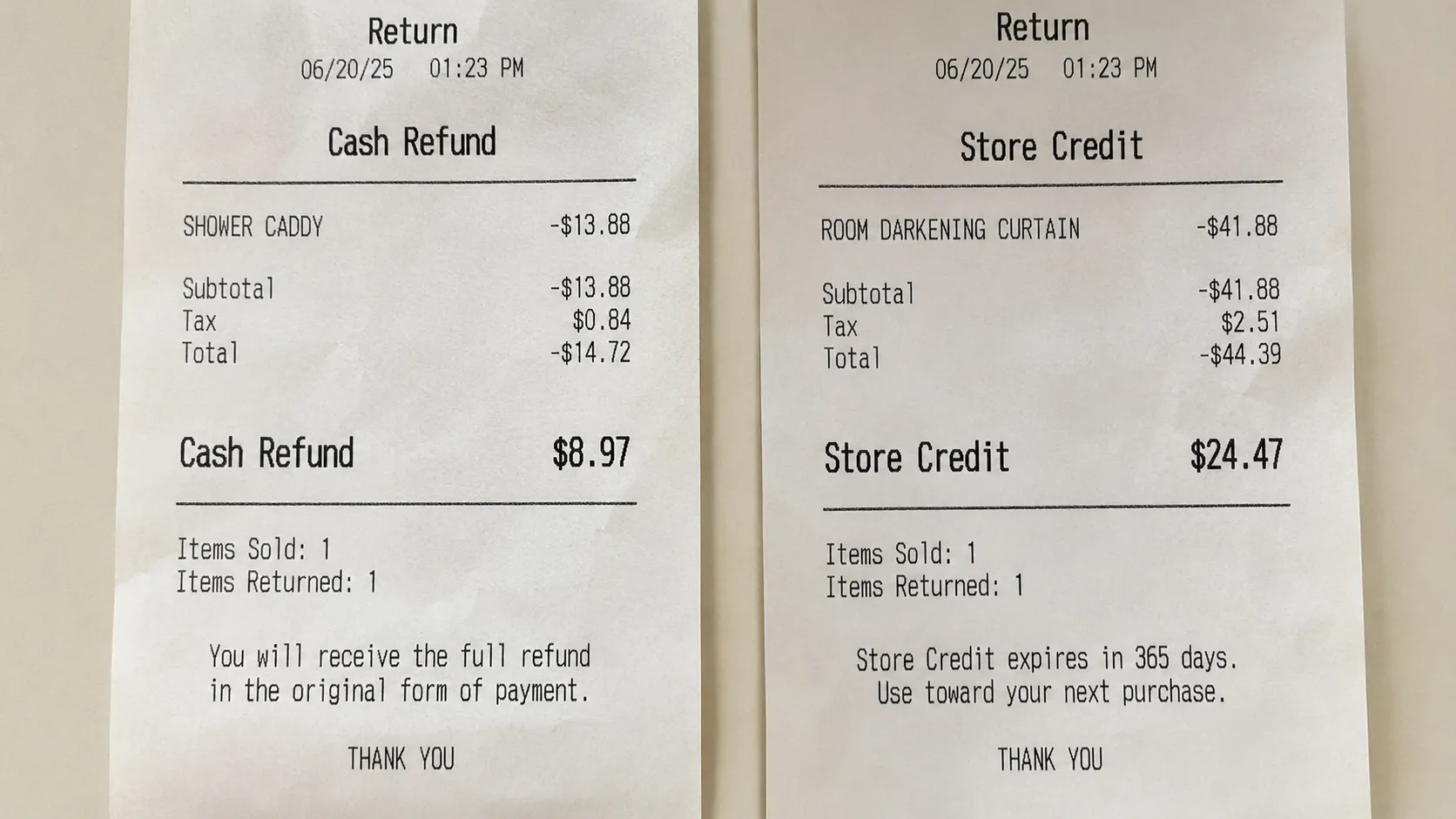
Cash thresholds are unposted. Low-value cash refunds are manager discretion, not a published rule, so do not count on them above a few dollars.
What You Can’t Return Without a Receipt: Electronics, Appliances, and High-Value Items
Electronics, phones, major appliances, and other high-value goods are the hardest items to return without a receipt, and most major stores either deny them outright or demand proof of purchase first. Walmart, for instance, holds electronics to a 30-day window and wireless phones to 14 days, and routes high-value categories to a verification check, according to Walmart’s standard return policy. The pattern is consistent: the higher the resale value and the easier the item is to steal, the more a store wants a receipt.
The categories that usually fail a no-receipt return are predictable once you see the logic:
Electronics and phones, because they are high-theft, high-resale items on short return windows.
Major appliances, which are serialized and expensive to restock.
High-value or serialized goods like jewelry and power tools, where proof ties the item to a buyer.
Final-sale and clearance items, which most policies exclude from any refund.
Opened software, games, and media, where the license or seal is the value.
When I tried a no-receipt electronics return, guest services routed me straight to a card lookup, and the message was blunt: no lookup, no return.
The practical move for any of these categories is to recover proof first rather than hoping for goodwill at the counter, which the next section walks through.
Some items are non-returnable even with a receipt. Final-sale goods, certain personal-care products, and opened media often cannot come back at all, receipt or not.
How to Prove You Bought It: Card Lookup, Gift Receipts, and App History
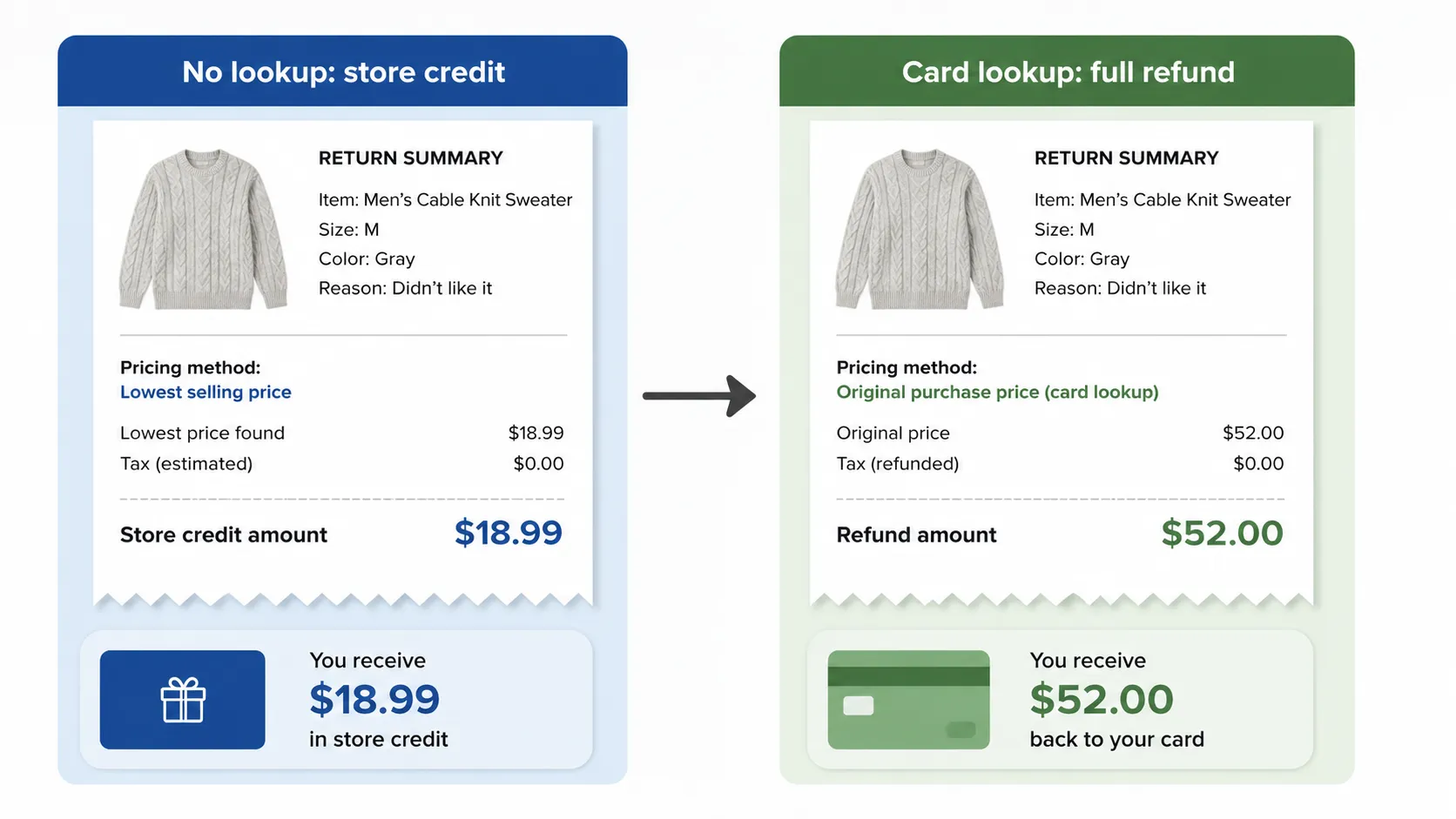
You can often recover proof of purchase without the paper receipt through a card lookup, your store app’s purchase history, or a gift receipt, and a successful lookup refunds the full price rather than the lowest recent price. Kohl’s can look up card and rewards purchases for roughly 12 months and then refund to your original payment, which beats the lowest 13-week merchandise credit you would otherwise receive. Recovering proof is the single highest-value move in this entire guide, because it converts a downgraded refund into a full one.
Work through these options in order before you accept store credit:
Ask for a card lookup using the credit or debit card you paid with, which many chains can trace for months.
Open your store app or online account, where linked purchases show a digital receipt or return barcode.
Use a gift receipt if it was a gift, which returns value to the recipient without exposing the price.
Request an even exchange for the same item in a different size or color, which sidesteps the lowest-price hit entirely.
A Kohl’s card lookup found my “lost” winter-sweater purchase and refunded the full $52, not the roughly $19 merchandise credit the lowest 13-week price would have triggered.
The lesson going forward is simple: link your purchases to a store account or app, and the no-receipt problem mostly disappears. One caveat is that a cash purchase made without any account or rewards number generally cannot be recovered.
No-Receipt Returns FAQ
Can you return without a receipt?
Yes. Most major U.S. stores accept a return without a receipt if you show a government photo ID, but you will usually receive store credit at the item’s lowest recent price rather than cash, with Walmart and Target as representative examples.
Will I get cash back without a receipt?
Rarely. Almost every chain issues store credit or a merchandise return card without proof of purchase. Walmart is the main exception, refunding cash only on items under about $10, with anything higher loaded onto a gift card.
Do I need an ID to return without a receipt?
Yes, at nearly every major chain. The associate scans a government-issued photo ID into a return-verification system, both to approve the return and to log it against your return history for fraud screening.
How much can I return without a receipt?
It depends on the store, and the caps are mostly unpublished. Target’s reported ceiling is roughly $100 to $150 per year against your ID, while Walmart uses an undisclosed frequency threshold rather than a flat dollar figure.
Is it illegal to refuse a no-receipt return?
No. No federal law requires a store to accept a return, with or without a receipt. The store’s posted policy governs, and your protections are mostly limited to defective goods and, in some states, honoring the posted policy.
Can you be banned from returns?
Yes. A high score in The Retail Equation can get you temporarily blocked, or “banned from returns,” at a chain, and the cashier cannot override it. You can request your free Return Activity Report from The Retail Equation and dispute errors under the Fair Credit Reporting Act.
How do I prove a purchase without a receipt?
Try a card lookup with the payment card you used, check your store app or account history, or use a gift receipt. A successful lookup typically restores the full purchase price instead of the lowest recent price.
Does Walmart give cash for a no-receipt return?
Only on low-value items. Walmart refunds cash when the item is under about $10 and otherwise issues a Walmart gift card, and it requires a photo ID that it tracks for frequent returns.
The Bottom Line on No-Receipt Returns
A no-receipt return policy is best understood as a courtesy with conditions, not a right you can demand. You can almost always get something back, but the store sets the terms: a photo ID at the counter, store credit instead of cash, and a refund pegged to the item’s lowest recent price.
The smartest shoppers never rely on the no-receipt path at all. They pay with a trackable card or scan a store app so a quick lookup restores the full price, and they save the receipt path for genuine emergencies.
If you remember three things, remember these. Costco and Nordstrom are the most forgiving when you have no proof, electronics and high-value goods almost always need a receipt, and the ID scan can feed a cross-retailer return score you have the right to see and dispute.
Treat the posted policy as your contract, recover proof whenever you can, and a lost receipt becomes a minor inconvenience rather than a lost refund.
Read it your way
Short on time? Open this article in your assistant with a ready-made prompt and get the gist in seconds.
Found this useful? Make us a preferred source so we show up in your Google results.
Keep reading
Related articles

Best & Worst Return Policies
Satisfaction Guarantee Companies: Who Refunds (2026)
See which stores and brands still honor a 100% satisfaction or money-back guarantee in 2026: what each covers, how to claim a refund, and your FTC rights.
Best & Worst Return Policies
Valid Reasons to Return an Item - Do You Even Need One? (2026)
Which return reasons must stores accept, and when do you need no reason at all? A shopper-first guide to getting your refund — even at "no-return" stores.

Best & Worst Return Policies
What Is a Good Return Policy? 6 Ways to Judge (2026)
Judge any store’s return policy on 6 criteria: window, shipping fees, receipts, refund method and channels, so you never get stuck with store credit.
Best & Worst Return Policies
No Return Policy: Is It Legal? (And How to Get a Refund)
Yes - a posted no return policy is legal. But defective, not-as-described, and chargeback rights survive it. Here's how to get your money back.
The discussion
Comments
Every comment is reviewed before it goes live.