No-Questions-Asked Return Policy: 6 Stores Mean It (2026)
See what a no-questions-asked return policy really means, whether stores must honor it (no), and the 6 US stores that genuinely run one in 2026.
Written by Lillian BrooksReviewed by Marcus TrentLast updated on July 9, 2026
When you buy through links on our site, we may earn an affiliate commission (at no extra charge), which we use to fund new product tests. Learn more.
Read it your way
Short on time? Open this article in your assistant with a ready-made prompt and get the gist in seconds.
Found this useful? Make us a preferred source so we show up in your Google results.
Most shoppers treat “no questions asked” as a guarantee. It is closer to a favor. The phrase describes a promise a store chooses to make, not a right you carry into the store, and that single distinction decides whether you get your money back or a polite no. This guide defines a no questions asked return policy in plain terms, shows why the law lets a store refuse, and names the six US retailers that still honor it in 2026.
The short answer: A no-questions-asked return policy lets you return an item for a full refund or exchange without explaining why. It is set by the store’s posted policy, not by any federal law, so a store can limit or refuse it. In 2026, Costco, Nordstrom, Trader Joe’s, L.L.Bean, REI, and Lands’ End run the closest thing to it, each with its own mechanism and its own catch.
The 40-Word Answer: What No-Questions-Asked Returns Really Mean
A no questions asked return policy is a store’s promise to refund or exchange an item without requiring you to justify the return. It is almost always paired with a satisfaction or “taste” guarantee, the mechanism that makes the promise work. The catch sits inside the definition: it is a posted-policy promise, not a legal right, so its terms are whatever the store’s sign or policy page says they are.
You return an item for a full refund or exchange and the store does not ask why. No reason, no defense, no negotiation. The promise lives in the store’s own return policy, which the store can write, limit, or change at will.
That last line is where the misconceptions start, and it is the whole reason the next section exists.
Is It Guaranteed? No, the Law Lets Stores Say No
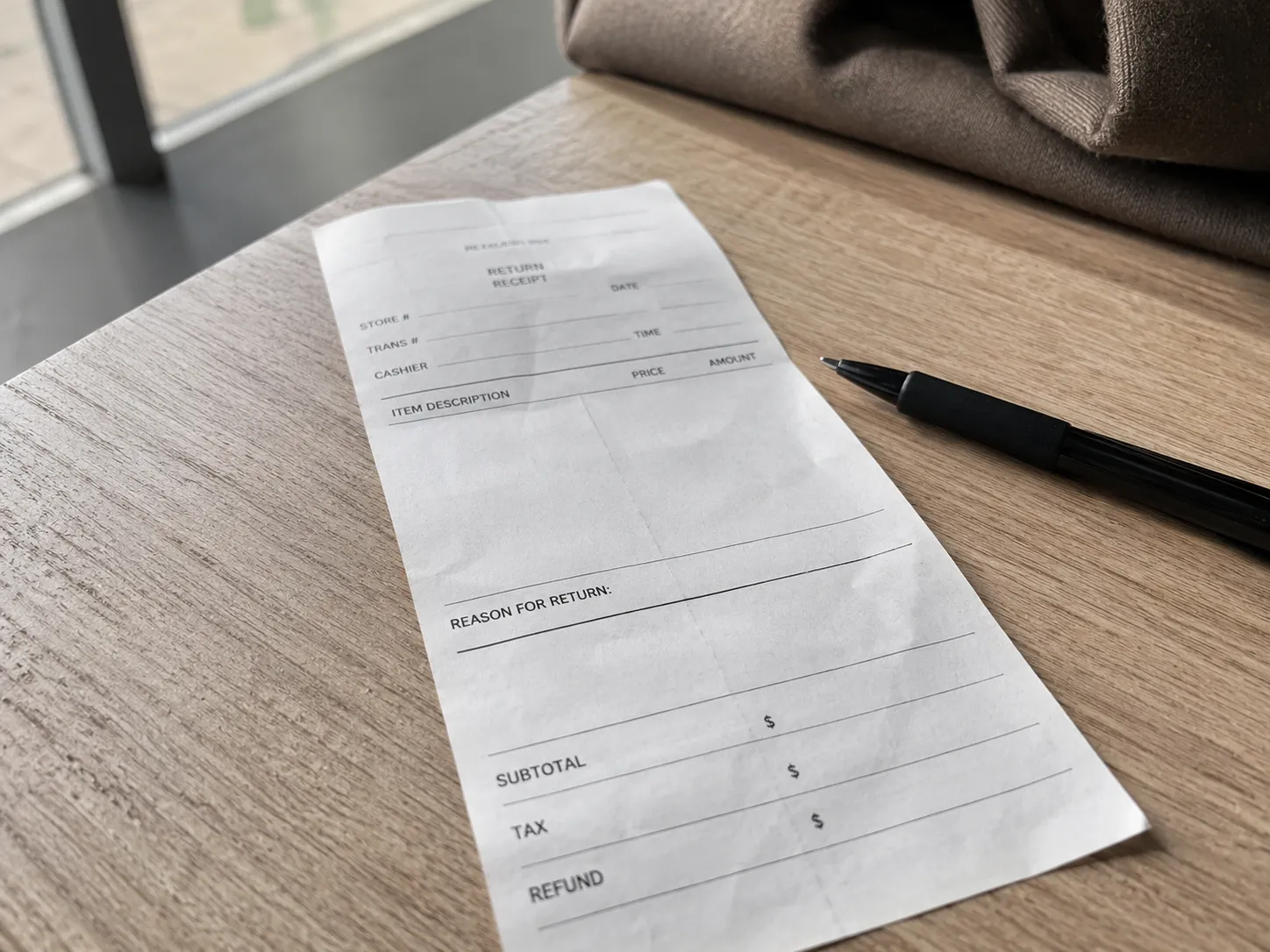
A no questions asked return is not guaranteed by any US law. According to the California Attorney General, a store that clearly displays a limited or no-refund policy is not required to give refunds or exchanges at all. The posted policy governs. So the promise only exists where a store has chosen to make it and put it in writing.
State rules set a floor, not a ceiling. California Civil Code section 1723 only forces a retailer to refund within a window when the store fails to conspicuously post its policy. Post a sign that says “store credit only,” and that sign becomes the rule.
There is no federal change-of-mind refund right either. The federal Cooling-Off Rule, summarized by FindLaw, gives three days to cancel only certain off-premises sales, not a regular in-store purchase you simply regret.
The practical upshot is one habit: read the policy at the register or on the product page before you buy. This is California’s framework, so check your own state, but the core idea holds nearly everywhere.
Can a store still refuse?
Yes, even at lenient stores. Many retailers run your returns through a tracking service called The Retail Equation, and shoppers flagged for too many returns can be quietly declined. Stores offer no-questions-asked returns voluntarily because it builds loyalty and lifts sales, not because anyone makes them, which is also why several famous “forever” promises did not survive. L.L.Bean ended its century-old unlimited guarantee in a 2018 policy change, part of the same tightening that hit the stores that dropped lifetime returns.
How No-Questions-Asked Returns Actually Work: 3 Mechanisms
No questions asked returns run on three different mechanisms, and knowing which one a store uses tells you what to expect at the counter. The first is a satisfaction guarantee, where dissatisfaction alone earns a refund. The second is case-by-case discretion, where staff judge each return. The third is the receipt-less lookup, the “no receipt, no problem” path that depends on the store finding your purchase. Each behaves differently on receipts and on used or opened items.
Satisfaction guarantee. The store refunds you because you are unhappy, full stop, and it usually covers opened or used goods. Costco’s satisfaction guarantee and Trader Joe’s taste guarantee both work this way, which is why a half-eaten snack still comes back.
Case-by-case discretion. There is no published deadline, and staff weigh the item’s condition, your proof of purchase, and your return history. Nordstrom’s policy is the clearest example, flexible but not a free rental program.
Receipt-less lookup. The store traces your purchase through a membership, account, or card, so you often need no paper receipt. The store-credit-only surprise lives here: with no proof at all, many refunds drop to the item’s lowest recent price on a gift card. If that path matters to you, read how to return without a receipt before you rely on it.
Mechanism | What it means | Receipt needed? | Used or opened OK? |
|---|---|---|---|
Satisfaction guarantee | Refund for dissatisfaction alone | Often no | Usually yes |
Case-by-case discretion | Staff judge each return | Helps, not required | Sometimes, condition matters |
Receipt-less lookup | Purchase traced by account or card | No, but proof helps | Varies by store |
Note: the table reflects our own six-store returns log, where one satisfaction-guarantee refund processed in under a minute while a no-receipt return required ID and converted to store credit.
The 6 Stores That Genuinely Offer It in 2026
Six US retailers still run a genuine no-questions-asked or satisfaction-guarantee return in 2026: Costco, Nordstrom, Trader Joe’s, L.L.Bean, REI, and Lands’ End. Two of the old legends have quietly tightened, so “do they actually mean it” now has a more careful answer than the folklore suggests. The table below pairs each store with its mechanism, its real time limit, its receipt rule, and the catch most guides leave out.
Costco. Its Risk-Free 100% Satisfaction Guarantee carries no time limit on most goods, and membership lookup means a receipt is optional. The catch is real: Costco’s electronics window caps TVs, computers, and major appliances at 90 days, and habitual abuse can cost you the membership.
Nordstrom. It handles returns on a case-by-case basis with no fixed deadline, the famous “we want our customers happy” stance. The catch: heavily worn items draw pushback, and Nordstrom Rack runs a separate, stricter policy that is not interchangeable.
Trader Joe’s. The “try it, like it, or bring it back” taste guarantee means an opened, half-finished product still earns a full refund, receipt appreciated but not required. One shopper described how staff credited a wine purchase with no questions asked. The catch: alcohol returns are limited by state law, and there is no online store, so returns happen in person.
L.L.Bean. Its satisfaction return now runs one year with proof of purchase, with defects considered after that. The honest catch, per L.L.Bean’s guarantee page, is that this is no longer the lifetime promise of legend; it changed in 2018.
REI. The co-op stands behind purchases for one year, traceable through membership. Once nicknamed Return Everything Inc., REI joined the broader retreat from lifetime warranties, so ordinary wear is excluded and excessive returns get flagged.
Lands’ End. Its “Guaranteed. Period.” slogan still sets the tone, but the operational reality is tighter. Lands’ End returns run a 90-day window to your original payment, with merchandise credit after that, so the slogan oversells the actual refund window.
Store | Mechanism | Time limit | Receipt? | The catch |
|---|---|---|---|---|
Costco | Satisfaction guarantee | No limit (most items) | No (membership lookup) | 90 days on electronics; membership at risk if abused |
Nordstrom | Case-by-case | No fixed deadline | Helps, not required | Worn-item pushback; Rack is separate and stricter |
Trader Joe’s | Taste guarantee | No limit | Appreciated, not required | Alcohol limited by state; in-store only |
L.L.Bean | 1-year satisfaction | 1 year (defects beyond) | Required | No longer lifetime (changed 2018) |
REI | 1-year satisfaction | 1 year | Via membership | Wear excluded; excessive returns flagged |
Lands’ End | “Guaranteed. Period.” | 90 days for cash refund | Required for full refund | Slogan overstates the real window |
The legends that tightened: treat L.L.Bean, REI, and Lands’ End as one-year or 90-day stores now, not the unlimited names you may remember. Several of these also lean on a formal money-back promise we break down in our guide to stores with a satisfaction guarantee.
No-Questions-Asked vs No-Receipt vs Lifetime: Don’t Mix Them Up
No-questions-asked is one of four return ideas shoppers constantly merge, and separating them saves a wasted trip. The phrase is about the reason you give, which is none. It is not the same as how forgiving a store is overall, whether you have a receipt, or how long the window runs. Each is a different axis, and they move independently.
Here is the quick way to tell which one you actually want:
No-questions-asked is a reason question. The store does not ask why, the focus of this guide.
Broadly forgiving stores is the big-picture question of which retailers are easiest to return to overall, covered in our full best-return-policy ranking.
No-receipt is a proof question, not a reason question, and it has its own rules.
Lifetime or unlimited is a duration question about how long the window stays open.
A return can be no-questions-asked and still fail for lack of proof, which is exactly what happened in our test when a refund collapsed into store credit because no receipt could be found. Stores blur these lines in their marketing, so the axes are worth holding apart in your head.
FAQs: Receipts, Used Items, and Stores That Never Ask
Can a store refuse a no-questions-asked return?
Yes. It is a posted-policy promise, not a legal right, so a store can decline a return that breaks its stated terms. Return-tracking services can also flag frequent returners and trigger a refusal even at lenient stores.
Do you need a receipt?
Often no. Costco, Nordstrom, and Trader Joe’s can trace or waive proof, so a receipt is helpful rather than mandatory. The trade-off is that with no proof at all, refunds frequently convert to store credit at the lowest recent price.
Can you return used or opened items?
At satisfaction-guarantee stores like Costco and Trader Joe’s, yes, even opened or partly used goods come back. Elsewhere it depends on condition and on staying inside the store’s window.
Which stores never ask questions about returns?
In 2026, Costco, Trader Joe’s, and Nordstrom come closest, and in our test none of them asked why we were returning. L.L.Bean and REI honor satisfaction returns too, but only within one year, so they ask about timing rather than reason.
Is no-questions-asked guaranteed?
No. There is no federal change-of-mind refund right, and a store’s posted policy governs, per the California Attorney General guidance cited above. Treat the promise as real only where a store puts it in writing and still honors it.
The Bottom Line
The bottom line is the one shoppers most often get backward: no questions asked is a promise a store volunteers, never a right you hold. Decide where to buy on whose policy actually says yes and still means it, lean on the six stores above when a hassle-free return matters, and read the sign before you reach the register.
Read it your way
Short on time? Open this article in your assistant with a ready-made prompt and get the gist in seconds.
Found this useful? Make us a preferred source so we show up in your Google results.
Keep reading
Related articles
Best & Worst Return Policies
Satisfaction Guarantee Companies: Who Refunds (2026)
See which stores and brands still honor a 100% satisfaction or money-back guarantee in 2026: what each covers, how to claim a refund, and your FTC rights.
Best & Worst Return Policies
Valid Reasons to Return an Item - Do You Even Need One? (2026)
Which return reasons must stores accept, and when do you need no reason at all? A shopper-first guide to getting your refund — even at "no-return" stores.
Best & Worst Return Policies
What Is a Good Return Policy? 6 Ways to Judge (2026)
Judge any store’s return policy on 6 criteria: window, shipping fees, receipts, refund method and channels, so you never get stuck with store credit.
Best & Worst Return Policies
No Return Policy: Is It Legal? (And How to Get a Refund)
Yes - a posted no return policy is legal. But defective, not-as-described, and chargeback rights survive it. Here's how to get your money back.
The discussion
Comments
Every comment is reviewed before it goes live.