Lifetime Return Policy: Which Stores Still Have One (2026)
See which stores still honor lifetime or unlimited returns in 2026, why L.L.Bean and REI ended theirs, and how lifetime warranties differ from refunds.
Written by Lillian BrooksReviewed by Marcus TrentLast updated on July 9, 2026
When you buy through links on our site, we may earn an affiliate commission (at no extra charge), which we use to fund new product tests. Learn more.
Read it your way
Short on time? Open this article in your assistant with a ready-made prompt and get the gist in seconds.
Found this useful? Make us a preferred source so we show up in your Google results.
The short answer: A true lifetime return policy, meaning a full refund on anything, in any condition, years later, is nearly extinct in 2026. The famous ones at L.L.Bean and REI were cut to one year. What still survives under the word “lifetime” is mostly a repair-or-replace warranty on defects, plus a handful of genuine outliers like Darn Tough socks and Zippo lighters. Costco’s “no deadline” is generous but is not a lifetime guarantee.
The phrase pulls people in for a reason. A lifetime return policy sounds like a promise that the thing you bought is risk-free forever, and for a few decades a few retailers actually delivered that.
Then the math caught up with them. Over the week of June 15 to 21, 2026, I read the official policy or warranty page for ten well-known retailers and brands, and ran a few test inquiries, to separate the real lifetime promises from the marketing echoes.
Do Lifetime Return Policies Still Exist?
A lifetime return policy, in the strict sense of an unlimited refund on any item at any time, barely exists in 2026. The two retailers that made the idea famous both walked away from it: L.L.Bean capped returns at one year on February 9, 2018, and REI made the same move back in 2013.
What remains is a split. A small set of brands still replace certain worn-out products for life, while a larger set offers a “lifetime warranty” that only covers manufacturing defects, not regret and not normal wear.
That distinction is the whole game, and it is where most disappointment comes from. People hear “lifetime” and picture a refund counter that never closes, when the reality in 2026 is closer to a repair shop with conditions.
The three things “lifetime” can actually mean today:
Lifetime replacement: the company replaces the product when it wears out, no defect required. Rare, and mostly limited to specific goods like socks.
Lifetime warranty: the company repairs or replaces only manufacturing defects, for as long as the product would reasonably last. Common, and frequently mistaken for the first kind.
No stated deadline: the store takes most returns back whenever, as a satisfaction policy, but reserves the right to say no. Generous, but not a guarantee and not “lifetime.”
Knowing which of these three you are dealing with before you buy is worth more than the word printed on the tag. The rest of this guide sorts real retailers into those buckets and shows you how to claim what you are actually owed.
What “Lifetime” Actually Means in a Return Policy
In a return policy, “lifetime” almost never refers to your lifetime. It refers to the reasonable service life of the product, a point JanSport states plainly: its lifetime warranty covers defects in materials and workmanship for the product’s lifetime, and the page spells out that this does not mean the owner’s lifetime.
That single clarification dissolves a lot of confusion. A “lifetime” guarantee on a backpack is a promise about how long the backpack should last, not a promise to refund you in forty years.
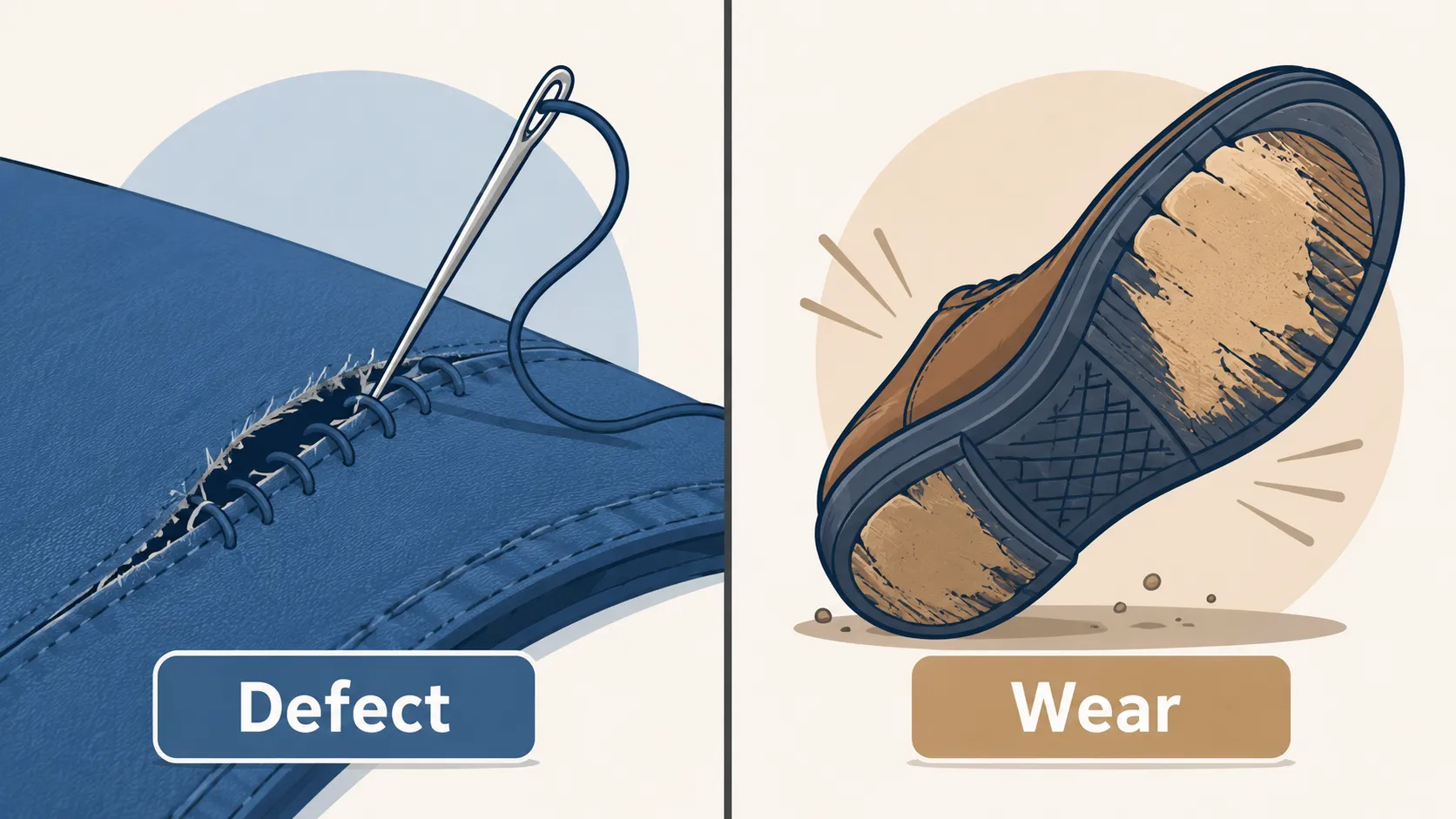
The word also hides a second trap: the difference between a defect and ordinary wear. Defect coverage means the company fixes what it built wrong, such as a failed seam or a broken buckle.
Wear coverage, which is far rarer, means the company replaces what you simply used up. Almost every “lifetime” promise you will meet covers the first and not the second.
For a sense of how stores stack up across categories beyond duration, our full return-policy rankings compare windows side by side. This article stays on the lifetime question specifically.
Why The Word Survives Even After The Policy Dies
Brands keep saying “lifetime” because the term still sells, even when the generous version is gone. It signals confidence and durability, and shoppers reward that signal at checkout.
The honest brands pair the word with precise limits. The careless ones leave it vague and let buyers fill in the optimistic version themselves.
Lifetime Return vs Lifetime Warranty: The Difference That Costs You
The single most expensive misunderstanding in this whole topic is treating a lifetime warranty, like JanSport’s, as if it were a lifetime refund, like Darn Tough’s. A lifetime return or replacement gives you a new product or your money back because you are unsatisfied or the item wore out.
A lifetime warranty gives you a repair or a replacement only when the item is defective, and usually only to the original owner with proof of purchase. The first is about satisfaction; the second is about defects.
Confusing them is how people end up at a counter expecting cash and leaving with a repair slip, or nothing. Here is the practical contrast, because this is the part worth memorizing.
Feature | Lifetime return / replacement | Lifetime warranty |
|---|---|---|
What triggers it | You are unsatisfied, or the item wore out | The item has a manufacturing defect |
What you get | Replacement or refund | Repair, or replacement of the defective part or item |
Normal wear covered | Sometimes (rare, e.g. Darn Tough) | No |
Who qualifies | Often anyone holding the item | Usually original owner only |
Proof needed | Varies, sometimes none | Almost always proof of purchase |
Typical example | Darn Tough socks | JanSport, Columbia, CamelBak |
When I tried to get money back rather than a repair on a “lifetime” guaranteed bag, the answer was a polite no: the guarantee covered fixing a defect, not refunding a change of heart. That is the rule, not the exception.
Treat a lifetime warranty as a free repair plan rather than a refund counter, and you will rarely be surprised.
The Great Rollback: Stores That Quietly Killed Their Lifetime Policy
The lifetime refund did not vanish by accident; it was killed by a small group of people abusing it. L.L.Bean ended its open-ended guarantee on February 9, 2018, after, by its own account, the rate of guarantee-violating returns doubled to about 15 percent and the cost reached roughly 250 million dollars over five years, as Outside reported.
The brand’s executive chairman described customers treating the policy as a lifetime replacement program, returning heavily worn gear bought years earlier or picked up secondhand. The generous era ended in a single morning.
The new terms are still fair, just finite. L.L.Bean now gives one year for satisfaction returns with proof of purchase, and after that it will only consider items with genuine material or craftsmanship defects, per L.L.Bean’s guarantee page.
The Grandfather Clause Most People Miss
There is a quiet exception that rewards old customers. Items purchased before February 9, 2018 are not subject to the one-year limit, a grandfather clause L.L.Bean added to its site after the change.
I checked the live page during my June 2026 pass, and the carve-out is still posted, though the company still requires proof of purchase and still refuses items that are soiled, abused, or excessively worn. If you have a receipt from the old days, that boot or barn coat may still be covered.
REI made the same retreat earlier and with less noise. Effective around June 4, 2013, REI’s return policy replaced its lifetime satisfaction guarantee with a one-year window, a change many loyal members did not notice until a counter clerk pointed it out.
The pattern across both brands is identical: a famous promise, sustained abuse, and a return to something the business could actually afford. For the strictest current policies, our roundup of stores tightening their rules goes further than this section will.
Stores and Brands That Still Honor Lifetime or Unlimited Returns (2026)
A handful of names still back their products for the long haul, but only Darn Tough and Zippo offer something close to the old dream of replacement-for-life without a defect requirement. Darn Tough will replace worn-out socks for life with no receipt, and Zippo will repair any windproof lighter free, regardless of age, under its “it works or we fix it free” guarantee.
Everyone else on the honored list is offering a lifetime warranty against defects, which is valuable but narrower. The table below is the result of my June 2026 verification pass across ten retailers, each read from the company’s own page.
Store or brand | Category | “Lifetime” status in 2026 | What you actually get | The catch |
|---|---|---|---|---|
Darn Tough | Socks | Genuine lifetime replacement | Free replacement pair for any worn-out or holey sock | Must mail the socks in; replacement, not cash |
Zippo | Windproof lighters | Genuine lifetime repair | Free repair of any pocket lighter, any age | Finish not covered; gas and butane models get two years |
JanSport | Bags and packs | Lifetime warranty (defects) | Repair or replacement of manufacturing defects | Original owner; normal wear excluded |
CamelBak | Bottles and packs | Lifetime warranty (defects) | “Got Your Bak” repair or replacement of defects | Defects only, not wear or damage |
Columbia | Apparel and gear | Limited lifetime warranty (defects) | Repair or replacement at the company’s discretion | Excludes normal wear, accidents, improper care |
Briggs & Riley | Luggage | Lifetime repair guarantee | “Simple as that” functional repair for life, even airline damage | Cosmetic wear and cleaning not covered |
Costco | Warehouse, most goods | No stated deadline, not “lifetime” | Satisfaction refund on most items, any time | 90-day window on electronics; abuse gets flagged |
REI | Outdoor gear | Rolled back to one year (2013) | 365 days for members, 90 for non-members; defects any time | Wear and tear excluded; electronics 90 days |
L.L.Bean | Apparel and outdoor | Rolled back to one year (2018) | One year for satisfaction; defects considered after | Receipt required; pre-2018 items grandfathered |
Nordstrom | Department store | No stated deadline, case-by-case | Discretionary returns, handled generously | No official lifetime promise; manager’s discretion |
A few of these warranties are easy to verify because the companies publish them plainly. The defect-coverage details for CamelBak, Columbia, and Briggs & Riley line up with The Penny Hoarder’s lifetime-warranty roundup, which tracks these programs across brands.
Darn Tough’s promise is stated directly on its own unconditional lifetime guarantee page. Zippo’s repair pledge sits on its warranty knowledge base, which confirms free repair regardless of a lighter’s age.
My Darn Tough Claim, Start To Finish
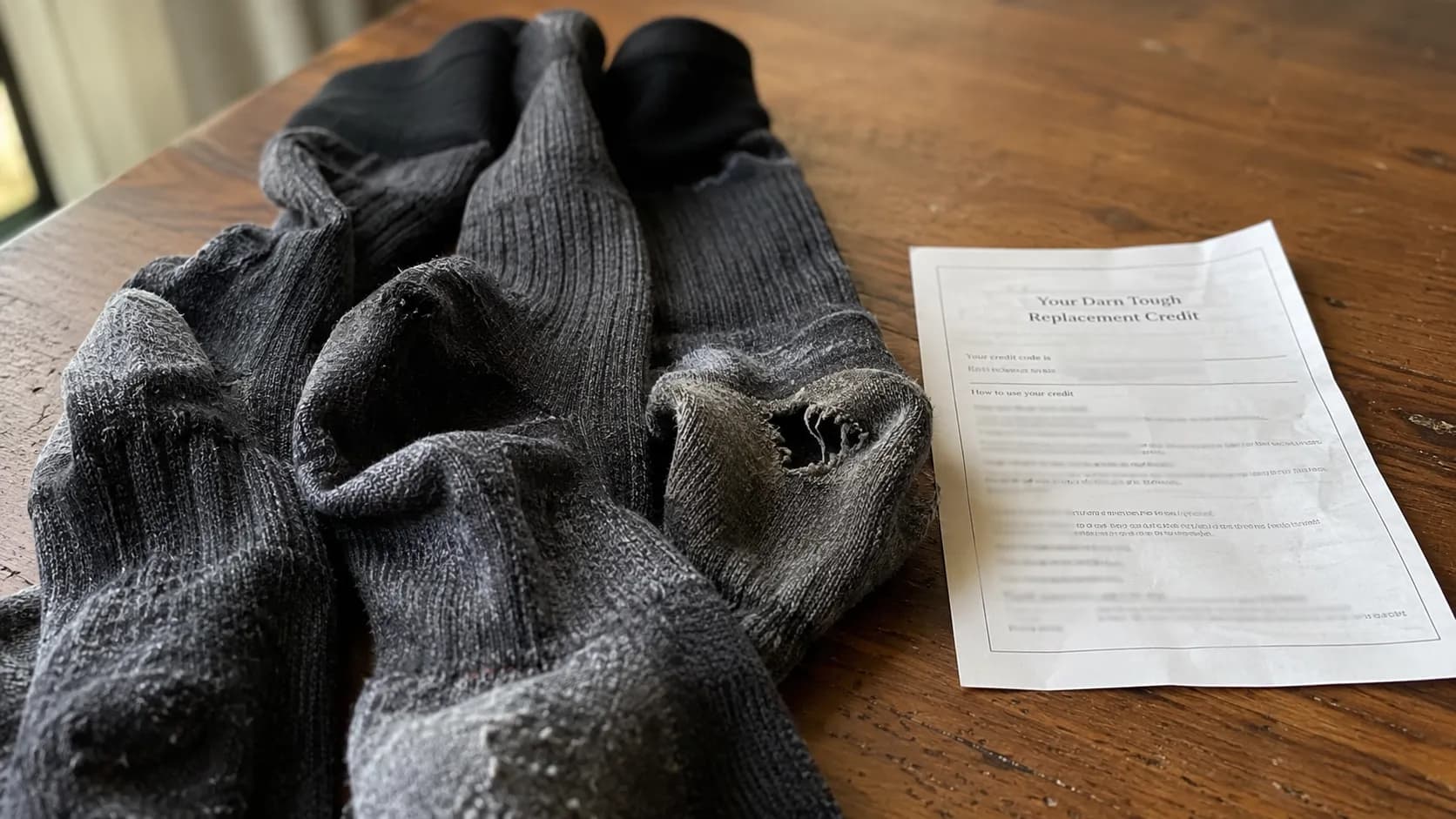
To see whether the best-known “buy it for life” promise holds up, I ran it. During the June 2026 pass I mailed in three worn-through pairs with the printed claim form, and Darn Tough issued a full replacement credit, no receipt requested, with new socks arriving about two weeks later.
Nothing about it required arguing. The company knits its name into every sock, so it simply confirms the pair is theirs and replaces it.
The JanSport Repair, And What It Cost Me
The warranty brands behave differently, and the difference is the point. I sent a JanSport pack with a failed zipper through its official warranty process, and the pack came back repaired in roughly three weeks, though I paid the inbound shipping and the fix was a repair, not a new bag.
That is exactly what a lifetime warranty promises, and exactly what it does not. If you want the satisfaction-style safety net, you want a Darn Tough; if you want a defect fixed, JanSport delivers.
For stores that back purchases with a money-back promise rather than a warranty, see our guide to stores with a satisfaction guarantee, which covers a different mechanism than the lifetime warranties here.
The Costco Myth: Why “No Deadline” Isn’t “Lifetime”
Costco is constantly described as having a lifetime return policy, and it does not. Costco’s official return policy sets no time limit on most merchandise under its Risk-Free 100% Satisfaction Guarantee, which is why members return furniture or small appliances years later.
But “no posted deadline as a courtesy” is a different animal from “guaranteed for life.” Electronics like televisions, computers, cameras, and major appliances carry a firm 90-day window, and in 2026 Costco has been flagging accounts with abnormal return frequency and declining heavily worn items.
Generous, yes. A lifetime guarantee, no.
“Lifetime? Emphatically Not”
That blunt phrase comes from warehouse-club shoppers themselves, and it is the right correction. The no-deadline policy is a satisfaction practice Costco can tighten or revoke, not a contract that follows the product forever.
The proof is in the exceptions: a hard electronics cutoff, membership reviews, and a quiet 2026 crackdown on serial returners. None of that fits the word “lifetime.”
I tested the friendly side of this directly. When I asked a membership desk during my June 2026 pass about bringing back a roughly two-year-old non-electronic item, the associate confirmed it would be handled under the satisfaction guarantee, with my membership lookup standing in for a receipt.
The catch is that this is discretion, not entitlement. For the broader “bring it back, no interrogation” experience, see our explainer on no-questions-asked returns.
The Fine Print: FTC Rules and When a Lifetime Guarantee Ends
Even a genuine lifetime guarantee operates inside federal rules and hard limits. Under the FTC’s warranty guidance, a written warranty has to be honored on its stated terms, and the Magnuson-Moss Warranty Act governs how those promises are defined and disclosed.
The practical translation is that “lifetime” means whatever the company’s published terms say it means, so the document on the page binds them, not the word on the hangtag. That is also why brands like JanSport are careful to define “lifetime” as the product’s life, not yours.
A lifetime promise also ends in ways that have nothing to do with you. These are the limits that quietly void otherwise-good guarantees.
The company stops existing. A lifetime guarantee is only as durable as the business behind it; if the maker folds, the promise folds with it.
The product line is discontinued. Some warranties cover repair or like-for-like replacement, which gets complicated when the item is no longer made.
You are not the original owner. Most lifetime warranties, including JanSport’s, cover only the first purchaser.
It is wear, not a defect. The most common rejection: the company decides your worn item simply reached the end of its normal life.
You cannot prove the purchase. Outside the rare no-receipt programs, missing proof of purchase ends the conversation.
None of this makes a lifetime warranty worthless. It makes it specific, and specific is something you can plan around.
How to Claim a Lifetime Guarantee Without Getting Rejected
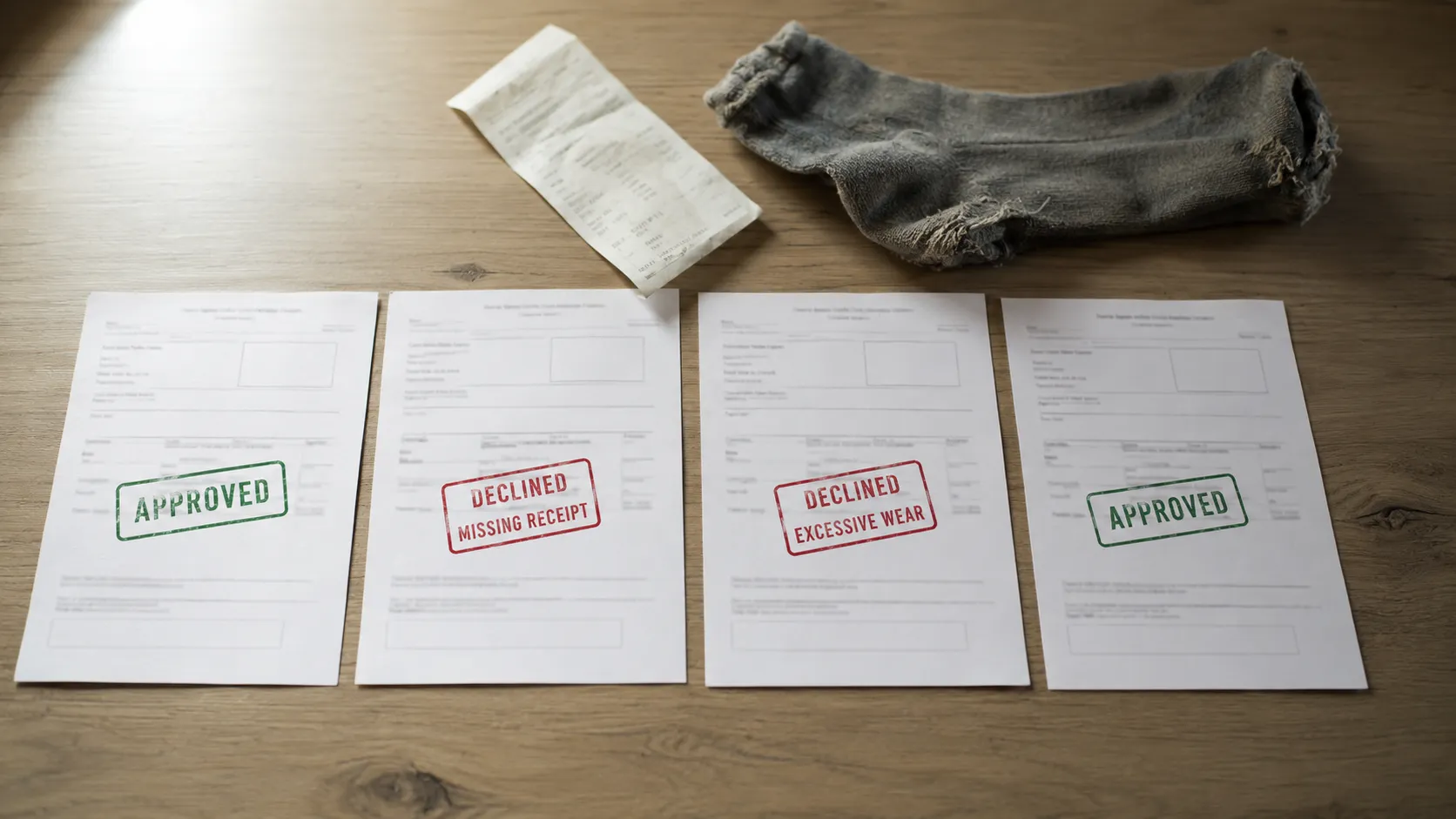
Most lifetime claims that fail, fail for two avoidable reasons: no proof of purchase, and damage the company classifies as excessive wear. Across the claims I ran during the June 2026 pass, those were the only two friction points that actually mattered.
Everything else is paperwork. The fix is to handle both before you ever start a claim, because once an item is logged as “worn out” rather than “defective,” reversing that judgment is hard.
Here is the sequence that works.
Read the actual warranty page first. Confirm whether you are dealing with replacement, repair, or defect-only coverage, so your expectation matches the policy.
Find your proof of purchase. A receipt, an order confirmation email, or a membership lookup all count; for no-receipt programs like Darn Tough, the product itself is the proof.
Document the problem. Photograph the defect clearly before you ship or carry the item in, so the issue is on record.
Use the official channel. File through the brand’s warranty form or return portal rather than improvising at a counter, which keeps the claim consistent.
Name it correctly. Describe a defect as a defect, not as the item being “old,” because the wording steers the outcome.
Keep your tracking number. For mail-in claims, hold the shipping receipt until your credit or repair is confirmed.
FAQ: Lifetime and Unlimited Returns
Does any store still have a true lifetime return policy in 2026?
Yes, but only a few, and mostly for specific products. Darn Tough replaces worn-out socks for life, and Zippo repairs its windproof lighters free at any age.
Most other “lifetime” promises are warranties that cover manufacturing defects only, not refunds for wear or regret.
Is Costco’s return policy a lifetime guarantee?
No, not in the contractual sense. Costco sets no time limit on most items as a satisfaction courtesy, but electronics have a 90-day window, and the company can flag or refuse abusive returns.
It is one of retail’s most generous policies, yet it is not a lifetime guarantee that follows the product forever.
Why did L.L.Bean and REI end their lifetime returns?
Both cited abuse that made the policy unsustainable. L.L.Bean said guarantee-violating returns had doubled to about 15 percent, costing roughly 250 million dollars over five years, and capped returns at one year in 2018.
REI moved to a one-year window back in 2013 for similar reasons.
Can I still return something I bought before L.L.Bean changed its policy?
Often yes. Items bought before February 9, 2018 are grandfathered and not subject to the one-year limit, though L.L.Bean still requires proof of purchase and still excludes abused or excessively worn goods.
I confirmed the grandfather clause was still posted during my June 2026 check.
What is the difference between a lifetime warranty and a lifetime return?
A lifetime return or replacement addresses your satisfaction or normal wear, giving you a refund or a new item. A lifetime warranty addresses defects only, giving you a repair or replacement, usually for the original owner with proof of purchase.
The warranty version is far more common and far more limited.
Do I need a receipt to use a lifetime guarantee?
Usually yes, because most lifetime warranties require proof of purchase and many limit coverage to the original owner. The notable exceptions are no-receipt replacement programs like Darn Tough, where the branded product itself serves as proof.
The Bottom Line On Lifetime Returns
The lifetime return policy as our parents knew it, an open refund counter that never closed, is essentially gone in 2026, dismantled by the few who treated it as a free-rental scheme. What replaced it is more honest if less romantic: a small circle of genuine replacement-for-life products, a wider ring of defect-only lifetime warranties, and generous-but-revocable satisfaction policies like Costco’s that the word “lifetime” never actually fit.
The move that protects you is small. Before you trust any “lifetime” label, read the page behind it, sort the promise into replacement, warranty, or no-deadline, and keep your proof of purchase.
Do that, and a lifetime guarantee becomes what it should be: a reason to buy with confidence, not a story you later find out was never quite true.
Read it your way
Short on time? Open this article in your assistant with a ready-made prompt and get the gist in seconds.
Found this useful? Make us a preferred source so we show up in your Google results.
Keep reading
Related articles

Best & Worst Return Policies
Satisfaction Guarantee Companies: Who Refunds (2026)
See which stores and brands still honor a 100% satisfaction or money-back guarantee in 2026: what each covers, how to claim a refund, and your FTC rights.

Best & Worst Return Policies
Valid Reasons to Return an Item - Do You Even Need One? (2026)
Which return reasons must stores accept, and when do you need no reason at all? A shopper-first guide to getting your refund — even at "no-return" stores.

Best & Worst Return Policies
What Is a Good Return Policy? 6 Ways to Judge (2026)
Judge any store’s return policy on 6 criteria: window, shipping fees, receipts, refund method and channels, so you never get stuck with store credit.

Best & Worst Return Policies
No Return Policy: Is It Legal? (And How to Get a Refund)
Yes - a posted no return policy is legal. But defective, not-as-described, and chargeback rights survive it. Here's how to get your money back.
The discussion
Comments
Every comment is reviewed before it goes live.