Stores That Give Cash for Returns: 7 Chains Compared (2026)
See which stores refund cash on returns (Walmart, Target, Costco, more), the original-payment rule, and why no receipt means store credit, not cash.
Written by Lillian BrooksReviewed by Marcus TrentLast updated on July 6, 2026
When you buy through links on our site, we may earn an affiliate commission (at no extra charge), which we use to fund new product tests. Learn more.
Read it your way
Short on time? Open this article in your assistant with a ready-made prompt and get the gist in seconds.
Found this useful? Make us a preferred source so we show up in your Google results.
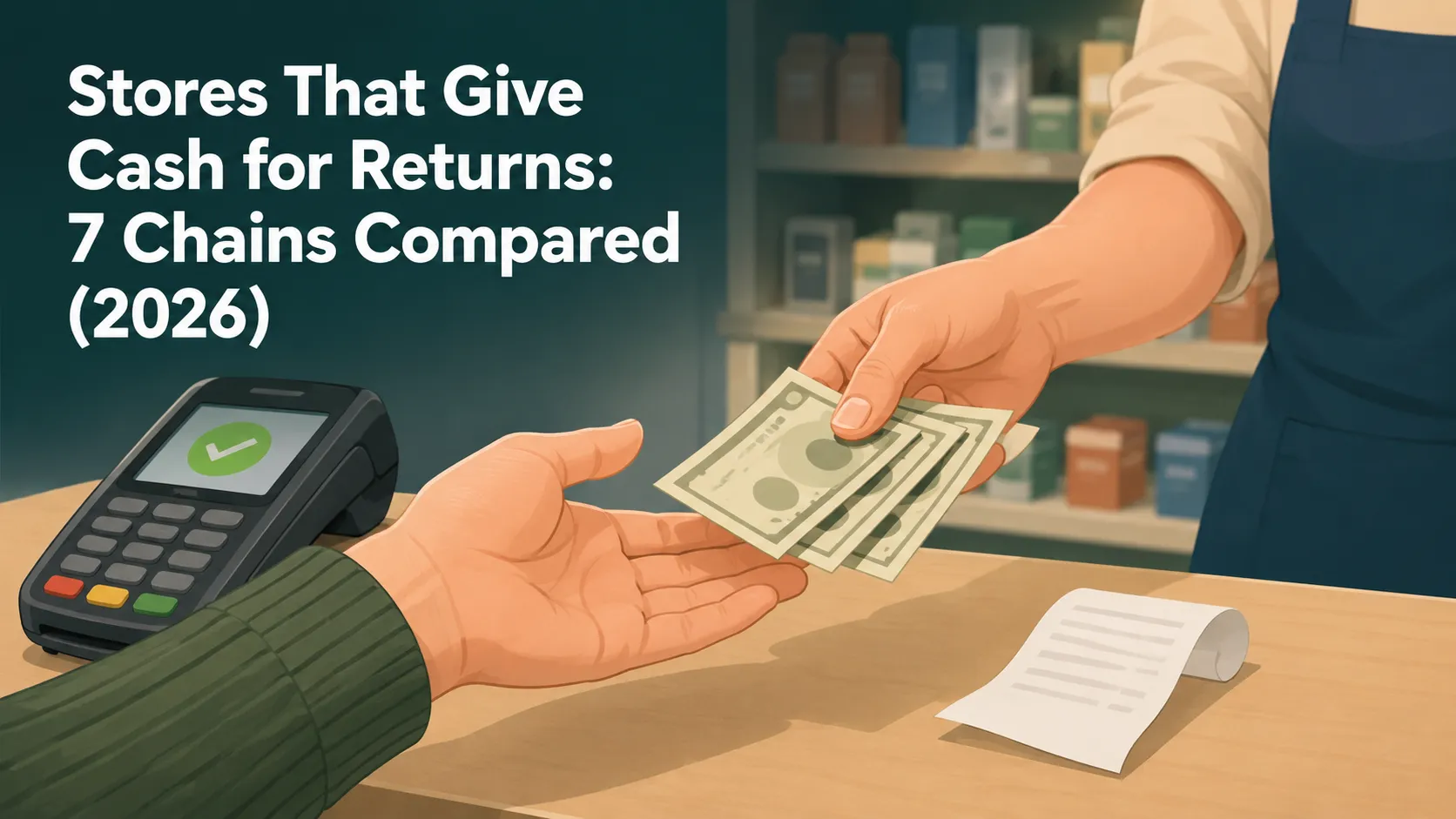
Most shoppers asking which stores that give cash for returns are asking the wrong question. Whether you walk out with cash is decided by how you paid and whether you kept your receipt, not by which store’s name is over the door.
That single rule explains every outcome below. Cash, PIN-debit, and check purchases with a receipt can come back as cash.
Card purchases go back to the card. No receipt almost always means store credit, not cash.
The Short Answer: Which Stores Give Cash, and the One Rule That Decides It
Stores that give cash for returns do so only when the original purchase was made in cash, by check, or by PIN-debit, and only when you bring the receipt. According to Walmart’s refunds page, refunds follow the original method of payment, so a card purchase returns to the card and a cash purchase returns as cash.
With no receipt, most chains issue store credit or a merchandise card instead. That is the whole logic, and it holds at every store in this guide.
Here is the quick version before the detail.
Paid cash and kept the receipt: expect cash at Walmart, Target, Kohl’s, Costco, Sam’s Club, Trader Joe’s, and CVS.
Paid by credit card: expect the refund back on that card, not cash, everywhere.
No receipt: expect store credit or a merchandise card, with cash reserved for small-dollar exceptions only.
Cash refund rule: cash, PIN-debit, or check plus a receipt equals cash. Card goes back to the card, and no receipt means store credit.
How Cash Refunds Actually Work: The Original-Payment-Method Rule
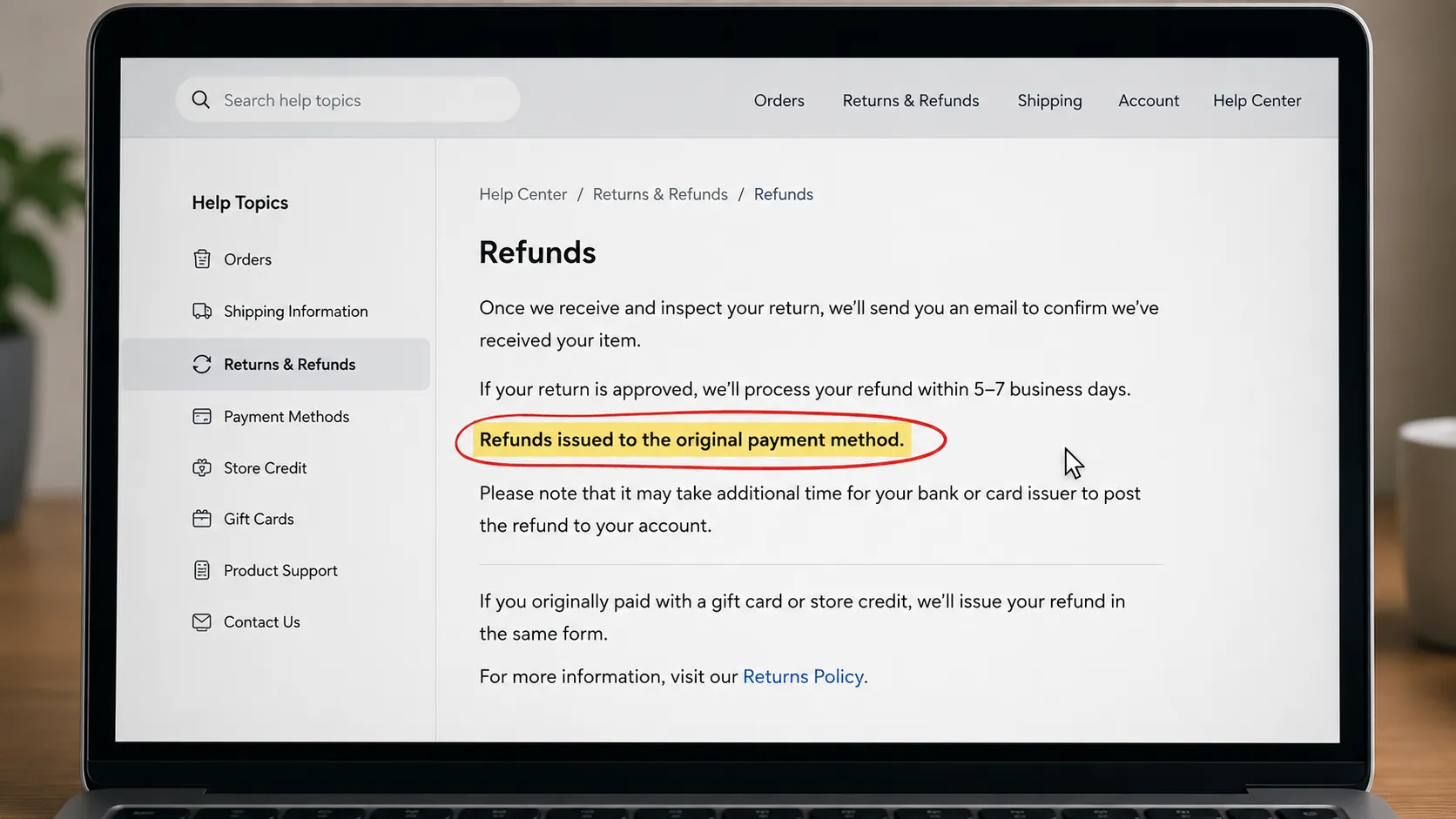
The original-payment-method rule is the reason a refund’s form is rarely up to you. Refunds are routed back to whatever tender you used, a policy Target’s refund help states plainly: refunds go to the original payment method, and a no-receipt return drops to a merchandise return card.
Cash and check purchases settle in cash. PIN-debit can settle in cash at the register, while credit and signature-debit purchases reverse back to the card over several days.
Match your payment type to the refund you will actually receive:
How you paid | What you get back (with receipt) |
|---|---|
Cash | Cash, immediately at the register |
Check | Cash |
Debit with PIN entered at the terminal | Cash possible at the register, otherwise back to the debit card |
Credit or signature debit | Back to the same card, often 3 to 10 days |
Any method, no receipt | Store credit or a merchandise card |
Why does the rule exist at all? It is a fraud control that sends money back the way it came, which stops a refund from being diverted to a different card or pocket than the one that paid.
For the broader picture of which chains rank best on windows and fees, see our full best-return-policy ranking.
Cash by Store and Payment Method: 7 Chains Compared
No competitor page lays out cash refunds by store and payment method in one place, so this matrix does. Each cell reflects the chain’s current official refund policy, verified in June 2026, covering cash purchases, PIN-debit, card returns, and the no-receipt outcome.
Treat it as a snapshot to confirm at the register, since refund handling can vary by location and manager discretion.
Store | Cash purchase, with receipt | PIN-debit return | Credit or online card | No receipt | Notable limit |
|---|---|---|---|---|---|
Walmart | Cash | Back to debit card (cash at some registers) | Back to the card | Walmart gift card at lowest recent price (under $10 may be cash) | No-receipt returns tracked by ID |
Target | Cash | Back to debit card | Back to the card | Merchandise return card, no cash | About $100 per year no-receipt cap, ID required |
Kohl’s | Cash | Back to card | Back to the card | Kohl’s Merchandise Credit at lowest 13-week price | ID required for no-receipt |
Costco | Cash | Back to card | Back to the card | Membership lookup, then original method, or a Costco Shop Card | Electronics 90 days |
Sam’s Club | Cash | Back to card | Back to the card | Membership lookup, original form or a Sam’s shopping card | Membership required to return |
Trader Joe’s | Cash | Back to card | Back to the card | Store-credit gift card at current price | Alcohol rules vary by state |
CVS | Cash (checks too) | Cash at the terminal | Back to the card | Store credit at lowest 60-day price | $25 no-receipt cap, ID required |
A few per-store notes earn their place. Kohl’s is the clearest example of the no-receipt catch: Kohl’s returns FAQ confirms a no-receipt return pays merchandise credit at the item’s lowest price over the past 13 weeks, which can land well below what you paid.
Warehouse clubs behave differently because membership replaces the receipt. Sam’s Club’s returns policy states refunds come as credit or cash in the original form of payment, or a Sam’s shopping card, and the club looks up the purchase by membership.
Costco runs the same way. Costco’s satisfaction guarantee refunds to the original payment method, returns cash on a cash purchase, and issues a Costco Shop Card only when you no longer have the card you paid with.
Why Most Stores Won’t Hand You Cash for a Card Purchase
Stores will not hand you cash for a credit-card return because doing so would be a fraud risk, not because they are being difficult. When a card purchase pays out as cash, a bad actor can buy on a stolen card, walk out with untraceable money, and still file a chargeback.
According to a 2026 return-fraud analysis, issuing store credit or gift cards instead of cash measurably reduces fraud, since cash refunds are hard to track and attract scammers seeking immediate, untraceable payouts. So the card-only refund is loss prevention working as designed.
There is a second reason worth naming. Sending money back to the original card is also what protects you if your own account is ever compromised, because the refund cannot be peeled off to a stranger’s pocket.
Why cash is shrinking. Across r/walmart return threads, the recurring line is “not anymore, most stores stopped that,” and it tracks with the fraud math. Every cash refund on a card purchase is an untraceable payout, so chains have quietly narrowed cash to cash, PIN-debit, and check purchases with a receipt.
If your goal is simply to dodge the strictest desks, it helps to know the stores with the worst return policies before you buy.
The Debit-Card Exception: When “Cash Back on Debit” Actually Works
Can I get cash back on a debit return?
Sometimes, and the deciding factor is how the terminal processed your purchase. A debit purchase run as PIN-debit at the terminal can be refunded as cash at the register, while a signature-debit or online-debit purchase reverses back to the card over several days.
CVS’s in-store policy is explicit that check purchases and PIN-debit purchases are refunded in cash, which makes CVS the cleanest documented example of the debit exception.
To give yourself the best shot at cash on a debit return, line these up:
Pay with debit and enter your PIN at the terminal rather than choosing credit or signature.
Keep the receipt, since the rule still requires proof of purchase.
Return in store, where cash can be issued at the register instead of waiting on a card reversal.
Ask the associate to process it as a debit refund before they default to the card.
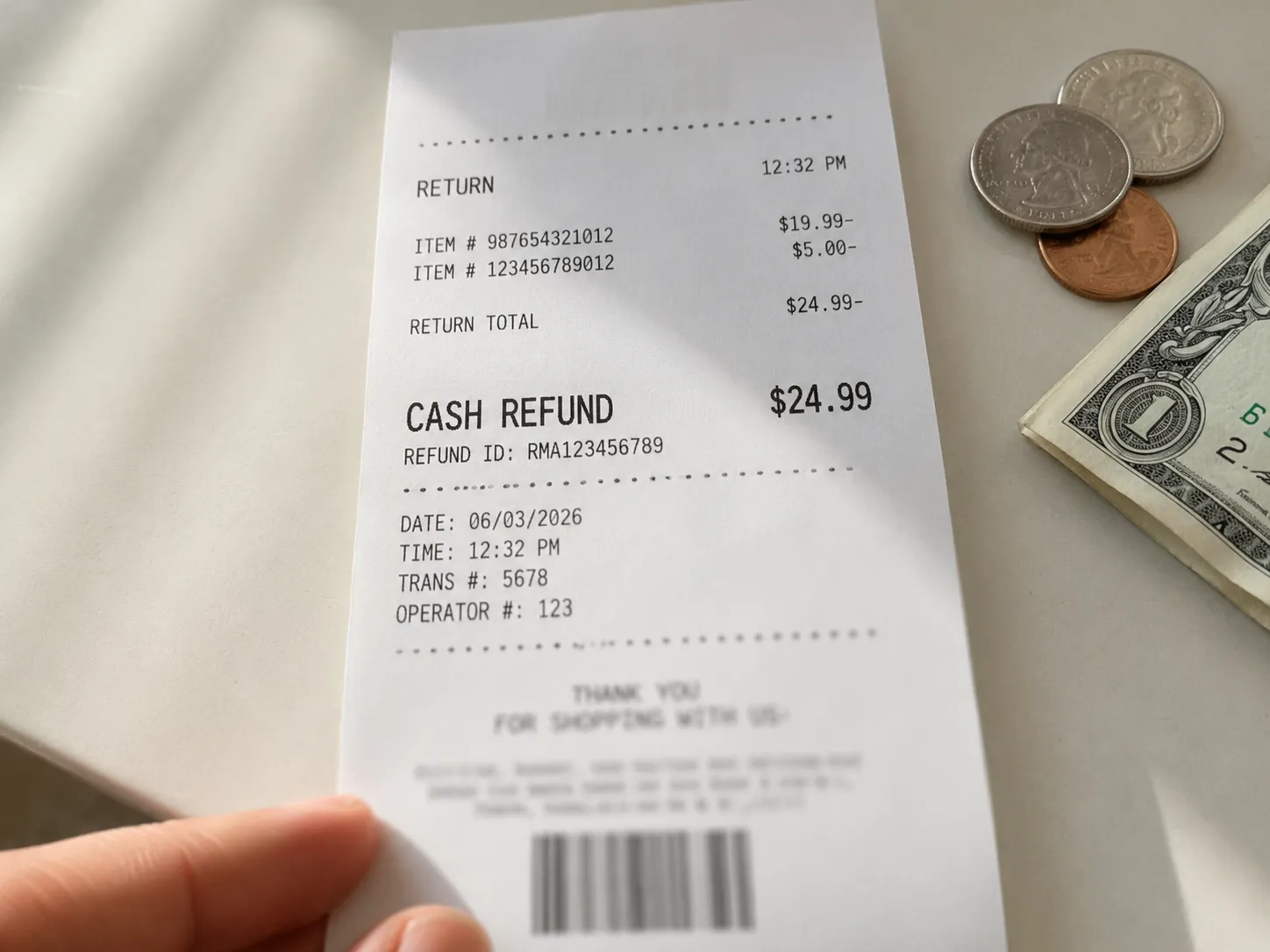
It is not guaranteed, because some registers and chains route every debit refund back to the card regardless. When I ran a small PIN-debit return at a drugstore to check this, the associate handed back cash at the counter and the receipt showed a cash-refund line rather than a pending card credit.
No Receipt? Why That Almost Always Means Store Credit, Not Cash
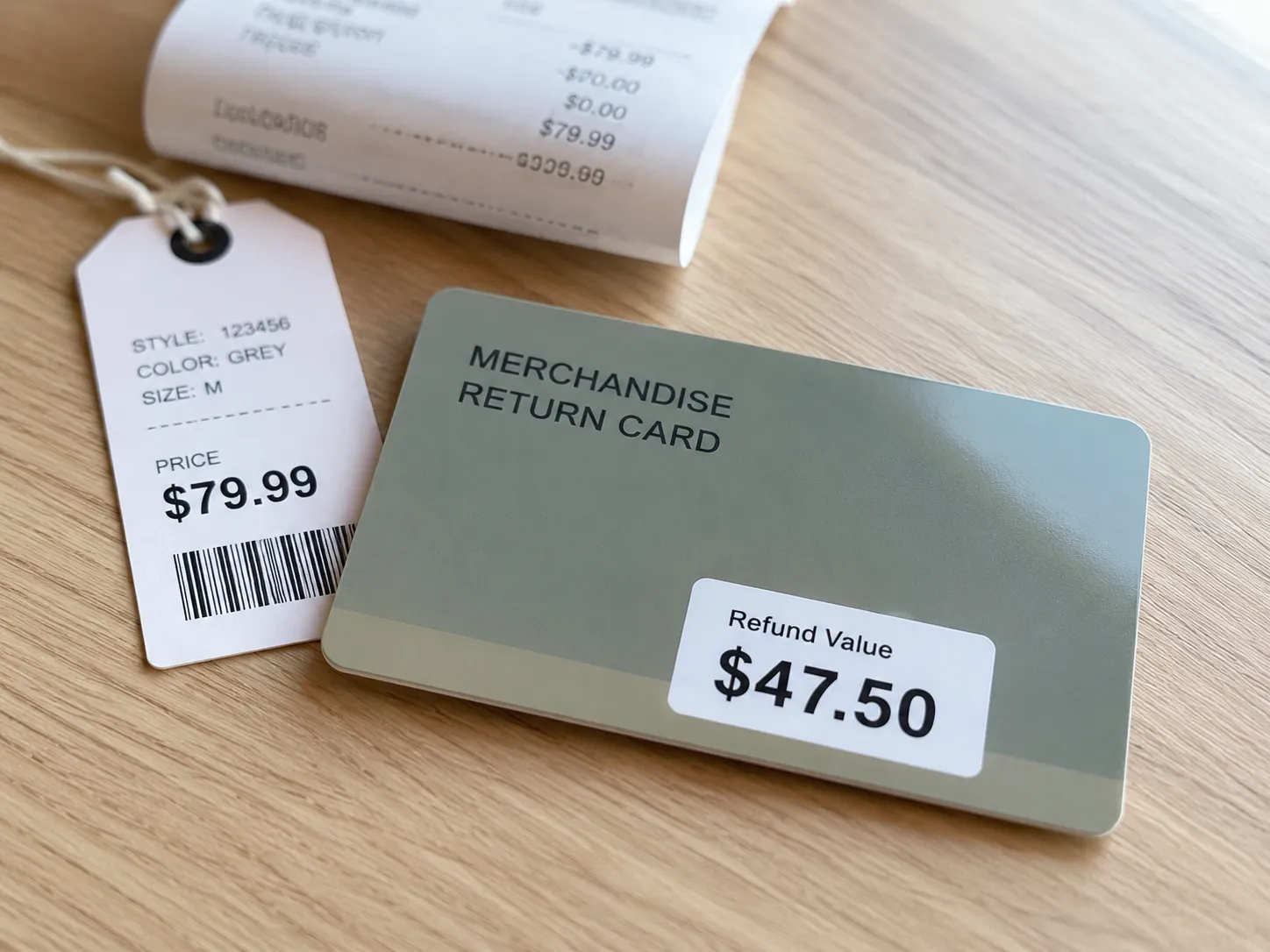
No receipt is the single biggest reason a cash hope turns into store credit. Without proof of purchase, most chains issue a merchandise card or gift card rather than cash, usually at the item’s lowest recent price, with a photo ID required.
The narrow exception comes from Walmart Business refunds, which notes a no-receipt item under $10 can be refunded in cash, while anything $10 or more goes onto a gift card.
The catch most shoppers miss is the value, not just the format. A no-receipt return at CVS is capped at $25 and paid at the lowest advertised price over the prior 60 days, so a sale-priced lookup can return far less than you paid.
Store | No-receipt outcome | Refund value basis | ID or cap |
|---|---|---|---|
Walmart | Gift card (under $10 may be cash) | Lowest recent price | Tracked by ID |
Target | Merchandise return card | Lowest recent price | ID, about $100 per year |
Kohl’s | Merchandise credit | Lowest 13-week price | ID required |
CVS | Store credit | Lowest 60-day price | ID, $25 cap |
Costco and Sam’s | Usually fine via membership lookup | Original price | Membership card |
The catch. Without a receipt you can be refunded below what you paid, because the system uses the item’s lowest recent price, not your purchase price.
If you are weighing a return you know will be receiptless, it is worth reading how to return without a receipt first, since the rules and ID limits differ by store.
Grocery, Warehouse, and Drugstore Specifics
Cash handling shifts by store type, which matters for the common search for grocery stores that give cash for returns without receipt. Warehouse clubs lean on membership lookup, groceries lean on a satisfaction guarantee, and drugstores cap no-receipt returns hard.
Knowing the type tells you the outcome before you reach the desk.
Warehouse clubs rarely need a receipt at all. Both Costco and Sam’s Club pull the purchase from your membership account, then refund in the original form, including cash on a cash purchase.
When I returned a small item at a club without the slip, the associate found it by membership card in seconds and never asked for paper.
Groceries follow the same payment rule with a satisfaction-first attitude. Trader Joe’s hands cash back on a cash purchase with a receipt and issues a store-credit gift card when there is no receipt, while EBT purchases are returned to the EBT card by federal rule.
Drugstores are the strictest on no-receipt cash. CVS will return cash on a check or PIN-debit purchase per its in-store rule, but a no-receipt return is store credit only, capped at $25, and tied to your ID.
Frequently Asked Questions
Does Walmart give cash for returns?
Walmart gives cash when the original purchase was cash, check, or PIN-debit and you have the receipt. Credit and standard card purchases return to the card, and a no-receipt return is issued on a Walmart gift card at the item’s lowest recent price, with small sub-$10 items sometimes refunded in cash.
Can I get cash back if I paid by debit card?
Possibly, if the purchase was processed as PIN-debit at the terminal, in which case some stores refund cash at the register. If it ran as signature debit or online debit, the refund goes back to the card instead, typically within a few business days.
What stores give cash for returns without a receipt?
Almost none for anything but small amounts. Most chains pay no-receipt returns as store credit or a merchandise card, with Walmart’s under-$10 cash exception the main case where cash appears without a receipt.
Why won’t stores give cash for a credit-card return?
Because cash on a card purchase is a fraud risk that lets stolen-card buyers walk out with untraceable money and still dispute the charge. Routing the refund back to the card is loss prevention, and it also protects the legitimate cardholder.
The Bottom Line on Getting Cash Back
Cash on a return is never really about the store. It is about the receipt in your pocket and the way you paid, and once you see that, the stores that give cash for returns become predictable rather than a gamble.
Pay cash, check, or PIN-debit and keep the receipt, and cash is on the table at Walmart, Target, Kohl’s, Costco, Sam’s Club, Trader Joe’s, and CVS alike.
Lose the receipt or pay by card, and plan for store credit instead, often at the item’s lowest recent price. Before your next big purchase, decide how you will pay with the return in mind, and keep the receipt until you are sure the item is a keeper.
Read it your way
Short on time? Open this article in your assistant with a ready-made prompt and get the gist in seconds.
Found this useful? Make us a preferred source so we show up in your Google results.
Keep reading
Related articles
Best & Worst Return Policies
Satisfaction Guarantee Companies: Who Refunds (2026)
See which stores and brands still honor a 100% satisfaction or money-back guarantee in 2026: what each covers, how to claim a refund, and your FTC rights.
Best & Worst Return Policies
Valid Reasons to Return an Item - Do You Even Need One? (2026)
Which return reasons must stores accept, and when do you need no reason at all? A shopper-first guide to getting your refund — even at "no-return" stores.
Best & Worst Return Policies
What Is a Good Return Policy? 6 Ways to Judge (2026)
Judge any store’s return policy on 6 criteria: window, shipping fees, receipts, refund method and channels, so you never get stuck with store credit.
Best & Worst Return Policies
No Return Policy: Is It Legal? (And How to Get a Refund)
Yes - a posted no return policy is legal. But defective, not-as-described, and chargeback rights survive it. Here's how to get your money back.
The discussion
Comments
Every comment is reviewed before it goes live.