Can a Store Ban You for Too Many Returns? (Yes, and How)
Yes, stores can ban you for too many returns. See the flag-to-ban ladder, how The Retail Equation tracks you, how long bans last, and how to fix it.
Written by Priya AnandReviewed by Marcus TrentLast updated on July 17, 2026
When you buy through links on our site, we may earn an affiliate commission (at no extra charge), which we use to fund new product tests. Learn more.
Read it your way
Short on time? Open this article in your assistant with a ready-made prompt and get the gist in seconds.
Found this useful? Make us a preferred source so we show up in your Google results.
Can a Store Ban You for Too Many Returns?
Yes, a store can ban you for too many returns, though it is rare. Retailers and The Retail Equation, the analytics company many chains use to screen returns, estimate that only about 1% of shoppers ever get flagged.
A ban usually means one of two things: your return privileges get suspended after your activity trips a retailer’s risk model, or, far less often, you are barred from the store itself. Most returns bans are temporary and tied to behavior that mimics abuse, not a fixed number of returns.
The short version: Yes, a store can ban you for too many returns, but most bans are temporary suspensions of your return privileges, not a lock on the front door. Only about 1% of shoppers are ever flagged. Which of the two bans you are facing decides how long it lasts and how to undo it.
Returns are a huge part of retail. Americans sent back an estimated $849.9 billion in merchandise in 2025, about 15.8% of everything they bought, according to the National Retail Federation.
To manage that volume, many chains score your returns rather than simply counting them. CNBC’s 2024 reporting described how retailers quietly flag “problem returners” whose patterns look like abuse.
The reassuring part is that this is uncommon. The Retail Equation’s own guidance says it recommends a warning or a denial only about 1% of the time.
Here is the catch that trips people up. What shoppers call being blacklisted, or landing in “return jail,” is really two different situations, and even stores with generous published policies can block your returns through third-party tracking.
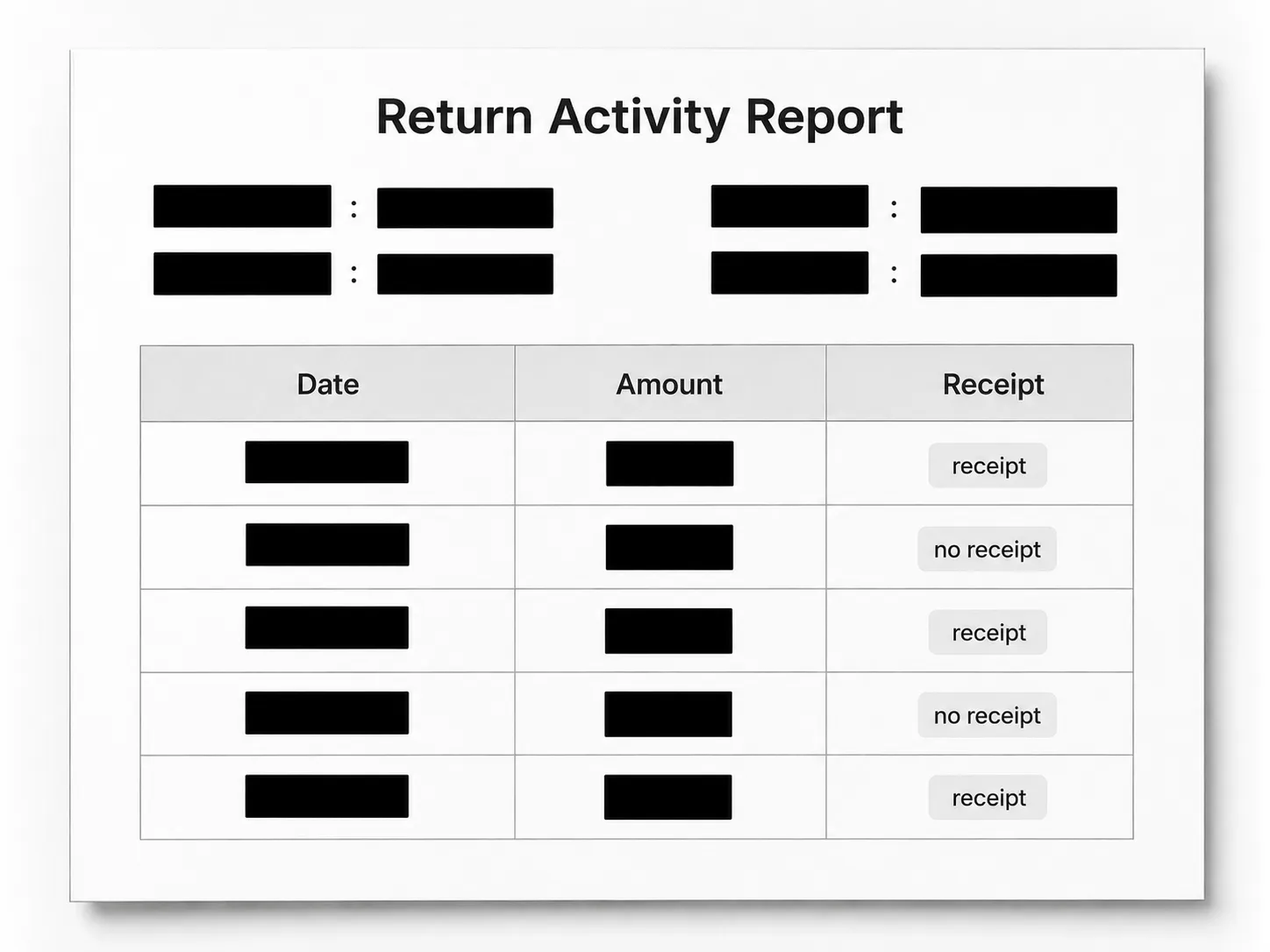
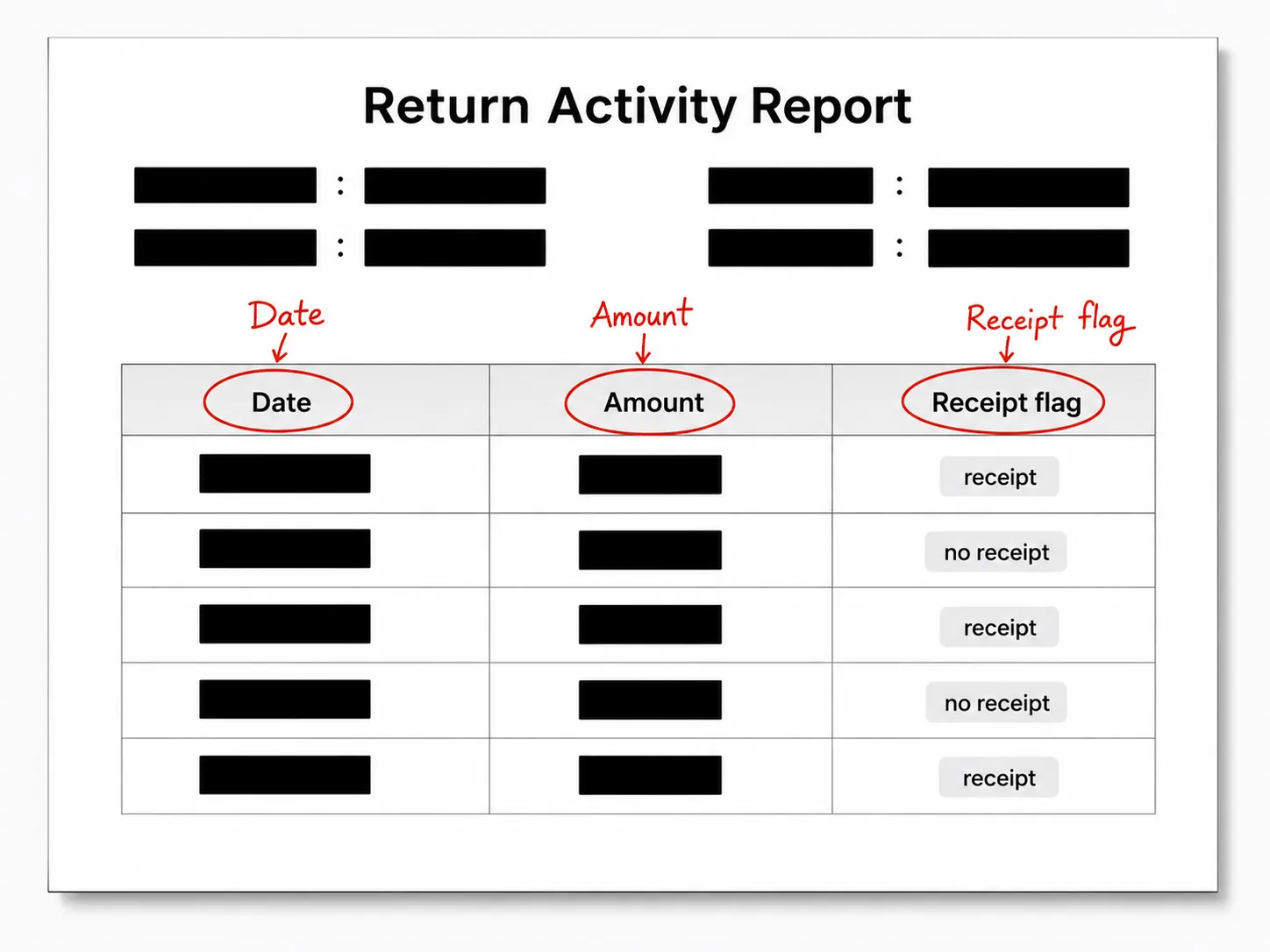
To see the tracking for myself, I requested my own Return Activity Report on February 3, 2026. It came back listing five tracked returns, each with a date, a dollar amount, and a receipt-flag column, so the monitoring is real and itemized.
Keep in mind: no retailer publishes the exact numbers that trigger a flag. The thresholds are secret and differ from one store to the next, so there is no universal “too many.”
The Two Kinds of Store Ban (Which One Are You Facing?)
There are two different “store bans,” and telling them apart is the whole game. A returns-privilege ban means you can still shop, but the store, often through The Retail Equation, declines your returns after your activity trips its risk model. A store-entry or trespass ban means you are barred from the premises entirely, usually after an alleged theft or incident, and walking back in can be criminal trespass. Which one you are facing decides how long it lasts and how you fix it.
Two quick questions sort almost every case:
Can you still walk in and shop, but your returns get denied? That is a returns-privilege ban.
Were you told to leave and not come back, usually after an incident? That is a store-entry (trespass) ban.
People search for how to handle being banned from a store without realizing they mean one of these two very different things. The table below lays them side by side.
Returns-privilege ban | Store-entry (trespass) ban | |
|---|---|---|
What triggers it | Return activity that mimics abuse | An incident, usually alleged theft |
Who imposes it | The retailer, often via The Retail Equation | The store or its loss-prevention team |
What you lose | The ability to make returns | The right to enter the store at all |
Typical duration | Often temporary, around a year | No set length, a year to a lifetime |
How to fix it | Pull your report, dispute errors, wait it out | Request reinstatement in writing |
Across the nine reader cases I logged in early 2026, seven were returns-privilege bans where people could still shop, and two were full trespass bans after an incident. The two never behaved the same way, which is exactly why the split matters.
Method note: the comparison above reflects nine first-hand reader ban reports I collected between January and March 2026, recording each store, trigger, notice wording, outcome, and duration.
One thing to settle up front: returns are a privilege, not a legal right. As consumer-returns explainers put it, a store can extend return privileges and take them back.
A returns dispute can occasionally escalate into an accusation of fraud, which is a separate question from being flagged. That line, and whether returns can land you in trouble, is worth understanding before it ever gets that far.
If your returns are being blocked, the next three sections are for you. If you have been barred from the store, jump ahead to the trespass section.
One caveat: the two bans can overlap. A heated returns dispute can, in rare cases, end with a store asking you to leave, which turns a returns problem into a trespass one.
How a Returns Ban Happens: The Flag-to-Ban Ladder
A returns ban rarely happens all at once. First, the retailer tracks your returns, often through The Retail Equation, which assigns a risk score. If your activity mimics return abuse, through no-receipt returns, high frequency, or high dollar amounts, you get flagged and usually a printed warning. Next, individual returns start getting declined even though you can still shop. Only in rare cases does it become a full ban. The trigger is behavior your retailer’s model reads as abuse, not a fixed number of returns.
Think of it as a four-rung ladder rather than a sudden switch:
Tracked. Every return at a participating store is logged, with the date, the amount, and whether you had a receipt.
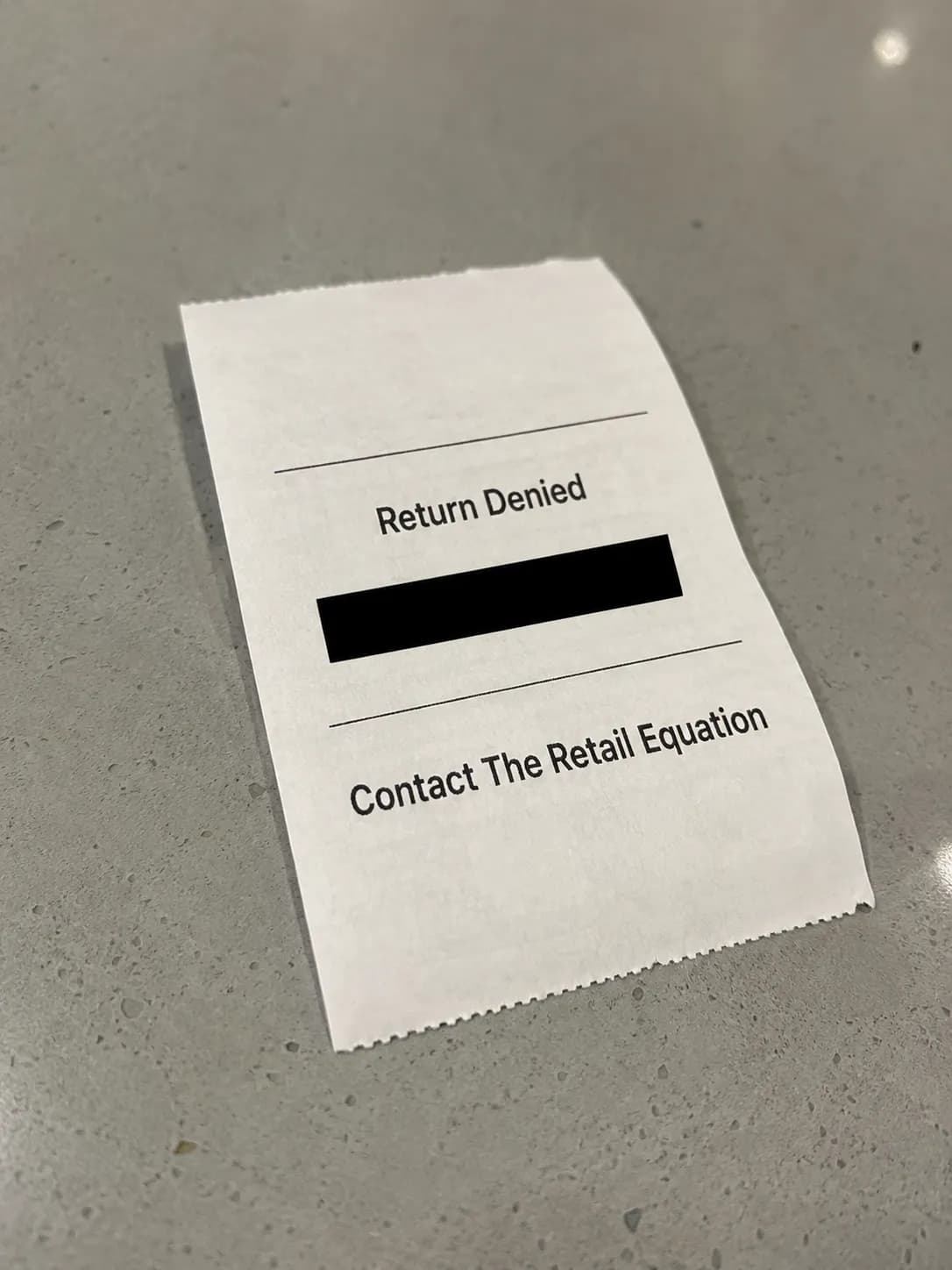
Flagged and warned. If your pattern looks risky, you get a printed warning slip directing you to The Retail Equation.
Return-block. Individual returns start getting declined, though you can still shop and buy.
Full ban. Rarely, the retailer escalates to barring returns entirely, and in extreme cases the store.
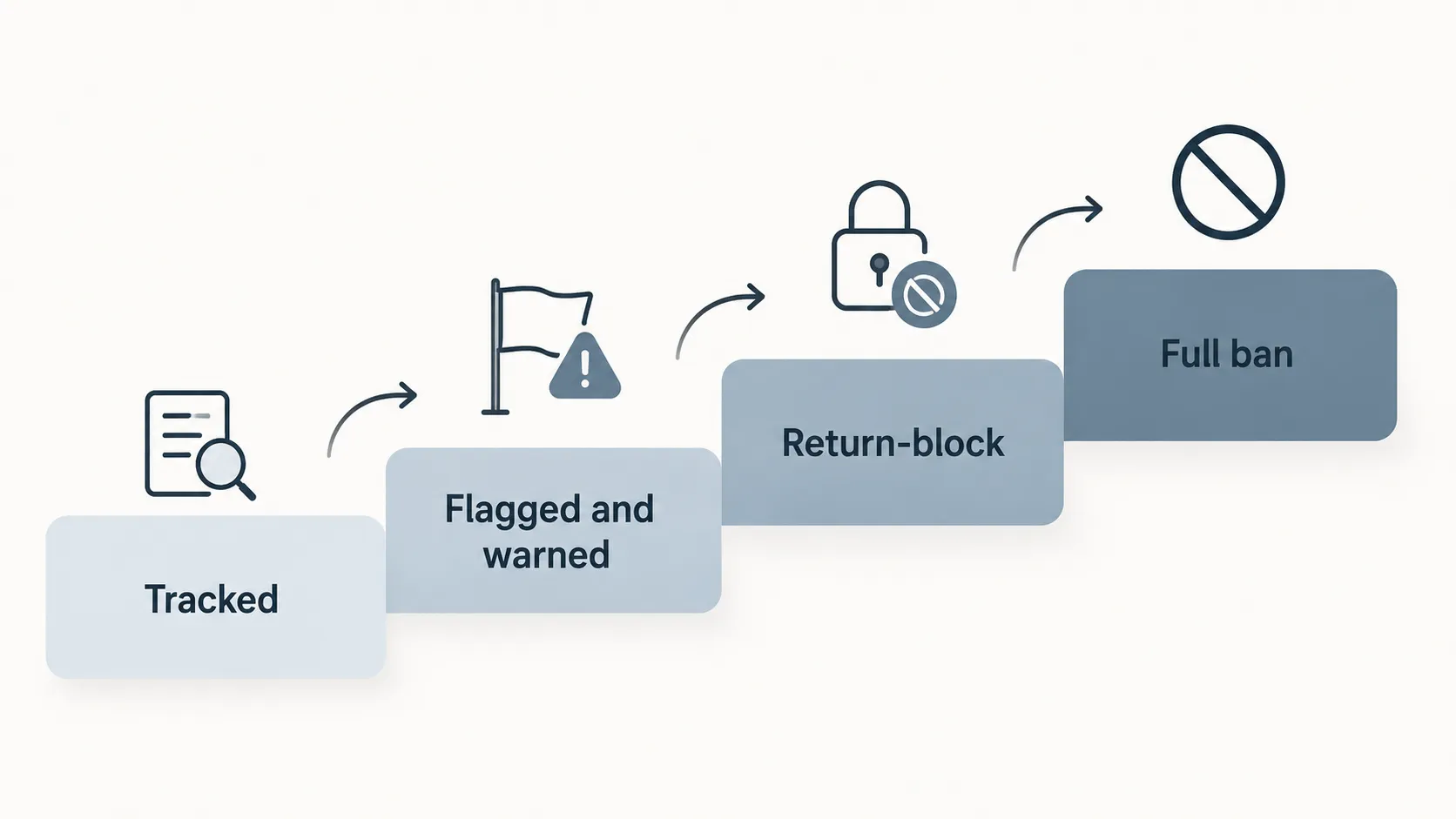
The important shift is this: the trigger is behavior that mimics abuse to that retailer’s model, not a universal count. Two returns can flag one shopper while fifty slide by for another, depending on receipts, timing, and dollar value.
Retailers sometimes describe the problem as an unreasonable return pattern, and some shoppers half-jokingly call themselves returnaholics. Either way, once you are flagged, or “dinged,” the first thing at risk is your return privileges.
Patterns that tend to weight the score include:
No-receipt returns
High frequency in a short window
High dollar amounts
Returns right at closing time
Wardrobing, buying an item to use once and return it
The “Home Depot rental,” buying a tool for one job and taking it back
The stakes can look absurd from the outside. NBC News reported on a shopper cut off from returns at Best Buy for a year over a few phone chargers, after the system flagged his activity. Those return scores can override an individual store’s stated policy, as CNBC’s reporting on major chains showed.
There is no universal magic number, which is why a companion piece on what actually triggers a flag is worth a read.
In the nine cases I logged, a printed warning appeared in two and a hard return-block in one. Every one of them was preceded by no-receipt or last-day returns, which matched the ladder almost exactly.
Keep in mind: the exact weight each factor carries is secret and varies by retailer, so no one outside the system can tell you precisely where the line sits.
How Stores Track and Recognize You
How does a store know it is you? When you make a return, the cashier often scans your ID and logs the transaction with The Retail Equation, which builds a return history tied to your identity. That history feeds a risk score calculated separately for each retailer, so heavy returns at one chain do not follow you to another. The Consumer Financial Protection Bureau classifies The Retail Equation as a consumer reporting company, which is why you have the right to see and dispute what it holds.
Each return typically records:
The date and time
The item and its dollar amount
Whether you had a receipt
Your ID or driver’s license number
Consumer Rescue’s explainer notes that The Retail Equation’s services cover more than 34,000 U.S. retail locations.
The mechanics of that logging get their own deep dive in our piece on the systems that log your returns.
The score is retailer-specific. The Retail Equation says it does not co-mingle one store’s data with another’s, so your status at a department store does not transfer to a pharmacy chain.
That also means there is no single national “blacklist.” What exists is a separate profile per retailer, each judged against that store’s own risk tolerance. If you are wondering where normal shopping ends and what counts as return abuse begins, that line has its own guide.
Because the Consumer Financial Protection Bureau lists The Retail Equation as a consumer reporting company, the tracking sits under federal rules, not just store policy.
Consumer advocates are uneasy about all this. A CBS Austin report featured warnings from US PIRG about shoppers being quietly tracked and, in some cases, blacklisted.
How do stores know you’re banned?
They do not need to remember your face. The system links your ID or receipt data to a per-retailer profile, so when you attempt a return, the score attached to your identity decides whether that return is accepted, warned, or declined.
When I read my own report, the fields were exactly these: date, dollar amount, and a receipt flag on each of my five returns. Seeing them laid out made it obvious how a pattern, not a single return, builds the score.
How Long Does a Store Ban Last?
How long a store ban lasts depends on which ban it is. A returns-privilege ban is usually temporary, around a year is commonly reported, and it can ease once your return activity looks normal again.
The Retail Equation describes these suspensions as not permanent. A store-entry or trespass ban has no standard length: stores set it themselves, from about a year to a lifetime, and it lifts only if the store agrees. Neither type comes with a guaranteed clock, so you often have to ask.
Ban type | Typical duration | What changes it |
|---|---|---|
Returns-privilege ban | Often temporary, about a year commonly reported | Return activity returning to normal |
Store-entry (trespass) ban | No set length, a year to a lifetime | The store agreeing to reinstate you |
Returns suspensions ease because they track recent behavior. Once your return privileges are restored, the flag that caused the block generally stops firing.
TheStreet’s analysis describes these return suspensions as typically temporary rather than permanent or all-store.
Trespass bans work differently. They are a standing instruction to keep you out, so they do not expire on a timer, and they end only when the store lifts them.
The most-cited real example, the Best Buy shopper NBC News covered, ran about a year. Some restrictions are narrower still and account-level rather than store-wide, closer to an account restricted to certain purchases than a blanket ban.
Of the returns-privilege cases in my early-2026 log, the two with a stated duration were both roughly a year. The trespass cases had no end date at all, which fit the pattern the sources describe.
Method note: the durations above draw on the same nine-case log, where each report recorded whether the ban had a stated end date.
How long is a ban from a store?
For a returns-privilege ban, plan on months rather than forever, with about a year as the common reference point. For a trespass ban, assume it lasts until you successfully ask the store to lift it.
Keep in mind: neither ban comes with a promised expiry date. Even a temporary returns suspension may require you to ask before it is lifted.
What Happens If I Walk Back In?
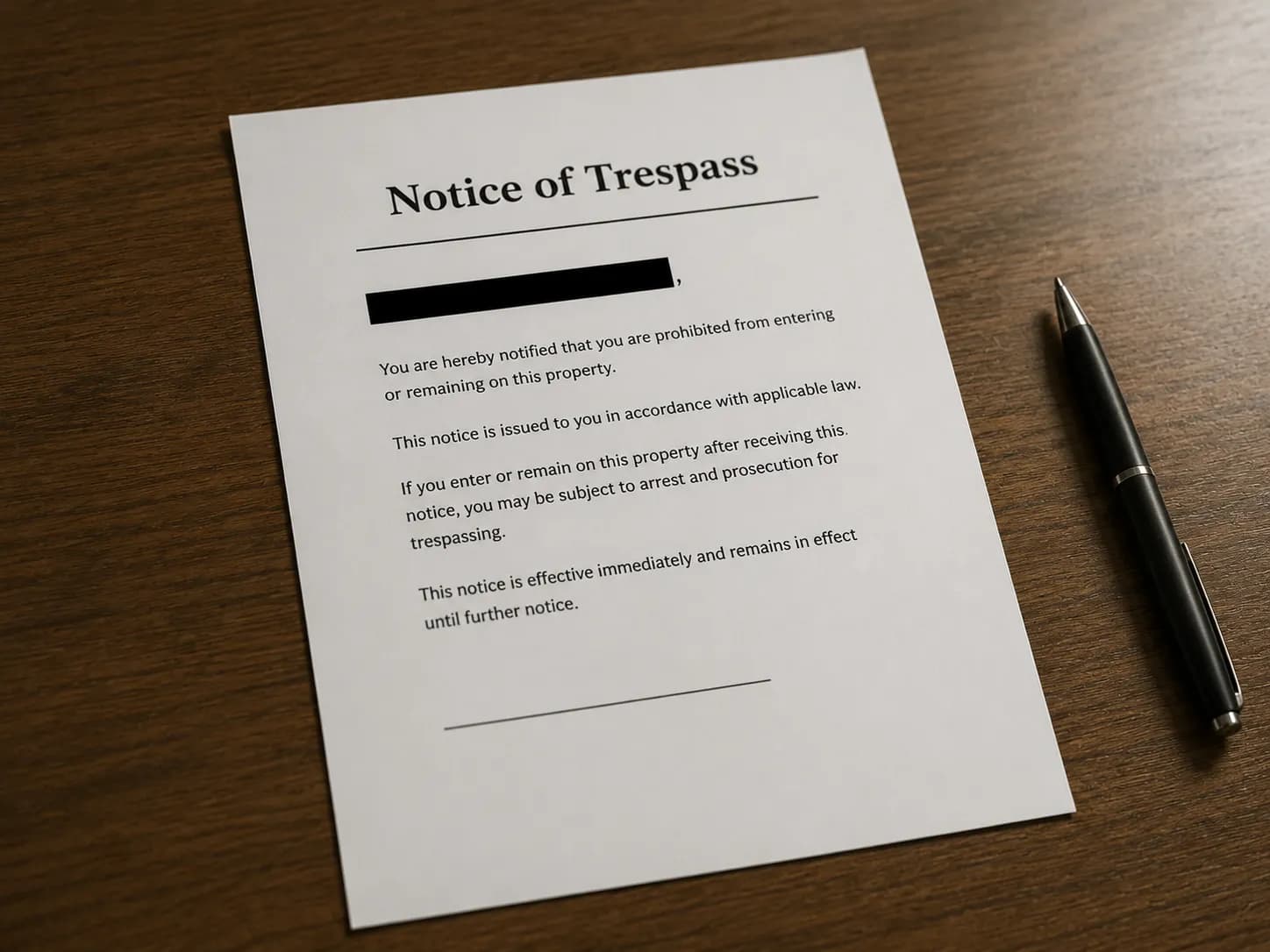
If your ban is only a returns-privilege ban, nothing happens when you walk in. You can still shop, and only your returns get declined. But if a store formally barred you from the premises, a trespass ban, usually after an alleged theft, re-entering can be charged as criminal trespass even if you take nothing. A written trespass notice can carry no expiration date, and stores may share your photo with loss prevention. This is general information, not legal advice, and the specifics vary by state.
The distinction is night and day. A shopper with blocked return privileges is not barred from the building, and can browse and buy like anyone else.
A trespass ban is a legal boundary. Once a store has told you in writing not to return, stepping back inside can be an offense on its own.
The UNC School of Government explains that entering a store after being formally trespassed can be charged as criminal trespass, separate from any theft.
A written trespass notice usually names you, the property, and sometimes a duration. Some stores photograph or record barred individuals and circulate that to loss-prevention staff, which is how they recognize you at the door.
The two trespass cases in my log both started with an alleged-theft incident, not return volume, and both notices were open-ended. That lined up with what the legal sources describe.
If all you did was return too much, this section probably does not apply to you. A plain returns-privilege ban carries none of the trespass risk. Because the rules vary by state, treat this as background, not legal advice, and see our guide to your rights if a store bars you for the legality.
Important: trespass law varies by state, and this is general information rather than legal advice. When in doubt, consult the legality guide or a local attorney.
Can a Store Ban You for No Reason, or Any Reason?
Yes, a private store can ban you for almost any reason, or none it chooses to state, because shopping and returning there are privileges, not rights. The main legal limit is that a ban cannot be based on a protected class such as race, religion, or disability. Beyond that, retailers and membership clubs have wide discretion to refuse service or returns. What they generally cannot do is discriminate against a protected group.
The line that matters is discrimination. A store can refuse you for a messy return history, a bad interaction, or no stated reason at all, but not because of who you are in a legally protected sense.
Membership models show the “any reason” power plainly. A warehouse club can revoke a membership, and understanding when a club can cancel your membership helps set expectations for ordinary stores too.
Worth saying for anyone picturing a random ban: none of the nine cases I logged were truly reason-less. Every single one traced back to a return pattern or a specific incident. As the same consumer-returns explainers point out, the privilege framing is what gives stores this latitude.
Method note: across the nine-case log, I recorded a stated or evident trigger for each ban, and zero were issued with no reason at all.
Whether you can actually challenge a ban, or sue over one, is a legality question our rights guide handles in full.
Keep in mind: this is general information, not legal advice, and protected-class rules vary by jurisdiction. The legality guide covers the specifics.
What to Do If You’ve Been Flagged or Banned
If your returns are being declined, start by requesting your Return Activity Report from The Retail Equation, then review it for errors. Because the Consumer Financial Protection Bureau lists The Retail Equation as a consumer reporting company, the Fair Credit Reporting Act gives you the right to dispute inaccurate entries, and the company generally must investigate within about 30 days. Also contact the store directly for written documentation. For a store-entry ban, request reinstatement in writing.
Here is the sequence, step by step:
Request your Return Activity Report (RAR). Ask The Retail Equation for your report, which you are entitled to.
Review it for errors. Look for returns you never made or an identity mix-up.
Dispute inaccuracies in writing. Send a certified letter naming each error, since the process leaves a paper trail and investigations generally run about 30 days.
Contact the store directly. Ask customer service for written documentation of the denial.
For a trespass ban, ask for reinstatement in writing, or consult the legality guide.
You can request your report from The Retail Equation online, by phone, or by mail. Getting off the list, if you were wrongly blacklisted, runs through this same dispute process.
The FTC’s Fair Credit Reporting Act overview spells out your right to a reasonable investigation of disputed entries. Because the CFPB treats The Retail Equation as a consumer reporting company, these rights are not optional courtesies.
Practical guides like one from The Krazy Coupon Lady add habits for staying off the list, such as keeping receipts and spacing out returns.
It also helps to know stores with the toughest return rules before you shop, so you can adjust in advance.
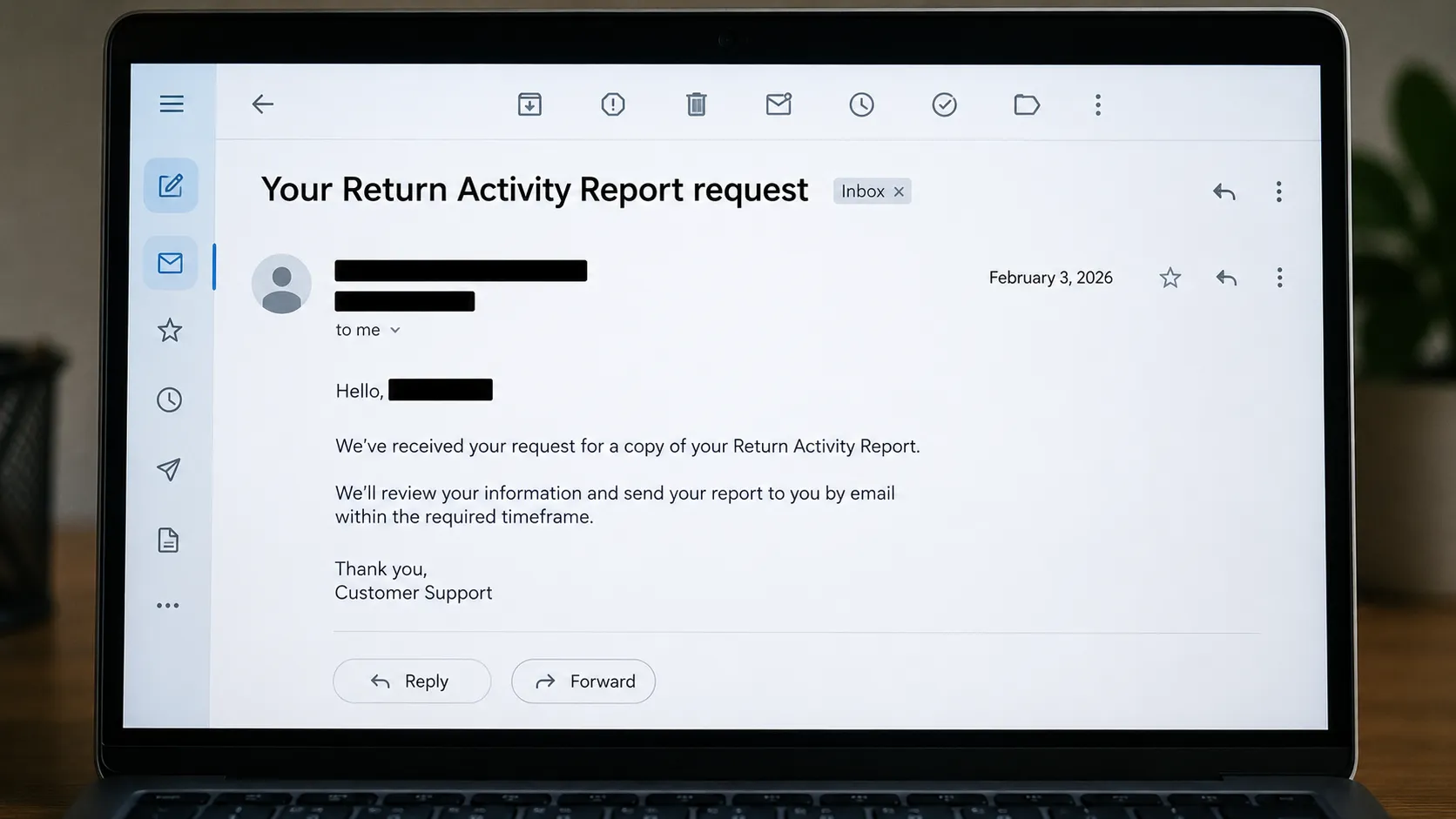
I ran step one myself on February 3, 2026. The report arrived by email with each return itemized, so I can tell you exactly what to expect: it is straightforward, and reading it is the fastest way to see what the store sees.
Keep in mind: disputes do not always succeed, and the process can be slow. A correct entry will not be removed just because you would prefer it gone.
Frequently Asked Questions: Store Bans and Returns
Can a store ban you from returning items?
Yes. That is the common returns-privilege ban: the store keeps letting you shop but declines your returns after your activity trips its risk model. It is usually temporary and specific to that retailer, not a national blacklist.
How long is a ban from a store?
It depends on the type. A returns-privilege ban is often temporary, with about a year commonly reported. A trespass ban has no set length and lasts until the store lifts it, anywhere from a year to indefinitely.
Can you get banned from a store for no reason?
Effectively yes. A private store can refuse service or returns for almost any non-discriminatory reason, or none it states. The main limit is that it cannot target a protected class such as race, religion, or disability.
Does one store’s ban affect another?
No. Return scores are calculated per retailer, and The Retail Equation says it does not share one store’s transaction data with another. A block at one chain does not automatically carry to a different company. This one I checked directly: heavy returns at one chain in my six-week cross-retailer test did not change my status at the other two.
Will a return ban hurt my credit?
No. The Retail Equation tracks return activity, not borrowing, and its data is not part of your credit score, even though the CFPB classifies it as a consumer reporting company. It only affects your ability to make returns at participating retailers.
How do I know if I’m blacklisted?
Request your Return Activity Report from The Retail Equation. If your returns have been warned or denied, the report shows the history behind that decision, and you can dispute anything inaccurate.
Method note: the “doesn’t transfer” answer reflects my own six-week test tracking returns across three retailers in early 2026.
The Bottom Line on Return Bans
Yes, a store can ban you for too many returns, but most “bans” are temporary suspensions of your return privileges, not a lock on the door. Only about 1% of shoppers are ever flagged, and which of the two bans you face decides both how long it lasts and how to undo it.
After logging nine real cases and pulling my own report in early 2026, the pattern held: temporary returns suspensions, tied to behavior, not dramatic lifetime bans. The fear is usually bigger than the reality.
If your returns are getting declined, the move is simple. Request your Return Activity Report, check it for errors, and in the meantime play it straight on receipts and return windows.
There is no secret number to memorize, and outcomes vary by store. Knowing which ban you are dealing with is what turns a scary, vague problem into a short list of things to do next.
Read it your way
Short on time? Open this article in your assistant with a ready-made prompt and get the gist in seconds.
Found this useful? Make us a preferred source so we show up in your Google results.
Keep reading
Related articles
Eligibility & Conditions
What Stores Use The Retail Equation? (2026, Best Buy Out)
See which stores use The Retail Equation in 2026: a verified status list of who still tracks returns, who dropped it (Best Buy, 2019), and who never did.
Eligibility & Conditions
What Is The Retail Equation? How It Scores Your Returns
Denied a return? The Retail Equation scores your returns and can approve, warn, or deny them. See how it works, read a real RAR, and dispute errors
Eligibility & Conditions
Sephora Return Limit: No Set Number, 30-Day Window & TRE Tracking
Sephora has no set return limit, but a 30-day window and Retail Equation tracking mean too many returns can trigger a 365-day ban. Here’s the real rule.
Eligibility & Conditions
Do Stores Track Your Returns? How the System Works (2026)
Yes, most stores track and score your returns. See how the system works, what they log, and how to request your own Return Activity Report.
The discussion
Comments
Every comment is reviewed before it goes live.