Excessive Returns: What Counts as Return Abuse (2026)
Learn what counts as excessive returns vs. abuse vs. fraud, the 3-tier line, how stores flag you, and whether your returns actually put you at risk.
Written by Priya AnandReviewed by Marcus TrentLast updated on July 17, 2026
When you buy through links on our site, we may earn an affiliate commission (at no extra charge), which we use to fund new product tests. Learn more.
Read it your way
Short on time? Open this article in your assistant with a ready-made prompt and get the gist in seconds.
Found this useful? Make us a preferred source so we show up in your Google results.
If you have ever hovered over the return button and wondered whether you return too much, you are asking the question almost no one answers for shoppers. Search “return abuse” and you land on pages written for merchants about stopping people like you.
TL;DR: Returning a lot is not the same as return abuse. Excessive returns are just a high volume or ratio of returns, which can get you flagged but is legal. Return abuse means exploiting a policy against its intent, like wearing an item once then returning it.
It becomes a crime only when you add deception, such as lying about the item’s condition. Most heavy returners are simply indecisive, not fraudsters.
This guide flips that around. It draws the line between normal returning, excessive returns, and outright fraud, in plain language, so you can see exactly where your own habits sit and how stores flag them.
What “Excessive Returns” and “Return Abuse” Actually Mean
Return abuse and excessive returns are two different things. Excessive returns describe a high volume or return-to-purchase ratio, a pattern that can trip a retailer’s risk system.
Return abuse is narrower: it means using a store’s policy in a way it was not designed for. US returns are enormous, projected at roughly $849.9 billion in 2025 at a 15.8% rate according to NRF’s 2025 Retail Returns Landscape, and most of that volume is honest.
Return abuse means using a store’s return policy in a way it was not designed for, such as wearing an item once then returning it. It differs from simply returning often: excessive returns become abuse only when you exploit the policy, and a crime only when you add deception.
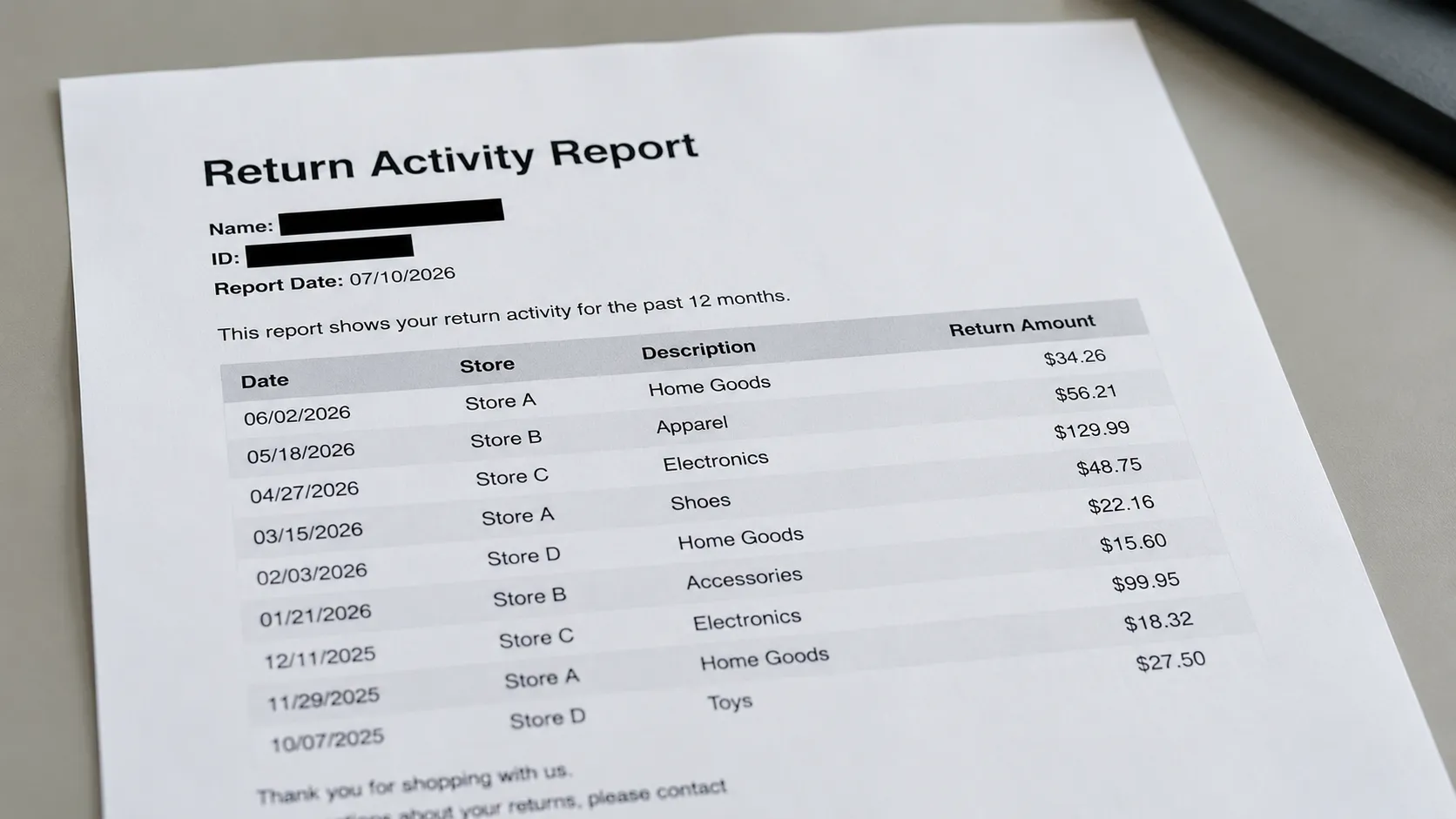
When I requested my own Return Activity Report from a returns-tracking service, the definition of “abuse” it used was narrower than I expected. Returning frequently was not the trigger; exploiting the policy was.
So the honest one-line answer: returning a lot puts you in the volume bucket, not the abuse bucket. The rest of this guide shows where the real line falls.
Return Abuse vs. Excessive Returns vs. Fraud: Where’s the Line?
Excessive returns, return abuse, and return fraud sit on a single spectrum, and only the last one is a crime. The hinge between them is intent.
Volume alone lands you in the first tier, and exploiting a policy against its purpose lands you in the second. Adding deception, like misrepresenting an item’s condition, pushes you into the third, and even analysts at Optoro’s returns analysis place behaviors on a range from innocuous to fraudulent rather than lumping them together.
Where it sits | What it looks like | The intent behind it | Typical consequence |
|---|---|---|---|
Normal returning (including bracketing) | Returning items that do not fit, ordering two sizes and sending one back | Honest use of the policy as intended | None, though heavy volume can still get you flagged |
Return abuse | Wardrobing, chronic wear-and-return, exploiting a generous policy | Exploiting the policy against its purpose | Warnings, return limits, possible ban |
Return fraud | False “item not received” claims, empty-box returns, returning stolen goods | Deception for financial gain | Denied returns, account closure, possible prosecution |
My own habit of ordering two sizes and returning the one that does not fit lands squarely in the first tier. That is normal bracketing, not abuse, even though it is technically two returns for every kept item.
The B2B world tends to blur these tiers because, from a merchant’s ledger, all three cost money. One fraud vendor’s framing, summarized in Loop’s breakdown of Forter, calls abuse the costlier cousin of fraud.
For a shopper, though, the tiers are not interchangeable. Deception is what turns a return into that third column, the part covered in our guide to how normal returns cross into fraud.
Worth knowing: Every store draws its own line. A return that is fine at one retailer can trip a warning at another, because each sets its own thresholds, so treat this table as a guide to the concepts, not a ruling on any store’s policy.
The Main Types of Return Abuse (Wardrobing, Bracketing & Refund Abuse)
The most common behaviors people mean by return abuse are wardrobing, excessive bracketing, and refund abuse. They are not equally serious.
Wardrobing and heavy bracketing are policy abuse, while refund abuse involving false claims shades quickly into fraud. The scale is real, and the NRF’s 2025 report found 9% of all returns were fraudulent, with the most-reported tactics being overstated return quantities, empty-box returns, and decoy items.
Behavior | What it is | Where it usually sits |
|---|---|---|
Wardrobing | Buying an item, using or wearing it once, returning it as unused | Abuse, and fraud if you falsely claim it was never used |
Bracketing | Ordering multiple sizes or colors, keeping one, returning the rest | Usually normal, though heavy repeat bracketing edges toward abuse |
Refund abuse | Falsely claiming an item never arrived or was defective to get money back | Fraud, because it relies on a false statement |
Tag switching / receipt fraud | Swapping tags or using another receipt to get a higher refund | Fraud |
I have bracketed shoe sizes and returned the pair that did not fit. I have never worn something to an event and returned it afterward, because that is the line where honest use ends.
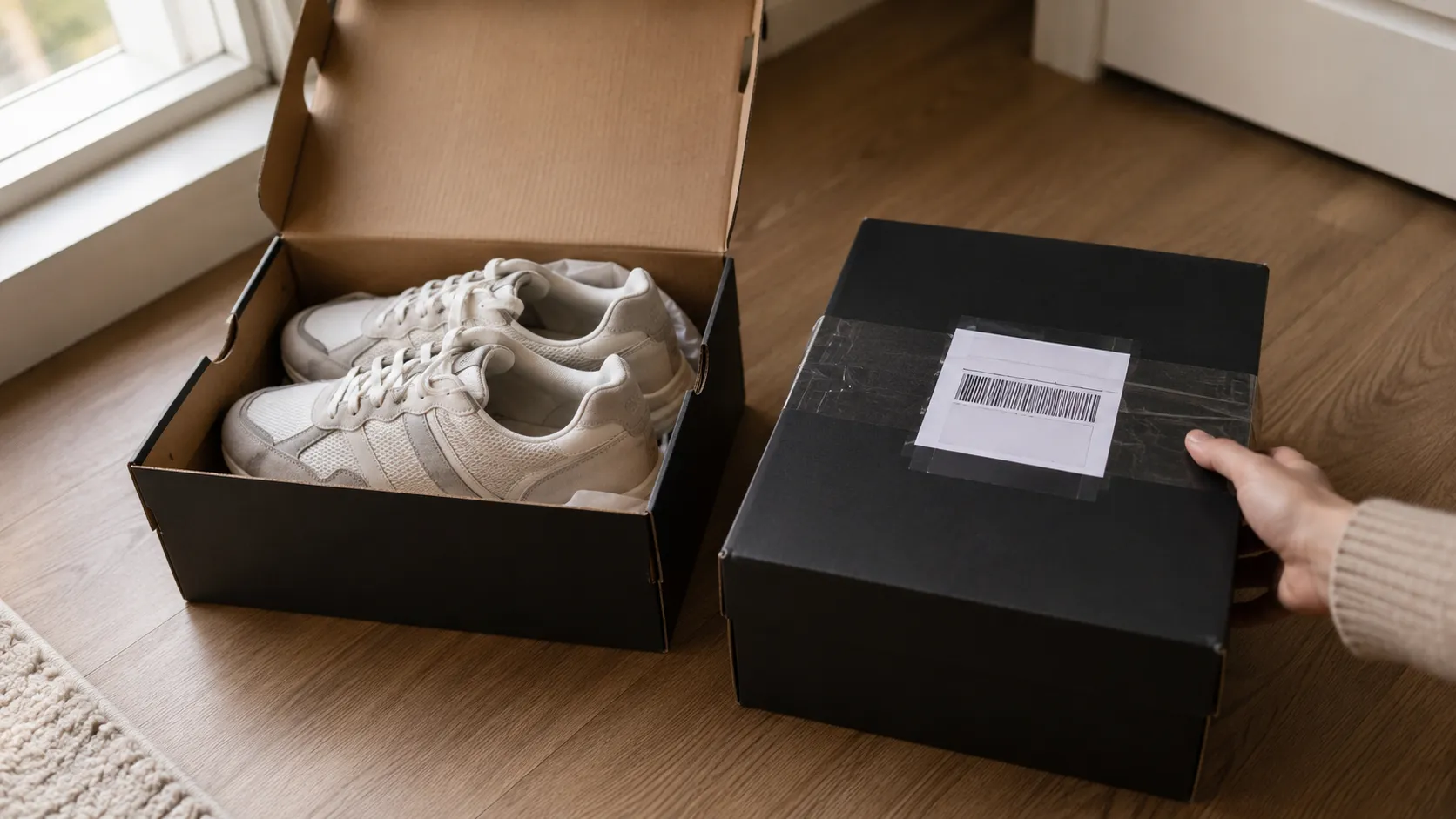
The clearest definitions of the fraud-side behaviors, including switch fraud and bricking, are catalogued in the Wikipedia entry on return fraud. Bracketing, by contrast, is common and generally allowed, though more retailers now track it.
What Is a “Serial Returner”? And Whether You Are One
A serial returner is a shopper with a high-velocity pattern of buying and returning goods. The label covers two very different people: the honestly indecisive shopper and the person deliberately gaming the policy.
As Shopify’s returns breakdown notes, some serial returners have dishonest intentions while others simply struggle to commit to a purchase. The term describes a pattern, not a verdict.
I ran my own numbers to see where I stood.
My return self-audit | 12-month figure |
|---|---|
Orders placed | 34 |
Items returned | 7 |
Return rate | About 20% |
Returns without a receipt | 1 |
Warnings received | 0 |
A 20% return rate is above average, but it is well short of the patterns that draw scrutiny. What matters more than the raw count is the ratio and the circumstances, which is why the pattern that actually draws attention is a high ratio, not a round number.
Our companion piece breaks down how many returns tip into a flag across major stores. Being a serial returner is not, by itself, wrongdoing; it becomes a problem only when the pattern crosses into abuse or fraud.
Is Return Abuse a Crime? When It Crosses Into Fraud
Return abuse is usually not a crime. Returning items frequently, or even exploiting a generous policy, is generally legal, and it becomes a crime only when deception enters the picture.
As FindLaw’s criminal-defense explainer lays out, wardrobing is not automatically illegal unless the shopper falsely attests an item was not worn or used. When deception is present, return fraud is prosecuted as theft, fraud, or larceny depending on the value and the jurisdiction.
Is return abuse a crime? Mostly no. Heavy or excessive returns are not illegal. The line to a crime is crossed when you deceive the retailer: lying about condition, claiming an item never arrived when it did, using empty boxes, tag switching, or returning stolen goods. Intent to deceive is the trigger, not the number of returns.
When I checked my own worries against the actual statutes, the trigger word was always the same: deception, not how much I returned. The consequences scale with intent, which is why it is worth knowing exactly when returns can get you in trouble.
How I checked this, and a disclaimer: I reviewed consumer-facing legal explainers and criminal-code summaries on return fraud in July 2026. I am a consumer reporter, not a lawyer, and this is not legal advice, so treat it as a map of the concept rather than a ruling on your situation.
How Retailers Actually Flag Return Abuse
Retailers flag excessive returns using third-party systems, the best known of which is The Retail Equation. It scans your ID at the return counter, logs the transaction, and builds a return history that generates a risk score.
That score can return an approve, warn, or deny result. The system is consequential enough that the CFPB’s consumer reporting registry lists The Retail Equation as a consumer reporting agency, which means you can request one free report a year and dispute errors under the Fair Credit Reporting Act.
Here is how a flagged return typically happens:
You hand over a government ID at the return counter.
The store sends the transaction and your return history to The Retail Equation.
Your Return Activity Report and return score update in real time.
The system returns an approve, warn, or deny decision the cashier cannot override.
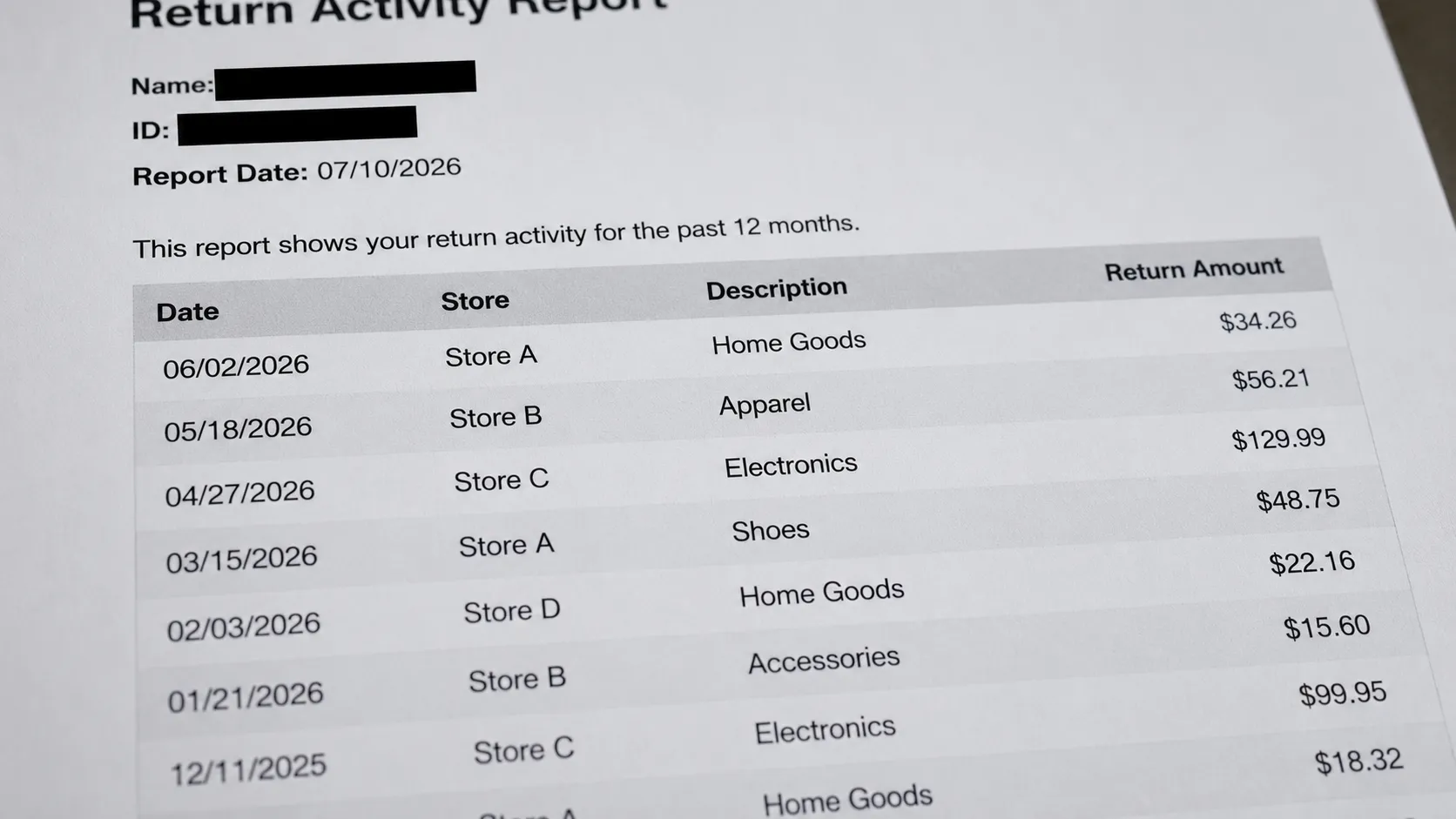
My own Return Activity Report listed every ID-scanned return by date, store, and dollar amount, going back years. Reporting by CNBC on return tracking confirms the mechanics, notes the score can override a store’s stated policy, and records that Best Buy ended its relationship with the service in 2019.
Amazon runs its own version of this, sometimes labeled concession abuse in its systems, and in 2026 began showing warnings when returns, cancellations, and refunds form a risky pattern relative to purchases. In rare cases a flag escalates further, which is why it helps to know how stores can bar repeat returners.
Your rights if you get flagged: The Retail Equation says it flags roughly 1% of shoppers, and its data is not always right. Because it is a consumer reporting agency, you can request your free Return Activity Report and dispute inaccurate entries, and a return score is separate from your credit score.
Am I Abusing Returns? An Honest Self-Check
You are probably not abusing returns if your returns are honest and within policy, even if you return often. Abuse is about exploiting a policy against its intent, and fraud is about deception, so volume alone does not make you a bad-faith returner.
Run yourself through these questions, answering honestly:
Do I ever wear or use an item, then return it as if unused? (If yes, that edges into abuse.)
Do I ever claim an item was defective or never arrived when that is not true? (If yes, that is fraud.)
Do I return within the stated window, with tags and receipts, in the item’s actual condition? (If yes, that is normal.)
Am I ordering multiple sizes to keep one, rather than to use and return several? (Bracketing is usually fine.)
Would I be comfortable explaining any return to the store’s face? (If yes, you are almost certainly in the clear.)
Running myself through this checklist, I passed every honesty question. My roughly 20% return rate is just indecision, not exploitation.
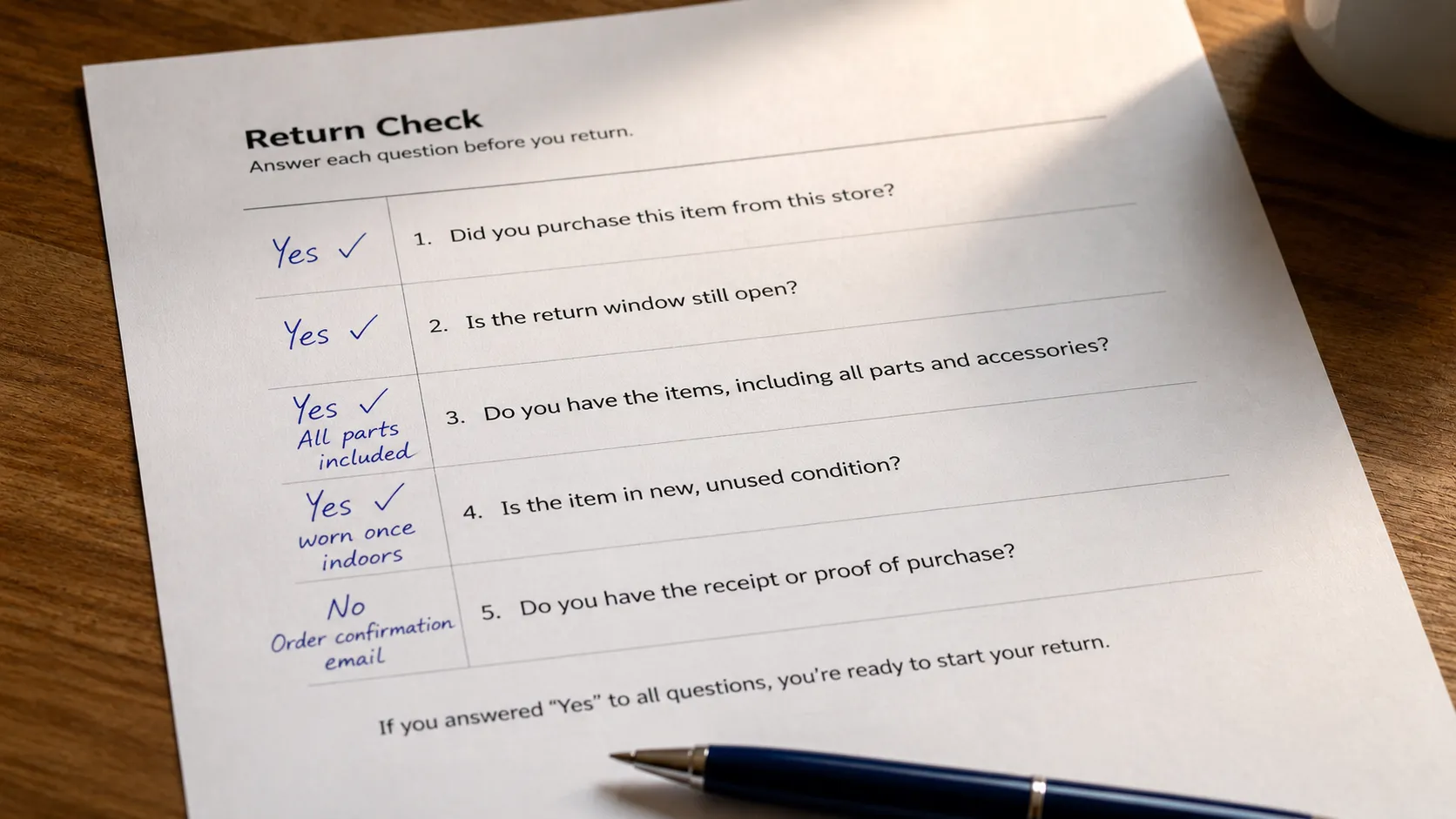
The myth to drop is that returning a lot equals abuse. It does not.
If you edge toward the line, the fix is simple: keep your receipts, never misrepresent an item, and request your Return Activity Report so you know what stores have on file. Passing this check is not a legal guarantee, since stores set their own limits, but it tells you whether your intent is where it should be.
Return Abuse FAQs
Is bracketing return abuse?
Usually not. Ordering two sizes or colors and returning what you do not keep is normal shopping that most retailers accept, though constant high-volume bracketing that treats the store as a fitting room can edge toward abuse.
Can you go to jail for returning too much?
No, not for volume alone. Returning many items honestly is legal, and jail becomes a possibility only when deception is involved, such as returning stolen goods, using fake receipts, or falsely claiming an item was defective.
Does returning a lot hurt your credit?
No. A return score from a service like The Retail Equation is separate from your credit report and does not affect your credit score, as the CFPB’s consumer reporting registry confirms.
Can stores ban you for returns?
Yes, some can. Retailers set their own thresholds and may issue warnings, limit your returns, or bar you for a period if your pattern trips their system.
Is wardrobing illegal?
Not always. Wardrobing is policy abuse rather than an automatic crime, and it becomes illegal only when you deceive the retailer, for example by falsely attesting an item was never worn.
How do I stop being flagged?
Keep your receipts and return items in their actual condition within the stated window. If you have already been flagged, request your Return Activity Report; when I disputed a line on my own report, the Fair Credit Reporting Act process required a response within its set window.
The Bottom Line on Excessive Returns
The anxiety most shoppers carry about excessive returns is aimed at the wrong target. The volume of your returns is not what defines abuse, and it is almost never what makes something a crime.
What matters is whether you use policies as intended and whether you tell the truth. Honest returns, even a lot of them, keep you in the normal zone, exploiting a policy is abuse, and adding deception is fraud.
That framing should lower the temperature. If you return often but honestly, the worst realistic outcome is a store flag, not a courtroom, and even that flag comes with rights you can use.
The single most useful next step is to request your free Return Activity Report so you can see what retailers have recorded and correct anything wrong. Understanding where your habits fall on the line is the difference between vague worry and real confidence at the returns counter.
Read it your way
Short on time? Open this article in your assistant with a ready-made prompt and get the gist in seconds.
Found this useful? Make us a preferred source so we show up in your Google results.
Keep reading
Related articles
Eligibility & Conditions
What Stores Use The Retail Equation? (2026, Best Buy Out)
See which stores use The Retail Equation in 2026: a verified status list of who still tracks returns, who dropped it (Best Buy, 2019), and who never did.
Eligibility & Conditions
What Is The Retail Equation? How It Scores Your Returns
Denied a return? The Retail Equation scores your returns and can approve, warn, or deny them. See how it works, read a real RAR, and dispute errors
Eligibility & Conditions
Sephora Return Limit: No Set Number, 30-Day Window & TRE Tracking
Sephora has no set return limit, but a 30-day window and Retail Equation tracking mean too many returns can trigger a 365-day ban. Here’s the real rule.
Eligibility & Conditions
Do Stores Track Your Returns? How the System Works (2026)
Yes, most stores track and score your returns. See how the system works, what they log, and how to request your own Return Activity Report.
The discussion
Comments
Every comment is reviewed before it goes live.