What Is Return Fraud? (And Why Yours Probably Isn’t)
See what return fraud actually is: the 5 types, how it differs from normal returns, and how stores detect it, so you know if you’re at risk.
Written by Priya AnandReviewed by Marcus TrentLast updated on July 9, 2026
When you buy through links on our site, we may earn an affiliate commission (at no extra charge), which we use to fund new product tests. Learn more.
Read it your way
Short on time? Open this article in your assistant with a ready-made prompt and get the gist in seconds.
Found this useful? Make us a preferred source so we show up in your Google results.
If you return a lot of stuff, you have probably wondered whether a store secretly thinks you are running a scam. You are not.
So what is return fraud, exactly, and where does an ordinary pile of returns end and something a store can actually act on begin?
That gap is the confusing part, because the word “fraud” gets thrown at everything from a returned dress to an organized crime ring. The honest answer is narrower and calmer than the headlines suggest, and once you see the line, the anxiety usually goes with it.
The short version
Return fraud is deliberately deceiving a retailer to get a refund, credit, or exchange you are not owed. It is defined by intent, not by how many times you return things. Only about 9% of returns are fraudulent, stores approve roughly 99% of returns, and honest high-volume returning is not a crime. The five main types are wardrobing, price switching or bricking, empty-box returns, receipt fraud, and fake tracking ID (FTID) schemes. If you are ever flagged, you can request your return history and dispute errors.
What Is Return Fraud? The Short Answer
Return fraud is deliberately deceiving a retailer to get a refund, credit, or exchange you are not owed: returning stolen goods, using a fake or altered receipt, wearing an item and returning it as unworn, or claiming a package never arrived when it did. It is defined by intent, not by how often you return things.
That distinction is the whole ballgame. Volume alone is not fraud, and neither is being picky, indecisive, or unlucky with sizing.
According to NRF and Happy Returns’ 2025 report, about 9% of all returns are fraudulent. That means the other 91%, which includes the vast majority of heavy returners, are not fraud at all.
The load-bearing word is deception. If you are honestly bringing back things you bought, with no lie involved, you are on the right side of the line even if your return pile is embarrassing.
From my own returns
Over the past year I have been a genuinely heavy returner, sending back clothes, a blender, and two pairs of shoes across three major retailers I shop at regularly. Number of times I have been warned or flagged for fraud: zero. Frequent and honest is not the same as fraudulent, and my own history is a small, boring example of exactly that.
One honest caveat before we go further: a store can still decline a return that isn’t fraud at all, because outside of a defect you generally have no legal right to a refund. Not fraudulent and not guaranteed are two different things, and both are true.
Return Fraud vs. Return Abuse vs. Just Returning a Lot
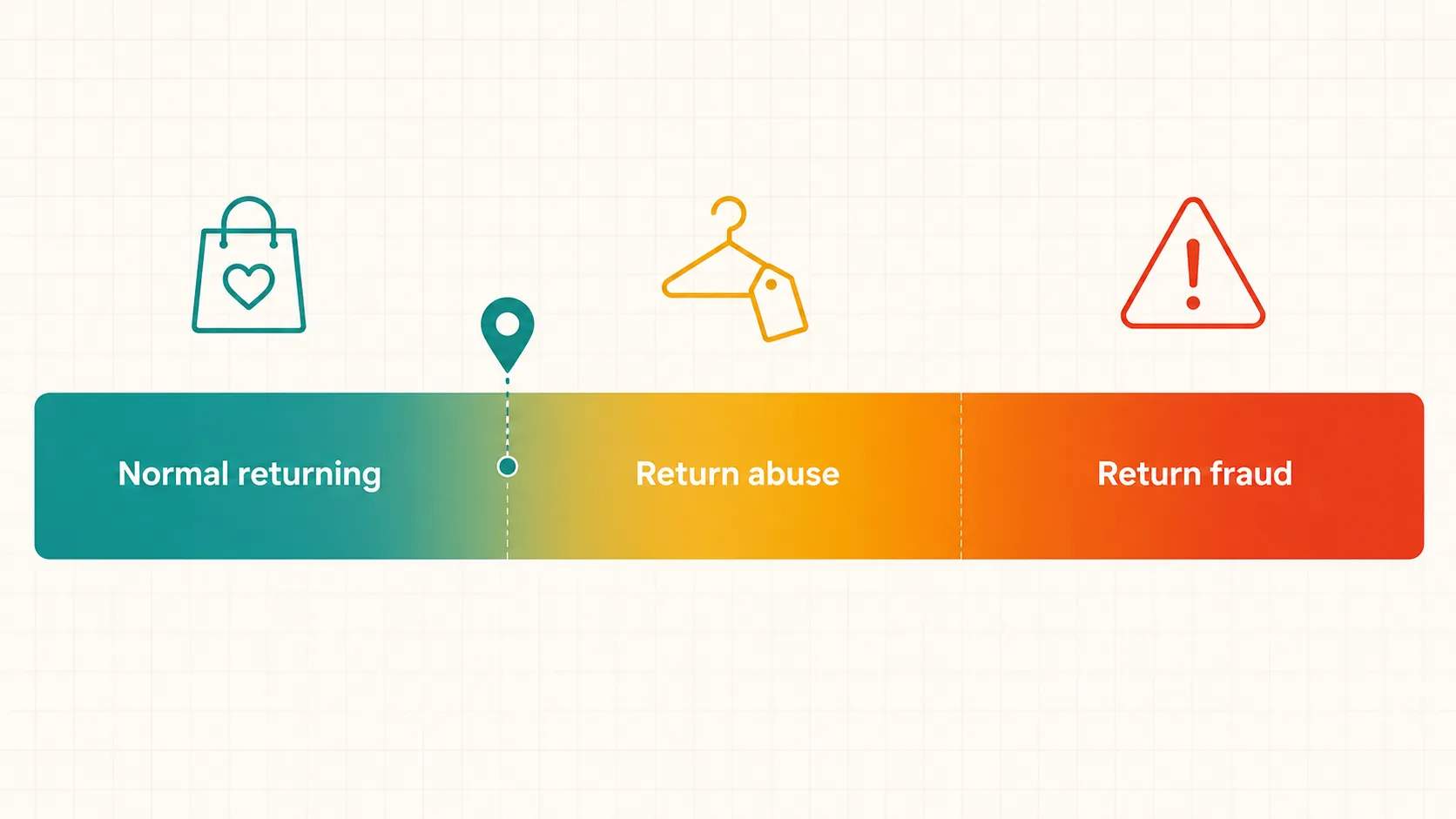
Return abuse and return fraud are not the same thing. Return fraud is the criminal end of the spectrum, meaning deliberate deception like fake receipts or returning stolen goods. Return abuse means stretching a generous policy without necessarily lying, such as wardrobing or ordering three sizes to keep one. Forter’s fraud-versus-abuse analysis calls return fraud the criminal end of the spectrum and notes that many people who abuse policies picture themselves as savvy shoppers, not criminals. In its 2025 returns survey, the National Retail Federation found 45% of shoppers think bending the truth on a return is acceptable.
It helps to picture three tiers on a single line, from completely fine to actually criminal.
Tier | What it looks like | Is it fraud? |
|---|---|---|
Normal returning | Wrong size, a defect, a change of mind inside the window, even a lot of it | No. Legitimate, even at high volume. |
Return abuse | Wardrobing, bracketing (buying several to keep one), leaning hard on a generous policy | Usually not criminal. It bends the rules without lying. |
Return fraud | Fake or stolen receipts, returning stolen goods, claiming a defect that isn’t real, FTID | Yes. This is the deliberate-deception, criminal end. |
The fulcrum between the middle tier and the last one is intent. Abuse exploits a policy; fraud lies to a person or a system to take something you are not owed.
Most of what worries anxious shoppers lives in the first tier, and occasionally grazes the second. If you are curious which return reasons stores treat as legitimate in the first place, that is worth knowing, because a genuinely valid reason keeps you firmly in the normal-returning zone.
Where I land on the spectrum
My most borderline-feeling return: a dress I wore once to an event, decided I hated, and returned inside the window with tags reattached. That is abuse-adjacent at worst, closer to wardrobing than anything, and it is still not fraud, because I didn’t lie about why I was returning it. Naming it honestly is more useful than pretending it was squeaky clean.
The 5 Types of Return Fraud (vs. a Legit Return)
The main types of return fraud are wardrobing, price switching or bricking, empty-box returns, receipt fraud, and FTID (fake tracking ID). Wardrobing means wearing an item then returning it as new. Price switching or bricking means swapping tags or the guts of a product and returning the lesser item. Empty-box returns send back a box of rocks. Receipt fraud fakes or reuses receipts, often to return stolen goods. FTID manipulates a shipping label so a scan shows a return that never physically arrived. Each shares one trait honest returns lack: deliberate deception.
Here is each type set next to the honest behavior it can resemble, so you can see exactly where the line falls.
Type | What it is | Why it is fraud | The honest lookalike |
|---|---|---|---|
Wardrobing | Buying, using or wearing an item, then returning it as unused | The refund is for something you already consumed the value of | Returning clothing you tried on at home and genuinely didn’t wear out |
Price switching / bricking | Swapping price tags, or replacing an item’s guts, then returning the cheaper or broken one | You are lying about what the item is or what you paid | Returning the actual item, unaltered, that you actually bought |
Empty-box (“box of rocks”) | Returning an empty or weighted box to trigger a refund | There is no real return, only the appearance of one | Returning the real product in its packaging |
Receipt fraud | Faking, altering, or reusing a receipt, often to “return” stolen goods for cash | The purchase, or the ownership, never happened | Returning something you bought, with your own valid receipt |
FTID (fake tracking ID) | Altering a return label so tracking shows delivery while the item never reaches the store | The scan is engineered to fake a return you didn’t send | Shipping the real item back with the label the retailer gave you |
The pattern is consistent. In every fraudulent row, a lie is doing the work, whereas the honest lookalike involves a real item, a real purchase, and no deception.
FTID is the most technical of the group, and it works by exploiting one assumption: that a tracking scan means the right item is inside the box. NoFraud’s FTID glossary describes how a fraudster references a tracking number that already shows delivery, so an automated system refunds before anyone opens anything.
Riskified’s breakdown of return fraud groups these same schemes together and notes they are increasingly run by organized rings, not one-off shoppers.
How I built this table
I drafted these five rows from the recognized fraud-type lists above, then did something the vendor glossaries don’t: I checked each one against my own returns to find the honest lookalike. A used-once-but-returned dress shadows wardrobing; a no-receipt return of a gift shadows receipt fraud. Seeing my real behavior next to each fraud type is what convinced me the line is intent, every single time.
Is Bending the Truth on a Return Illegal?
Whether bending the truth on a return is illegal depends on one thing: deception. Return fraud that involves fabricated receipts, returning stolen merchandise, or knowingly returning an item that doesn’t qualify is treated as theft or fraud, and it is prosecutable, with penalties that scale with the dollar value. Policy-bending like wardrobing or bracketing is usually a violation of a store’s rules rather than a crime, unless you lie to get the refund. Appriss Retail defines a fraudulent return as one where the shopper knew the item did not qualify under the store’s policy.
Is wardrobing actually illegal?
Generally, no. Wardrobing, wearing something and returning it, is almost always a policy violation rather than a crime, right up until deception enters, for example insisting an item is defective when you simply wore it.
At that point the lie, not the return, is what can make it fraud.
What actually crosses into criminal territory is narrower and more deliberate:
Fabricated, altered, or stolen receipts
Returning stolen or shoplifted merchandise for cash or credit
Price switching or bricking for profit
FTID and other engineered “the package came back” schemes
“Friendly fraud,” where you get a refund from the store and also file a chargeback with your bank for the same order
That last one, friendly fraud, is riskier than it looks precisely because it feels casual. Collecting twice on one purchase is exactly the kind of deliberate double-dip that turns a gray-area habit into something a retailer and a bank will both treat as fraud.
If a store ever does escalate, it helps to know whether frequent returns get you in trouble and what can and can’t actually happen to you. For most honest shoppers, the realistic answer is a warning or a declined return, not handcuffs.
My own gray-area moment
I once ordered the same jacket in three sizes intending to keep one and send two back. That is bracketing, and I braced for it to be some kind of violation. It wasn’t a crime at all, just me leaning on a generous policy, and confirming that against the store’s own rules is what moved it from “am I in trouble?” to “this is fine, if a little wasteful.”
This section is general information, not legal advice, and specifics vary by state and by the dollar amount involved.
How Stores Detect Return Fraud, and What It Means for You
Stores detect return fraud in three layers. First, an ID or driver’s license scan ties each return to your history. Second, a behavioral score, often calculated by a firm called The Retail Equation, compares your return frequency, dollar amounts, and receipt status against the retailer’s own rules and returns an approve, warn, or deny recommendation. Third, item verification, meaning serial numbers, weight checks, and inspection, catches switched or empty-box returns. On The Retail Equation’s own account, it recommends a warning or denial only about 1% of the time, which means roughly 99% of returns are approved.
Here is what each layer is really doing, from your side of the counter.
The ID scan. When you return something, especially without a receipt, the store may scan your ID and attach the transaction to a return history tied to you.
The behavioral score. That history feeds a score that predicts risk. It weighs patterns, not a single return, which is why one big return rarely matters but a relentless pattern can.
Item verification. Serial numbers, weight, and a physical look are how empty-box and switching schemes get caught, which is also why an honest but unusual-looking return sometimes gets extra scrutiny.
The reframe that matters: a warning is a threshold signal, not an accusation of a crime. It is the system saying “your pattern is getting close to our limit,” and as Consumer Rescue’s reporting confirms, about 99% of the time the return goes through anyway.
The Retail Equation is worth naming because the Consumer Financial Protection Bureau lists it as a consumer reporting company, which gives you specific rights we will get to shortly. No-receipt returns are the most heavily tracked, since your ID is often the only thing tying the transaction to you.
That ID scan is really the front door to a much larger system, and it is worth understanding how stores keep tabs on returns in full if the tracking side is what worries you most.
When I requested my own return report
I emailed ReturnActivityReport@TheRetailEquation.com with my name and phone number, and about two weeks later a copy of my Return Activity Report landed in my inbox. It listed returns going back several years, each with a date, store, dollar amount, and whether I had a receipt. Seeing the actual record, rather than a vendor’s description of it, is the single most reassuring thing I did while writing this, because it was accurate, unremarkable, and entirely un-scary.
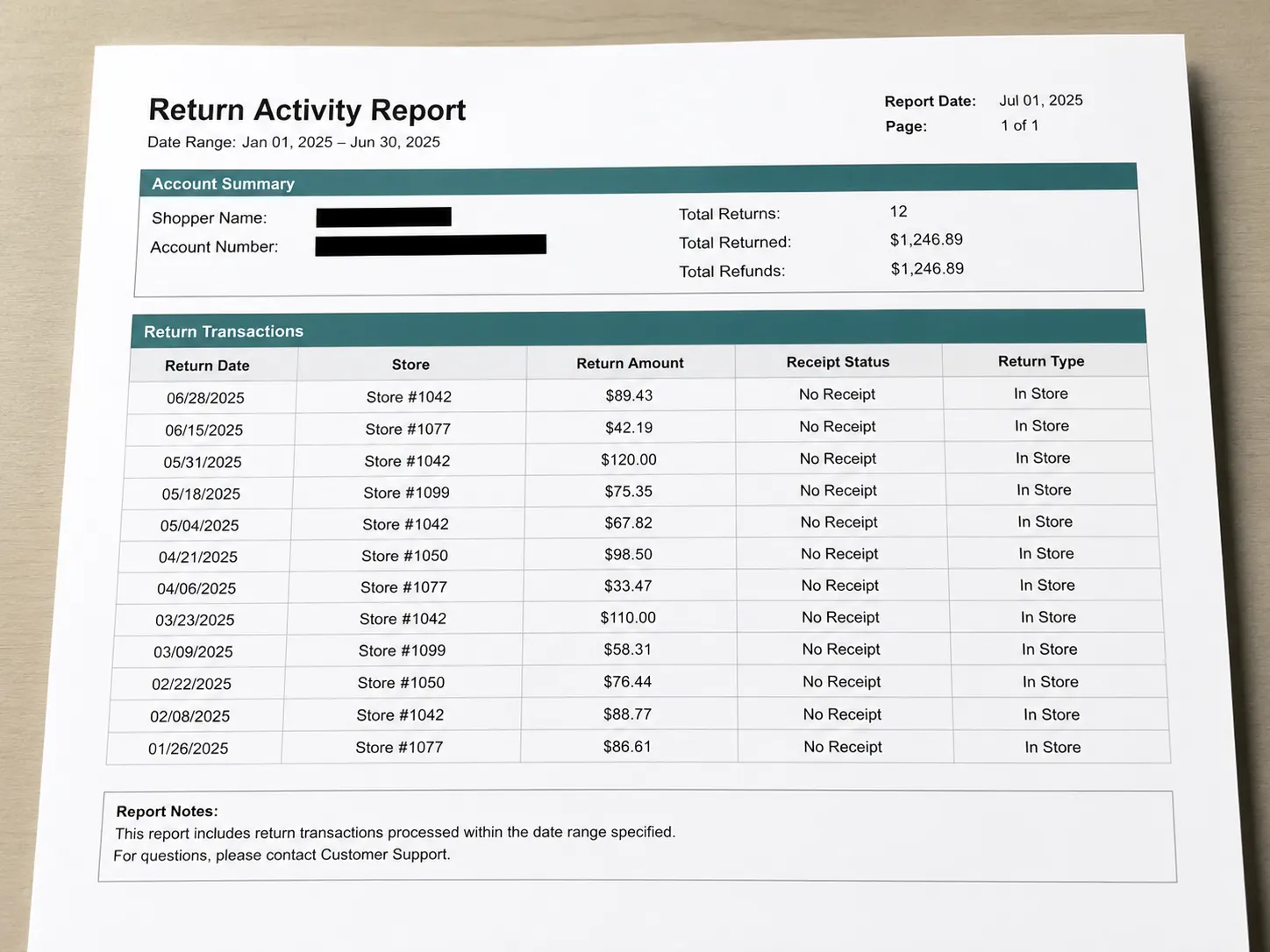
Algorithms are not perfect, which is the honest limitation here. Legitimate shoppers do occasionally get wrongly flagged, and that is exactly what your dispute rights are for.
What Return Fraud Costs (and Why Returns Are Getting Harder)
Return fraud is expensive, and that expense is the reason your returns keep getting harder. Appriss Retail and Deloitte estimated that fraudulent and abusive returns and claims cost U.S. retailers $103 billion in 2024, roughly 15% of all returns by value. The National Retail Federation puts the fraudulent share of 2025 returns at about 9%. To claw that money back, retailers add restocking fees, shorten windows, and cap no-receipt returns, which is precisely why honest shoppers feel the squeeze.
The frustrating part is that policies tightened because of a small fraudulent minority, and everyone pays for it. Shorter windows and new fees are a blunt response to a targeted problem.
There is a real cost to overcorrecting, too. Forter found that 37% of merchants who added return fees lost customers as a result, so the tightening that annoys you also quietly punishes the stores doing it.
A policy that changed under me
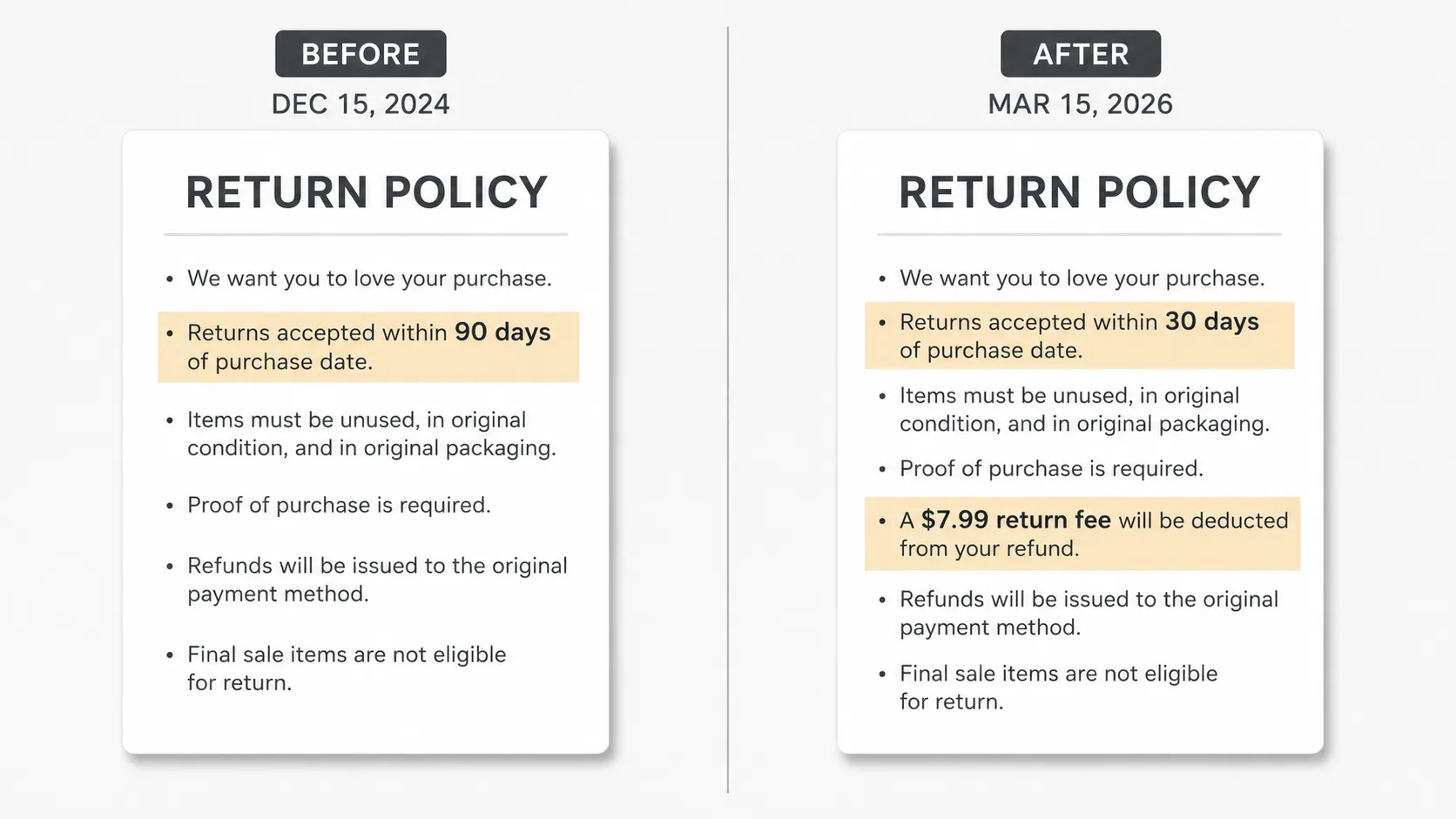
One retailer I shop at regularly went from a 90-day return window to a 30-day window between two of my orders, and later tacked on a restocking fee for certain items. Nothing about my behavior changed; the policy did. Watching the same store’s rules get stricter in real time is the clearest proof I have that fraud losses roll downhill onto ordinary returners.
Is Your Returning a Problem? A Shopper’s Self-Check
Most frequent returning is not return fraud, but a few patterns do make your returns look risky to a store’s scoring system: a very high return rate, a lot of no-receipt returns, repeated high-value or high-theft-item returns, and returns clustered right after weekends or holidays, which is the classic wardrobing signature. A flag is not an accusation of a crime. Privacy Rights Clearinghouse notes that systems like The Retail Equation compare your return frequency, dollar amounts, and receipt status against a store’s rules, and only a small share of shoppers ever trip them.
Run yourself through this honestly. More boxes checked means a higher chance of a warning someday, not proof of wrongdoing.
Is your return rate unusually high, roughly north of the 10% figure shoppers trade around online?
Are a lot of your returns done without a receipt?
Do you frequently return high-value or easily-resold items?
Do your returns cluster right after events, weekends, or holidays?
Do you ever return across multiple accounts or IDs?
A rough way to read your results: mostly unchecked means low risk, and you can stop worrying. A few checked, especially the no-receipt and high-value ones, means you are a serial returner in the honest sense and might see a warning eventually, which still isn’t fraud.
Several checked, particularly multiple accounts, is the pattern most likely to get acted on.
The important reframe is that a scoring model weighs the pattern, not the raw count. Being a heavy but consistent, receipted, honest returner reads very differently from a scattered, no-receipt, high-value pattern.
There is a point where high-volume returning stops looking normal and starts looking like a habit stores respond to, which is where over-returning tips into abuse. Knowing that boundary is more useful than guessing at it.
Where I actually landed
Running my own year against this list, I checked exactly one box: my return rate is genuinely high. Everything else stayed empty, almost all receipted, few high-value items, no multiple accounts. High volume, clean pattern, never flagged, which is the whole point of the exercise.
One honest caveat: the 10% figure and the “returns per month” thresholds people cite are community heuristics, not a store’s published rule. Treat them as a rough gut-check, not a bright line.
Flagged, Warned, or Denied? What to Do Next
If your return is denied or you get a warning, you have a clear recovery path. Ask the store for the reason in writing, then request your Return Activity Report from The Retail Equation, which the Consumer Financial Protection Bureau lists as a consumer reporting company. Review it for errors, and dispute any inaccuracy under the Fair Credit Reporting Act, which requires the company to investigate, usually within 30 days. A warning or denial is usually recoverable, and it does not mean you have been accused of a crime.
Here is the concrete sequence:
Get the reason in writing. Ask the store or the printed return slip why the return was warned or denied, and note the date and transaction ID.
Request your Return Activity Report (RAR). Email The Retail Equation with your name and a phone number and ask for your report, which lists your tracked return history.
Review it for errors. Check for returns you never made, wrong amounts, or duplicated entries, since inaccurate data is exactly what wrongly flags honest shoppers.
Dispute inaccuracies under the FCRA. Because The Retail Equation is a consumer reporting company, you can dispute errors in writing, and it must investigate, generally within 30 days.
Your leverage here comes from federal law, not from a store’s goodwill. The Fair Credit Reporting Act gives you access and dispute rights, and California shoppers get additional protection under state privacy law.
How long my report took
To put timing on the process I ran myself: I sent my RAR request by email, got an automated acknowledgment quickly, and had the actual report in hand in about two weeks. No cost, no phone-tree ordeal, just a record I could read and check. If I had been disputing an error, that report is the document I would have built the dispute around.
One honest limitation: if the data is accurate, you cannot simply erase a legitimately recorded return history. The dispute process fixes errors; it is not a delete button for returns you actually made.
Frequently Asked Questions
Is returning a lot considered return fraud?
No. Return fraud is about deliberate deception, not volume. You can be a heavy, even excessive, returner and still be completely legitimate, as long as you are returning real items you bought without lying. Frequent returning may earn a warning, but a warning is not fraud.
Is return fraud a crime?
Yes, when it involves deception. Faking receipts, returning stolen goods, or knowingly returning items that don’t qualify is treated as theft or fraud and is prosecutable, with penalties that scale with the dollar value. Honest returns, and even policy-bending without a lie, generally are not crimes.
Is wardrobing illegal?
Usually not. Wardrobing, wearing an item and returning it, is typically a store policy violation rather than a crime. It only tips into fraud if you add deception, such as claiming the item was defective when you simply used it and changed your mind.
Do stores really track my returns?
Yes. Many retailers scan your ID and feed your return history to a service like The Retail Equation, which scores your pattern and recommends approve, warn, or deny. When I requested my own report, it listed returns going back several years, so the tracking is real, though it approves the vast majority of returns.
What is a fake tracking ID (FTID)?
FTID is a return fraud scheme where someone manipulates a shipping label or references a tracking number that already shows delivery, so a retailer’s automated system issues a refund for an item that never actually came back. It exploits the assumption that a delivery scan means the right item is inside.
Can I see my own return history?
Yes. You can request your Return Activity Report from The Retail Equation by email, usually free, and it lists your tracked returns by date, store, amount, and receipt status. Because the company is a consumer reporting agency, you can also dispute anything on it that is wrong.
The Bottom Line
Return fraud, at its core, is a story about intent, not about how full your returns pile gets. The line is deception, and if you are honestly bringing back things you bought, you are on the right side of it, even when a store gets stricter or a scoring system gives you a nudge.
Understanding what is return fraud, how stores detect it, and the rights you hold if you are ever flagged turns a vague worry into something concrete. Instead of a fear, it becomes something you can actually check, dispute, and move past.
So if your next return gets a warning, treat it as a threshold signal to look into rather than a verdict to fear. Request your report, correct anything wrong, and keep returning honestly.
Read it your way
Short on time? Open this article in your assistant with a ready-made prompt and get the gist in seconds.
Found this useful? Make us a preferred source so we show up in your Google results.
Keep reading
Related articles
Eligibility & Conditions
What Stores Use The Retail Equation? (2026, Best Buy Out)
See which stores use The Retail Equation in 2026: a verified status list of who still tracks returns, who dropped it (Best Buy, 2019), and who never did.
Eligibility & Conditions
What Is The Retail Equation? How It Scores Your Returns
Denied a return? The Retail Equation scores your returns and can approve, warn, or deny them. See how it works, read a real RAR, and dispute errors
Eligibility & Conditions
Sephora Return Limit: No Set Number, 30-Day Window & TRE Tracking
Sephora has no set return limit, but a 30-day window and Retail Equation tracking mean too many returns can trigger a 365-day ban. Here’s the real rule.
Eligibility & Conditions
Do Stores Track Your Returns? How the System Works (2026)
Yes, most stores track and score your returns. See how the system works, what they log, and how to request your own Return Activity Report.
The discussion
Comments
Every comment is reviewed before it goes live.