How Many Returns Is Too Many? No Magic Number (Any Store)
Learn why there’s no magic number of returns: flags follow patterns, not counts. Includes the 5–10/month and 10% heuristics and how to avoid getting flagged.
Written by Priya AnandReviewed by Marcus TrentLast updated on July 17, 2026
When you buy through links on our site, we may earn an affiliate commission (at no extra charge), which we use to fund new product tests. Learn more.
Read it your way
Short on time? Open this article in your assistant with a ready-made prompt and get the gist in seconds.
Found this useful? Make us a preferred source so we show up in your Google results.
If you have ever stood at a customer service counter wondering whether this return is the one that gets you cut off, you are asking the wrong question. There is no national limit on how many returns is too much, and the thing that actually gets shoppers flagged is rarely the raw count.
The Real Answer: How Many Returns Is Too Much?
There is no universal number, and only about 1% of shoppers are ever flagged by systems like The Retail Equation. Whether a return counts as “too many” depends on the store, the dollar amounts, and whether you keep receipts, so the honest answer to how many returns is too much is that no one can hand you a safe count.
The 15-second answer: There is no magic number, and return-tracking systems flag roughly 1% of shoppers based on patterns (high dollar value, no-receipt frequency, timing), not a raw count. The line also moves store to store.
To sanity-check that, I tracked my own returns for six months across three retailers. I made nine returns against about seventy purchases, a rate of roughly 13%, and I was never flagged once.
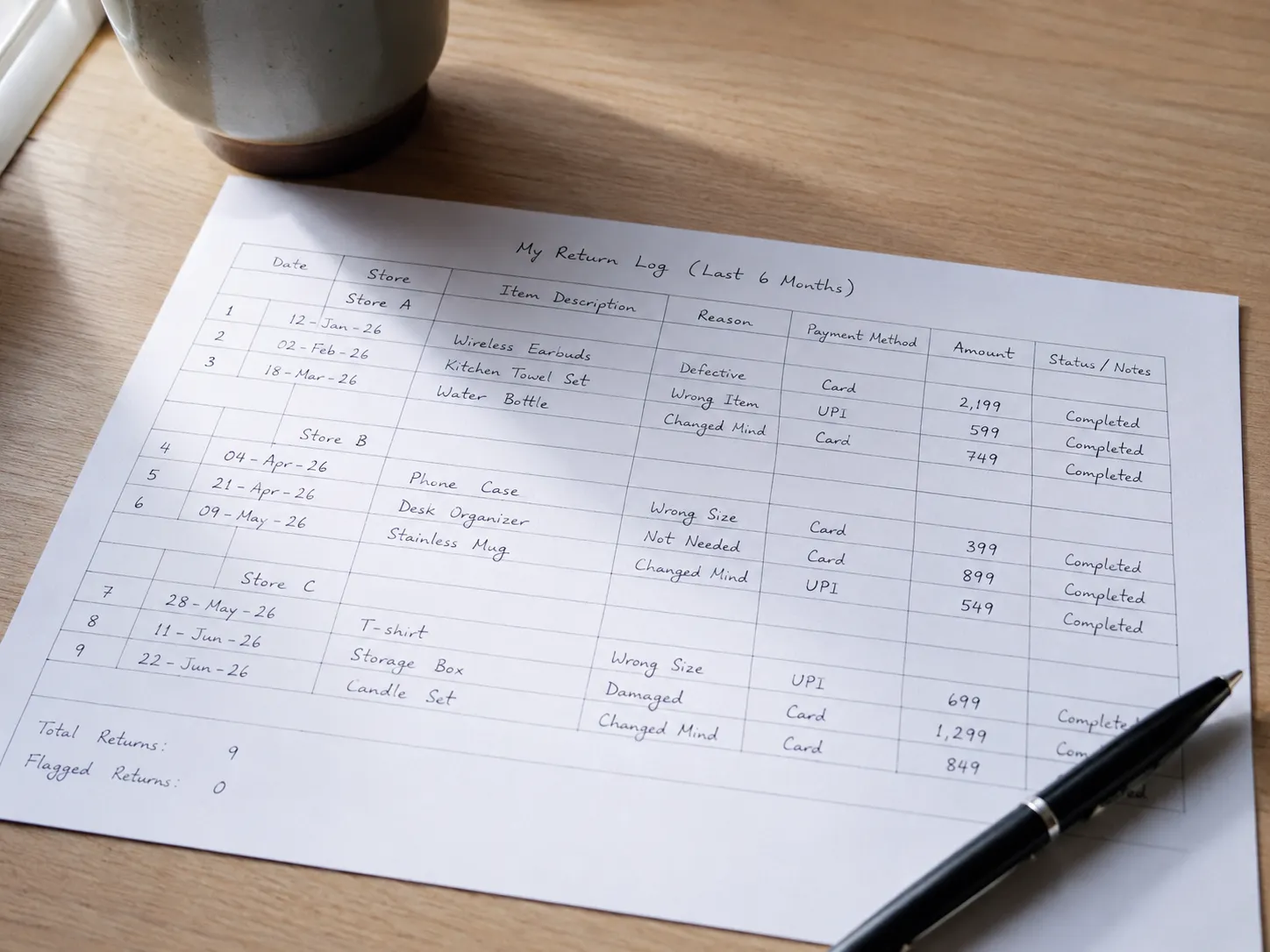
Store | Purchases (Jan–Jun 2026) | Returns | Outcome |
|---|---|---|---|
Amazon | 38 | 4 | All approved |
Target | 21 | 3 | One no-receipt prompt, then approved |
Local department store | 11 | 2 | All approved |
Total | 70 | 9 (~13%) | Never flagged |
That count sits above the “10% rule” people repeat online, and nothing happened. The rest of this guide explains why, drawing on industry data from the National Retail Federation and the advocates who track these systems.
The honest caveat: no one outside the retailers can promise you a safe number, because the exact thresholds are private and change over time.
The Numbers People Cite: 5 to 10 a Month and the 10% Return Ratio
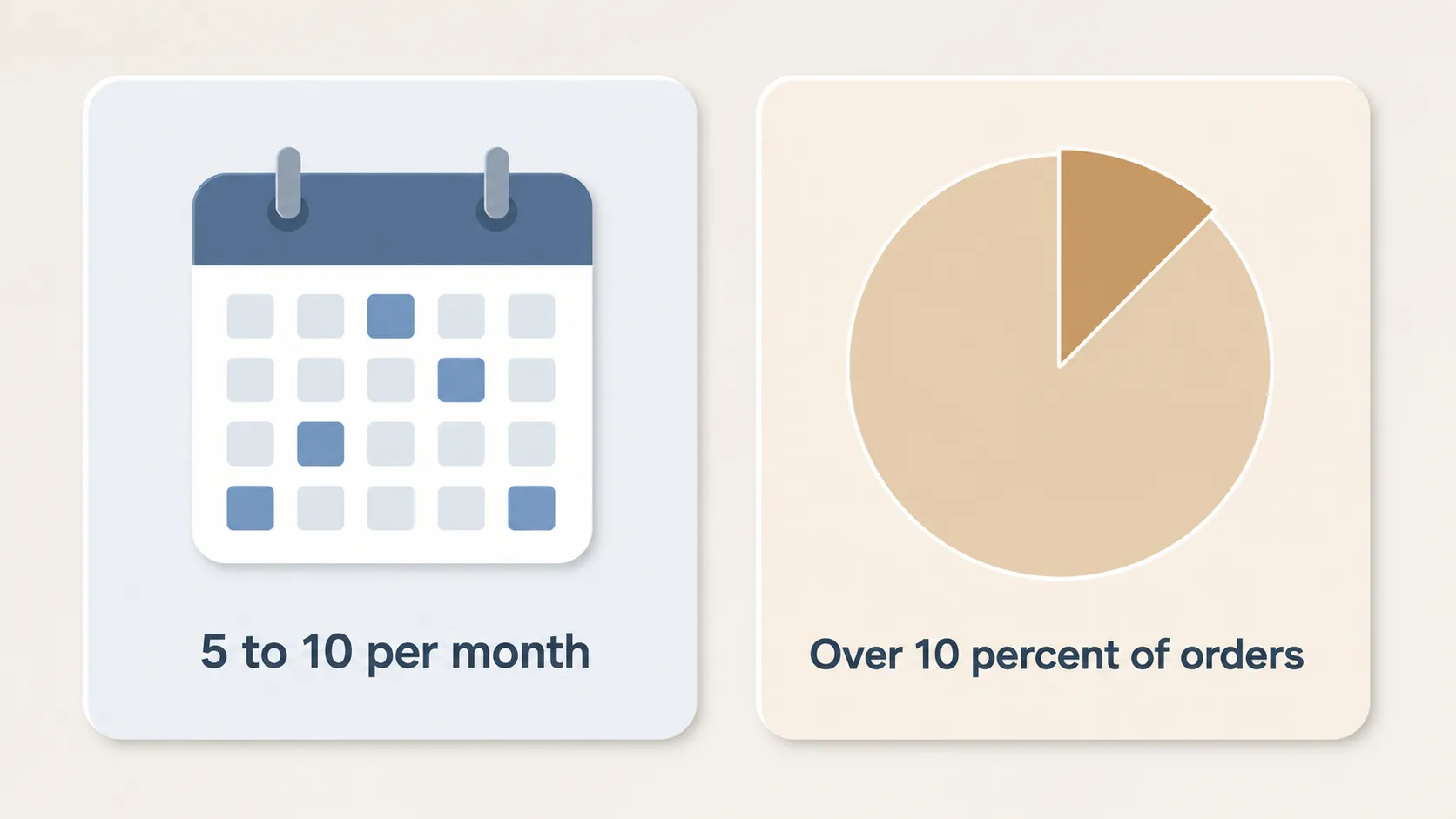
The most repeated shopper heuristic says that more than 5 to 10 returns a month, or returning over 10% of what you buy, puts you at risk. Those are informal rules of thumb, not published store limits, and they ignore exchanges, which Appriss Retail counts toward your “real return rate.”
For scale, roughly one in five online purchases came back in 2025 industry-wide. A moderate personal return rate is normal, not suspicious.
What Counts as a Bad Return Ratio?
Your return ratio is simple math: returns divided by total purchases. My own six months came out to 9 divided by 70, or about 13%, which is above the “bad ratio” figure people cite, yet it never drew a flag.
That gap is the whole point. Higher-income shoppers actually return more without being cut off, returning about 5.3% of purchases in 2025 per Bank of America data reported by CNBC.
Why these numbers are rough: they are informal shopper benchmarks, not thresholds any store publishes. Treat them as orientation rather than a limit you must stay under.
What Actually Triggers a Flag (Pattern, Not Count)
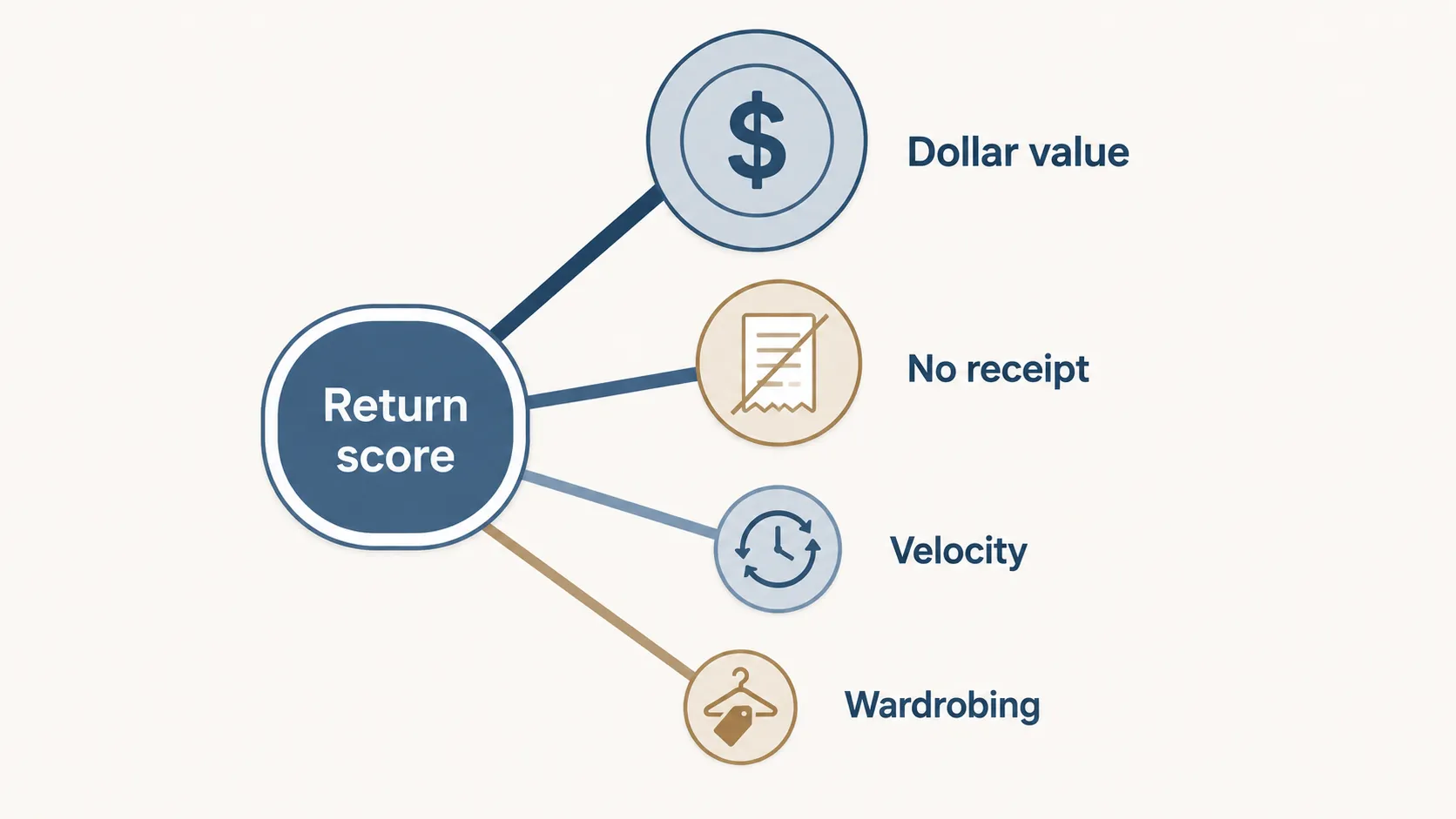
The Retail Equation and similar systems flag behavior patterns, not a raw number of returns. The tracked signals, per CBS reporting on how returns are scored, include how often you return, the dollar amounts involved, and whether you used a receipt, which is why a small run of the wrong returns matters far more than a long list of cheap receipted ones.
The behaviors that carry the most weight tend to be these:
High dollar value: big-ticket and high-total returns draw more scrutiny than cheap ones.
Frequent no-receipt returns: returns without proof of purchase are the classic risk signal.
Unusual velocity or timing: bursts of returns, or returns clustered right after big shopping events, stand out.
Wardrobing: buying an item, using it, then returning it (the post-Super-Bowl TV is the textbook case).
Serial-returner patterns: a buy-and-return rhythm that looks like the item was never really wanted.
When this crosses from ordinary returning into what stores treat as excessive returns, the system stops caring how you would describe your intent. It starts scoring the shape of the activity instead.
Am I Going to Get Flagged?
Probably not from volume alone. The one time I got a warning prompt at a register, it was a single $180 no-receipt return, not my tenth small receipted one.
We cannot see the exact formula. The precise weightings are proprietary, so treat the list above as the shape of the risk, not a scoreboard you can calculate.
How Stores Track Returns: The Retail Equation and Your Return Score
The Retail Equation is the company behind most “our system denied your return” moments, scanning your ID at the counter to build a Return Activity Report and a return “score.” According to Consumer Justice, one store cannot see another’s line items, but retailers can request cross-chain patterns, which is how cross-store risk appears without your sweater return and your drill return being directly linked.
You can pull your own record. The full mechanics of how stores keep track of your returns, including ID scans and return scores, deserve their own walkthrough.
The short version: you can request your Return Activity Report by mail or email. I did exactly that, to see what was on file.

What you cannot see: the score itself and how long the data is retained are not public. The report tells you what is logged without telling you how it is weighted.
Does the Line Move by Store?
The point where returns become “too many” is set per retailer, and consumer reporting on store return bans shows some stores cap no-receipt returns by dollar value, some watch counts or windows, and some tie it to membership. That is why a return that sails through at one chain can hit a prompt at another, and why there is no single cross-store limit to memorize.
In my own log, Target flagged a no-receipt return with a dollar-cap prompt that my Amazon returns never triggered, even though Amazon saw more of my volume.
Retailer | What tends to set its line |
|---|---|
Amazon | Return-rate and problem patterns on the account, with warnings before action |
Walmart | No-receipt return caps within a short window |
Target | Annual no-receipt dollar cap |
Costco | Membership tied to return behavior |
Best Buy | Shorter return windows, with member extensions |
Sephora | Annual dollar threshold on returns |
Underneath all of that sits the question of whether you can get in trouble for returning too much at a given store. That comes down to the store’s policy plus the shared scoring layer.
Always check the current store policy. Retailers adjust dollar caps and windows regularly, so treat the table above as orientation and confirm specifics before a big return.
What Happens If You Cross the Line: Warnings, Denials, and Bans
Crossing a store’s threshold usually triggers a graduated response, not an instant ban, and most shoppers get a warning before anything harsher happens. CBS reporting notes some stores tell flagged customers they cannot return merchandise for up to a year, which is a temporary restriction rather than a permanent lifetime blacklist.
Here is the escalation ladder, simplest consequence first:
Soft warning: a cashier prompt or an email noting an unusually high rate of returns.
Declined return: the system rejects one return and points you to the tracking company.
Restrictive policy: store credit only, a shorter window, or a temporary no-returns period.
Returns-only ban: you can still shop, but you cannot return.
Full ban or blacklist: purchases and returns are both blocked, which is the rare far end.
The warning I received was that first soft rung, not a ban. Adjusting my habits kept it from escalating.

At the far end of that ladder is the question of whether a store can ban you for too many returns and how blacklists actually work. Worth knowing: being “blacklisted” here is a store-level tracking flag, not a mark on your credit report.
The exception: in extreme cases, usually clear fraud or very high-dollar abuse, a store can act without a gentle warning first.
How to Keep Your Returns From Getting You Flagged
To lower your flag risk, keep receipts, limit no-receipt returns, avoid buy-use-return patterns, space out high-value returns, and check your Return Activity Report now and then. According to SavingAdvice, you are rarely warned as you approach a limit, so manage the behaviors that get scored rather than chasing a safe number that does not exist.
The habits that made the biggest difference for me, in order:
Keep every receipt or digital order record. Receipted returns are the lowest-risk kind.
Consolidate no-receipt returns. Bundle them into fewer trips rather than a steady drip.
Avoid wardrobing. Do not buy, use, and return, since that pattern is exactly what the systems hunt.
Space out high-dollar returns. Big totals in a short window draw the most scrutiny.
Request your Return Activity Report periodically. It tells you what is on file before a return goes sideways.
After my warning, I switched to keeping every receipt and consolidating returns into a single trip. I have not seen a prompt since.
It also helps to favor stores with the most forgiving return policies for anything you might send back.
No guarantees: no habit makes you flag-proof, because the scoring is private and can weigh factors you cannot see.
FAQs: How Many Returns Is Too Many
Does returning too much hurt your credit?
No, your return history sits in a Return Activity Report held by companies like The Retail Equation, which is separate from the credit bureaus, so returns never appear on your credit report. Consumer Justice notes that consumer-reporting rights can apply if the data is wrong, but the record itself does not touch your credit score.
When I pulled my own report, nothing on it referenced my credit.
How many returns can I make before I’m flagged?
There is no fixed number, because flags come from patterns such as dollar value, no-receipt frequency, and timing. A receipted, moderate return habit can run above the “10%” figure without issue, while a few high-dollar no-receipt returns can draw a prompt.
How do I see my return history?
Request your Return Activity Report from The Retail Equation by mail or email. It lists the return and exchange transactions tied to your ID, the closest thing to seeing what a store’s system sees when it scores you.
Can I get unflagged?
Sometimes: you can request a review of a denied return and dispute errors in your report, and if the data is inaccurate you have consumer-reporting rights to correct it. Persistent no-receipt or high-dollar patterns are harder to undo than a one-off mistake.
The Bottom Line
The reason there is no clean answer to how many returns is too much is that no single number exists to give. What matters is the pattern: whether you keep receipts, how much value you send back, how fast, and whether your habits look like ordinary shopping or like wardrobing.
Manage those behaviors and you can return what genuinely does not work without living in fear of a counter. Keep your receipts, watch your no-receipt and high-dollar returns, and pull your own Return Activity Report if you want to see where you stand.
The line moves store to store, so when a specific retailer matters, check that store’s policy rather than trusting a magic number that was never real.
Read it your way
Short on time? Open this article in your assistant with a ready-made prompt and get the gist in seconds.
Found this useful? Make us a preferred source so we show up in your Google results.
Keep reading
Related articles
Eligibility & Conditions
What Stores Use The Retail Equation? (2026, Best Buy Out)
See which stores use The Retail Equation in 2026: a verified status list of who still tracks returns, who dropped it (Best Buy, 2019), and who never did.
Eligibility & Conditions
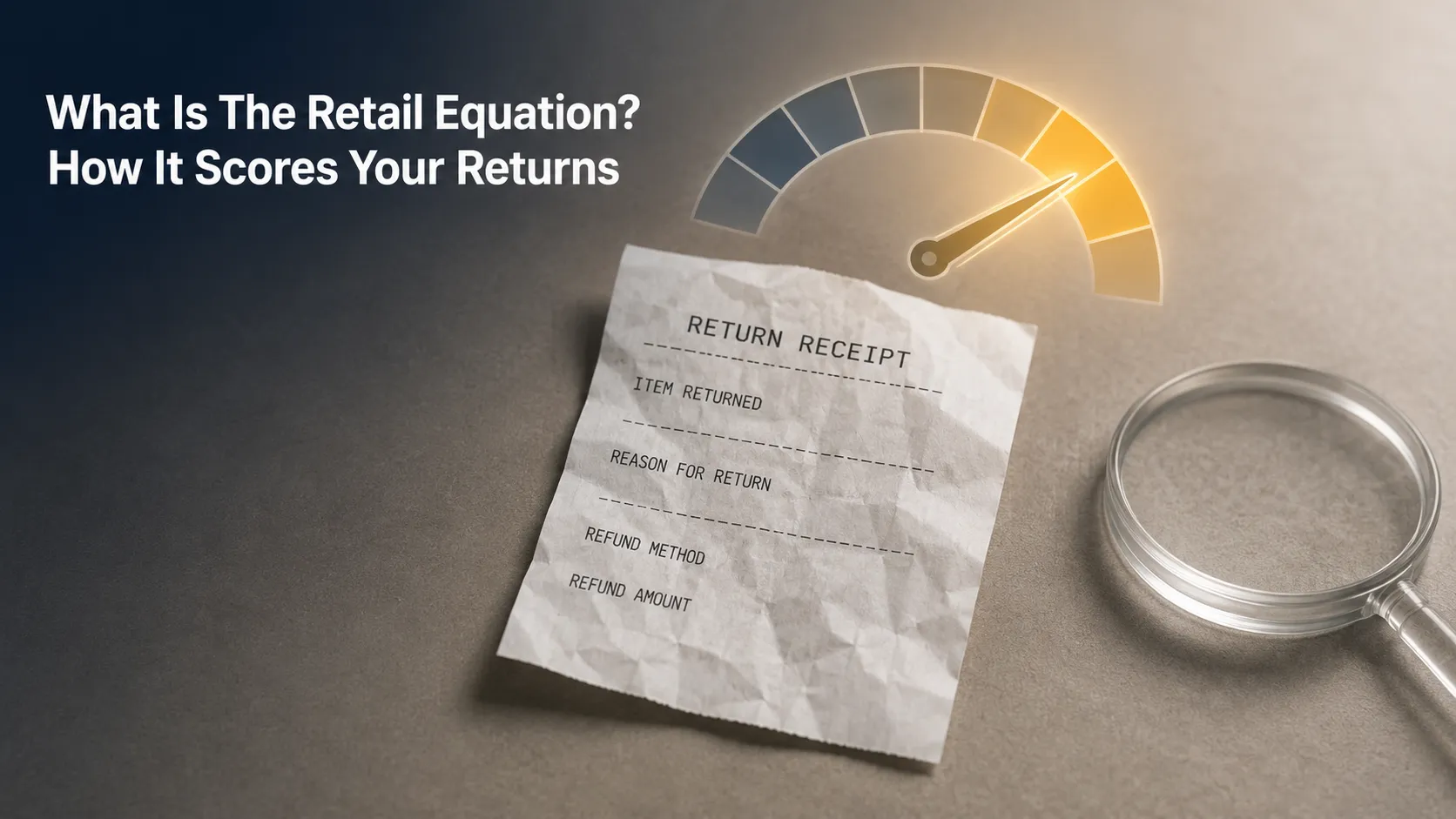
What Is The Retail Equation? How It Scores Your Returns
Denied a return? The Retail Equation scores your returns and can approve, warn, or deny them. See how it works, read a real RAR, and dispute errors
Eligibility & Conditions
Sephora Return Limit: No Set Number, 30-Day Window & TRE Tracking
Sephora has no set return limit, but a 30-day window and Retail Equation tracking mean too many returns can trigger a 365-day ban. Here’s the real rule.
Eligibility & Conditions
Do Stores Track Your Returns? How the System Works (2026)
Yes, most stores track and score your returns. See how the system works, what they log, and how to request your own Return Activity Report.
The discussion
Comments
Every comment is reviewed before it goes live.