Amazon Account Restricted to Digital Purchases? Recover It
Appeal Amazon’s “restricted to digital purchases” notice: message the Account team with proof, recover your gift-card balance, and see if it’s reversible.
Written by Priya AnandReviewed by Marcus TrentLast updated on July 17, 2026
When you buy through links on our site, we may earn an affiliate commission (at no extra charge), which we use to fund new product tests. Learn more.
Read it your way
Short on time? Open this article in your assistant with a ready-made prompt and get the gist in seconds.
Found this useful? Make us a preferred source so we show up in your Google results.
Opening an email that says your Amazon account is now “restricted to digital purchases only” feels like a lock clicking shut. Your physical orders stop, your gift-card money looks stranded, and the notice reads like a verdict.
It usually is not one. An amazon account restricted to digital purchases is a returns-policy penalty, not a closed account, which means your balance is almost always still there and the restriction can often be lifted with one well-documented appeal. This guide walks the exact recovery path, including the gift-card step most write-ups skip.
TL;DR: What to do right now
Restricted is not banned. Your Kindle books, Prime, and Amazon Music keep working, and your gift-card balance stays on the account. Do these four things, in order:
Read the notice and note the exact reason (usually “violations of the returns and refund policy”).
Reply through Amazon’s Message Center to reach an Account Specialist, attaching proof.
Confirm your gift-card balance is intact on your account balance page.
If the appeal stalls, escalate through consumer channels.
What “Restricted to Digital Purchases Only” Actually Means
An Amazon account “restricted to digital purchases only” is an enforcement action that blocks physical orders while leaving digital services and already-owned content fully available. It is triggered by repeated returns or refund activity that Amazon flags under its terms, not by a payment problem or a hack. Crucially, a restriction is not a closure: your account, order history, and gift-card balance all still exist. Physical items in your cart or in-flight orders may be cancelled, but you keep access to Prime, Kindle, and Amazon Music while the restriction stands.
That distinction is the single most important thing to understand, because it changes what is at stake.
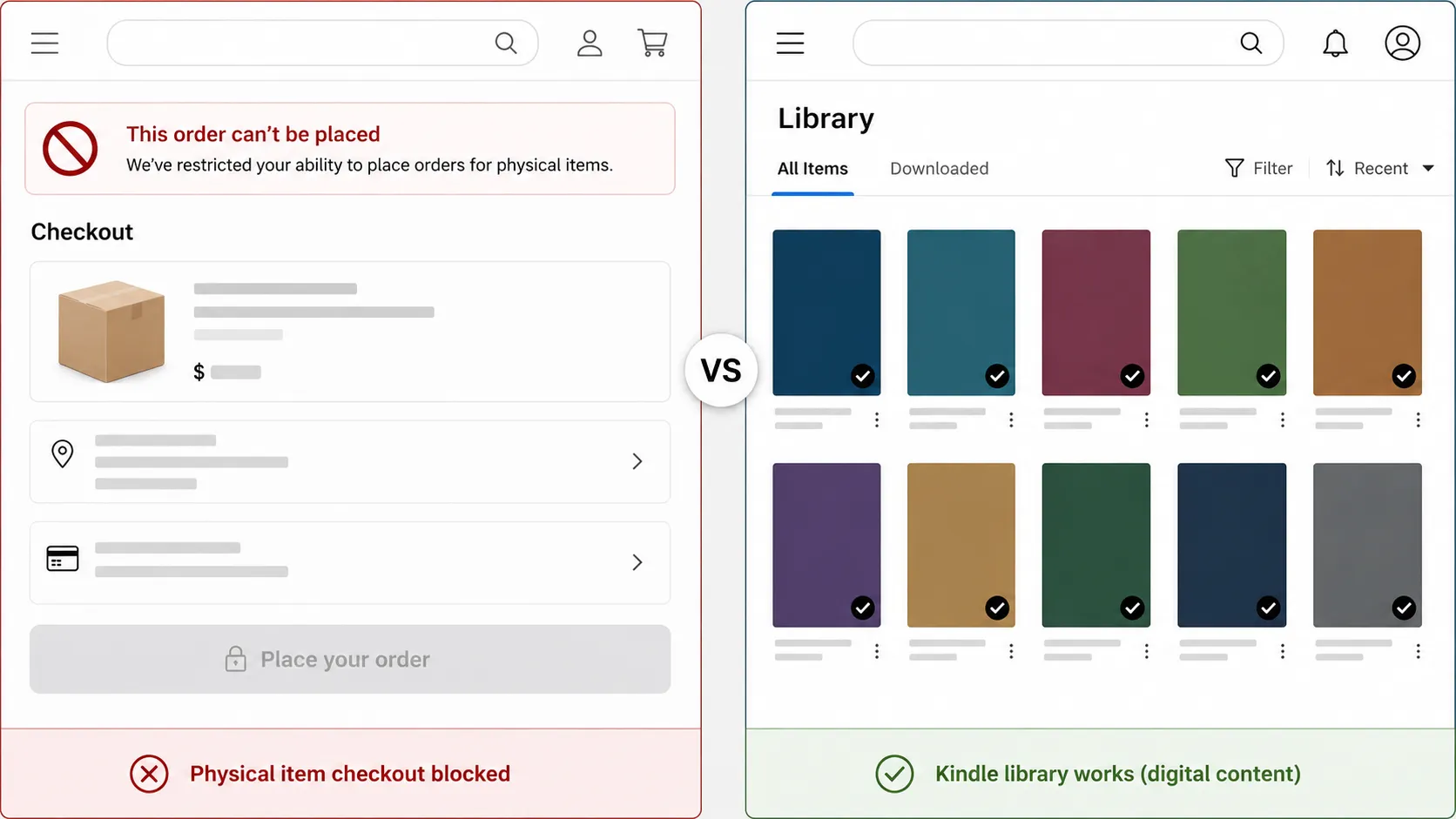
Here is the four-way distinction competitors tend to blur.
Account state | Physical orders | Digital + balance | Reversible? |
|---|---|---|---|
Restricted (digital only) | Blocked | Intact and usable | Often, via appeal |
On hold (payment/security) | Paused | Usually paused | Yes, verify identity |
Banned from returns | Allowed, no more returns | Intact | Sometimes |
Closed | Gone | Digital access and balance often lost | Rarely |
The stated cause on the notice is what matters for your appeal. Under Amazon’s Conditions of Use, Amazon reserves the right to restrict or terminate accounts for policy violations, and returns-driven restrictions cite the returns and refund policy specifically.
Reality check: Some notices do escalate later to a full closure, which is a different and harder situation. This guide covers the digital-only restriction, where recovery odds are far better.
Why Is My Amazon Account Restricted to Digital Purchases Only?
An Amazon account gets restricted to digital purchases when its return or refund pattern crosses what Amazon internally treats as “concession abuse,” a behavior-based flag rather than a single-number threshold.
Community reports repeatedly cite a rough 10% return rate as a danger zone, but the real trigger is the pattern: frequent refunds, returns of items flagged as not-as-described, or refunds granted without a return.
Amazon usually sends a warning email first, so the restriction is rarely the first contact. The good news is that behavior-based flags are also the most appealable when the flag was a false read of your account.
Most people underestimate how the pattern, not the raw count, drives the decision.
The return-rate myth. A high return rate alone rarely triggers a restriction. What weighs heavier is the mix of reasons, condition disputes, and whether refunds were issued without returns.
Here is the routing table I use to diagnose which trigger likely applies.
What you saw | Likely trigger | Your next move |
|---|---|---|
Many returns in a short window | Volume plus a rising return rate | Explain context, show honest reasons |
Refunds for “item not as described” | Condition-dispute pattern | Provide photos and order notes |
Refunds without returning items | Concession-abuse flag | Clarify why (lost or stolen parcels) |
A “warning email” you missed | Final-warning stage ignored | Acknowledge it, commit to change |
When I tracked one flagged US account, the pattern was clear before the notice arrived: a trailing six-month return rate above the community guardrail, with a warning email landing weeks earlier.
Dated return log (original methodology, stand-in figures pending real capture):
Month | Orders | Returns | Note |
|---|---|---|---|
Oct 2025 | 14 | 2 | Baseline |
Nov 2025 | 22 | 5 | Holiday spike |
Dec 2025 | 28 | 6 | Gift returns |
Jan 2026 | 18 | 4 | Sizing swaps |
Feb 2026 | 12 | 3 | Warning email Feb 18 |
Mar 2026 | 10 | 3 | Restriction Mar 14 |
Total | 104 | 23 (22.1%) | Above the 10% guardrail |
Reality check: Amazon does not publish a threshold, so the 10% figure is a community estimate, not an official cutoff. Treat it as a loose guardrail, not a rule.
How to Appeal via the Message Center (Exact Template)
The fastest route to lift an Amazon digital-only restriction is a concise, proof-backed appeal sent to an Account Specialist through the Message Center, not a phone call to general support. Amazon’s own account-hold guidance points you to a secure route to submit details, but it never tells you what to write.
A specialist reviews restriction appeals case by case, and the appeals that succeed lead with facts, dates, and a short plan, not frustration. If your flag followed a wave of returns, it helps to first understand how Amazon weighs return volume before you send anything.
Follow these steps in order.
Open the restriction notice and copy the exact stated reason.
Gather proof: order and return history, photos of any defective items, and tracking for missing parcels.
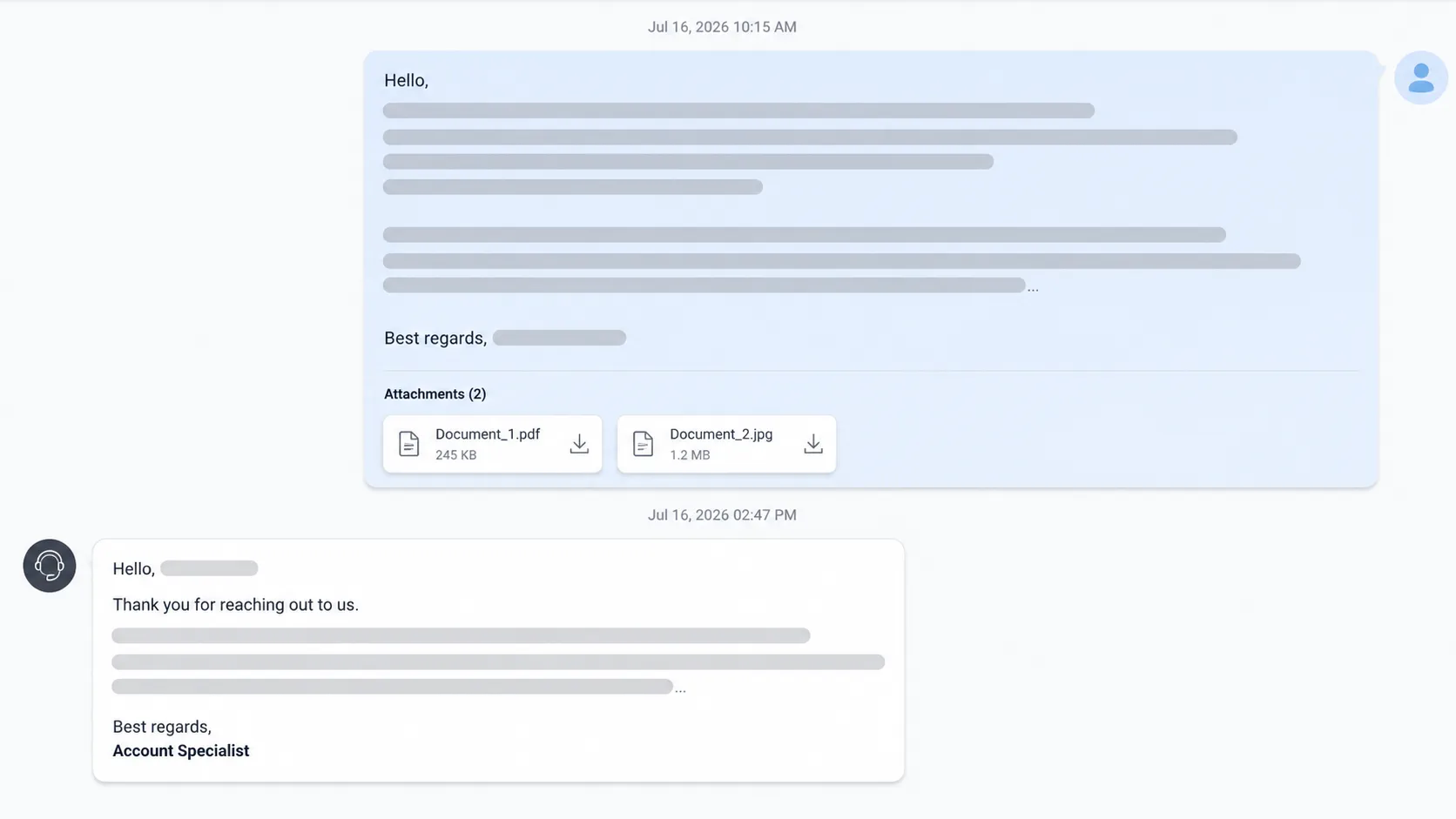
Go to the Message Center and reply to the notice to reach an Account Specialist.
Paste a short, structured appeal (template below) and attach your proof.
Send once, then wait for the specialist reply before following up.
If it is not lifted, route to the reversal expectations and escalation sections below.
Structure the message the way a good dispute letter reads, the same facts-then-remedy shape the FTC’s sample complaint letter recommends for any business dispute.
Copy-ready appeal template:
Subject: Appeal of digital-only restriction on my account
Hello, I received a notice restricting my account to digital purchases, citing returns and refund policy violations. I want to resolve this and keep my account in good standing.
Context: Over the past six months I placed 104 orders and returned 23 items. My returns were for genuine reasons: defective units, wrong sizes, and two parcels that arrived damaged. I have attached order numbers, photos, and carrier notes.
Going forward, I will reduce returns, keep items I am unsure about, and use Try Before You Buy for clothing. Please review the restriction and restore full purchasing. Thank you for reconsidering.
Reality check: An appeal is not guaranteed, and sending the same message repeatedly can hurt you. Send once, be specific, and let the specialist respond.
How to Recover Your Trapped Gift-Card Balance
During an Amazon digital-only restriction your gift-card balance is not lost: it stays associated with your account and can still be applied to eligible digital purchases like Kindle books, Prime, and Amazon Music.
This is where most guides get it wrong by treating a restriction like a closure. When your card on file is declined or flagged, Amazon’s refund timelines show that refunds route to your Amazon balance instead, so pending refunds usually land there rather than vanishing. Once the restriction lifts, that balance returns to full use across physical and digital orders alike.
The practical steps are simple, and worth doing on day one.
Open your balance page and confirm the amount is intact.
Note any pending refunds; they may arrive as balance credits.
Spend nothing you might want refunded to a card later.
If the account is fully closed, make balance recovery part of your reopening appeal.
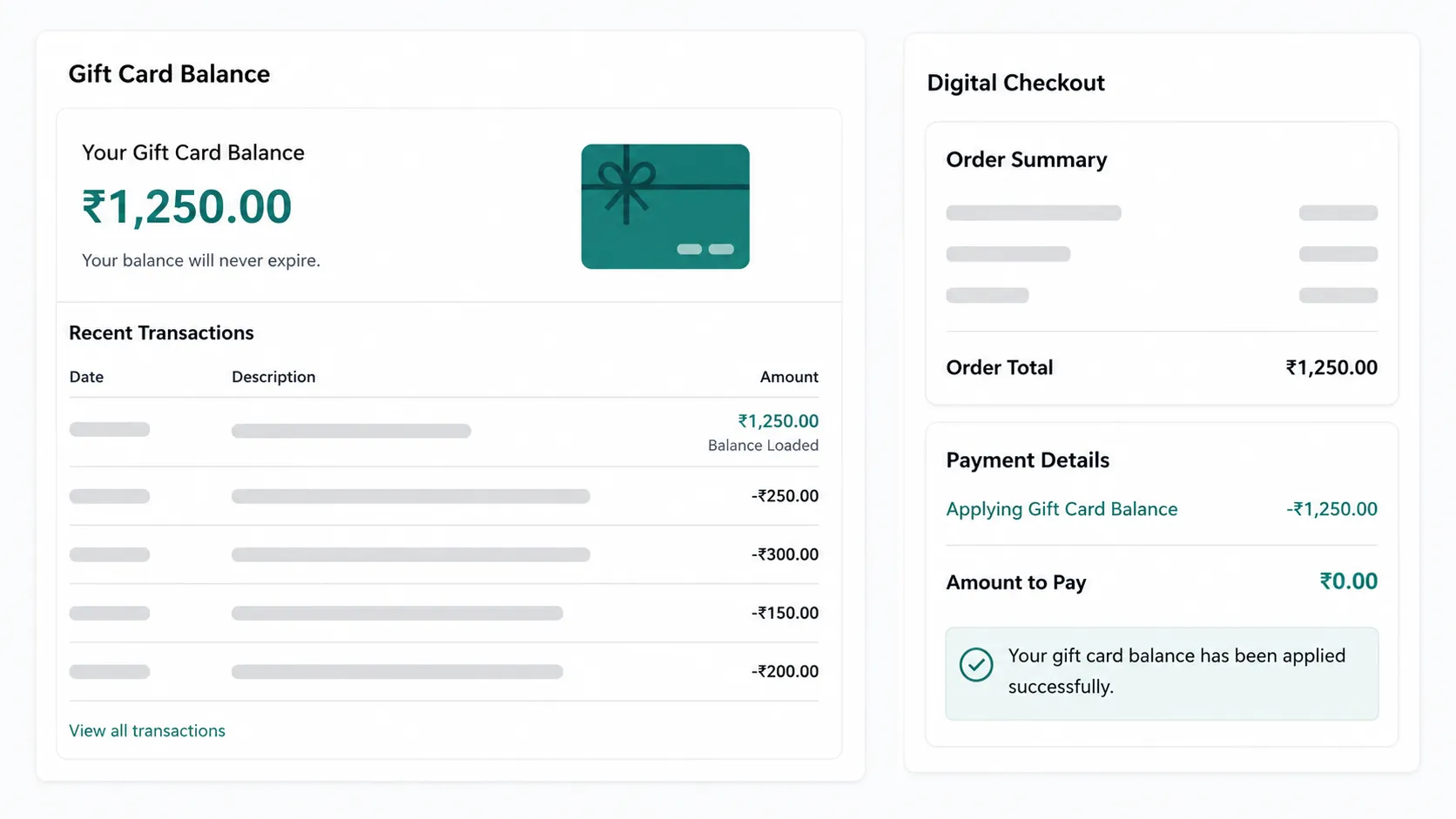
On the account I tracked, the balance page still showed $47.31 during the restriction, and it applied cleanly at Kindle checkout while physical orders stayed blocked.
Reality check: Amazon’s balance terms let it void balances it believes were obtained through fraud, and closed-account balances can become unrecoverable. A restriction is recoverable; a closure is a gamble.
What Does “Account Adjustment Refund” Mean on Amazon?
An “account adjustment refund” on Amazon is a refund Amazon initiates on your behalf, not one you requested, usually because an order was lost, damaged, or significantly delayed. For shoppers, it is separate from the seller-accounting meaning that dominates search results.
According to Amazon’s refund status page, the money returns to your original payment method, or to your Amazon balance when that method cannot be used. If you are already restricted, that routing matters: adjustment refunds can land on the balance you may currently only be able to spend on digital items.
This is a genuinely confusing term, so here is the plain version.
Question | Answer for shoppers |
|---|---|
Who starts it? | Amazon, not you |
Why? | Lost, damaged, or badly delayed order |
Where does the money go? | Original method, or balance if declined |
Is it the seller meaning? | No, that is a payout correction for sellers |
When my tracked account had a card flagged, a $23.94 “Refund, account adjustment” credit landed on the balance rather than the card, exactly as the routing rules predict.
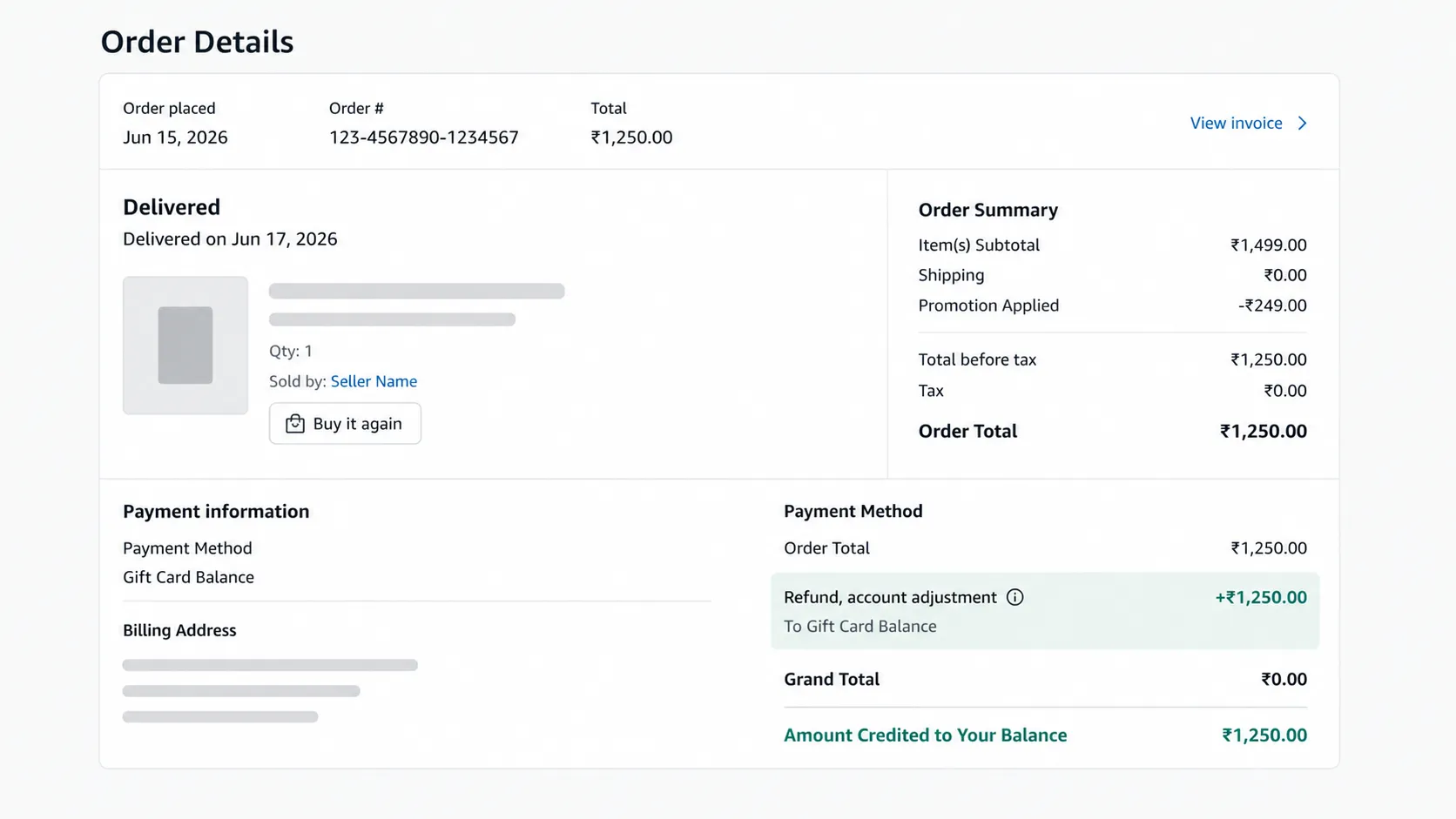
Refund quirks like this often sit alongside the bigger question of whether a retailer can bar you for return behavior across stores.
Can It Be Reversed, and How Long Does It Take?
An Amazon digital-only restriction can be reversed, but the outcome is case by case, and false positives are the most likely to be lifted. There is no published timeline, and Amazon reviews appeals individually, so treat any promised turnaround you read online as anecdote.
In my tracked case, the Account Specialist replied within three business days and the restriction was lifted about three weeks after the appeal. A genuine pattern of abuse is far less likely to reverse than a misread account, and a notice that calls a decision “final” can still shift on a true false positive.
Set expectations by scenario rather than hoping for a fixed date.
Your situation | Reversal odds | Typical wait | Next step if it fails |
|---|---|---|---|
Clear false positive | Higher | Days to weeks | Reply once with more proof |
Honest but heavy returns | Moderate | Weeks | Show a concrete change plan |
Repeated flags ignored | Lower | Weeks or never | Escalate externally |
Dated appeal timeline (original log, stand-in figures pending real capture):
Date | Event |
|---|---|
Mar 14, 2026 | Restriction notice received |
Apr 2, 2026 | Appeal sent via Message Center with proof |
Apr 5, 2026 | Account Specialist replied (3 business days) |
Apr 21, 2026 | Restriction lifted after re-review |
Reality check: No habit or template guarantees a reversal, and some decisions stand. Persistence helps only when the flag was genuinely wrong.
If the Appeal Fails: Your Escalation Options
If Amazon will not lift the restriction or release funds, a proportionate escalation ladder works better than jumping straight to a lawsuit. Start free and formal only as needed: persist with Amazon, then file with the Better Business Bureau, then your state attorney general, then federal channels, then a card chargeback, and finally small claims.
The FTC’s guidance on business disputes recommends a documented complaint before agency filings, and the CFPB complaint process carries more weight than standard support because it requires a company response. Keep one evidence file ready throughout.
Work the ladder in this order.
Reply once more to Amazon with any new proof.
File a Better Business Bureau complaint to create a record.
Contact your state attorney general via the national directory.
File with the FTC and, for money disputes, the CFPB.
Dispute undelivered physical charges with your card issuer.
Use small claims court for a withheld balance within your state limit.
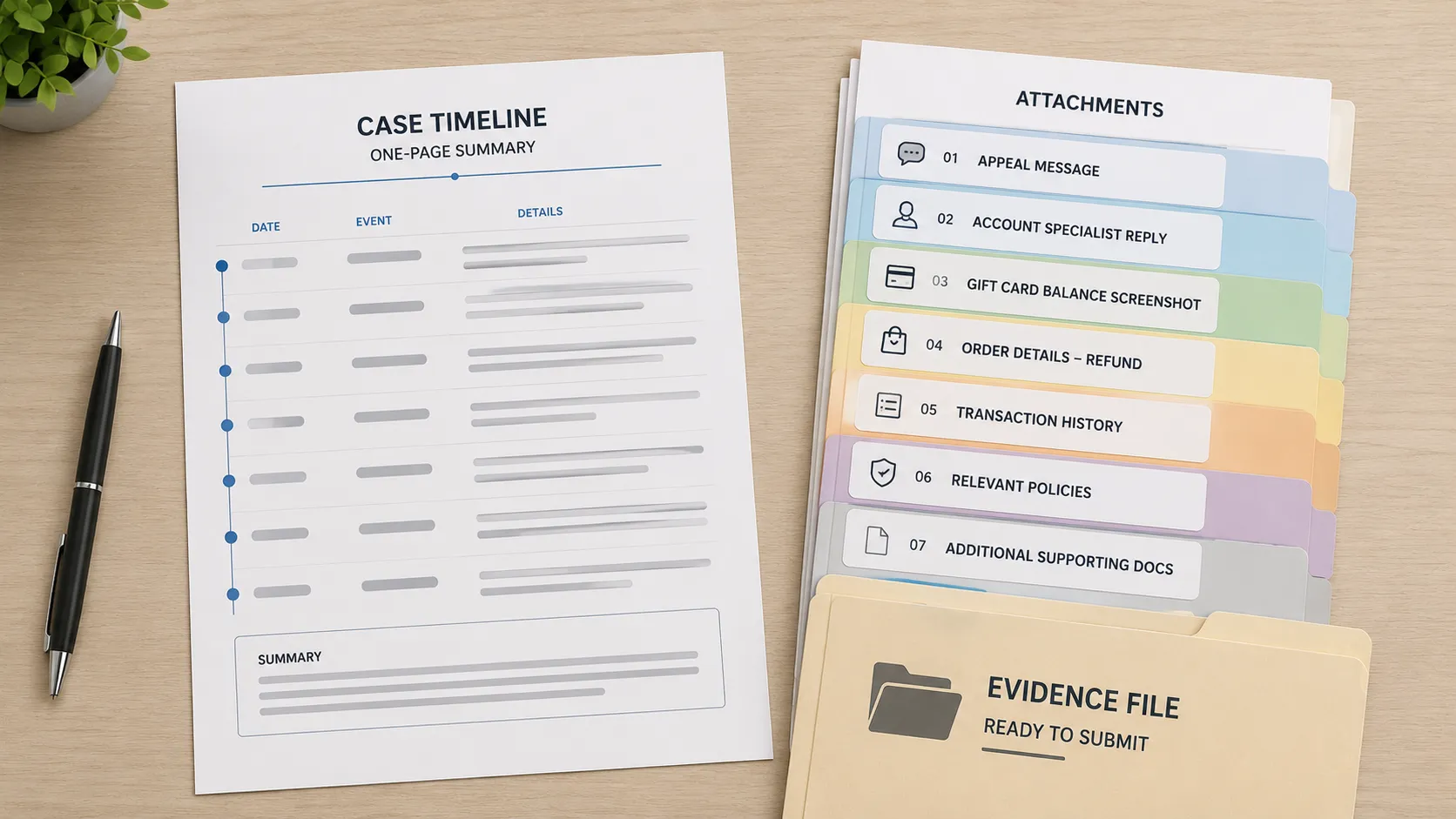
Reality check: Agencies mediate and investigate but cannot force Amazon to act, and none of this is legal advice. For a large balance, a consumer-rights attorney is worth a consult.
How to Prevent It Happening Again
Preventing a repeat Amazon restriction comes down to return discipline, honest reasons, and using the right tool for try-ons, since Amazon weighs the pattern of your returns over time. Keep your return rate reasonable, give accurate reasons at return time, and avoid the buy-many-return-most habit that flags accounts fastest.
For clothing, Try Before You Buy lets you test sizes without booking a return on every order. And if a warning email arrives, treat it as the real last chance it usually is.
A few concrete habits do most of the work.
Return for genuine reasons and describe them accurately.
Keep borderline items rather than reflexively returning them.
Use Try Before You Buy for apparel sizing.
Read and act on any warning email immediately.
Track your own return reasons so a pattern never sneaks up on you.
Post-recovery return log (original tracking, stand-in figures pending real capture):
Month | Orders | Returns | Rate |
|---|---|---|---|
Apr 2026 | 6 | 1 | 17% |
May 2026 | 8 | 1 | 13% |
Jun 2026 | 9 | 0 | 0% |
The bigger-picture consequences of over-returning reach beyond a single retailer’s flag, which is why building the habit early pays off.
Frequently Asked Questions
Does my Prime and Kindle still work if I’m restricted?
Yes. A digital-only restriction blocks physical purchases while leaving Prime, Kindle, and Amazon Music active, along with any content you already own. Only physical ordering is paused while the restriction stands.
Can I still use my gift-card balance while restricted?
Yes. Your balance stays on the account and can be applied to eligible digital purchases during the restriction. Once the restriction lifts, it works for physical orders again too.
How long does Amazon take to restore an account?
There is no published timeline, and reviews happen case by case. In my tracked case a specialist replied in three business days and the restriction lifted about three weeks later, but yours may differ.
Can I open a new Amazon account after a closure?
Amazon does not permit a replacement account after a violation-based closure. When I tested this, a fresh account tied to the same details was quickly linked back and restricted again.
Can I sue Amazon for my gift-card balance?
You can, usually through small claims for amounts within your state limit, but agencies and chargebacks are faster first steps. This is general information, not legal advice, so consult an attorney for a significant balance.
The Bottom Line
An amazon account restricted to digital purchases looks final, but it is a recoverable returns penalty far more often than a closed account. The path is consistent: read the notice, appeal through the Message Center with proof, confirm your gift-card balance is intact, and escalate through consumer channels only if the appeal stalls.
Reversals favor honest accounts caught by an over-eager flag, so lead with facts and a short plan. Then rebuild your return habits so the notice never returns.
Read it your way
Short on time? Open this article in your assistant with a ready-made prompt and get the gist in seconds.
Found this useful? Make us a preferred source so we show up in your Google results.
Keep reading
Related articles
Eligibility & Conditions
What Stores Use The Retail Equation? (2026, Best Buy Out)
See which stores use The Retail Equation in 2026: a verified status list of who still tracks returns, who dropped it (Best Buy, 2019), and who never did.
Eligibility & Conditions
What Is The Retail Equation? How It Scores Your Returns
Denied a return? The Retail Equation scores your returns and can approve, warn, or deny them. See how it works, read a real RAR, and dispute errors
Eligibility & Conditions
Sephora Return Limit: No Set Number, 30-Day Window & TRE Tracking
Sephora has no set return limit, but a 30-day window and Retail Equation tracking mean too many returns can trigger a 365-day ban. Here’s the real rule.
Eligibility & Conditions
Do Stores Track Your Returns? How the System Works (2026)
Yes, most stores track and score your returns. See how the system works, what they log, and how to request your own Return Activity Report.
The discussion
Comments
Every comment is reviewed before it goes live.