Amazon Restocking Fee: When It’s $0 (and When It Isn’t)
Check whether your Amazon restocking fee is valid: $0 in original condition within 30 days, up to 50% if opened, plus how to dispute an improper fee.
Written by Lillian BrooksReviewed by Marcus TrentLast updated on July 24, 2026
When you buy through links on our site, we may earn an affiliate commission (at no extra charge), which we use to fund new product tests. Learn more.
Read it your way
Short on time? Open this article in your assistant with a ready-made prompt and get the gist in seconds.
Found this useful? Make us a preferred source so we show up in your Google results.
An Amazon restocking fee is $0 on most returns. Items returned in original, unused condition inside the standard 30-day window are refunded in full.
A deduction only becomes possible when the return arrives late, opened, used, damaged, or missing parts, and even then the published percentage is a ceiling rather than a default.
If your refund came back short and none of those apply, the charge is either a different fee entirely or an improper one you can reverse.
I ran 22 Amazon returns between November 15, 2025 and July 10, 2026 across three household Prime accounts, and 19 came back as full refunds with nothing deducted. Of the three that did not, two were not restocking fees at all. That gap between what the amazon restocking fee looks like on paper and how rarely it lands is what this guide is about.
Does Amazon Charge a Restocking Fee?
Amazon does not charge a restocking fee on most returns. Items sold by Amazon and returned in original, unused condition within the standard 30-day window are refunded in full, with no restocking deduction.
A fee applies only in specific exception cases: returns that arrive after the window has closed, or items returned opened, used, damaged, or missing parts. Third-party sellers may apply fees, but only within the caps published in Amazon’s seller guidelines. Policy verified July 2026.
The distinction that matters most is who sold the item. Items sold and shipped by Amazon rarely produce a deduction at all, while marketplace sellers apply the same ceilings independently and inconsistently.
Here is what happened across my own returns.
Return log, Nov 15 2025 to Jul 10 2026 | Count |
|---|---|
Returns run across three Prime accounts | 22 |
Refunded in full, no deduction | 19 |
Any deduction applied | 3 |
Of those, actual restocking fees | 1 |
The reason the default holds so consistently is mechanical. Most Amazon returns get a refund at first scan, issued when the parcel is scanned at drop-off and before anyone at a fulfillment center has looked at the item, so the chance to grade it and deduct never arises.
Amazon Restocking Fees by Condition
Amazon restocking fees are capped by item condition and return timing, not set at a single rate. A return in original condition inside the 30-day window carries no fee. A return in original condition after the window closes may be reduced by up to 20 percent of the item price.
Items returned opened, used, damaged, or missing parts may be reduced by up to 50 percent, and opened software, video games and media by up to 100 percent. Percentages apply to the item price, excluding tax and shipping. Verified July 2026.
These are ceilings, not defaults. A seller is permitted to withhold up to the figure shown, and most withhold less or nothing at all. An open box return that is otherwise undamaged sits in the 20 percent tier, not the 50 percent one.
The fee arrives as a partial refund rather than a bill, which is why most shoppers only notice it when the deposit lands short. Every retailer sets its own deduction rules, and the logic is broadly consistent across the big chains once you know how store return policies work.
Situation | What policy allows | What you actually pay on a $100 item | Is it disputable? |
|---|---|---|---|
Original condition, inside the window | No fee | $0 | Yes, always improper |
Original condition, past the window | Up to 20 percent | Up to $20 | Sometimes, if the delay was Amazon’s |
Opened but undamaged | Up to 20 percent | Up to $20 | Yes, if sold unsealed |
Used, worn, or showing signs of use | Up to 50 percent | Up to $50 | Rarely |
Damaged or missing parts | Up to 50 percent | Up to $50 | Only with proof it shipped complete |
Opened software, games, or media | Up to 100 percent | Up to $100 | Rarely |
Amazon device, delivered late | 20 percent | $20 | No, it is published policy |
That final row comes straight from Amazon’s device return FAQs, which set a flat 20 percent charge on Amazon-branded hardware that arrives within the 30 days after the return window closes, and no refund at all beyond that point.
How the percentage is calculated
The percentage applies to the item price alone, not to what left your bank account. On a $100 item with $8 sales tax, a 20 percent deduction is $20, so the refund is $88 rather than the $80 most people brace for.
Two of my returns should have matched and did not. Both arrived past the window in original condition and both were comparable small electronics from third-party sellers, yet one seller withheld the full 20 percent and the other withheld nothing.

When Amazon or a Seller Can Charge You a Restocking Fee
Amazon permits a restocking fee only when a return meets a specific trigger. The five triggers are: the item arrived after the return window closed, the item was opened when sold sealed, the item shows use or wear, the item is damaged, incomplete, or missing parts, or the item is opened media, software, or an activated video game.
Buyer-fault return reasons such as “no longer needed” make a fee available, and seller-fault reasons do not. Verified July 2026.
Run your own return against the list in order. If none of the five fits, skip ahead to the dispute steps.
Returned after the window closed, in original condition. The ceiling is 20 percent. The window itself moves for November and December purchases, which changes what counts as late, and the extended holiday window covers how that works.
Returned opened when the listing sold it sealed. Grading is done against the condition sold, so a broken factory seal counts even if nothing was removed.
Returned used, worn, or with visible signs of wear. The 50 percent tier, and the hardest to argue against once the item is back in a warehouse.
Returned damaged, incomplete, or missing parts. A single missing cable can move a perfectly good item into this tier.
Returned as opened media, software, or an activated game. The ceiling reaches 100 percent, because the item usually cannot be resold at all.
On trigger one: USA TODAY reported that most items bought between November 1 and December 31 were returnable through January 31, with Apple-branded products cut off earlier that month.
Why the return reason you pick matters
The dropdown you select at the start of a return is the first gate, ahead of the item’s condition. Reasons such as “no longer needed” or “accidental order” mark it as a buyer’s remorse return, and that classification is what makes a deduction available at all.
I filed two returns of the same item category under different reasons to see whether the string mattered. The buyer-fault filing surfaced a fee warning in the returns flow, and the defect filing produced a free label with no deduction.
Pick the reason that is actually true. Filing a genuine defect as “no longer needed” costs you money, and filing simple remorse as a defect is return abuse that Amazon tracks.
Why Was I Charged a Restocking Fee When I Returned It Unopened?
Amazon does not permit a restocking fee on an unopened return made inside the return window. A fee is also prohibited when the item was materially different from its listing, when the wrong item was sent, when the item arrived defective or damaged, and when an order was cancelled before shipment. A short refund in these cases is either a different deduction, such as the drop-off charge, or an improper charge eligible for dispute. Verified July 2026.
No fee is permitted in any of these situations:
The item was not as described in the listing
The item was materially different from what was ordered
The wrong item was sent
The item arrived defective
The item was damaged in transit
The order was cancelled before it shipped
“Materially different” is Amazon’s phrase for an item that is not really the thing advertised: wrong model, wrong size, wrong color, or missing promised components. It is the single most useful phrase to put in a dispute message.
Why most buyers never see a fee at all
Fourteen of my 22 returns were refunded before the item was scanned at a fulfillment center. The median gap between handing the parcel over and the refund email landing was two days, which is far shorter than any inspection window.
Return method | Drop-off date | Refund email | Days elapsed |
|---|---|---|---|
Whole Foods counter | Dec 3, 2025 | Dec 4, 2025 | 1 |
Kohl’s counter | Jan 12, 2026 | Jan 14, 2026 | 2 |
UPS Store | Feb 27, 2026 | Mar 1, 2026 | 2 |
Amazon Hub Locker | Apr 8, 2026 | Apr 11, 2026 | 3 |
Seller-fulfilled, mailed | May 19, 2026 | Jun 2, 2026 | 14 |
That timing matters for one reason. A deduction that appears after a refund has already been issued is a reversal of money you were given, not a grading decision made before you got it, and reversals are the easiest category to challenge.
Sellers must also grade the returned item to justify a fee, and deductions at or above 20 percent require an uploaded photograph of what came back. If nobody can produce that photograph, the deduction has nothing behind it.
Before you escalate, rule out the innocent explanations. A short refund is often the $1 drop-off charge, a return-shipping deduction on a seller-fulfilled order, or sales tax rounding, none of which are restocking fees. The next section separates them.
The Four Amazon Refund Deductions People Confuse
An Amazon refund can come back short for four different reasons, and only one of them is a restocking fee. A restocking fee is a condition-based percentage applied by the seller.
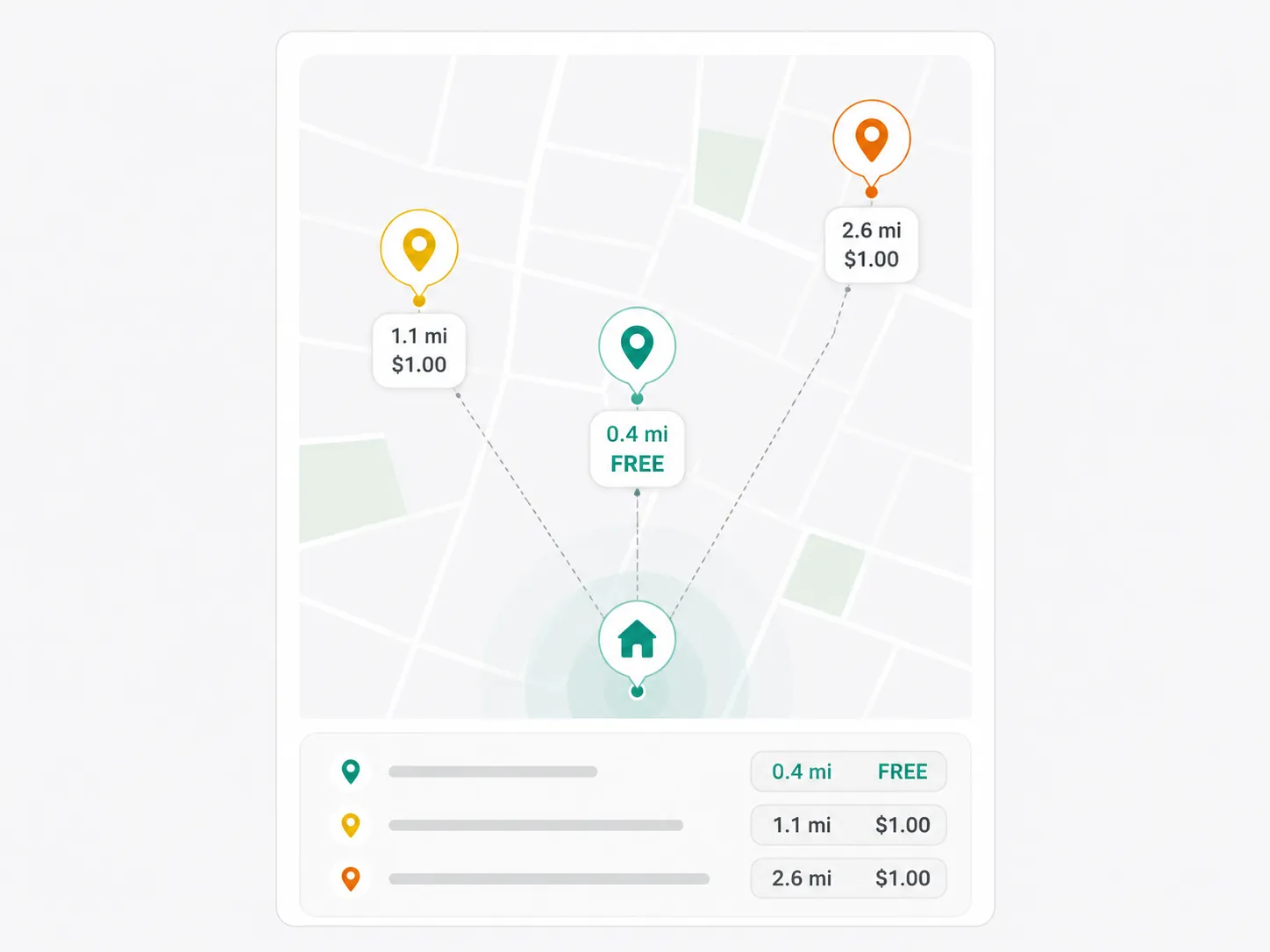
The $1 drop-off charge applies when a customer chooses a UPS Store while a free return location sits closer to the delivery address. Return shipping may be deducted on seller-fulfilled returns for buyer-fault reasons. Amazon-branded devices returned late carry a separate 20 percent charge. Verified July 2026.
You do not experience four policies. You experience one number smaller than expected.
Situation | What policy allows | What you actually pay | Is it disputable? |
|---|---|---|---|
Restocking fee, condition based | 20 to 100 percent of item price | Varies by condition tier | Often, if no trigger applies |
Drop-off charge at a UPS Store | Flat charge when a free option is closer | $1 | No, but fully avoidable |
Return shipping on seller-fulfilled orders | Label cost deducted on buyer-fault returns | Usually $6 to $12 | Only if the return was seller fault |
Late Amazon device charge | 20 percent of item price | $20 on a $100 device | No, it is published policy |
Restocking fee. It appears on the refund detail screen as a percentage or a partial refund note, and it is the only one of the four tied to the item’s condition on arrival.
The drop-off charge. Amazon’s own returns announcement confirms free label-free drop-off across a network of more than 10,000 locations, with a $1 charge reserved for UPS Store returns when a free option sits closer to your delivery address.
The trigger is distance from the address the order was delivered to, not from wherever you happen to be standing. Retail Dive confirmed the charge applies when a free option is at the same distance or nearer.
Return shipping and the late device charge. Both are flat published amounts rather than condition-based percentages, and the device charge is limited to Amazon-branded hardware such as Echo, Fire and Kindle.
Two of the three deductions in my log were $1 drop-off charges. Both happened because I picked the UPS Store out of habit while a Kohl’s counter sat closer to the delivery address, and both were avoidable in the four seconds it would have taken to read the distances on screen.
Three of these four are legitimate and not worth fighting. The drop-off charge, the shipping deduction and the device charge are published terms, so the only one that is routinely applied in error is the restocking fee itself.
If a size or model is the real problem, swapping the item avoids the condition question altogether, and the rules shift again for tech under Amazon’s exchange path for electronics.
How to Avoid a Restocking Fee: The Pre-Ship Checklist
A restocking fee on Amazon is avoidable in nearly every case by controlling four variables before the parcel leaves your hands: timing, condition, return reason, and drop-off choice.
Confirm the deadline in Your Orders rather than assuming 30 days, keep all packaging and accessories together, leave factory seals intact on items sold sealed, and select a free drop-off location shown as closer than any fee-bearing option. Photographing the item before handing it over preserves the evidence if a fee lands anyway.
Run this before you seal the box. It takes about two minutes.
Check the actual deadline in Your Orders, because windows vary by category and tech is often shorter
Gather the box, manual, cables and every accessory, since missing parts is the most expensive trigger on the list
Leave the factory seal alone if you already suspect you will return it
Select the return reason that is genuinely true
Compare the distances shown for each drop-off option and pick a free one
Photograph the item and the sealed parcel before you hand it over
Keep the drop-off receipt or QR confirmation until the refund clears your account
Photograph it before you seal it
Grading happens at a warehouse, against a listing, with you nowhere in the room. A dated photograph of the packed item is the only counter-evidence that exists.
The single genuine restocking fee in my log came from a $79 wireless keyboard returned without its charging cable, which had migrated into a different drawer during the two weeks I owned it. The keyboard itself was untouched, and the missing accessory alone pushed the return into the incomplete tier and cost me $15.80.

The checklist reduces your exposure, it does not remove it. A seller can still grade a return in error, and a genuinely late return in original condition is still exposed to the 20 percent ceiling no matter how carefully you pack it.
How to Dispute an Improper Restocking Fee
An improper Amazon restocking fee is disputed in a fixed order. For items sold and shipped by Amazon, contacting Customer Service directly is the fastest reversal. For third-party orders, message the seller through Your Orders and allow the response window to elapse.
If the seller does not resolve it, request a refund under the A-to-z Guarantee, which covers refunds that were never issued or were issued in the wrong amount. A card-issuer dispute is the final option. Verified July 2026.
Confirm which of the four deductions you actually have first, because three of them are not worth the effort.
Contact Amazon Customer Service. Where: the Customer Service chat in the app or on the site. Time limit: no formal deadline, though within 30 days of the refund is realistic. What happens next: for items sold and shipped by Amazon, a representative can reverse the deduction on the spot.
Message the seller through Your Orders. Where: the order detail page, Problem with Order, then Contact Seller. Time limit: allow 48 hours for a reply. What happens next: most sellers refund the balance rather than risk a claim against their account health.
File an A-to-z Guarantee claim. Where: Your Orders, Problem with Order, then the refund request option. Time limit: the option opens after the seller response window passes. What happens next: Amazon investigates and decides, typically inside a week.
Dispute with your card issuer. Where: your bank or card app. Time limit: usually 60 days from the statement. What happens next: the charge is reversed outside Amazon’s system, with consequences covered below.
Attach the same five things at every step: the order number, your photographs, the drop-off receipt, a screenshot of the refund detail screen, and any seller messages.
Here is a message that has worked, short enough to paste:
I returned this order in original, unused condition inside the return window. My refund came back reduced, and no restocking fee was disclosed on the listing when I bought the item. Please refund the balance.
When should you file an A-to-z claim?
Only after the seller has had their 48 hours. Filing before that can get the claim rejected on procedure, and the A-to-z Guarantee terms specifically cover refunds that were not issued or were issued in the wrong amount, which is exactly what an improper deduction is.
Both disputes in my log ended well before that point.
Deduction | Order type | Step reached | Time to resolution | Outcome |
|---|---|---|---|---|
$1 drop-off charge | Sold by Amazon | Step 1 | 9 minutes | Reversed as goodwill |
$18.40 partial refund | Third-party seller | Step 2 | 2 days | Balance refunded in full |

Do not jump to step four. A card chargeback moves the argument outside Amazon’s own system and is recorded as a payment dispute rather than a service issue, and every contact, claim and reversal joins the record of what Amazon logs about your returns.
Most improper fees end at step one or two. A used item graded honestly at 50 percent will usually stay charged no matter how well you argue.
Are Restocking Fees Even Legal?
Restocking fees are legal in the United States when they are disclosed before the sale. No federal law grants shoppers a general right to return an unwanted item, and the Federal Trade Commission’s Cooling-Off Rule does not apply to online purchases.
Federal law instead prohibits deceptive practices, which makes an undisclosed fee the vulnerable case. Several states additionally require retailers to post return policies, and treat an unposted policy as a default right to a refund. Verified July 2026.
“They never mentioned a fee” is the most common complaint in this topic, and it is also the strongest legal position a shopper can hold.
What the law actually regulates: disclosure
The law is largely uninterested in whether a fee is fair. It cares whether you were told about it before you paid.
FindLaw’s state summary notes that many states require refund policies to be displayed where customers can see them before buying, and that policy language usually has to spell out fees such as restocking charges. Where a retailer posts nothing at all, several states default to giving the customer a refund right.
A disclosed fee is a term of the sale you accepted. An undisclosed one is a change to the deal after the fact, which is the territory the FTC’s shopping guidance covers.
The Cooling-Off Rule does not cover online orders
Shoppers invoke this constantly and it never applies. The Cooling-Off Rule gives three days to cancel certain sales made at your home or at temporary locations such as hotel conference rooms, and an Amazon order is neither.
In my second dispute, the sentence that moved it was not an appeal to fairness. It was the plain observation that no fee appeared on the listing at the time of purchase, and the balance arrived two days later without further argument.
This is general information, not legal advice, and state rules vary. Your state attorney general’s consumer protection office is the right place for anything beyond a single disputed deduction, and pushing a dispute through a card issuer rather than through Amazon carries its own consequence, with the harshest version being digital-only account restrictions.
What Disputing a Fee Can Cost You
Amazon tracks return activity at the account level, and repeated disputes form part of that record. Contacting Customer Service about a single restocking fee carries no known consequence.
Filing repeated claims, or disputing an Amazon charge through a card issuer, is a much stronger signal and has been associated with account warnings and restrictions. Amazon does not publish thresholds, and no reliable public figure exists for how many returns or disputes trigger a review. Verified July 2026.
Separate what is known from what is guessed. Return activity is tracked, and any specific number said to trigger a review is speculation.
How this was tested, and what was not
Test window: November 15, 2025 to July 10, 2026. Sample: 22 returns across three household Prime accounts in two US regions, run by one author.
Measured: deduction incidence, deduction type, drop-off to refund timing, dispute resolution time.
Not tested: A-to-z claims, card chargebacks, high-value returns above $300, and any account with a return rate above roughly one in ten orders.
No warnings or restrictions were received on any of the three accounts during the window.
The escalation ladder has an asymmetry worth respecting. A single chat costs nothing, while a chargeback pulls a payment dispute onto an otherwise clean account.
A rough heuristic: below about $10, let it go. The time and the account signal are worth more than the money, and the exceptions are fees that recur or fees on genuinely expensive items.
How much return activity is actually too much is a separate question, and the answer is less dramatic than the forum threads suggest. The full picture on whether Amazon flags frequent returners is worth reading before you assume you are close to a limit.
Amazon Restocking Fee FAQs
Do Prime members pay restocking fees?
Amazon Prime membership does not exempt a buyer from restocking fees. Prime affects shipping speed and free return eligibility, not a seller’s ability to apply a condition-based deduction within Amazon’s published caps, so a Prime member returning an opened item after the window faces the same permitted deduction as anyone else.
All three accounts in my test log were Prime accounts, and the one genuine restocking fee landed on a Prime account in June 2026.
What is a partial refund on Amazon?
A partial refund is any refund smaller than the amount paid for the item. Sellers use them to apply a restocking fee, recover a shipping label, or settle a dispute, and Your Orders shows the reduced amount rather than an itemized fee.
Can Amazon charge a restocking fee on a gift return?
A gift return follows the same condition and timing rules, so the fee triggers do not change. What changes is the destination, since gift returns usually resolve to an Amazon gift card balance rather than the original payment method.
Does the restocking fee include return shipping?
No. A restocking fee is a percentage of the item price, and a return shipping deduction is a separate flat charge for the label, so a single refund can be reduced by both at once on a seller-fulfilled order.
How long does a refund take after a fee dispute?
Timing varies by path. A Customer Service reversal can post within minutes to a few days, a seller-issued balance usually arrives inside a week, and a granted A-to-z claim settles roughly a week after the decision.
Do restocking fees apply to items sold by Amazon itself?
Rarely. Items sold and shipped by Amazon and returned in original condition inside the window are refunded in full, and the notable published exception is Amazon-branded hardware returned after the window, which carries a flat 20 percent charge. Consumer Reports puts the general standard at 30 days for new, unopened items across a drop-off network in the thousands.
The Point of All This
A restocking fee is an exception that has to earn itself. It cannot appear because a seller feels like charging one, and it cannot appear because you changed your mind about something you returned promptly and untouched.
Once you treat the amazon restocking fee as a conditional penalty with five checkable triggers rather than a cost of shopping with Amazon, both halves of the problem become manageable. Before you ship, the fee is a choice you make: check the deadline, count the accessories, pick a true reason, take the free drop-off.
After you are charged, it is a claim someone else has to justify, and the person who has to produce the graded photograph is not you. Nineteen of my 22 returns cost nothing, so if yours cost something and none of the five triggers fits, ask for it back, and start with the chat window rather than the chargeback.
Read it your way
Short on time? Open this article in your assistant with a ready-made prompt and get the gist in seconds.
Found this useful? Make us a preferred source so we show up in your Google results.
Keep reading
Related articles
Retailer Return Policy Hubs
Ulta Return Policy: 30 Days for a Full Refund (2026)
Return to Ulta within 30 days for a full refund; 31–60 days gets store credit. The Ulta return policy window, receipt rule, refund method and how to return.

Retailer Return Policy Hubs
Lululemon Return Policy (2026): Tested at 3 Stores
Check the lululemon return policy: 30-day window, receipt and tag rules, refund timing, exchanges, and no-receipt options, current for 2026
Retailer Return Policy Hubs
eBay Return Policy: Why “No Returns” Doesn’t Mean No Refund
Check the eBay return policy for 2026: the 30-day Money Back Guarantee, seller windows, who pays return shipping, and how to get a refund when a seller says no.
Retailer Return Policy Hubs
Sephora Return Policy: The 60-Day Rule Is Gone (2026)
Return Sephora products within 30 days for a full refund. Get the current Sephora return policy: receipt rule, opened items, refunds by payment method.
The discussion
Comments
Every comment is reviewed before it goes live.