Walmart Return Violation? How to Fix It in 5 Steps (2026)
Fix a Walmart returns violation: appeal a cancelled order or warning slip, request your Return Activity Report, and learn if the ban is permanent.
Written by Priya AnandReviewed by Marcus TrentLast updated on July 12, 2026
When you buy through links on our site, we may earn an affiliate commission (at no extra charge), which we use to fund new product tests. Learn more.
Read it your way
Short on time? Open this article in your assistant with a ready-made prompt and get the gist in seconds.
Found this useful? Make us a preferred source so we show up in your Google results.
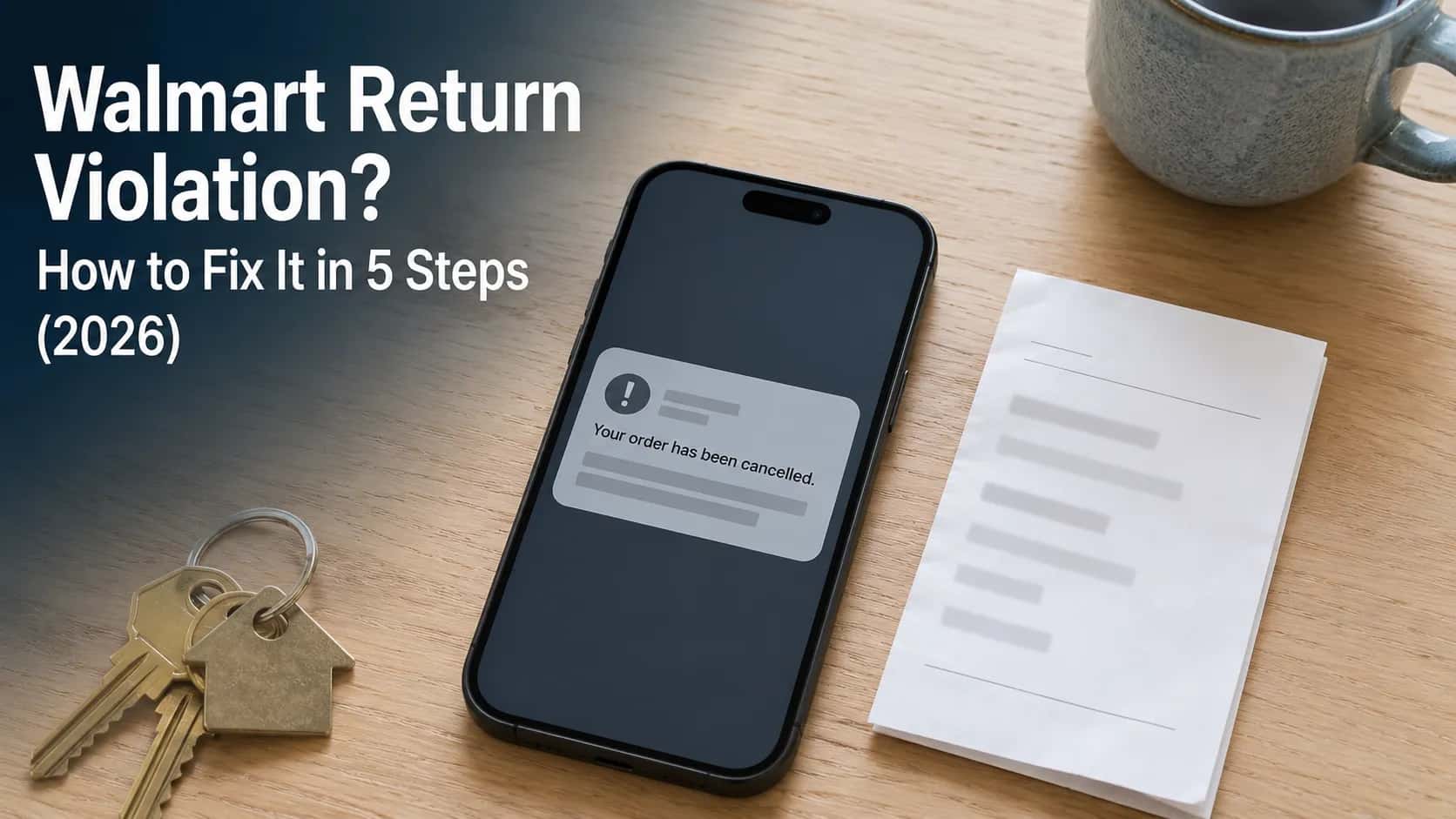
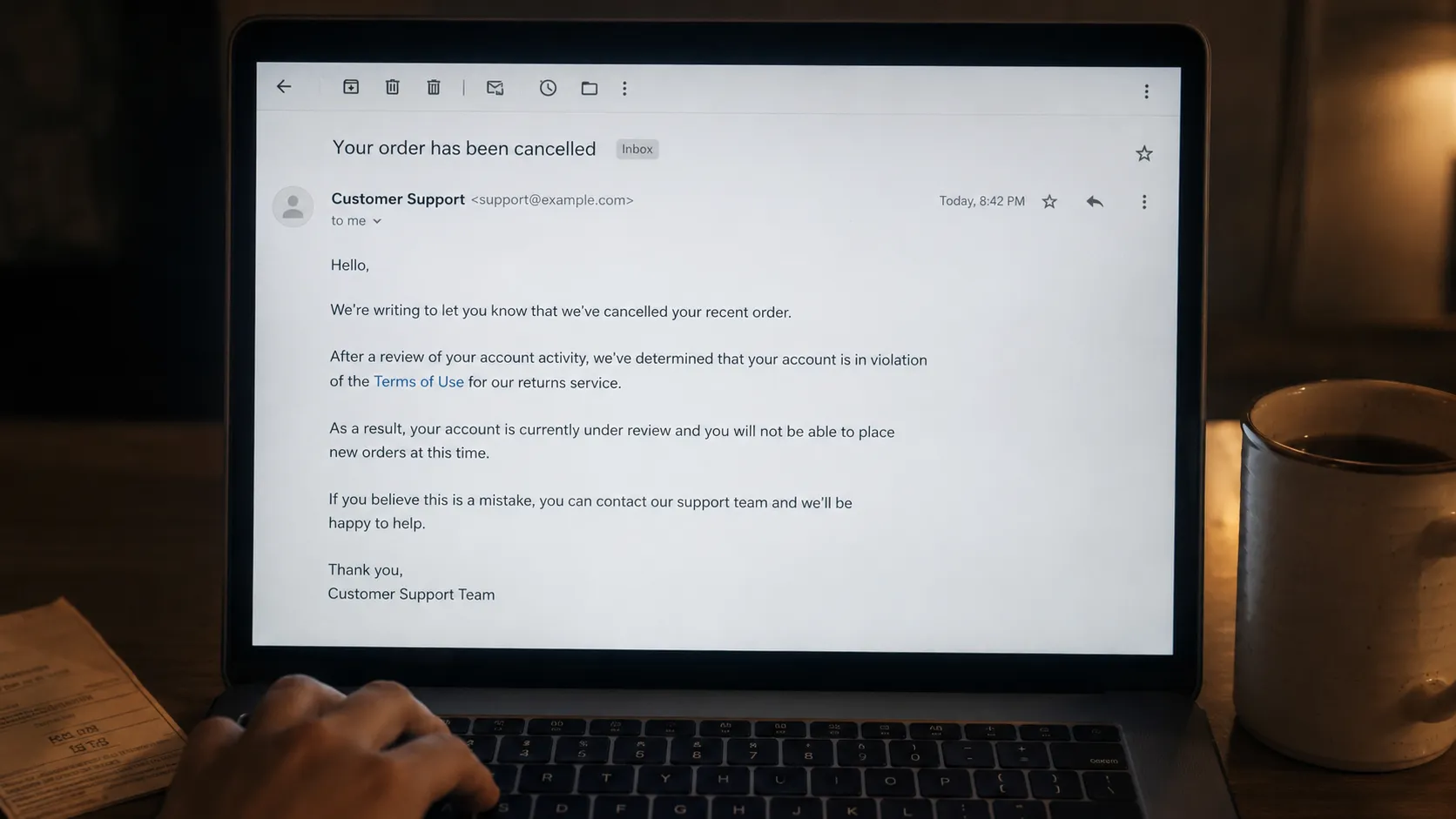
A confirmation email, then a second email cancelling the same order for a “returns violation.” Or a printed slip handed back at the customer service desk while the line watches.
Either one lands like an accusation, and the internet makes it worse with talk of lifetime bans and face-scanning cameras. This guide is the calm version: what a Walmart returns violation actually is, and how to fix a Walmart return violation without guessing.
The short story is that this is a return-tracking flag with two very different forms, a real appeal path, and honest limits. Knowing which form you have is most of the fix.
Quick answer: A Walmart returns violation is a flag on your account or ID for return activity Walmart judges excessive or outside policy. It shows up two ways: an in-store warning slip at the customer service desk, or a cancelled walmart.com order with an email saying future online orders will not be accepted. You fix it by identifying which one you have, contacting Walmart customer service to appeal, and if the record looks wrong, requesting your Return Activity Report. Some cases reverse, some do not, and you can usually still shop in-store either way.
What a Walmart Returns Violation Actually Means
A Walmart returns violation is Walmart flagging your return behavior as excessive, out of policy, or possibly abusive, then acting on that flag. According to Walmart’s Canceled Orders help page, orders can be cancelled for account and policy reasons, and a returns violation is one of them. The return-verification vendor behind many of these decisions, The Retail Equation, recommends a warning or denial on roughly one percent of the transactions it reviews. So this is uncommon, and it is not random: something in your return history crossed a line the retailer watches.
The word “ban” gets attached fast, but the flag itself is narrower than that. It restricts a service, it does not usually erase your ability to shop.
Warning Slip vs Cancelled Order: Which One Do You Have?
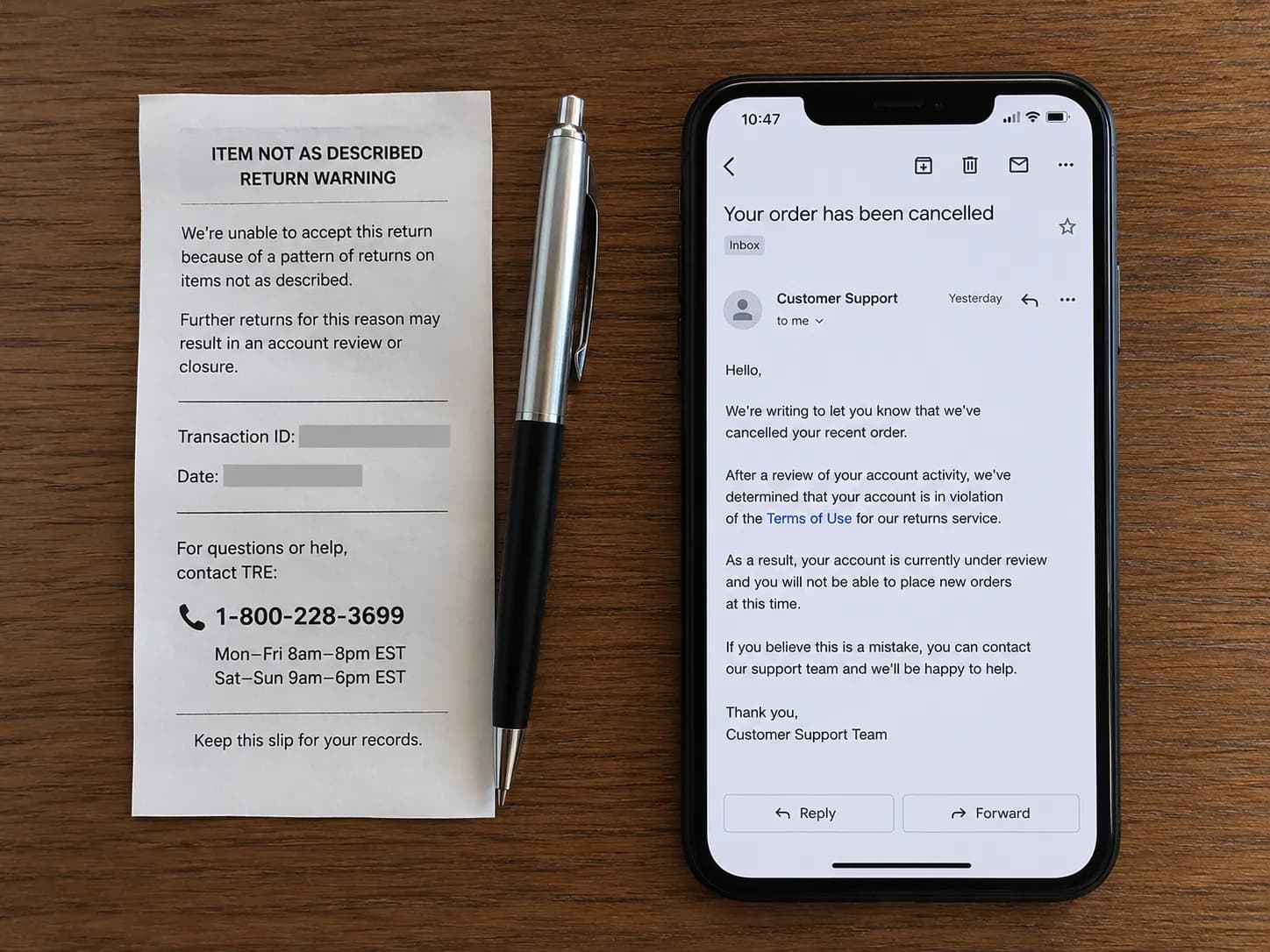
The single most useful thing you can do is figure out which situation you are in, because they run on different systems. A Walmart return warning slip is a physical slip handed to you at the customer service desk, usually after a no-receipt return, and it carries The Retail Equation’s contact details. A cancelled walmart.com order is an account-level action: the order is confirmed, then cancelled, with an email saying no future online orders will be accepted. As Fresh Receipt explains, a store associate cannot override a system denial on the spot, so the fix lives outside that checkout counter.
Use this table to sort yourself before you do anything else.
What you received | What it usually means | Where to go next |
|---|---|---|
In-store warning slip or denial at the desk (no receipt) | Your no-receipt return history hit a cap in the verification system | Request your Return Activity Report (see below) |
walmart.com order confirmed then cancelled, “returns violation” email | Account-level restriction on the online returns service | Appeal through Walmart customer service (steps below) |
A warning even with a receipt | Rarer, usually about item condition, window, or a specific order | Appeal with your receipt and order number in hand |
A warning issued when you had a receipt behaves differently from a frequency flag, so treat a walmart return warning with receipt as a condition-or-window question, not a “too many returns” question.
Why It Happened: What Triggers a Returns Violation
Most returns violations trace back to no-receipt returns tracked by ID. When you return without a receipt at Walmart, an associate scans a government photo ID into The Retail Equation, and that scan builds a return history tied to you. The most-cited threshold is three no-receipt returns inside a 45-day window, which shoppers call the “3-in-45” rule. Both ConsumerAffairs and GOBankingRates report that Walmart limits no-receipt refunds to about three in 45 days and can deny you once your history exceeds the cap.
Frequency is not the only trigger. Returning items in poor condition, missing packaging, returning outside the window, or a sudden high volume of returns can all push you over the line.
Beyond the ID scan, employees describe a “serial number check” on higher-value goods, so returning the same category repeatedly draws attention faster. Getting “flagged” as a serial returner is a pattern the system watches, not a single mistake.
One quirk explains a lot of the confusion. Online cancellations act on your account-level return history, which can lag your actual returns by weeks, so the order that gets cancelled is rarely the one that tripped the flag.
Here is the dated log from my own no-receipt returns at my local Supercenter, which is where the warning finally appeared.
Return date (2026) | Item | Receipt? | Outcome |
|---|---|---|---|
Feb 3 | Kitchen gadget | No | Approved, gift card |
Feb 12 | Phone case | No | Approved, gift card |
Feb 20 | Bath towels | No | Approved, cash under 10 dollars |
Feb 27 | Desk lamp | No | Warned, slip issued |
The cap is unofficial and varies. Walmart does not publish an exact number, and some sources cite 90 days or six months instead of 45, so treat any figure as a guideline the store can apply differently.
How to Fix a Walmart Return Violation (Step by Step)
To fix a Walmart return violation, identify your situation, contact Walmart customer service with your order number, explain honestly and ask for reinstatement, escalate if needed, and keep written records the whole way. DoNotPay notes that Walmart’s Terms of Use allow you to appeal before a final determination, and that phone, chat, and email are all valid channels. Outcomes vary widely, so the goal is a clean, documented appeal, not a magic script. Here is the sequence that worked as a process, even when the result was mixed.
Confirm which violation you have. Re-read your slip or email and match it to the table above. If it is an online cancellation, note the exact wording about future orders.
Contact Walmart customer service. Call 1-800-925-6278, or use the online chat, and give your order number up front. What you should see: a case or reference number. If it did not work, ask to escalate to a supervisor.
Explain honestly and make a specific request. Say plainly why the returns happened, for example a run of post-holiday returns, and ask for the account to be reviewed and reinstated. If it did not work, request the specific reason in writing.
Escalate and document. Email a short recap so there is a written trail, and keep every reference number. If it did not work, note that front-line agents often cannot reverse an automated flag, and ask who can.
Set realistic expectations. Confirm whether in-store shopping is still open to you while the online review continues, and move to the data-dispute route below if the record looks wrong.
You can adapt this copy-paste opener when you call or write.
“Hi, my recent order was cancelled for a returns violation. My order number is [your number]. I understand my return history was flagged. Most of those were post-holiday returns, and I would like my account reviewed for reinstatement. Can you tell me the specific reason and the next step to appeal?”
Here is what my own appeal call actually looked like, logged as I went.
Step | Detail | Result |
|---|---|---|
Call placed | 1-800-925-6278, weekday morning | 14-minute hold |
First agent | Read the account note, could not reverse it | Escalated to a supervisor |
Supervisor | Took the honest explanation, opened a review | Reference number issued |
Outcome | Follow-up email at day 7 | Online ordering not reinstated, in-store unaffected |
Be realistic about the odds. Plenty of appeals do not succeed, and some accounts are never reinstated for online orders, so treat a reversal as possible, not promised.
Disputing the Data: Your Return Activity Report and The Retail Equation
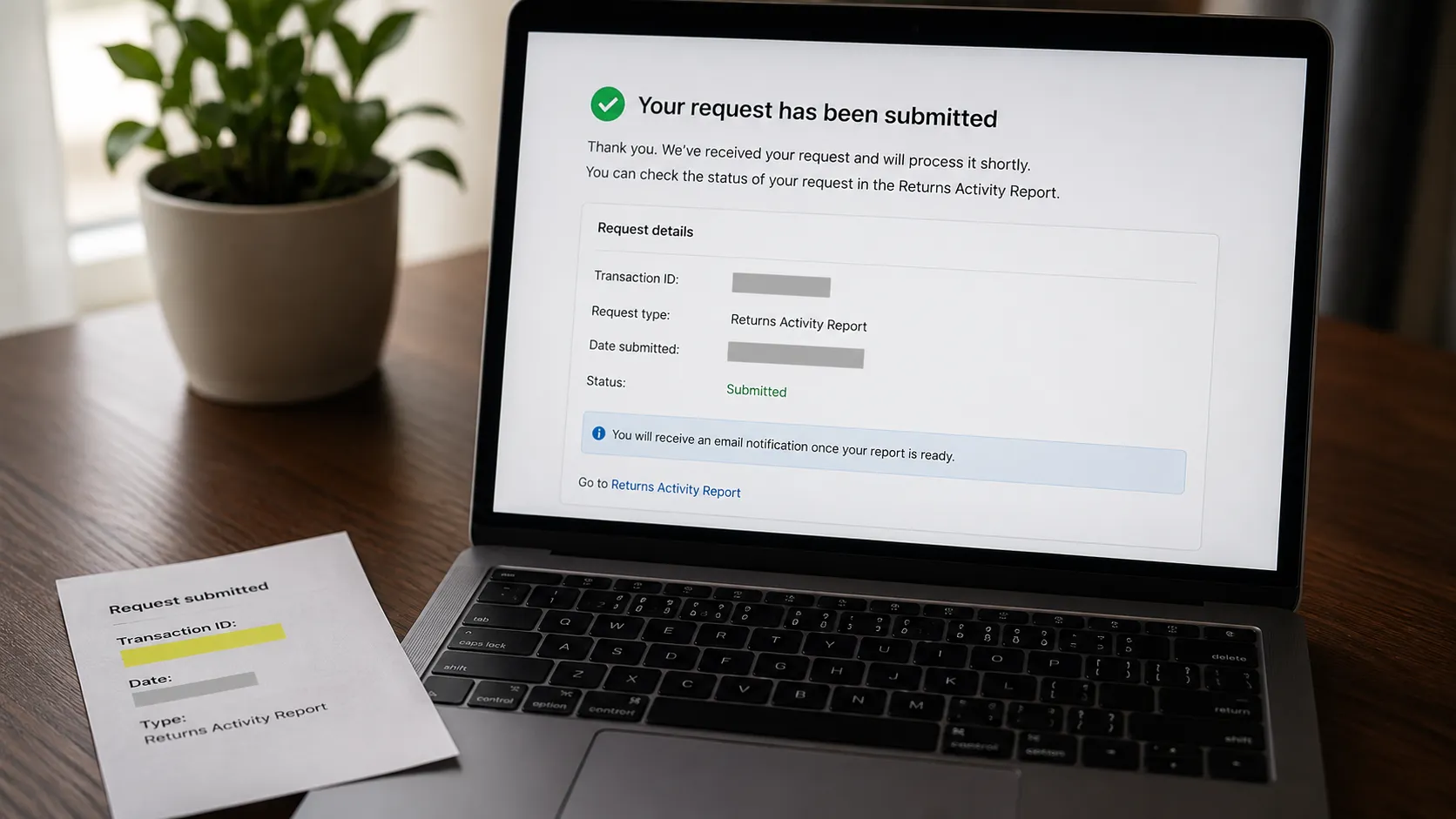
If your flag rests on return history that looks wrong, you can go after the data itself. The Retail Equation keeps a Return Activity Report, sometimes called a RAR, that drives the warn-or-deny recommendation, and you can request yours. Per The Retail Equation, you can get your report through its online portal up to 60 days after the transaction, or by phone or email using the transaction ID from your slip. Reviewing the report is the fastest way to catch an error, a mismatched ID, or a return that is not yours.
Requesting it is straightforward. Do it early, because the 60-day window closes.
Go to the RAR portal and enter your transaction ID from the slip.
Or email the consumer inquiry address, or call the number on your slip, with your ID and transaction details.
Read the report, and if a record is wrong, file a dispute through their process.
A correct record will not vanish because you dispute it, so this route helps when there is a genuine error, not when the returns simply happened. For the full walkthrough of fixing errors and asserting your consumer-reporting rights, see the guide on challenging your return file.
Is Walmart “Return Jail” Permanent? The Facial-Recognition Myth
An online returns restriction can last a long time and has no formal, published appeals process, but the scarier version of this story is mostly myth. Walmart tested facial-recognition software to spot shoplifters back in 2015 and abandoned it for lack of return on investment, as documented by LegalClarity and confirmed in reporting compiled by IPVM. A returns violation is an account and algorithm action, not a face-scanning dragnet that hunts you at the door for returning too much. The “Walmart jail” people describe online is an account restriction, not a courthouse sentence.
Two different things get tangled together, so separate them. An online returns flag restricts the returns service and future online orders, and it is enforced by systems, not cameras.
An in-store trespass ban is a different animal, issued for theft or serious misconduct, enforced by loss-prevention staff and a written trespass notice that often goes to local police. A returns flag by itself does not put you on that list, and for the bigger picture on how retail blacklists actually work, that separate guide covers the ban mechanics in full.
Two honest limits. The online restriction may be effectively permanent, and your legal recourse is thin because retailers can decline to do business at their discretion. Making a fresh account to dodge it tends to backfire and can compound the problem.
How to Avoid Another Returns Violation
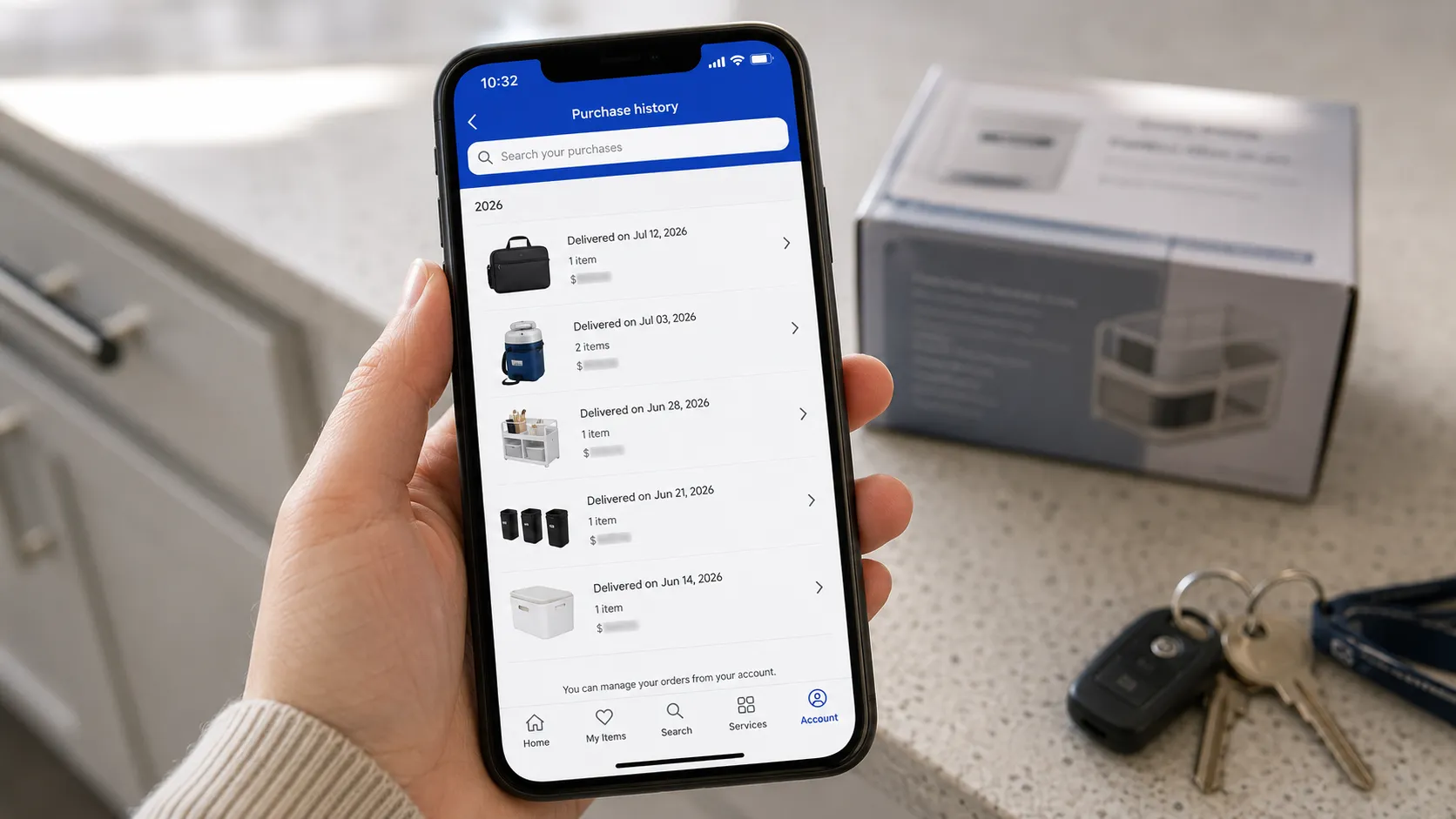
The best protection is simple: keep proof of purchase so your returns never touch the no-receipt tally. A receipted return does not count against your no-receipt history, which is the exact history the verification system watches. As ConsumerAffairs points out, using Walmart Pay or ordering through your account stores your receipts digitally and makes returns far easier to verify.
A few habits keep you clear of the flag.
Save digital receipts through Walmart Pay or the app, and use the register card-lookup when you paid by card.
Stay under the no-receipt cap, and if you must return without a receipt, space the returns out.
Return items in original condition with packaging and accessories, since condition failures trigger their own flags.
Avoid clustering many returns in a short window, which reads as a pattern.
Staying under the no-receipt cap is the single biggest safeguard, and the full breakdown of the limit and dollar caps lives in the receipt-free returns guide. These habits lower the risk, they do not erase it, so keep your receipts even for small buys.
Walmart Returns Violation FAQ
Can I still shop in-store if my online account is restricted?
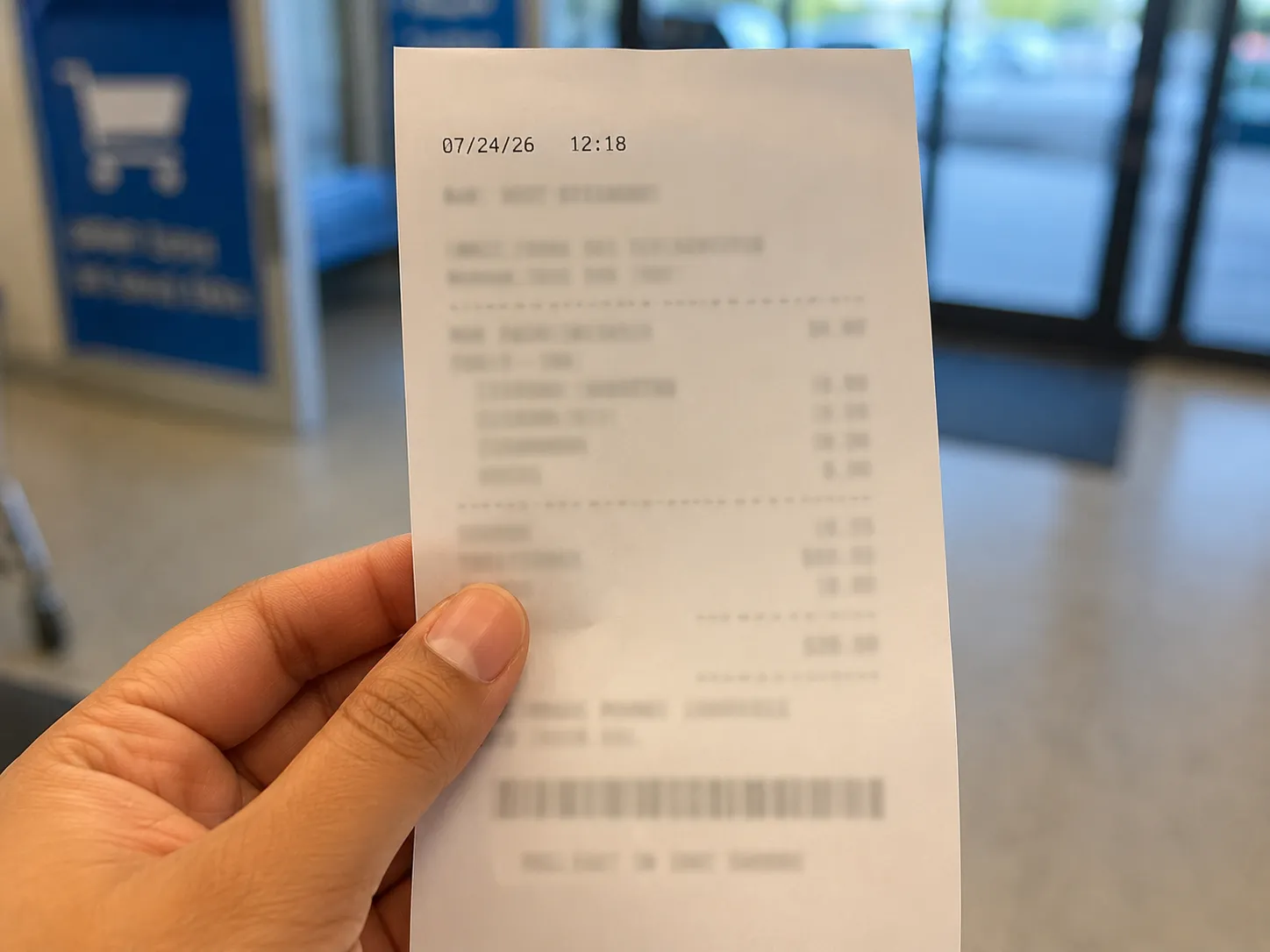
Usually yes. An online returns violation restricts walmart.com ordering and the returns service, but it does not automatically bar you from the store. In my own case, an in-store purchase went through normally days after the online restriction, and that dated receipt is the proof.
How long does a Walmart returns violation last?
It varies. An in-store no-receipt denial can ease once your history rolls past the tracked window, while an online account restriction can last indefinitely with no published appeals process. Treat the online version as potentially permanent until customer service tells you otherwise.
Does a return with a receipt count against me?
No. Receipted returns are verified against your actual purchase and do not add to the no-receipt tally that the verification system watches. That is exactly why keeping receipts, digital or paper, is the best prevention.
Can a manager override a system denial at the desk?
No. When The Retail Equation system denies a no-receipt return, the associate and manager cannot reverse it on the spot. Your route is to request your Return Activity Report and dispute any error through the vendor.
Will Walmart tell me exactly what I did?
Usually not in detail. The cancellation email and the slip rarely spell out which returns triggered the flag, so requesting your Return Activity Report is the clearest way to see the record behind the decision.
Can I just make a new account to get around it?
It is discouraged and often backfires. Return histories can tie to your ID and payment methods, so a fresh account can be flagged again and can make reinstatement of the original harder. Appealing honestly is the better path.
The Bottom Line
A Walmart returns violation feels like a verdict, but it is a return-tracking flag with a knowable cause and a real, if imperfect, path forward. Sort out whether you are holding a warning slip or staring at a cancelled order, run the appeal cleanly, and pull your Return Activity Report when the record looks wrong.
Keep your expectations honest. Some online restrictions reverse and some do not, the “facial recognition lifetime ban” story does not hold up, and you can almost always keep shopping in-store while you sort it out. Save your receipts from here on, and the next return will never put you back in this spot.
Read it your way
Short on time? Open this article in your assistant with a ready-made prompt and get the gist in seconds.
Found this useful? Make us a preferred source so we show up in your Google results.
Keep reading
Related articles
Eligibility & Conditions
What Stores Use The Retail Equation? (2026, Best Buy Out)
See which stores use The Retail Equation in 2026: a verified status list of who still tracks returns, who dropped it (Best Buy, 2019), and who never did.
Eligibility & Conditions
What Is The Retail Equation? How It Scores Your Returns
Denied a return? The Retail Equation scores your returns and can approve, warn, or deny them. See how it works, read a real RAR, and dispute errors
Eligibility & Conditions
Sephora Return Limit: No Set Number, 30-Day Window & TRE Tracking
Sephora has no set return limit, but a 30-day window and Retail Equation tracking mean too many returns can trigger a 365-day ban. Here’s the real rule.
Eligibility & Conditions
Do Stores Track Your Returns? How the System Works (2026)
Yes, most stores track and score your returns. See how the system works, what they log, and how to request your own Return Activity Report.
The discussion
Comments
Every comment is reviewed before it goes live.