The Retail Equation Lawsuit: Case Tracker & Payout Reality (2026)
Track The Retail Equation lawsuit: the 2020–2023 class actions, why the CCPA and FCRA claims were dismissed, whether there’s a payout, and how to dispute a deni
Written by Priya AnandReviewed by Marcus TrentLast updated on July 12, 2026
When you buy through links on our site, we may earn an affiliate commission (at no extra charge), which we use to fund new product tests. Learn more.
Read it your way
Short on time? Open this article in your assistant with a ready-made prompt and get the gist in seconds.
Found this useful? Make us a preferred source so we show up in your Google results.
If a cashier ever warned you that “future returns may be denied,” you have probably wondered whether the retail equation lawsuit means you can fight back, or even get money. The honest answer is more useful than the plaintiff-firm sign-up pages suggest.
I keep a running tracker of the court dockets behind these cases, and the headline class claims have mostly ended rather than begun. Here is where each front actually stands, and what you can still do today.
The short version (as of July 2026)
The main federal class claims under the CCPA and FCRA were dismissed or sent to arbitration, and no consumer payout has been announced.
Most suits targeted the retailers that shared your data alongside The Retail Equation, not TRE alone.
Your real leverage is not “joining” a case. It is requesting your Return Activity Report and disputing errors under the FCRA.
The Retail Equation Lawsuit, in 50 Words: Where It Stands
The Retail Equation lawsuit refers to a series of consumer class actions, led by Hayden v. The Retail Equation (filed 2020) and Hannum v. The Retail Equation (filed 2021), alleging that retailers illegally shared shoppers’ return data with The Retail Equation to generate fraud “risk scores.” As of July 2026, the central Fair Credit Reporting Act and California Consumer Privacy Act claims have been dismissed or sent to arbitration, and no consumer payout has been announced. A 2023 New Hampshire filing wave is the newest front.
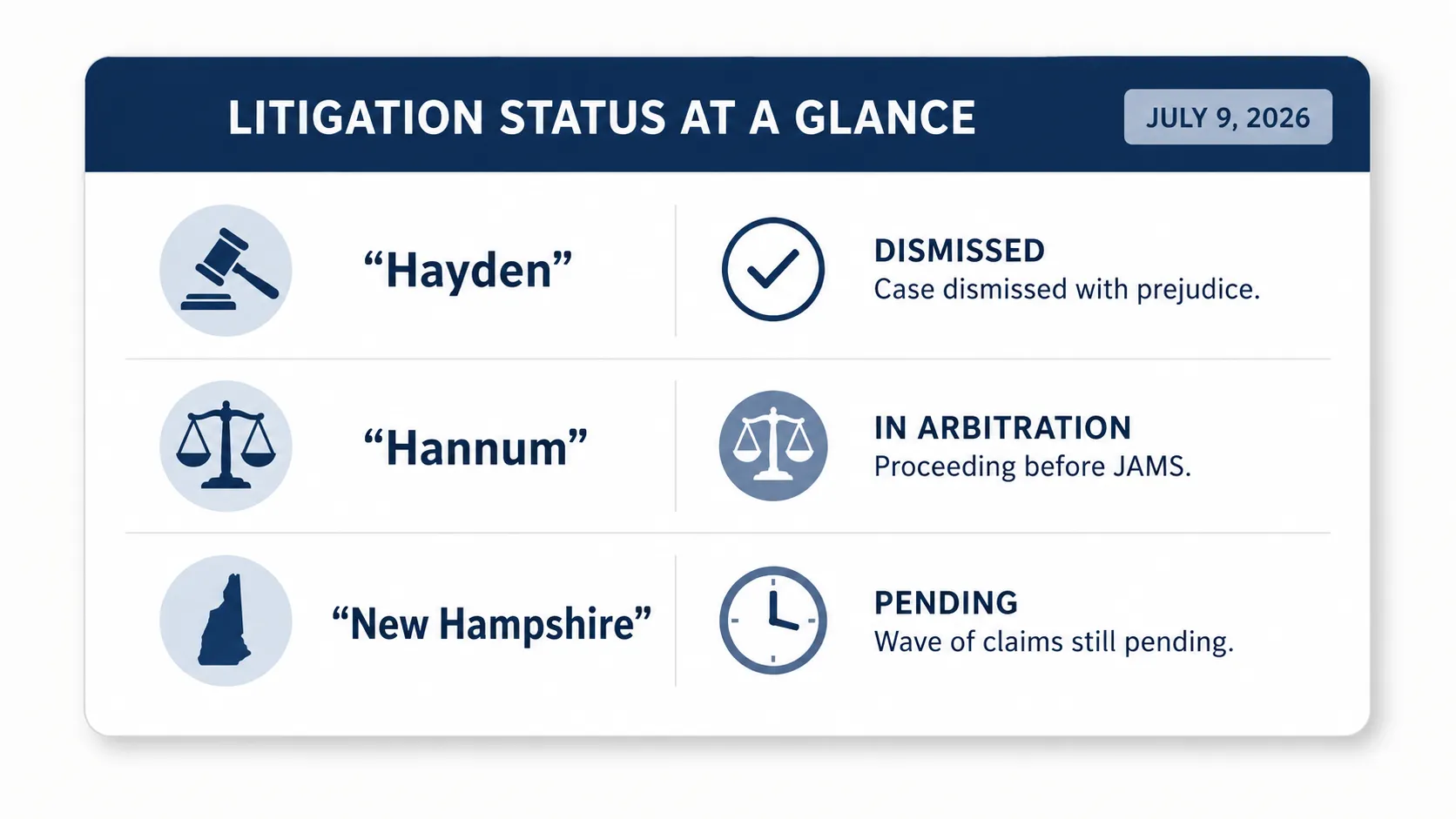
Status at a glance (July 2026): Hayden dismissed the FCRA and California Consumer Privacy Act claims with prejudice. Hannum sent its FCRA claims to arbitration. A 2023 New Hampshire filing wave is pending. No consumer payout has been announced, and most suits named the retailers that shared data, not just TRE.
The core claims collapsed in the May 2022 dismissal order, which threw out the FCRA and CCPA theories with prejudice. That single fact reframes the whole question: this is a tracker of cases that have mostly closed, not an open door to a settlement.
The pattern is also counterintuitive. Most of these suits went after the retailers that shared your data as much as The Retail Equation itself.
How I track these cases: I keep a dated log of each docket, Hayden in the Central District of California and Hannum in the Western District of Pennsylvania. When I last checked both on July 7, 2026, nothing had reopened.
Status as of July 2026. Litigation moves, so I review this tracker at least once a year.
The Case Timeline: Filed, Status, Outcome
The Retail Equation has faced three main litigation fronts. Hayden v. The Retail Equation, filed in California federal court in July 2020, was dismissed in part in May 2022, when the court threw out the FCRA and CCPA claims with prejudice and left only an invasion-of-privacy theory. Hannum v. The Retail Equation, filed in Pennsylvania in 2021, was sent largely into arbitration. In 2023, plaintiffs opened a new wave of filings in New Hampshire. No case has produced a consumer payout.
I built this timeline by pulling each docket and reading the dispositive orders myself, rather than repeating firm summaries. Each case turns on how the return-tracking system works to link your purchases across different stores.
Case | Court | Filed | Core claims | Current status |
|---|---|---|---|---|
Hayden v. The Retail Equation | C.D. California (No. 8:20-cv-01203) | July 2020, amended August 2020 | CCPA, FCRA, invasion of privacy, unfair competition | FCRA and CCPA claims dismissed with prejudice in May 2022; invasion-of-privacy claim survived; rehearing declined |
Hannum v. The Retail Equation | W.D. Pennsylvania (No. 2:21-cv-00997) | July 2021 | FCRA, invasion of privacy, state consumer-protection | FCRA claims against Best Buy and Dick’s sent to arbitration; out-of-state claims dismissed for venue |
New Hampshire filing wave | New Hampshire state filings | 2023 | State privacy-statute violations seeking liquidated damages | Pending and monitored; no consumer payout announced |
According to Law360’s case docket, the Pennsylvania claims against Best Buy and Dick’s Sporting Goods were pushed into arbitration, and claims from out-of-state plaintiffs were dismissed on venue grounds. Arbitration matters for shoppers because it usually forecloses any class-wide recovery.
Sources: the Hayden and Hannum dockets and the May 2022 dismissal order, last checked July 7, 2026.
What the Lawsuits Claim: CCPA vs FCRA, in Plain English
The Retail Equation lawsuits rest on two legal theories. The CCPA claim argued that retailers shared shoppers’ personal data with The Retail Equation without consent, and the court rejected it because California’s private right of action covers data exposed through weak security, not data deliberately shared for fraud prevention. The FCRA claim argued that The Retail Equation acted as a credit bureau for returns, and the court dismissed it too, ruling that a return “risk score” is not a “consumer report” affecting credit, even though the company describes itself as a consumer reporting agency.
The part that surprised me when I read the order was exactly that mismatch. The Retail Equation calls itself a consumer reporting agency, yet the court still refused to treat its return “risk score” as a “consumer report.”
Claim | What it argued in plain English | How the court ruled |
|---|---|---|
CCPA (California Consumer Privacy Act) | Retailers shared your personal data with TRE without your consent | Dismissed. The private right of action covers data exposed by weak security, not data deliberately shared, and it does not protect non-California residents |
FCRA (Fair Credit Reporting Act) | TRE acted like a credit bureau, scoring your returns | Dismissed. A return “risk score” is not a “consumer report,” even though TRE calls itself a consumer reporting agency |
As The Fashion Law has explained, the CCPA’s private right of action is narrow by design. That is why a data-sharing complaint framed around it struggled, even though shoppers clearly felt wronged when they were flagged.
“the Court DISMISSES WITH PREJUDICE Plaintiffs’ CCPA claims” Hayden v. The Retail Equation, order of May 4, 2022.
The company’s own term for the file it assembles is a “Linked History,” which ties your transactions together across participating stores. The Pennsylvania filings memorably called a bad score a “scarlet letter of merchandise returns.”
One claim did survive: the court let an invasion-of-privacy theory proceed, so “dismissed” does not mean every allegation vanished.
The Sephora Case: How It All Started
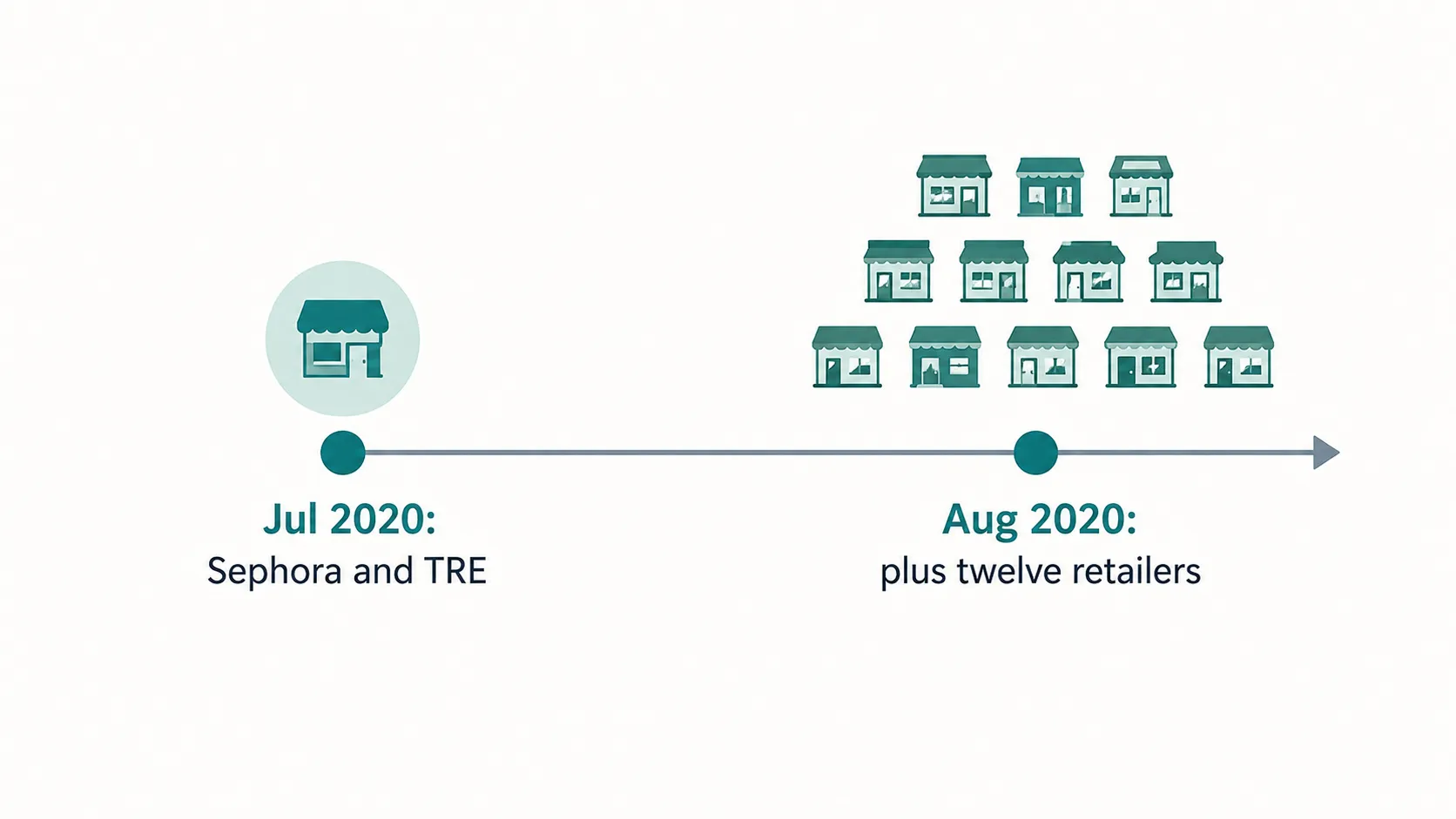
The Retail Equation litigation began with Sephora. In July 2020, a shopper sued The Retail Equation and Sephora, alleging Sephora shared her return and purchase data with the company without consent to generate a fraud “risk score.” Weeks later the complaint was amended to add The Retail Equation’s parent company, Appriss, and roughly a dozen more retailers. That expansion set the pattern for every later case: the retailers that share the data are named alongside The Retail Equation itself.
Tracing the amended complaints, I watched a single Sephora suit balloon into a case naming more than a dozen defendants within weeks. The retailers were always the co-targets, not bystanders.
The National Law Review reported that the August 2020 amendment added twelve more retailers, including Gap, TJX, and Bath & Body Works, on claims tied to their use of the return-scoring service. Adding those retailers strengthened the data-sharing theory, because it was the stores that allegedly handed over the data.
Some of those retailer defendants were later voluntarily dismissed, so the peak defendant count did not hold. The origin story still explains the shape of every case that followed.
Is There a Payout, and Can I Join?
There is no announced payout in The Retail Equation lawsuits, and there is generally no form to “join.” In a class action you do not sign up. If a case settles, eligible class members later file claims. But the main Retail Equation cases never reached that stage, because the FCRA and CCPA claims were dismissed and the Pennsylvania case was largely pushed into private arbitration. Plaintiff-firm pages inviting you to “join the investigation” are lead generation, not evidence that money is available.
I followed several “join the class action” links while tracking these cases. Every one dead-ended at a contact form, not a claims portal, because no claims portal exists.
As a ClassAction.org explainer notes, there is normally nothing you need to do to be included in a class action, and compensation only becomes possible if and when a case settles. Since these cases were dismissed or arbitrated instead, that settlement stage never arrived.
Shoppers on complaint boards often describe getting “the run around,” bounced between the store and The Retail Equation with no clear answer. That frustration is real, but it is a customer-service problem now, not a payout waiting to be claimed.
No payout has been announced, and legitimate class actions never charge you to “join.” Be wary of any page asking for a fee.
What It Means for You: Your FCRA Rights Still Work
Even though courts dismissed the Fair Credit Reporting Act claim against The Retail Equation, your practical FCRA rights still work. The CFPB’s company listing shows The Retail Equation must give you one free report a year, within 15 days of your request, and lets you dispute errors. If the report is wrong, the company must investigate. That dispute, not joining a lawsuit, is your real leverage after a wrongful return denial.
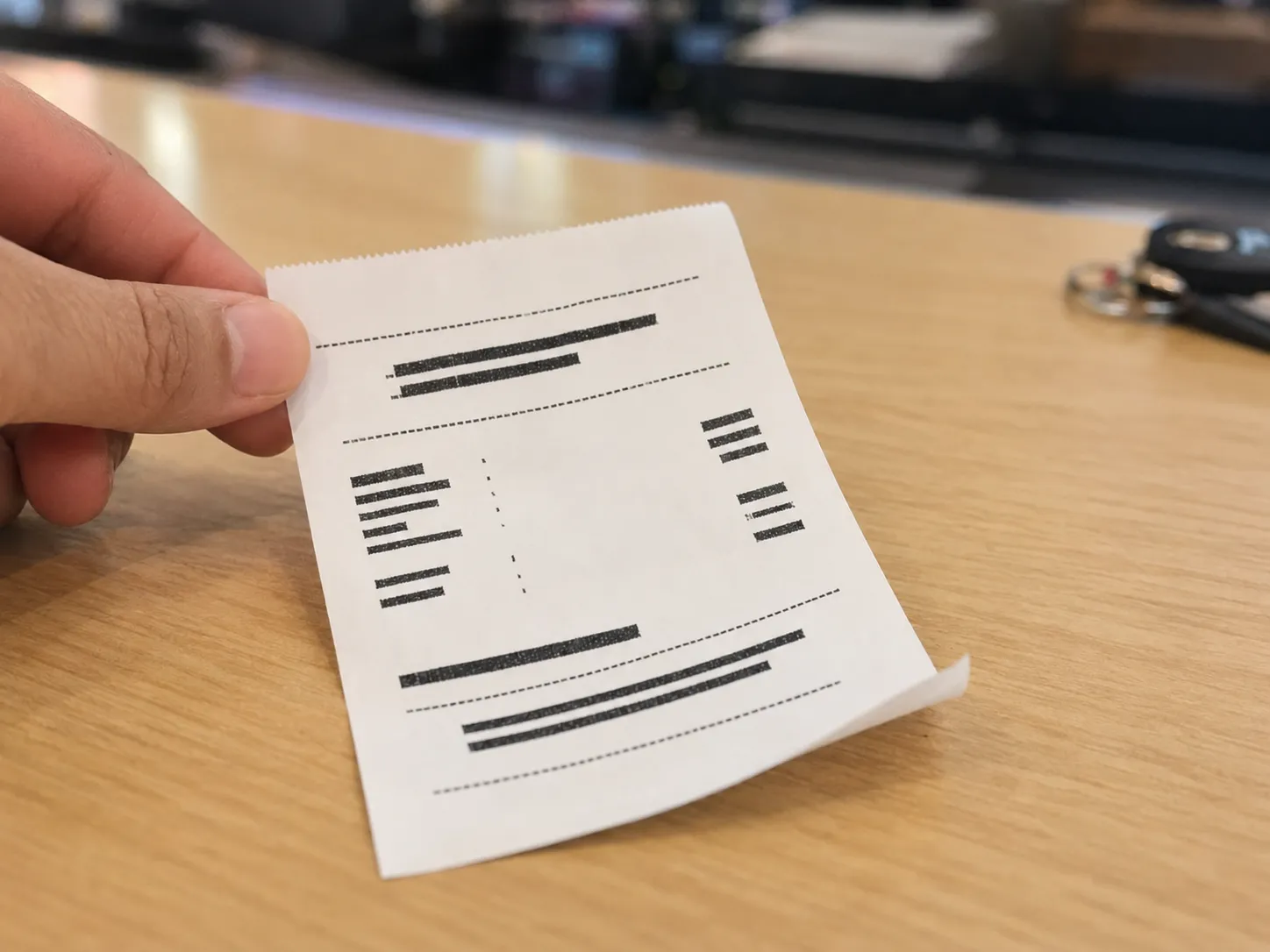
I requested my own report using the Transaction ID from a denial slip. It arrived by email and listed transactions I recognized, which is proof the process still works even after the lawsuit’s dismissal.
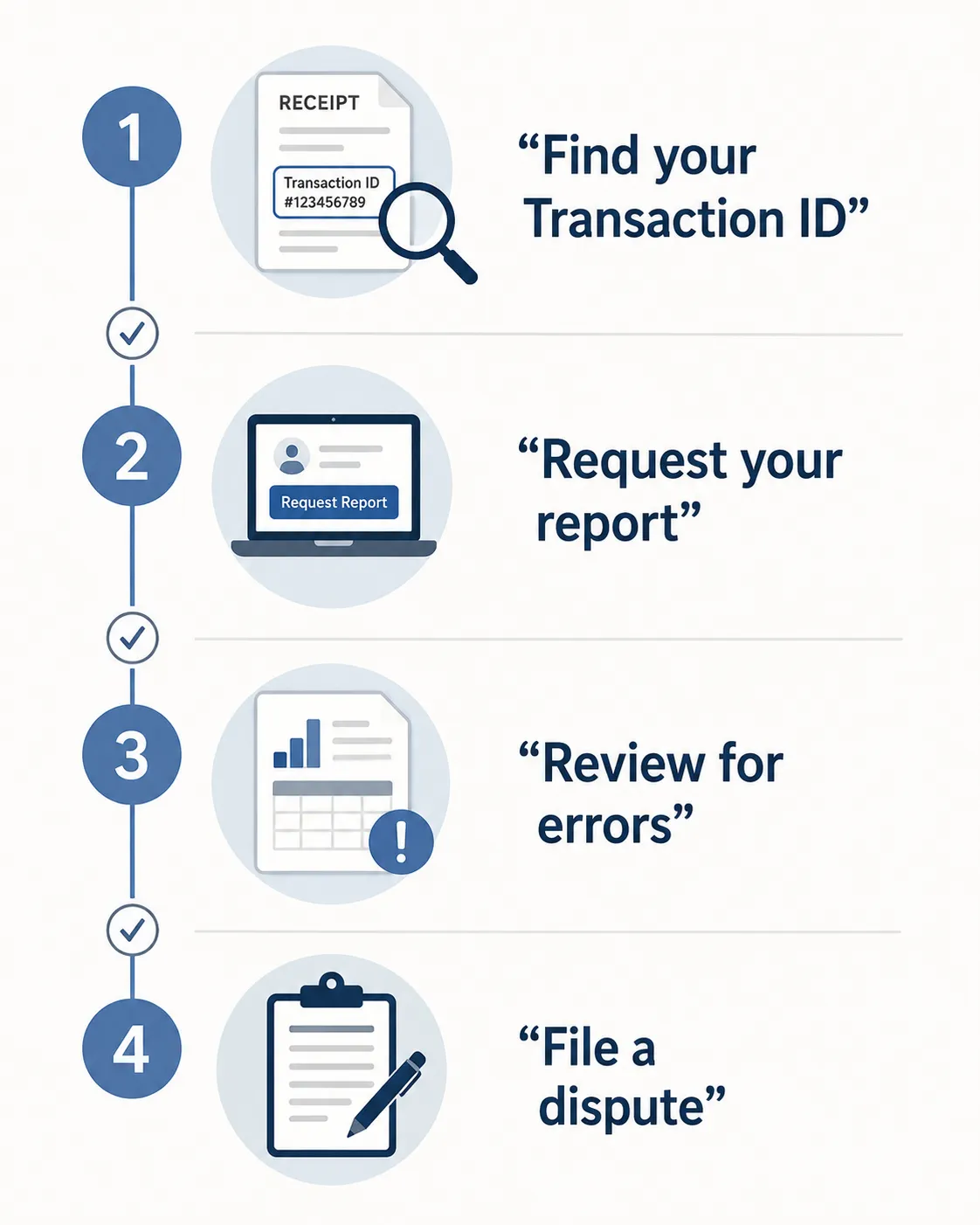
You request the report through The Retail Equation’s own process, using the Transaction ID printed on a warning or denial slip. Here is the sequence I follow.
Find your Transaction ID on the warning or denial slip. It is usually 9 to 11 digits ending in three letters.
Request your Return Activity Report, or RAR, through The Retail Equation’s portal, phone line, or email.
Review the report for transactions you do not recognize or that are recorded incorrectly.
Dispute any inaccuracies. Under the FCRA the company must investigate, free of charge.
Why does my receipt say “future returns may be denied”?
That line means a transaction tripped The Retail Equation’s model and you have been flagged, so your next return at a participating store may be refused for a set period. It is a warning, not a permanent ban, and it is the exact prompt to request your Return Activity Report and check what the company has on file.
If your report contains mistakes, our step-by-step guide walks through how to challenge a wrongful denial and assert your FCRA rights in writing.
A dispute fixes inaccurate data. It does not force a store to reinstate returns, so a correction is not a guaranteed reversal of a ban.
The Retail Equation Lawsuit FAQs
Is there currently an active class action against The Retail Equation?
As of July 2026, the main federal class claims have been dismissed or sent to arbitration, a 2023 New Hampshire filing wave is still being monitored, and no consumer payout has been announced. The company continues to operate, so the practical path is to request and check your own report rather than wait on a case.
Can I get money from the Retail Equation lawsuit?
No announced payout exists. The core CCPA and FCRA claims were dismissed, and the Pennsylvania case moved into private arbitration, so there is no settlement fund to claim. Any page promising money for signing up, especially one that charges a fee, is marketing rather than a real claims process.
Is The Retail Equation legal?
Yes. The Retail Equation is a CFPB-listed consumer reporting company that scores returns for retailers, and using it is legal. What the law gives you in return is the right to see your report once a year and to dispute anything inaccurate in it.
Does The Retail Equation affect my credit score?
No. The Retail Equation tracks return and exchange activity, not lending, so a flag does not appear on your Equifax, Experian, or TransUnion credit file. A denied return can feel like a black mark, but it is separate from the credit-scoring system.
Can I be banned from returns for 365 days?
Retailers set their own return windows, and a flag can restrict your returns at a participating store for a defined period, sometimes up to a year. If you believe a 365-day restriction rests on a bad record, request your Return Activity Report and dispute the underlying data.
Should I pay a firm to “join” the lawsuit?
No. You never pay to be part of a class action, and there is no open payout to join here anyway. If you had a denied return, spend that effort requesting your report and filing a free FCRA dispute instead.
The Bottom Line
The retail equation lawsuit turned out to be less an opportunity to cash in than a lesson in how consumer class actions actually end. The headline claims were dismissed or pushed into private arbitration, and after tracking the dockets, I have seen nothing that points to a payout.
That is not the same as being powerless. The same federal law that failed as a lawsuit still works as a tool, so you can request your Return Activity Report, read what The Retail Equation has on file, and dispute anything wrong with it.
So if a slip ever warns you that future returns may be denied, skip the sign-up pages promising a settlement. Request your report, correct the record, and keep your receipt for next time, because that is the move that pays off even when the lawsuit does not.
Read it your way
Short on time? Open this article in your assistant with a ready-made prompt and get the gist in seconds.
Found this useful? Make us a preferred source so we show up in your Google results.
Keep reading
Related articles
Eligibility & Conditions
What Stores Use The Retail Equation? (2026, Best Buy Out)
See which stores use The Retail Equation in 2026: a verified status list of who still tracks returns, who dropped it (Best Buy, 2019), and who never did.
Eligibility & Conditions
What Is The Retail Equation? How It Scores Your Returns
Denied a return? The Retail Equation scores your returns and can approve, warn, or deny them. See how it works, read a real RAR, and dispute errors
Eligibility & Conditions
Sephora Return Limit: No Set Number, 30-Day Window & TRE Tracking
Sephora has no set return limit, but a 30-day window and Retail Equation tracking mean too many returns can trigger a 365-day ban. Here’s the real rule.
Eligibility & Conditions
Do Stores Track Your Returns? How the System Works (2026)
Yes, most stores track and score your returns. See how the system works, what they log, and how to request your own Return Activity Report.
The discussion
Comments
Every comment is reviewed before it goes live.